Applied Markets
Installed Gases
Project Details
Hello, this is RS Korea.
Today we visited a relay pump station that receives approximately 1,000 tons of wastewater per day and transfers it onward to another pump station or treatment facility.
What Is a Relay Pump Station?
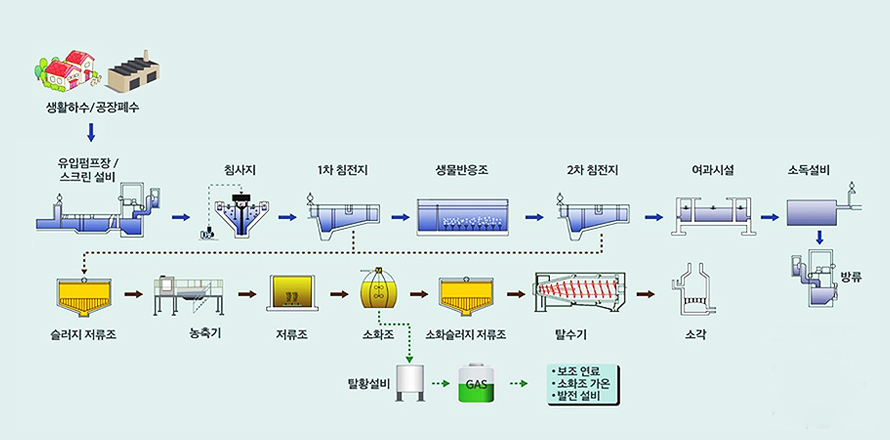
A relay pump station is installed at points where the burial depth of a pipeline increases, or midway along a long pipeline route, to pump wastewater onward to the next pump station or treatment facility.
Purpose of Installation
This relay pump station is monitored around the clock. If a pump malfunctions, wastewater can back up through the surrounding drains and create a serious mess around the station. Because of the need for continuous 24-hour inspection and maintenance, a fixed gas detector was installed for confined-space worker safety.
Installed Item
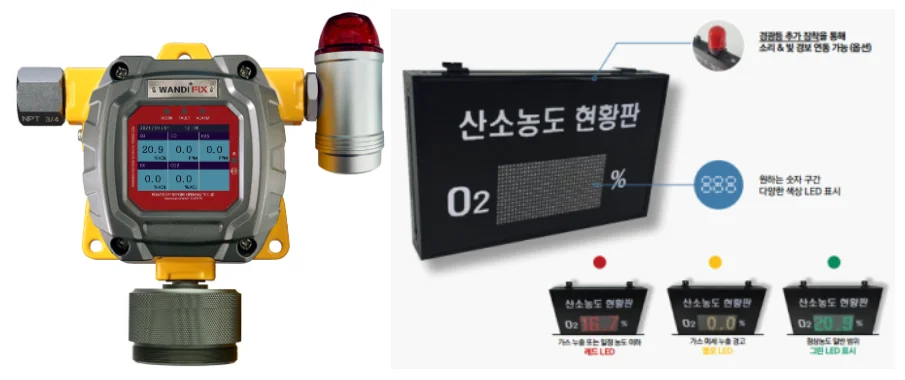
The FIX800 fixed gas detector was installed.
We frequently receive inquiries about fixed gas detectors and status displays for gas cylinder storage rooms, protected areas, confined spaces, laboratories, and similar sites where checking gas concentration with a portable detector before entry can be inconvenient or where a quick confirmation is needed before entering.
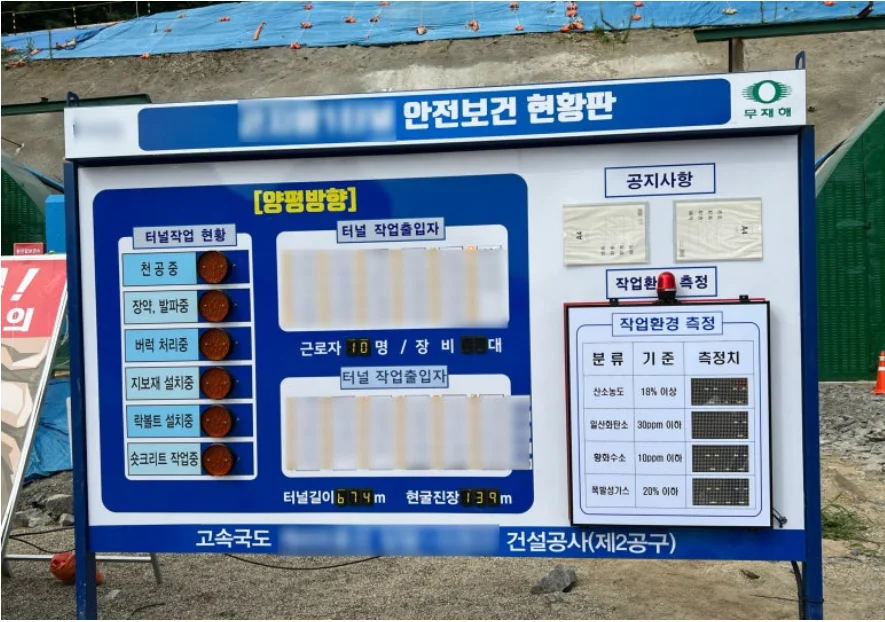
In tunnel environments, even blasting work poses no issue for measurement, and since fixed detectors are based on standard diffusion sampling, dusty environments generally don't interfere with accurate readings. That said, when a pump-driven suction sampling setup is used, we can add a dust filter and build a custom pre-treatment unit so the detector can still perform reliably in dusty conditions.
Installation
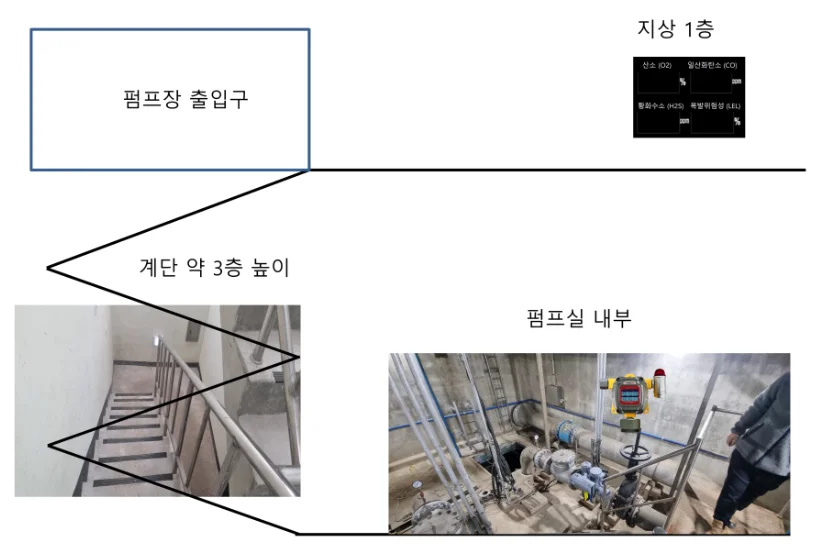
As more sites now call for a display installed above ground and a detector installed below ground, the first thing we do on arrival is look up at the ceiling to locate the cable tray.
Even if flexible conduit is neatly secured along a stairwell, the white-painted walls mean it can still look untidy to workers and visitors, so we avoid routing along stairwells. Instead, we go to the electrical room, open the floor, and locate the cable tray entry point to confirm the connection.
Working through the electrical room and floor involves working at height and depends on how easily the cable feeds through from underground, which raises the difficulty and time required — but the result is noticeably cleaner and tidier for everyone.
When our schedule doesn't allow us to be on site, our construction team sometimes handles the installation on their own. We've never once needed to make a mid-installation check-in or a follow-up visit after completion — that's how much confidence we have in our construction team's work and their sense of responsibility for handling anything that comes up. This time, however, the facility manager asked us to stop by, so we made a quick visit just to confirm everything was completed properly.
FIX800 Fixed Gas Detector
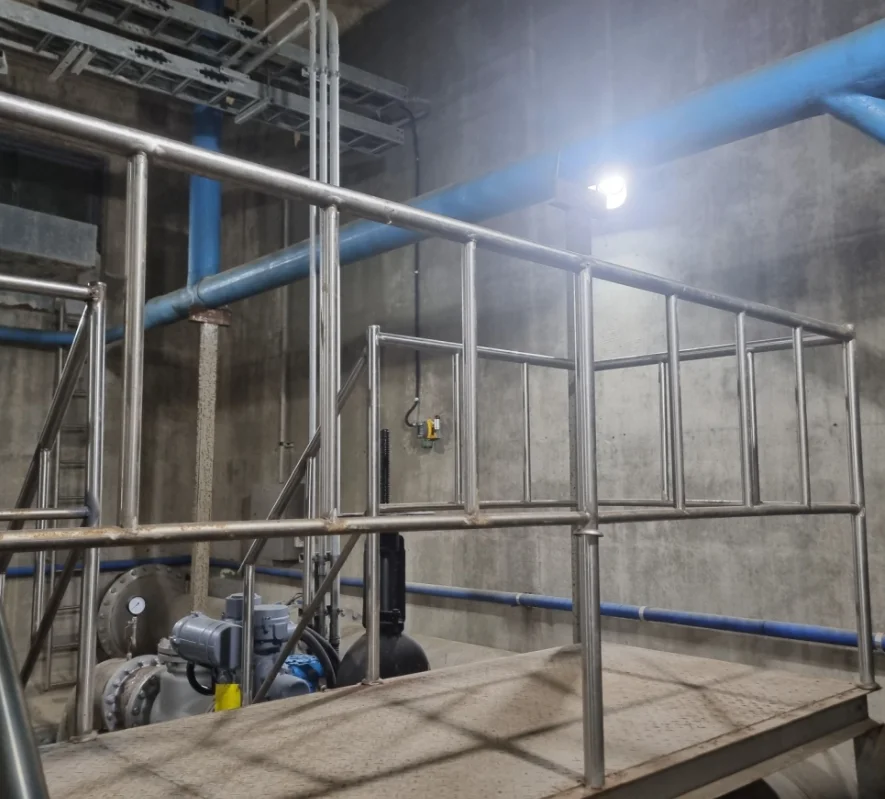
The facility manager wanted to see how the remote control works and to test the beacon alarm, so we went first to the pump room where the detector is installed.
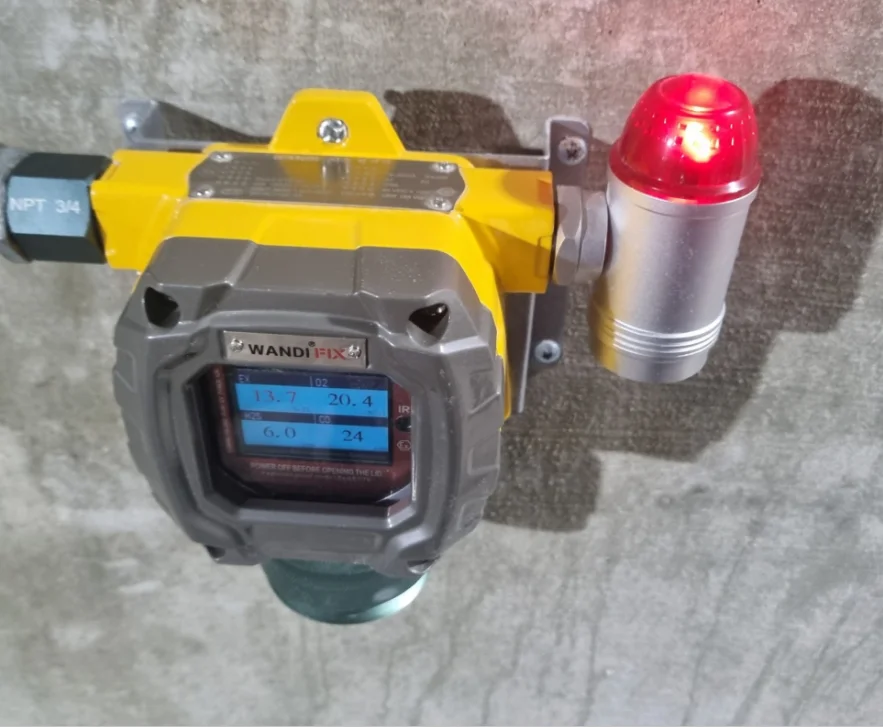
The facility manager's satisfaction ratings:
Responsiveness: ★★★★★
Sound: ★★★★ (would prefer it a bit louder, since pump noise in this pump station environment could make it harder to hear)
Light: ★★★★★
Overall, the manager was very satisfied with the product. They also wanted to check that the remote display alarm was working properly, so we triggered the alarm once more and inspected the display.
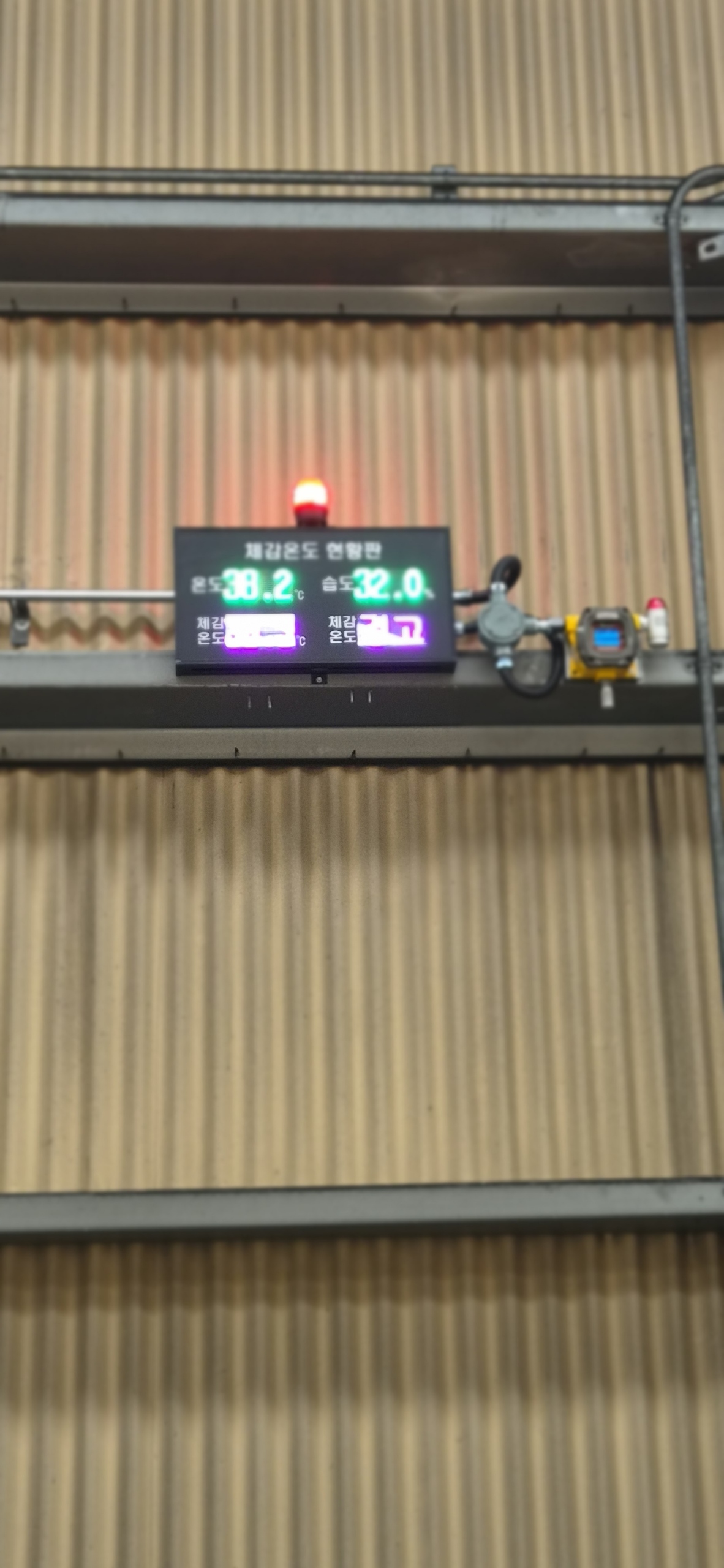
Gas Concentration Status Display
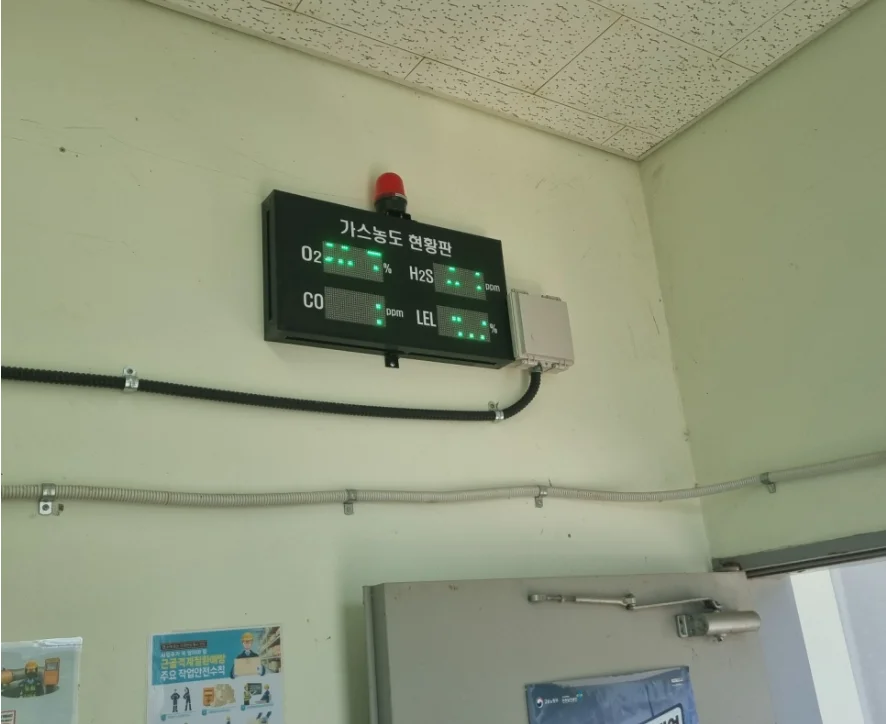
The display was properly connected to the detector and showed matching real-time concentration readings. With the cable routed cleanly from the electrical room through to the tray, we were able to complete product training and the demonstration without any issues.
Questions from the Facility Team
Q1. How often should calibration be performed?
We recommend calibration once a year. The calibration certificate is valid for one year, and since the detector and sensors are also inspected during calibration, it's beneficial for ongoing maintenance as well.
Q2. What is the sensor's expected lifespan?
Sensors typically last around 1.5 years, with the rest of the unit generally lasting around 2 years.
Q3. How can we tell if a sensor has failed?
We can identify this during calibration, or if you notice a reading of zero in a situation where gas should be present, that's a sign to suspect a fault — in that case, please contact us or send the detector in for inspection.
Q4. How long does a repair take?
We keep a reasonable stock of confined-space safety sensors, and since we hold all the components needed for in-house manufacturing, repairs are typically completed within 1 to 2 weeks.
We answered all of these questions, collected the necessary paperwork, and wrapped up the visit.
This concludes our post on the relay pump station installation.
자주 묻는 질문 (FAQ)
Q1. How often should calibration be performed?
Calibration is recommended once a year, since the calibration certificate is valid for one year and the process also includes an inspection of the detector and sensors.
Q2. What is the sensor's expected lifespan?
Sensors typically last around 1.5 years, with the rest of the detector unit generally lasting around 2 years.
Q3. How can a facility tell if a sensor has failed?
A reading of zero in a situation where gas should be present is a sign to suspect a fault. Sensor issues can also be identified during scheduled calibration.
Q4. How long does a repair typically take?
Since components for confined-space safety sensors are kept in stock and can be manufactured in-house, repairs are typically completed within 1 to 2 weeks.
Q5. Why was a fixed detector chosen for this relay pump station instead of only a portable one?
Since the station requires 24-hour monitoring and quick safety confirmation before entry, a fixed detector paired with a remote status display allows workers to check gas conditions instantly rather than relying solely on a portable unit before each entry.
#FIX800 #RSKOREA #ConfinedSpace #OccupationalSafetyStandards #4GasDetector #Oxygen #CarbonMonoxide #HydrogenSulfide #FixedGasDetector #PumpStation
![[레이먼드] 오,폐수 처리실 유해가스 모니터링](https://wandi.co.kr/storage/construction-cases/YxFUQVBZ8Unnk7pJzzfsmezr6xNe0LZvQRDmt7TL.jpg)
![[브이피이코리아] 종합병원 지하 밀폐공간 가스 측정기 설치_FIX800 & FIX-DS](https://wandi.co.kr/storage/construction-cases/gNOA28xSlEy5uU3AOxyHDRH5UfAe0TpMTgAt4Uag.jpg)

