Applied Markets
Installed Gases
Project Details
Hello, this is our team at RS Korea.
Today we installed gas detectors at a rainwater storage tank and greywater treatment facility that collects and reuses rainwater. Gases can be generated during the treatment process, so the detectors were installed to guard against gas leak incidents.
Purpose of Installation
This greywater treatment facility pre-treats raw water — such as rainwater and leachate that isn't tap water — to a level suitable for everyday use. Gas can be generated during this purification process, requiring continuous monitoring of the internal gas concentration.
Facilities like wastewater treatment plants, rainwater storage tanks, and similar treatment systems are often located underground within buildings. Without adequate oxygen supply, workers can be at risk of collapsing from oxygen deficiency, or gases can accumulate without being properly vented, potentially leading to gas poisoning. This is why the facility reached out about installing a fixed gas detector.
Installed Items
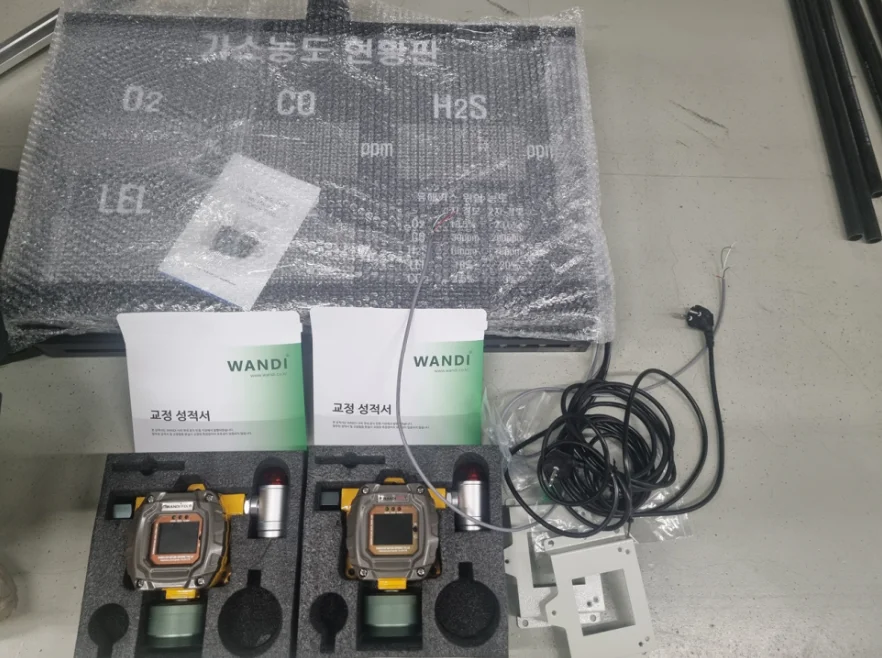
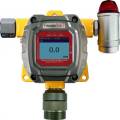
Two sets of FIX800 fixed gas detectors, each configured for 5 gases (O2, CO, H2S, EX, CO2).
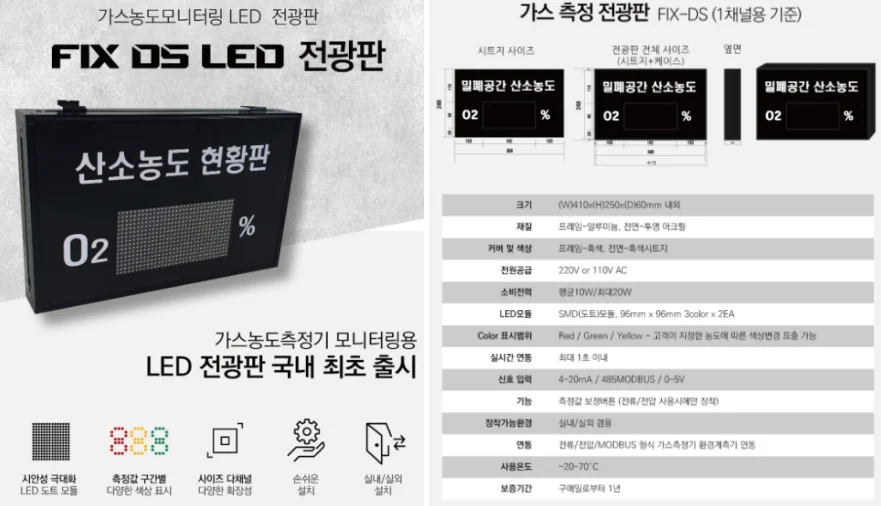
Two 5-channel status displays were also installed — one set at the rainwater storage tank and one set at the greywater treatment facility.
Installation
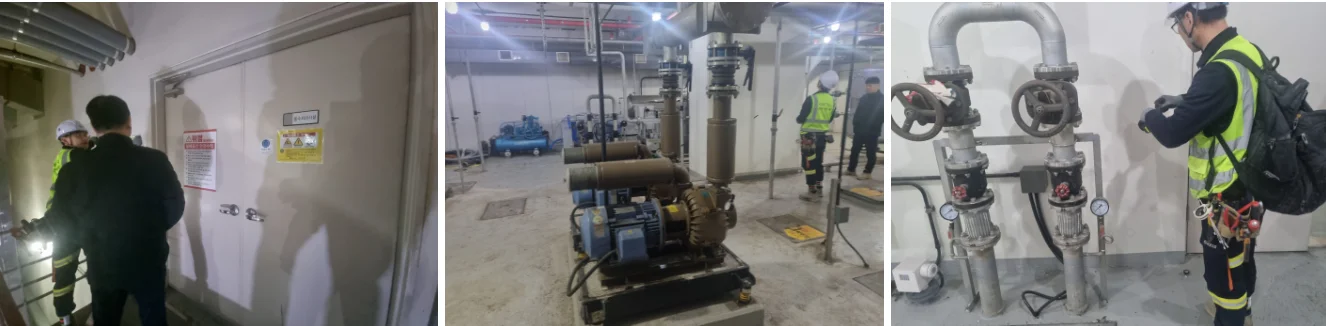
Before installation, we walked the site with the facility manager to identify and confirm all measurement points before beginning work.
We consider product placement to be an important part of any installation. Some sites have specific installation regulations, so we always confirm the location with the facility manager before proceeding. Installing wherever seems convenient without approval can lead to having to relocate the equipment later — wasting both time and materials — so we make it a rule to get sign-off on placement first.
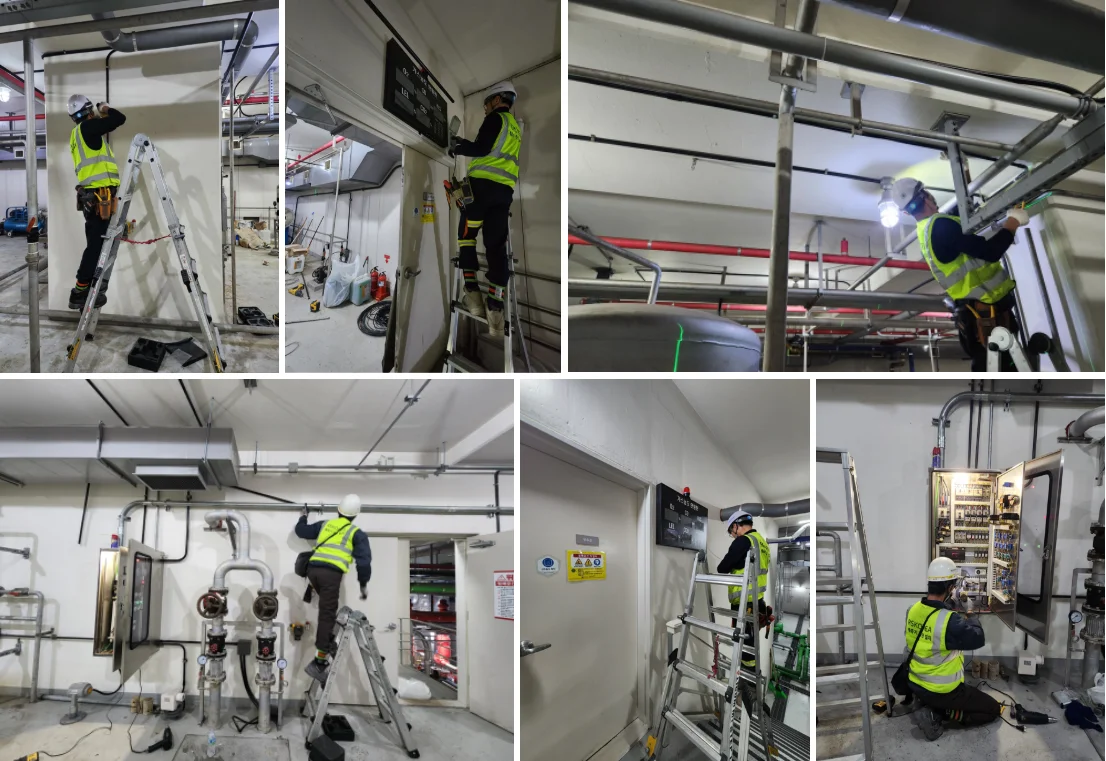
After completing the installation, we carried out gas response and alarm tests.
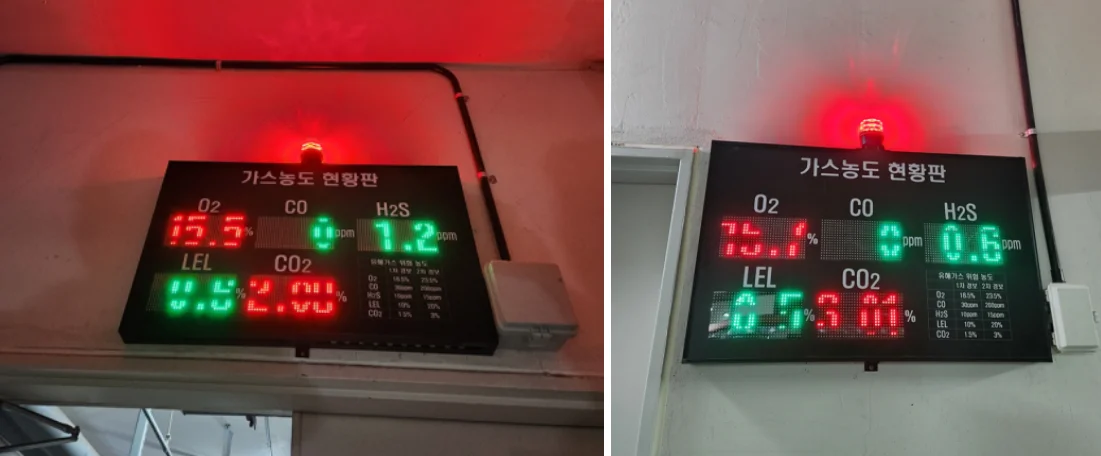
We provided product training to the facility manager and staff, demonstrated the gas response and alarm tests, and answered their questions.
Questions from the Facility Team
Q1. Once data is being logged, do we need to keep coming back to the detector to check the stored values?
Not necessarily. The FIX800 supports 4–20mA and RS-485 communication output, so if you have a data logger that can receive this signal, you can retrieve the readings remotely without needing to check the unit directly.
Q2. How can we tell if the sensor is still working?
While having a gas test cylinder on hand is the most convenient method, you can also do a simple response check. Breathing near the sensor lets you observe a response on the O2 and CO2 readings, and breathing for a longer period can also register on the CO reading. A lighter can also be used to check the response of the combustible gas (LEL) sensor. (We demonstrated this on site using both the breath test and a lighter that happened to be on hand.)
Q3. We'll need to get this calibrated again in about a year — will we get a text reminder?
Not by text message, but for WANDI-brand detectors, we track the delivery records and send a mail notification once a year has passed since installation, along with a reminder to schedule inspection and calibration. You can proceed with the calibration when you receive that notice.
These are a few of the questions we thought were worth sharing. The facility's managers asked a lot of thoughtful questions, which gave us confidence that the equipment will be well looked after.
This concludes our post on the greywater treatment facility installation. Thank you.
자주 묻는 질문 (FAQ)
Q1. Once data is being logged, do we need to keep coming back to the detector to check the stored values?
Not necessarily. The FIX800 supports 4–20mA and RS-485 communication output, so if you have a data logger that can receive this signal, you can retrieve the readings remotely without needing to check the unit directly.
Q2. How can we tell if the sensor is still working?
You can do a simple response check by breathing near the sensor — this shows a response on the O2 and CO2 readings, and a longer breath can also register on CO. A lighter can be used to check the response of the combustible gas (LEL) sensor.
Q3. How often does this detector need to be calibrated?
WANDI-brand detectors are generally recommended for calibration on an annual basis. RS Korea tracks delivery records and sends a mail reminder once a year has passed since installation.
Q4. Why were two full sets of detectors and displays installed?
One set was installed at the rainwater storage tank and one set at the greywater treatment facility, since both are separate underground processing points where gas can accumulate.
Q5. Why is gas monitoring important at facilities like this?
These facilities are often located underground, where gas generated during the water treatment process can accumulate without proper ventilation, creating a risk of oxygen deficiency or gas poisoning for workers.
#FIX800 #RSKOREA #ConfinedSpace #OccupationalSafetyStandards #5GasDetector #MultiGasDetector #FixedGasDetector #GasDetector #RainwaterReuse #GreywaterTreatment
![[레이먼드] 오,폐수 처리실 유해가스 모니터링](https://wandi.co.kr/storage/construction-cases/YxFUQVBZ8Unnk7pJzzfsmezr6xNe0LZvQRDmt7TL.jpg)
![[브이피이코리아] 종합병원 지하 밀폐공간 가스 측정기 설치_FIX800 & FIX-DS](https://wandi.co.kr/storage/construction-cases/gNOA28xSlEy5uU3AOxyHDRH5UfAe0TpMTgAt4Uag.jpg)

