Applied Markets
Project Details
Hello, this is our team at RS Korea.
Today's installation project was for a thin-film deposition test room.
Thin-film deposition testing takes place in a confined space, so to prevent asphyxiation incidents we installed a fixed oxygen gas detector inside the test room, along with a concentration display for visibility, and an additional status display at the entrance door so conditions inside can be checked from outside.
About Thin-Film Deposition
A thin film is a layer of material with a thickness of one micrometer (μm, one-millionth of a meter) or less. Thin-film deposition technology — such as Physical Vapor Deposition (PVD) — is used across many industries and plays an important role in surface improvement and protection, electronic and optical component manufacturing, and materials research.
Thin-film technology is used in familiar products such as smartphone screen protectors and touchscreens, as well as in the automotive industry to improve and protect surfaces like windows, side mirrors, and headlamps. It is also widely used in semiconductor manufacturing.
The gases typically used in thin-film deposition include argon (Ar), nitrogen (N2), and oxygen (O2). While other gases may be used depending on the specific process, this test room used these three gases, which we'll focus on here.
Argon, nitrogen, and oxygen are all naturally present in ordinary air, and argon in particular is generally known to be non-toxic to the human body — so we looked into why asphyxiation incidents can still occur.
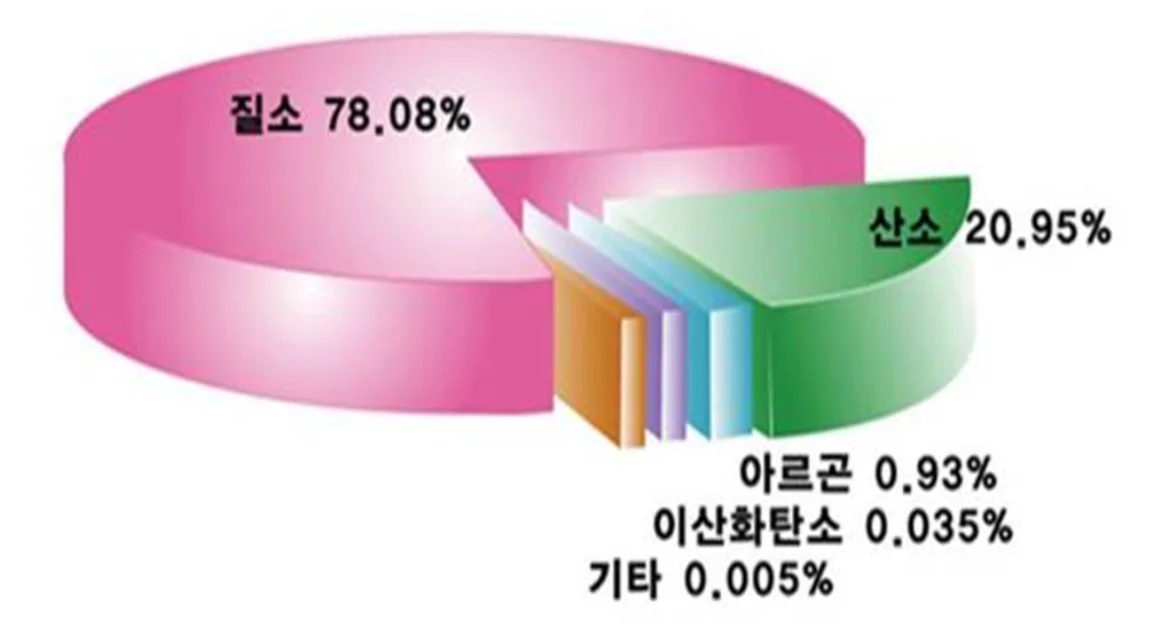
Nitrogen (N2)
Nitrogen makes up about 78% of the air we normally breathe and is harmless to the human body. However, if it enters or leaks into a confined space and its concentration rises, the oxygen concentration correspondingly drops, which can lead to nitrogen-related asphyxiation.
Argon (Ar)
Argon is known to be non-toxic to the human body, but because it is heavier than air, it can accumulate at the bottom of a confined space when used there, displacing oxygen and creating an oxygen-deficient environment that makes breathing difficult.
This installation was carried out specifically to help prevent confined-space asphyxiation incidents like these.
Installed Product
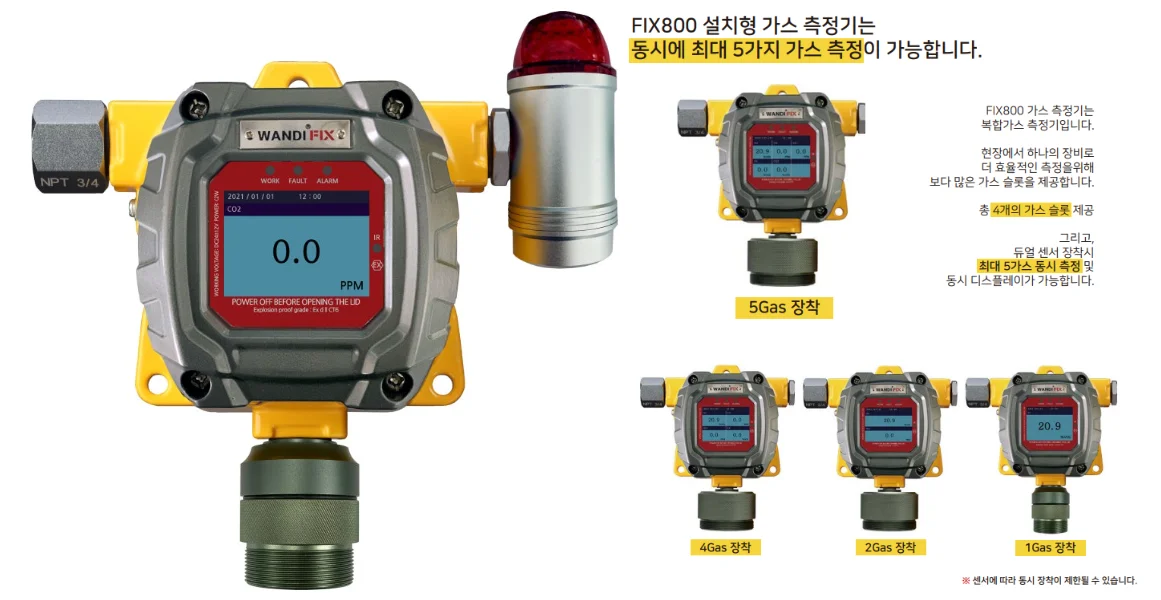
The product installed at this site was the FIX800 fixed gas detector in a single-gas configuration.

Installation Environment / Points
Environment: This installation was in a confined space inside a thin-film deposition test room.
Gas / Concentration: O2 (Oxygen), 0–30% Vol.
Installation points:
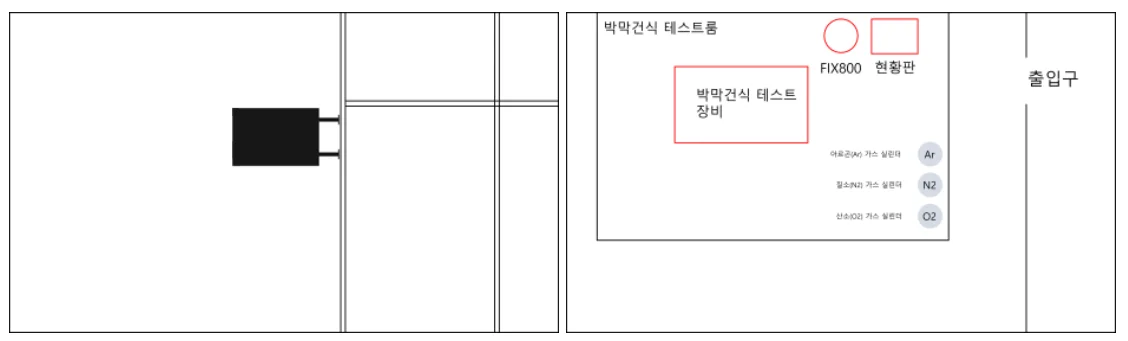
Left: entrance status display. Right: interior layout of the test room. Since on-site photography was restricted for security reasons, this is represented with a diagram instead (please excuse the limited artistic detail — the glass wall and sliding door are not fully depicted).
On the left side, we installed a status display outside the test room so that the interior oxygen concentration can be checked before entering. Since the exterior is a glass wall structure, a wall-mounted display wasn't feasible, so we prepared a signage-style galvanized steel panel mounted on a stainless steel frame, installed like a sign board, after discussing this approach with the facility.
Inside, the test room is enclosed by a sliding door within a larger lab space. For visibility, we installed an additional display inside the room alongside the FIX800 oxygen detector so workers can easily monitor the readings.
Photography was restricted on site for security reasons, but the facility manager kindly provided photos of the completed installation.
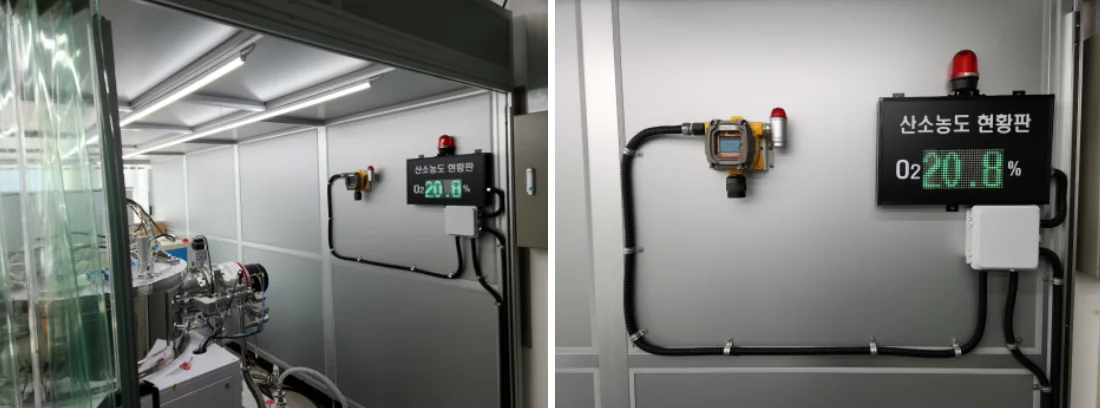
The oxygen detector and display installation inside the test room is complete.
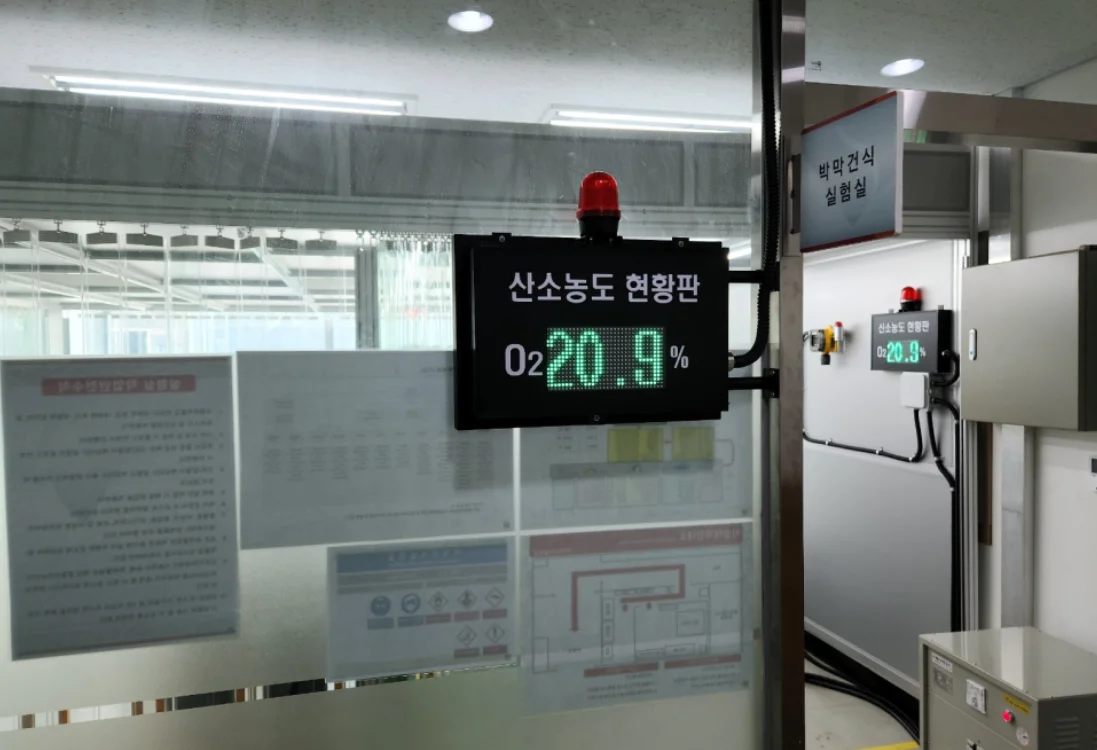
The display installation at the outside entrance is also complete.
After installation, we tested proper operation by breathing near the sensor to confirm the alarm threshold and alert function activated correctly, explained ongoing maintenance procedures, and completed the installation.
Summary
1. The FIX800 supports both single-gas and multi-gas configurations, and can measure up to 5 hazardous gases (O2, CO, H2S, EX, CO2) as required for confined spaces under occupational safety standards.
2. Nitrogen (N2) makes up 78% of ordinary air, but if it enters or leaks into a confined space, it can lower oxygen levels and cause oxygen deficiency.
3. Argon (Ar) is not considered harmful to the human body, but being heavier than oxygen, it can accumulate in a confined space when it enters or leaks, displacing oxygen and causing oxygen deficiency.
This has been RS Korea's installation team.
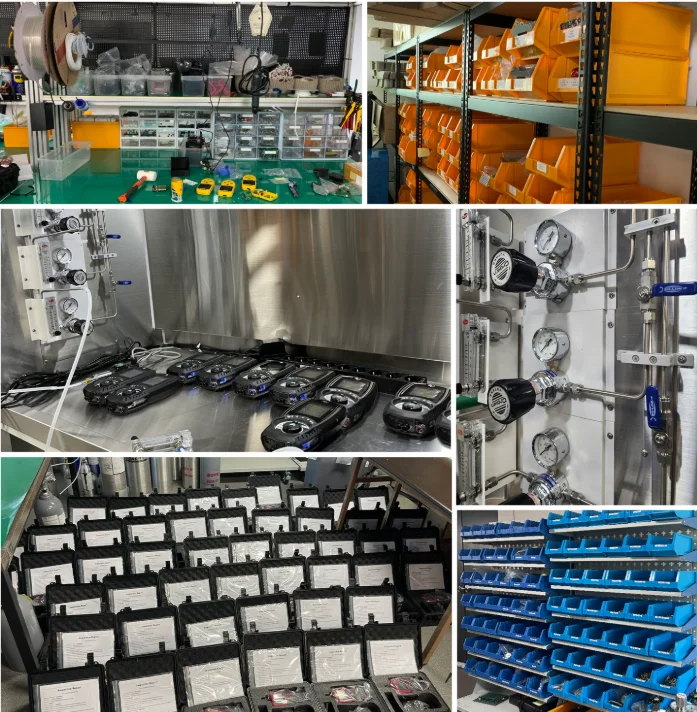
RS Korea is a gas-detection specialist offering more than product sales alone — including in-house calibration, domestic repair service, custom manufacturing, and installation work. Drawing on experience across demonstrations, site surveys, deliveries, repairs, and installations in a wide range of environments, we provide tailored one-to-one solutions for each gas measurement environment.
자주 묻는 질문 (FAQ)
Q1. Why is an oxygen detector needed in a thin-film deposition test room?
Gases used in the deposition process — such as nitrogen and argon — can displace oxygen if they leak into the confined test room, creating a risk of oxygen deficiency and asphyxiation for anyone inside.
Q2. Are nitrogen and argon themselves toxic?
No, both gases are generally considered non-toxic to the human body. The danger comes from their ability to displace oxygen in a confined space, not from direct toxicity.
Q3. Why was a signage-style display used instead of a wall-mounted one at the entrance?
Since the exterior wall at the entrance was made of glass, a standard wall-mounted display wasn't feasible. A galvanized steel signage panel mounted on a stainless steel frame was used instead.
Q4. What gas range was configured for this installation?
The FIX800 was configured as a single-gas detector for oxygen (O2), with a measurement range of 0–30% Vol.
Q5. How many gases can the FIX800 detect in confined-space configurations?
The FIX800 supports both single-gas and multi-gas configurations, and can be configured to measure up to 5 hazardous gases (O2, CO, H2S, EX, CO2) as required under occupational safety standards for confined spaces.
#FIX800 #RSKOREA #O2 #Oxygen #OxygenConcentrationDetector #ConfinedSpace #FixedGasDetector #TestRoom #Laboratory #ThinFilmDeposition
![[레이먼드] 오,폐수 처리실 유해가스 모니터링](https://wandi.co.kr/storage/construction-cases/YxFUQVBZ8Unnk7pJzzfsmezr6xNe0LZvQRDmt7TL.jpg)
![[브이피이코리아] 종합병원 지하 밀폐공간 가스 측정기 설치_FIX800 & FIX-DS](https://wandi.co.kr/storage/construction-cases/gNOA28xSlEy5uU3AOxyHDRH5UfAe0TpMTgAt4Uag.jpg)

