Applied Markets
Installed Gases
Project Details
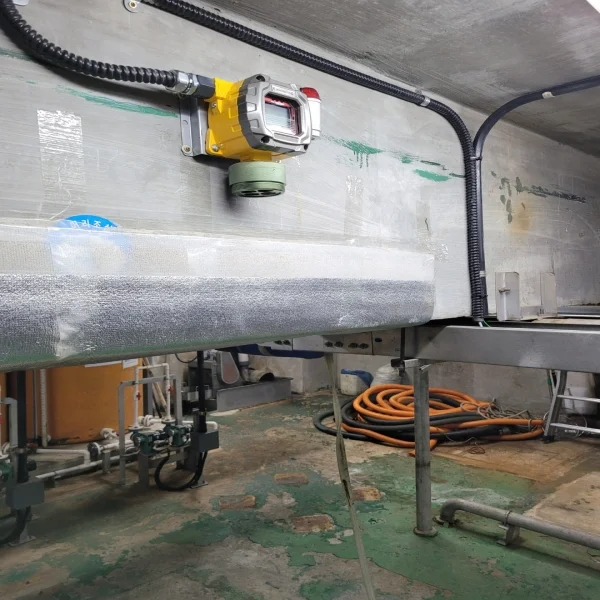
Hospitals are among the facilities that matter most to human life — they treat illness and care for emergency patients. A safety-related incident occurring in such a setting is a serious concern in itself. As occupational safety and health regulations have tightened in recent years, general hospitals have increasingly been inquiring about gas detectors.
Today we'll introduce the confined spaces found within general hospitals, and the types of gas detectors that should be installed in each.
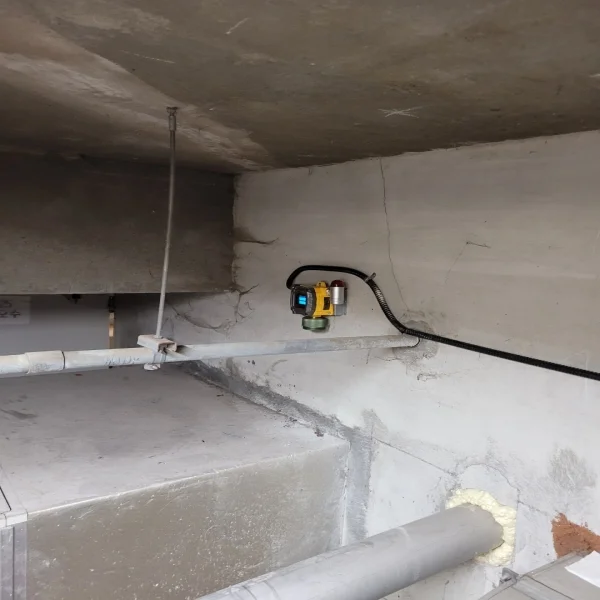
The most vulnerable confined spaces in a hospital are not much different from those in other types of facilities.
Wastewater treatment facilities and septic tanks, along with pit rooms, are the confined spaces most vulnerable to gas exposure. Septic tanks at wastewater treatment facilities in particular are where hydrogen sulfide poisoning and other gas poisoning incidents actually occur most frequently.
These spaces are typically fitted with O2/H2S sensors — an oxygen sensor to provide a basic indicator of air quality, alongside a sensor for hydrogen sulfide, which can be generated from wastewater mixtures. Depending on budget and site conditions, a full 4-gas configuration including CO (carbon monoxide) and LEL (combustible gas) is sometimes installed as well.
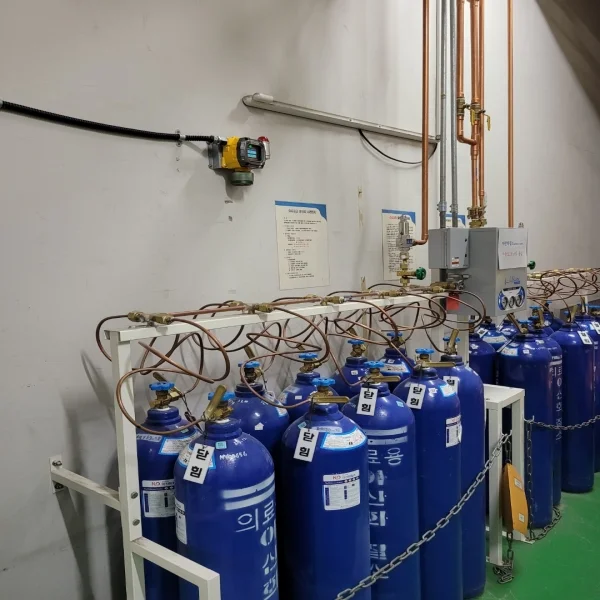
Another type of confined space found in hospitals is the fire suppression agent room and protected area.
In hospitals, an interruption to the power supply — for example to a critical patient's oxygen supply system or medical equipment in use during surgery — can cause serious harm.
For this reason, many hospitals use CO2 (carbon dioxide) fire suppression gas systems, which extinguish fire by rapidly reducing oxygen levels. If a CO2 suppression system malfunctions, oxygen in the space can drop rapidly, and any worker present in that space could be at risk of suffocation. For this reason, occupational safety and health regulations have, since last year, introduced a new requirement to install and operate oxygen or carbon dioxide alarms in CO2 fire suppression agent rooms and protected areas.
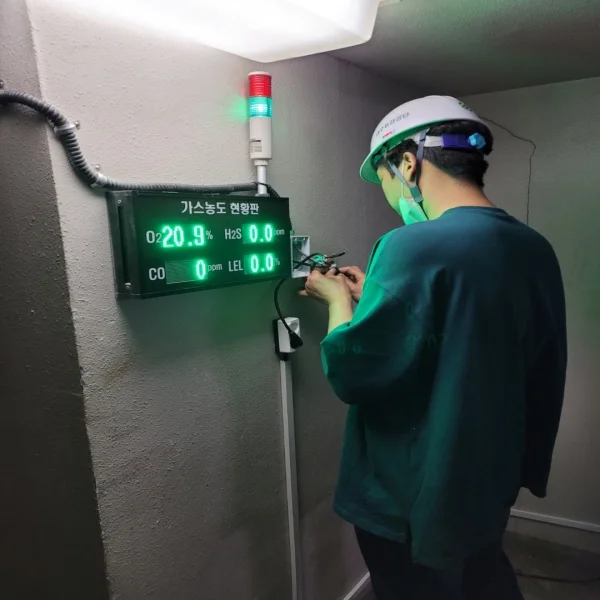
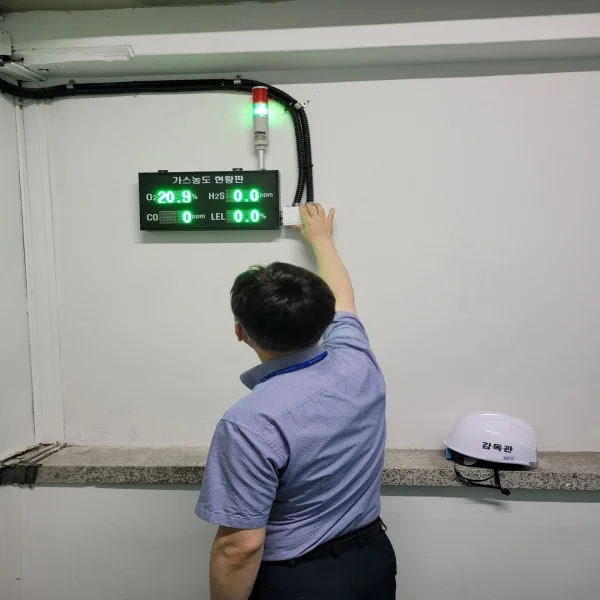
In addition, boiler rooms within hospitals can be vulnerable to CO (carbon monoxide) from incomplete combustion or boiler gas backflow. If an emergency generator room is present, H2 (hydrogen) monitoring may also be needed in case of a battery fire.
Hospital safety managers typically identify these confined spaces first and then request an on-site visit. We are always available to visit free of charge, assess the site, and provide a gas detector installation solution.
This concludes our introduction to gas detector installation cases for confined spaces within hospitals. Thank you.
We are a gas detector sales and installation specialist, ready to support you from a free on-site assessment and solution proposal through installation, and responsible after-sales service and ongoing maintenance.
Thank you.
자주 묻는 질문 (FAQ)
Q1. Which confined spaces in a hospital require a gas detector?
Wastewater treatment facilities and septic tanks, pit rooms, fire suppression agent rooms and protected areas, boiler rooms, and emergency generator rooms are the main confined spaces requiring gas detection.
Q2. What gas sensors are needed for wastewater treatment facilities and septic tanks?
These spaces are typically equipped with O2/H2S sensors, and depending on budget and site conditions, may be expanded to a full 4-gas configuration including CO (carbon monoxide) and LEL (combustible gas).
Q3. Why are oxygen/CO2 alarms required in fire suppression agent rooms and protected areas?
If a CO2 fire suppression system malfunctions and discharges accidentally, oxygen levels in the space can drop rapidly, risking suffocation for anyone present. Occupational safety and health regulations require these alarms to protect workers.
Q4. What gases should be checked in boiler rooms and emergency generator rooms?
Boiler rooms should be monitored for CO (carbon monoxide) from incomplete combustion or gas backflow, while emergency generator rooms may require H2 (hydrogen) monitoring in case of a battery fire.
Q5. How does the gas detector installation process work for hospital confined spaces?
Once a hospital's safety manager identifies the confined spaces on-site, we provide a free site visit, assessment, and a tailored gas detector installation solution.
#ConfinedSpace #HospitalGasDetector #WastewaterTreatment #SepticTank #FireSuppressionAgentRoom #ProtectedArea #OxygenConcentrationDetector #HydrogenSulfideDetector #CarbonMonoxideDetector #GasDetectorInstallation
![[레이먼드] 오,폐수 처리실 유해가스 모니터링](https://wandi.co.kr/storage/construction-cases/YxFUQVBZ8Unnk7pJzzfsmezr6xNe0LZvQRDmt7TL.jpg)
![[브이피이코리아] 종합병원 지하 밀폐공간 가스 측정기 설치_FIX800 & FIX-DS](https://wandi.co.kr/storage/construction-cases/gNOA28xSlEy5uU3AOxyHDRH5UfAe0TpMTgAt4Uag.jpg)

