Applied Markets
Installed Gases
Project Details
Hello. This installation follows an earlier project in Changwon, and we returned to the same site to complete additional gas detection installations. We keep documenting these installation cases to share practical examples of combining gas detectors with IoT monitoring for industrial safety.
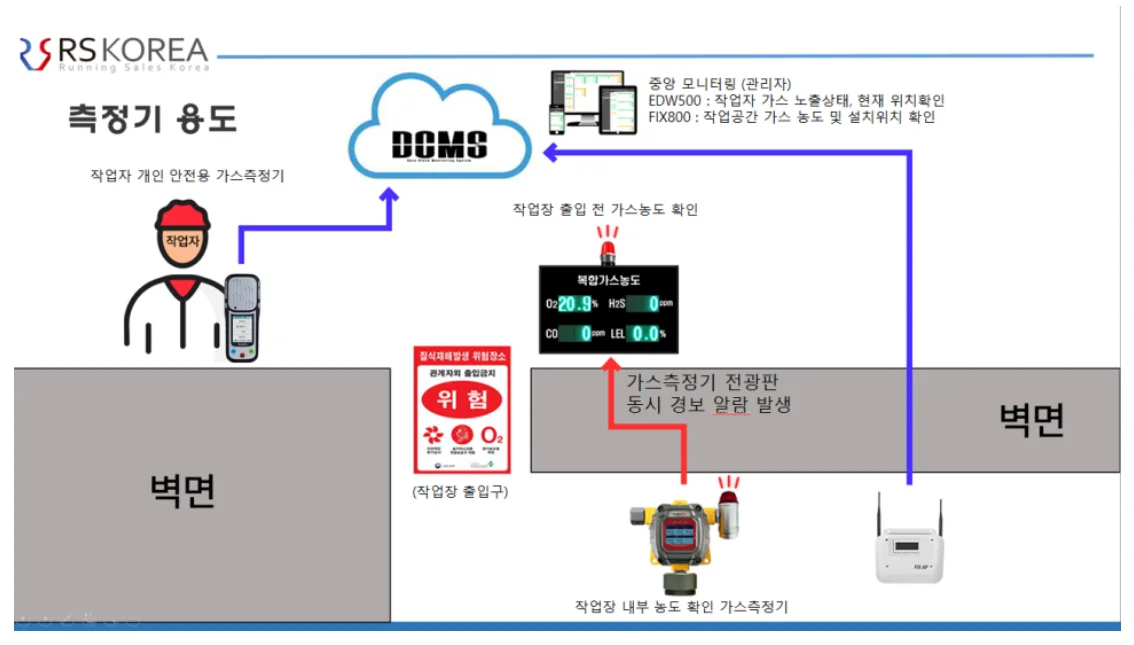
Our approach combines portable gas detectors with fixed installation-type detectors and IoT-based monitoring, so that a single system can help address both the Occupational Safety and Health Act and the Serious Accidents Punishment Act.
A typical configuration includes:
- Portable gas detector (personal safety device carried by each worker)
- Fixed installation-type gas detector (monitors concentration and raises alarms inside the work area)
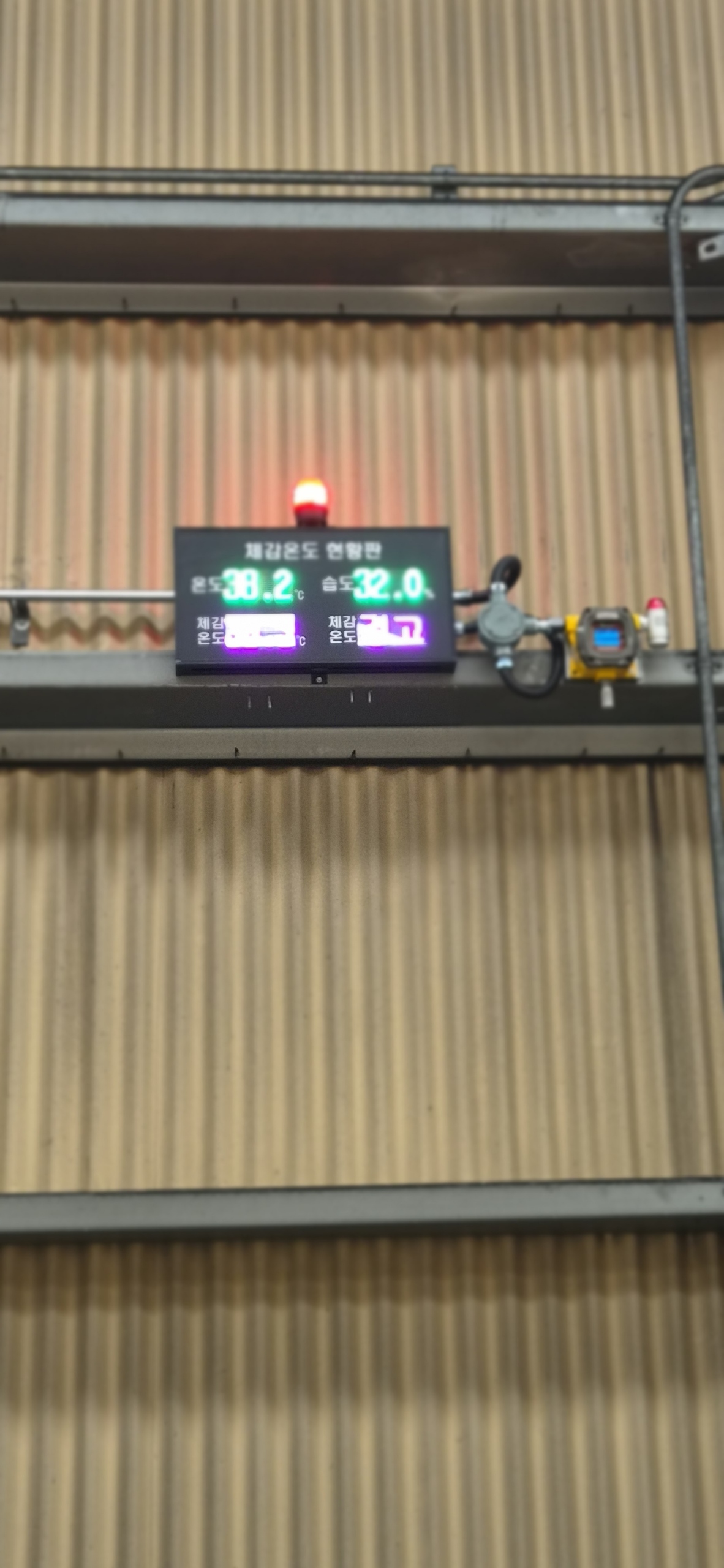
- Electronic display board (confirms whether it is safe to enter before workers step into a zone)
- FIX-AP central wireless monitoring (lets administrators check gas concentration at the workplace remotely)
This site had a number of protected areas (generator rooms) and fire suppression agent rooms, so we installed dedicated gas detection equipment for safety in each zone.
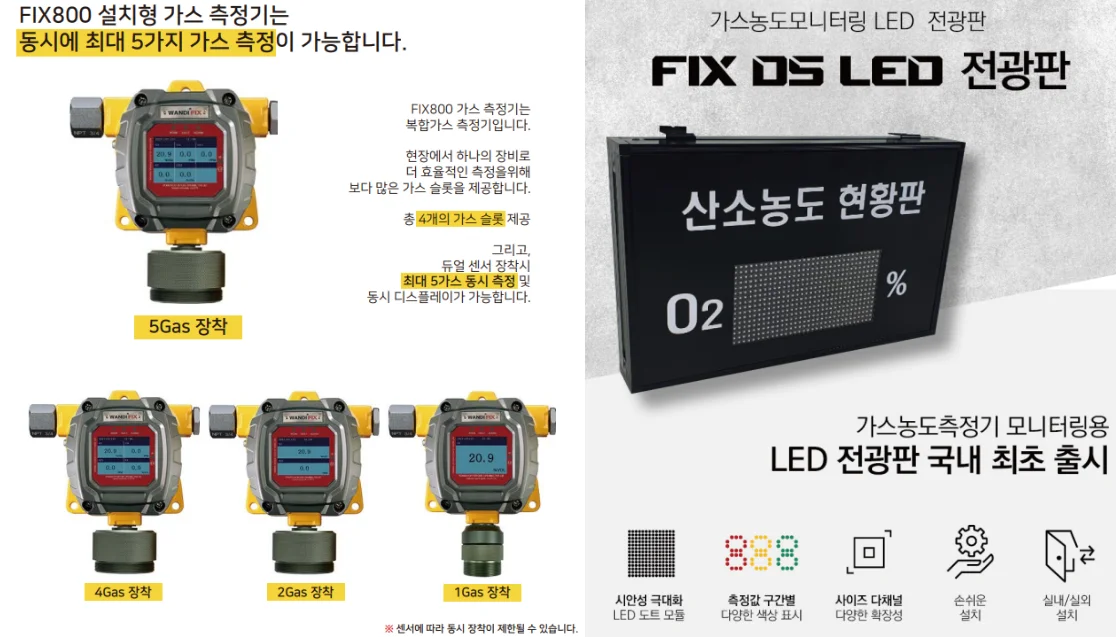
Materials used for this installation: two units of the WANDI FIX800 fixed-type multi-gas detector, for a total of five fixed gas detectors and five LED electronic display boards across the site.
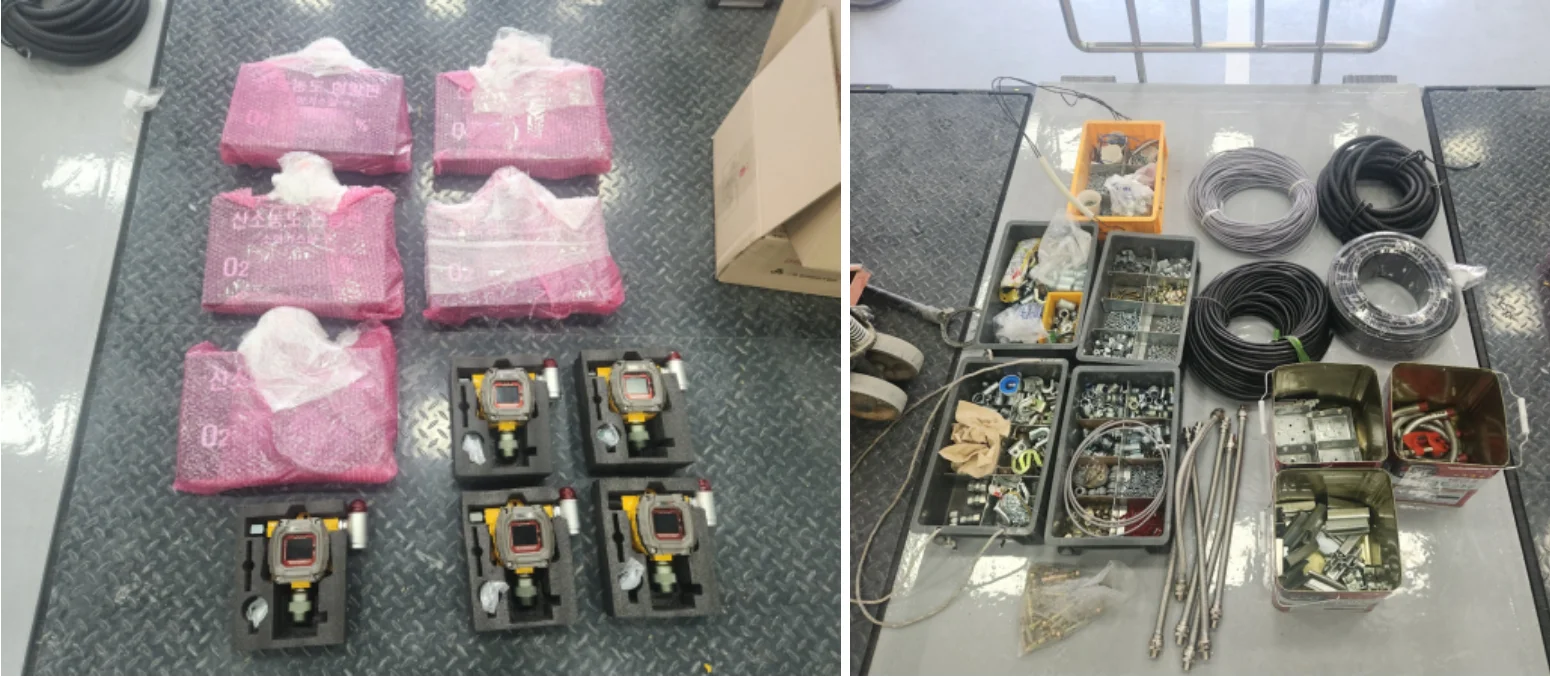
Installation was carried out using steel piping at five separate points.
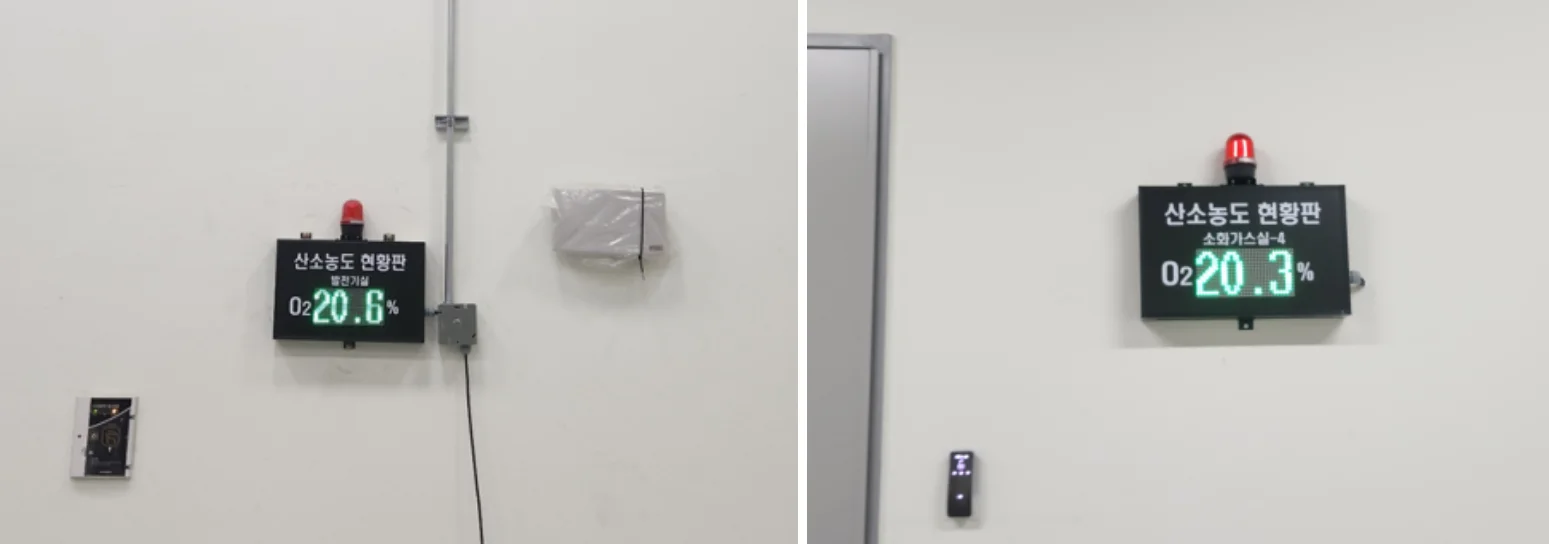
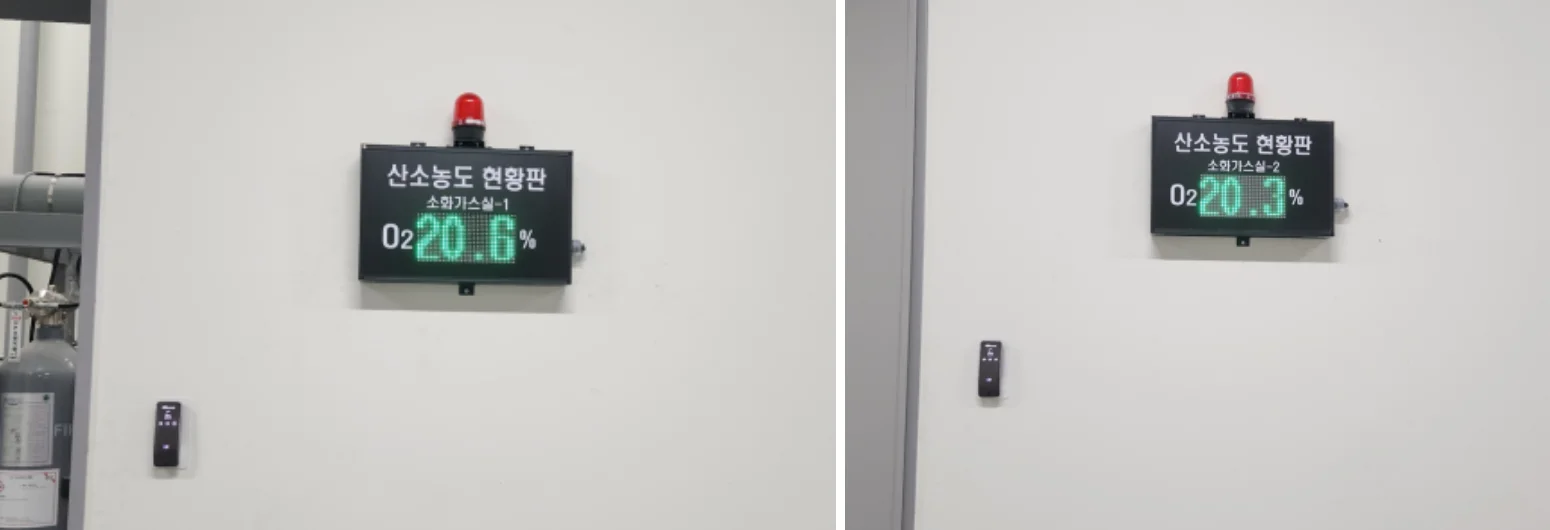
Photos after installation, showing the interior concentration readings inside the generator room and the fire suppression agent room.
Why Oxygen Concentration Monitoring Matters
In areas where internal oxygen concentration is difficult to verify, wearing a portable detector alone is not always enough. Since the device is typically worn on the upper body, a worker is exposed to the same air being measured, so a response to an alarm can come too late.
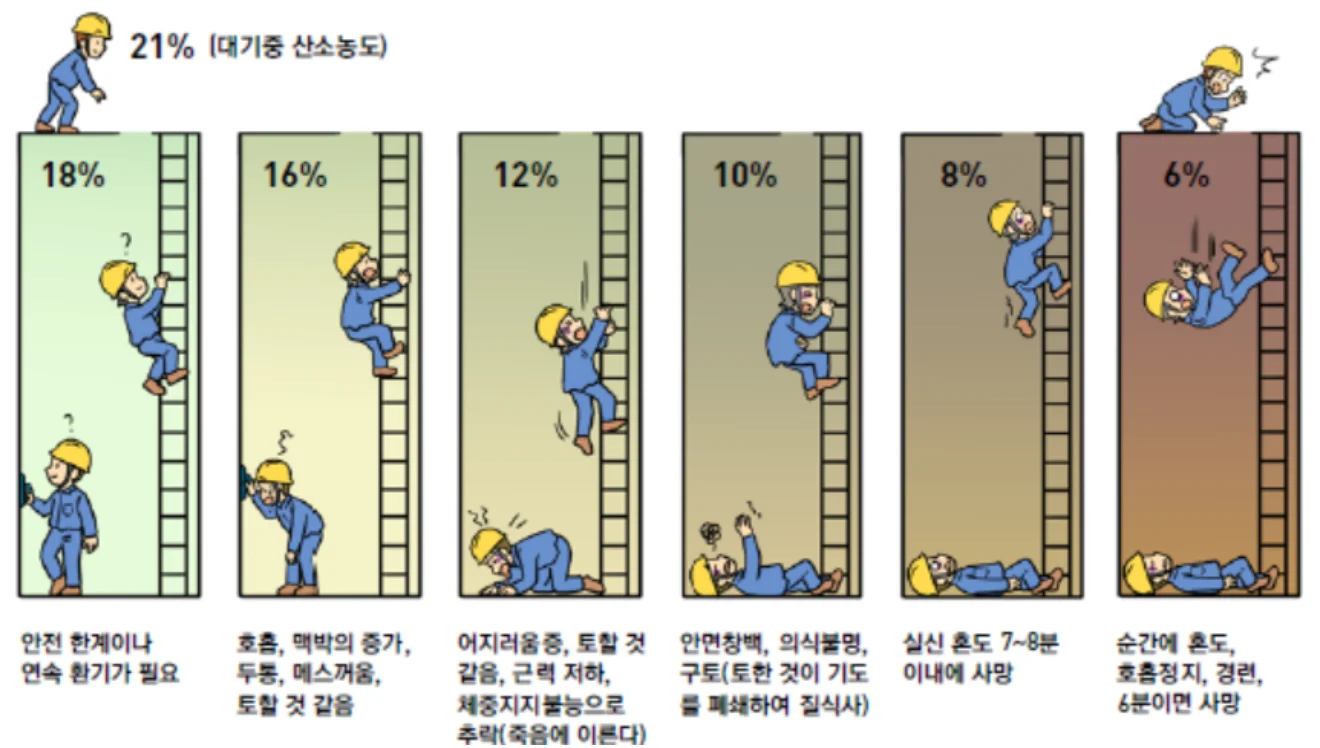
Checking the internal concentration in advance with a fixed detector and display board before entry helps determine whether it is safe to proceed, which improves both work efficiency and safety.
For sites with many separate zones, as in this project, it can be burdensome for managers to physically check every entrance. Registering a facility layout diagram makes it possible to see at a glance which zone — for example, which fire suppression agent room — has a detector installed and its current concentration reading, so managers can trigger ventilation or restrict access as needed.
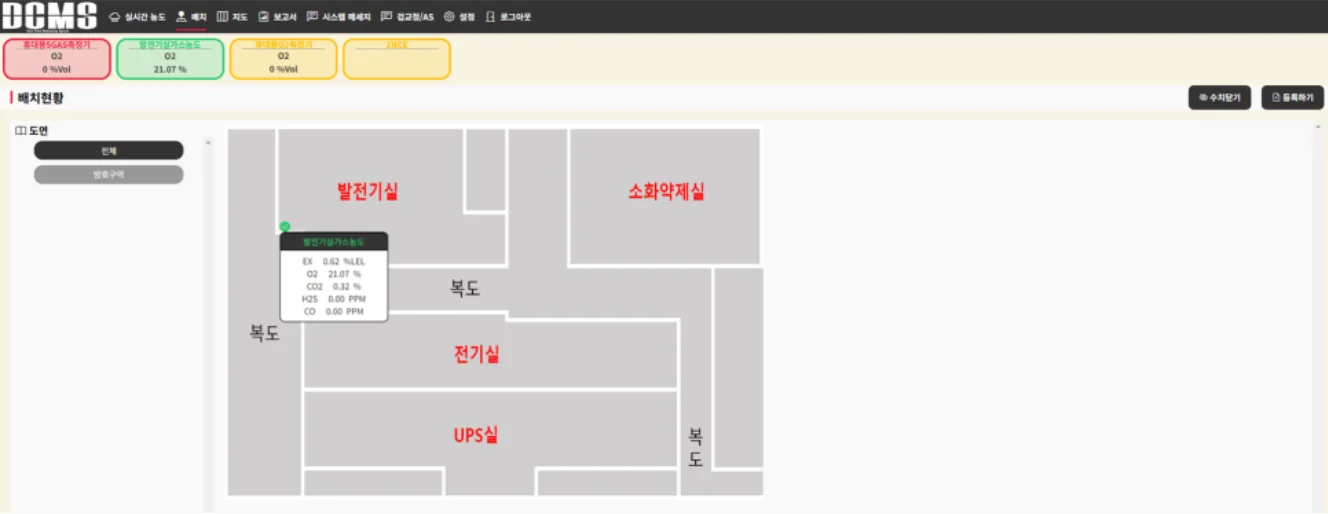
This concludes our overview of installing the FIX800 fixed-type gas detector, LED display boards, and the FIX-AP wireless central monitoring system to help support compliance with the Occupational Safety and Health Act and the Serious Accidents Punishment Act.
When it is unclear which gases may be present, or when the gases are known but the required measurement range is uncertain, choosing the right gas detector can be difficult without guidance. A thorough consultation that considers the environment, the gases involved, frequency, and concentration levels is the safest way to select a detector with the correct measurement range.
Beyond product sales, we provide in-house calibration, domestic repair service, custom manufacturing, and installation work, drawing on experience across many different measurement environments to offer tailored one-on-one solutions. Please feel free to reach out with any questions about gas detectors or other environmental measurement instruments.
Frequently Asked Questions (FAQ)
Q1. What is the WANDI FIX800 used for in this installation?
The WANDI FIX800 is a fixed-type multi-gas detector installed at set points in the generator room and fire suppression agent rooms to continuously monitor oxygen (O2), carbon monoxide (CO), and hydrogen sulfide (H2S) levels and trigger alarms when needed.
Q2. Why not rely on portable gas detectors alone?
A portable detector is worn on the worker's upper body, so if oxygen levels drop, the worker is exposed at the same moment the device detects it, meaning a response can come too late. Fixed detectors and display boards let workers check the atmosphere before entering a space.
Q3. How were the detectors installed at this site?
Five fixed gas detectors and five LED display boards were installed using steel piping at five points covering the protected (generator) area and the fire suppression agent rooms.
Q4. How does the FIX-AP central monitoring system help facility managers?
FIX-AP lets managers check real-time gas concentration readings remotely, and with a registered facility layout, confirm exactly which zone each detector covers so that ventilation or access restrictions can be applied as needed.
Q5. Does this configuration support legal compliance?
Yes. Combining portable detectors, fixed detectors, display boards, and central monitoring is intended to help support requirements under the Occupational Safety and Health Act and the Serious Accidents Punishment Act.
#WANDI #FIX800 #GasDetector #MultiGasDetector #IndustrialSafety #GasLeakDetection #OxygenMonitoring #FIXAP #WirelessMonitoring #WorkplaceSafety
![[레이먼드] 오,폐수 처리실 유해가스 모니터링](https://wandi.co.kr/storage/construction-cases/YxFUQVBZ8Unnk7pJzzfsmezr6xNe0LZvQRDmt7TL.jpg)
![[브이피이코리아] 종합병원 지하 밀폐공간 가스 측정기 설치_FIX800 & FIX-DS](https://wandi.co.kr/storage/construction-cases/gNOA28xSlEy5uU3AOxyHDRH5UfAe0TpMTgAt4Uag.jpg)

