Applied Markets
Installed Gases
Project Details
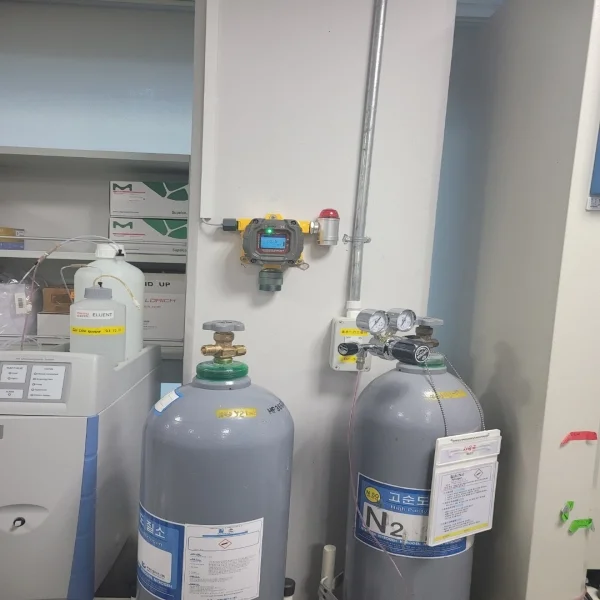
Hello. Today we're taking a look at a research and laboratory site — a change of pace from our usual wastewater treatment, septic tank, and fire-suppression agent room installations.
You might think research and laboratory settings need less gas monitoring, but that isn't the case at all. Many university and corporate research labs continue to reach out about gas detection. It's simply that labs typically purchase only one or two units, or install a standalone detector without a remote display, so the number of full installation projects is naturally smaller.
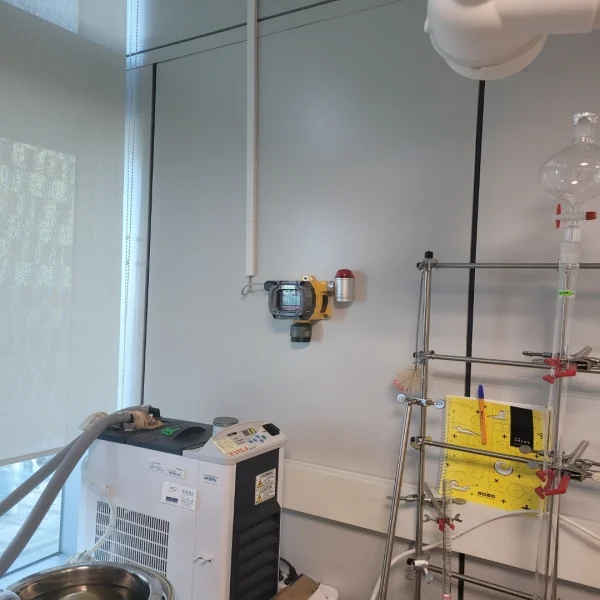
This particular site was a research institution with multiple laboratories spread across several floors. Most of the labs stored gas cylinders, and a large share of the research and experiments there relied on cylinder gases. So what type of detector should be installed where cylinder gases are in use?
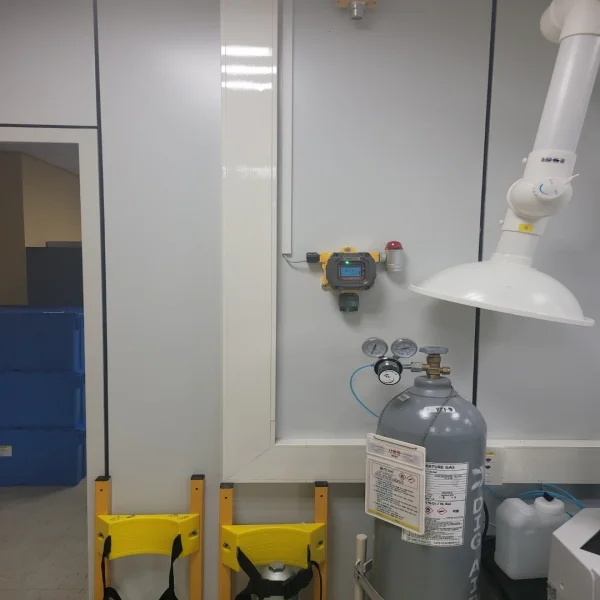
The first and most important step is a site survey to identify exactly which gases are in use. Research and experimental cylinder gases most commonly include: N2 (nitrogen), H2 (hydrogen), CO2 (carbon dioxide), and He (helium).
However, due to the nature of gas sensors, dedicated sensors for N2 and He either don't exist or aren't cost-effective. The question we're asked most often is which sensor should be used to manage safety where these gases are stored and used. Here is our answer.
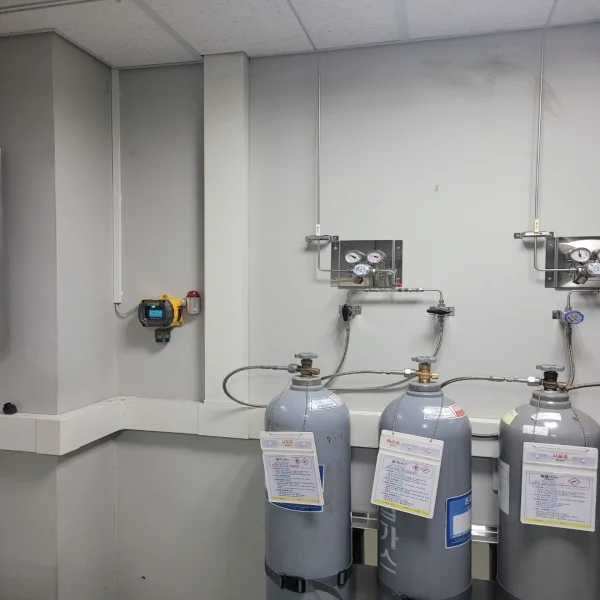
H2 (hydrogen) is the gas most commonly used in university and corporate labs. It is colorless and odorless, making leaks difficult to detect, and it poses an explosion risk above 40,000 ppm. It should be measured with an H2 sensor or an LEL (combustible gas) sensor.
N2 is used for liquid-nitrogen cooling, but since it is typically supplied at concentrations above 90%, a leak can create an oxygen-deficient, asphyxiation risk. It should be monitored with an O2 (oxygen) sensor.
He (helium) is used in heavy-ion research and various other studies. Like N2, it is typically supplied at concentrations above 90%, so a leak carries the same asphyxiation risk and should also be monitored with an O2 sensor.
CO2 is a commonly used research gas, especially for cell-culture applications. Because dedicated CO2 sensors are now widely available, it can be measured with either a CO2 sensor or an O2 sensor.
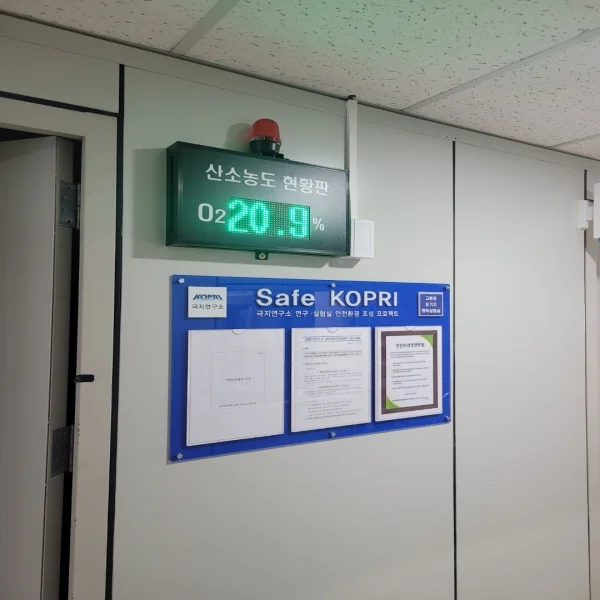
Based on this installation case, we've covered the cylinder gases most commonly used in labs and research facilities and which detectors are appropriate for each. Compared to wastewater treatment facilities or general industrial sites, lab and research facility installations tend to be simpler and quicker, which means more units can be installed per day. So regardless of how many labs or research rooms you manage, please feel free to reach out with any questions.
We provide everything from a free on-site survey and solution design through installation, backed by responsible after-sales service and support.
Thank you.

Frequently Asked Questions (FAQ)
Is a gas detector really necessary for research and laboratory settings?
Yes. Installations may be less visible than at large industrial sites since fewer units are typically installed, but many labs store and use gas cylinders, making a gas detector an important safety measure.
What cylinder gases are most commonly used in research labs?
N2 (nitrogen), H2 (hydrogen), CO2 (carbon dioxide), and He (helium) are the most common.
How are N2 (nitrogen) and He (helium) monitored?
Since dedicated sensors for N2 and He are either unavailable or not cost-effective, leaks are monitored indirectly with an O2 (oxygen) sensor, which detects the resulting oxygen deficiency.
Why is H2 (hydrogen) gas dangerous, and how is it measured?
H2 is colorless and odorless, making leaks hard to detect, and it poses an explosion risk above 40,000 ppm. It should be measured with an H2 sensor or an LEL (combustible gas) sensor.
How is CO2 (carbon dioxide) gas measured?
CO2, often used in cell-culture applications, can be measured with a dedicated CO2 sensor or an O2 sensor.
#GasDetector#LabSafety#ResearchFacility#NitrogenGas#HydrogenGas#CO2Monitoring#HeliumGas#GasCylinderSafety#OxygenMonitoring#WANDI