Applied Markets
Installed Gases
Project Details
Hello, this is RS Korea.
This case study covers the installation of fixed multi-gas detectors in the production room and training room of a cell culture research facility in Songdo, Incheon.
Purpose of Installation
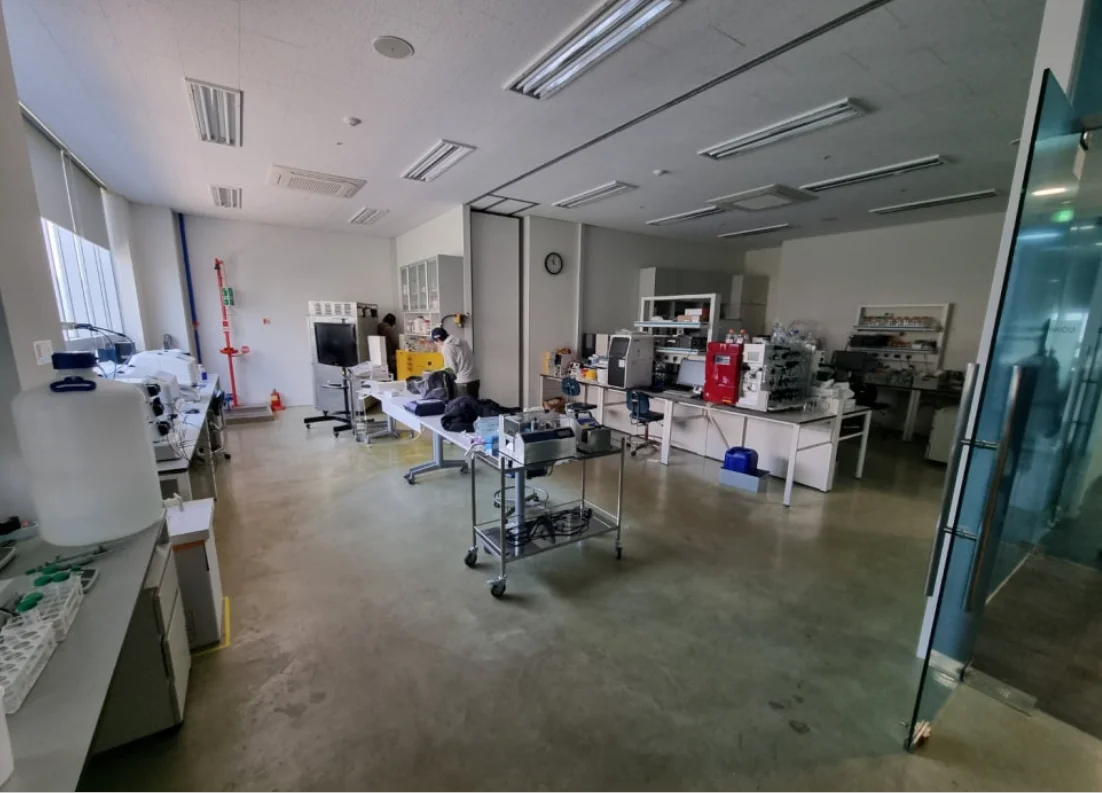
The facility uses hydrochloric acid and methanol in its experiments, development, and production processes. The customer requested this installation to measure residual gas concentrations and manage the resulting data.
Product Installed
The instrument installed is the FIX800, a fixed gas detector from WANDI, a manufacturer specializing in gas detection equipment.
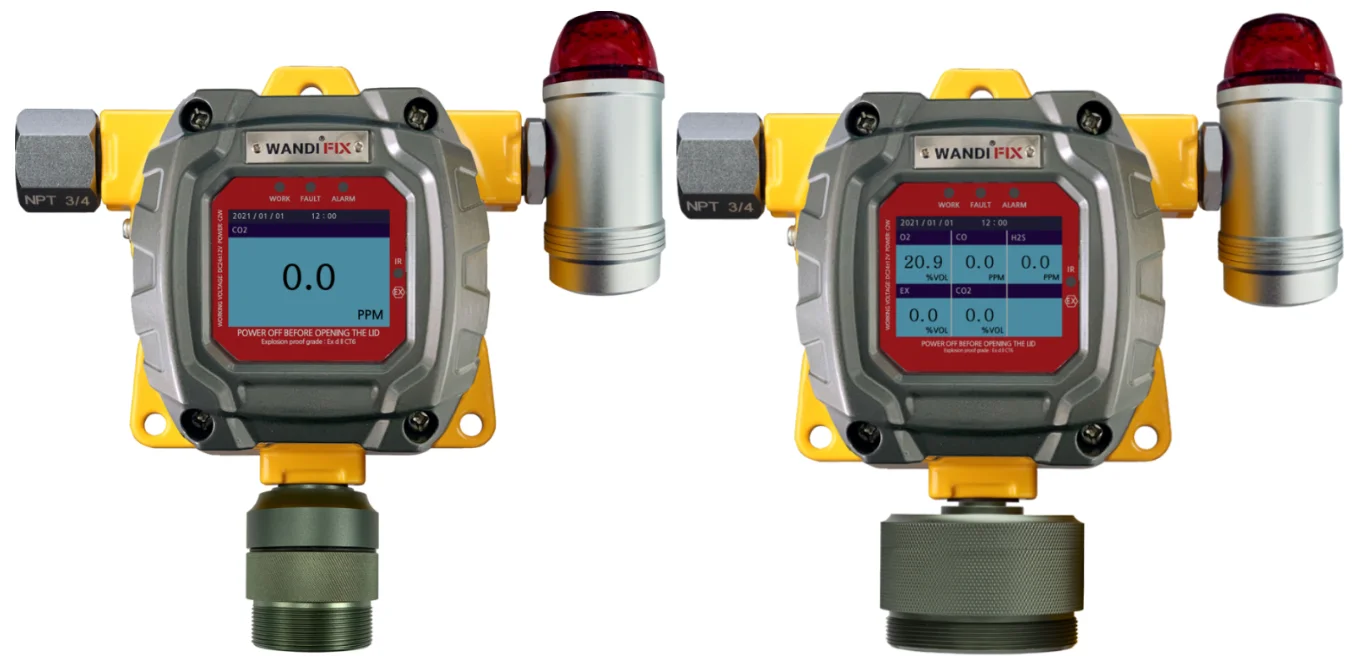
Left: single-gas configuration. Right: multi-gas configuration. A single FIX800 unit can be configured with up to 5 gas sensors.
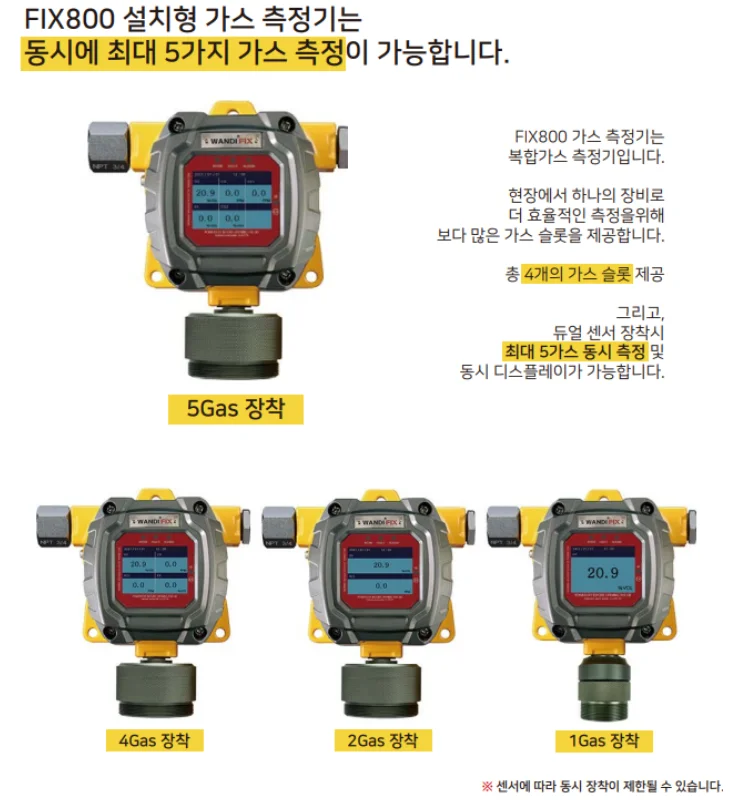
The display layout changes depending on the number of gases configured. The FIX800 supports single-gas up to 5-gas configurations (with dual-sensor slots) selected from roughly 40 available gas types, with all configured gases displayed and measured simultaneously in real time. When connected to an optional digital display board or PLC, readings can also be monitored remotely, with immediate alarm response in the event of a hazard.
Because this installation is in a space that is continuously occupied for training, development, and research, no separate digital display board was installed for this site.
Installation
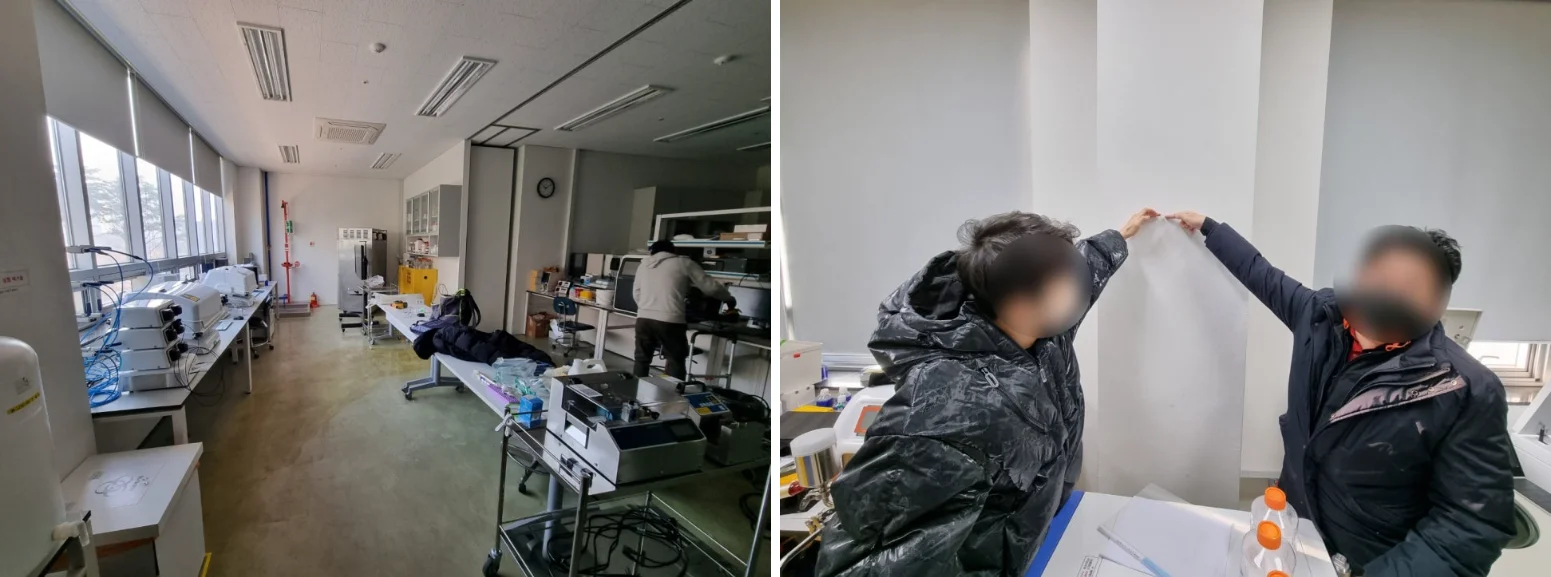
This was a newly established space, so the exact installation points had not yet been finalized in advance. The final positions were confirmed on the day of installation through an on-site meeting between the installation team and the facility manager, and work proceeded after the scope was confirmed.
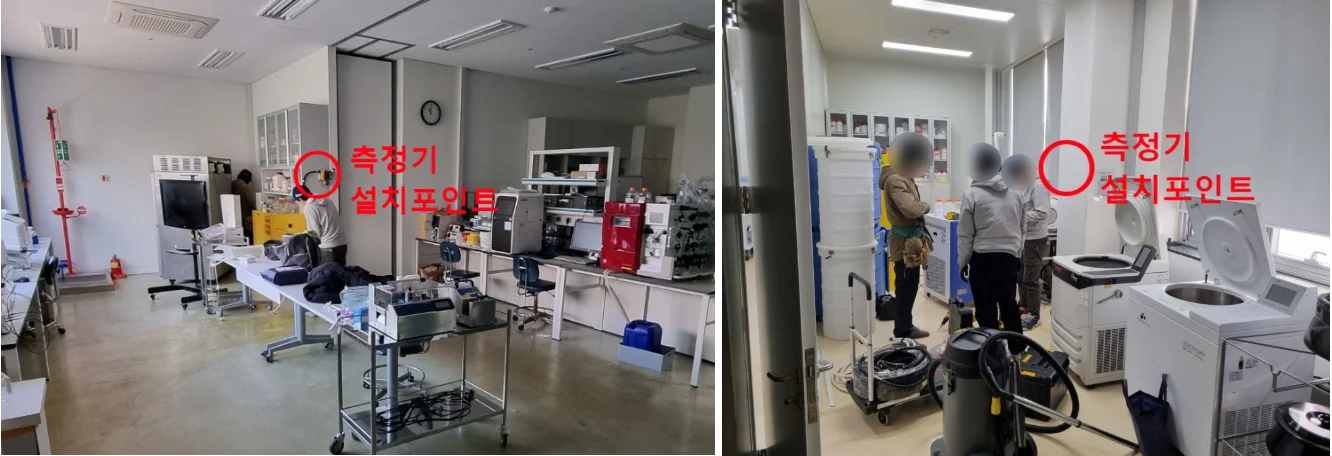
Left: installation point in the training/research room. Right: installation point in the production room.
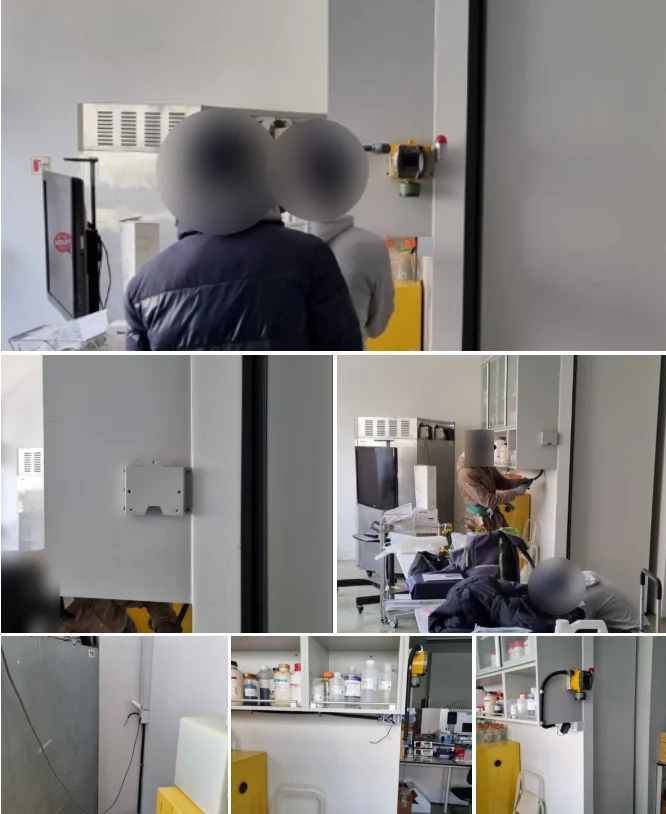
First installation point: the training/research room. A 220V outlet was available at the lower left, but since the FIX800's power cable was too short to reach it, an additional outlet was installed near the base of the detector.
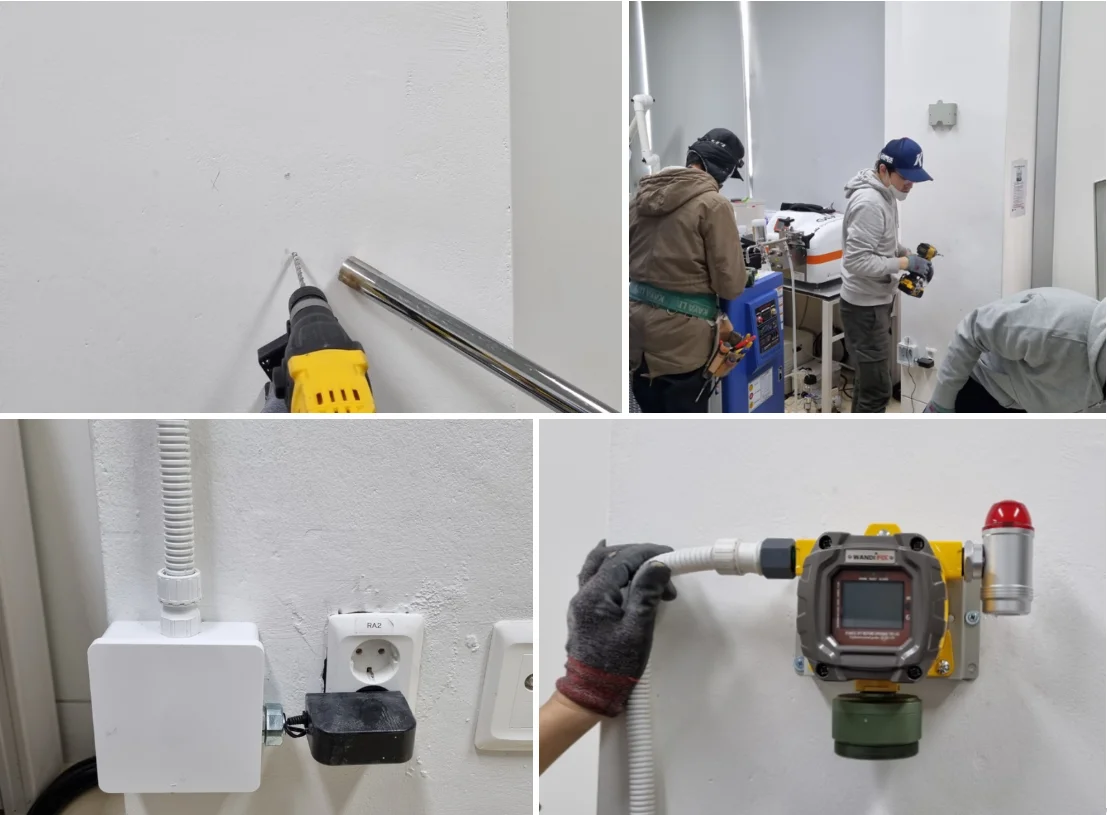
Second installation point: the production room. Drilling into the concrete wall was required to mount the detector. After securing the bracket, the detector was installed, and power was supplied conveniently from a nearby 220V outlet.
Completed Installation
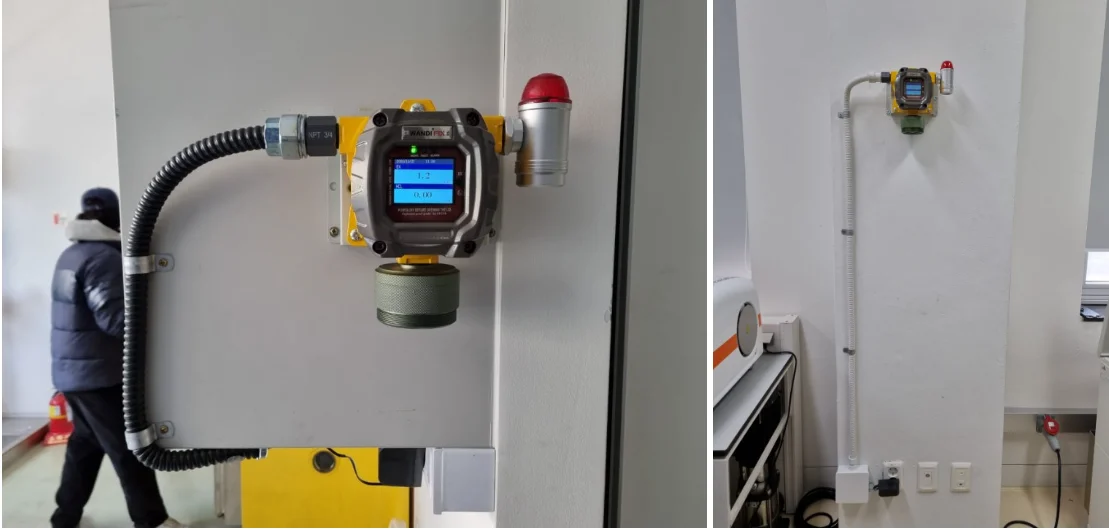
Installation was completed at both points. Power cabling is normally fully enclosed in flexible or flame-retardant conduit to minimize exposure. At the facility manager's request, however, some slack was left in the power cable and it was not fully enclosed, to make it easier to unplug the detector when needed. Requests like this are accommodated wherever possible during the pre-installation briefing with the on-site contact.
Summary
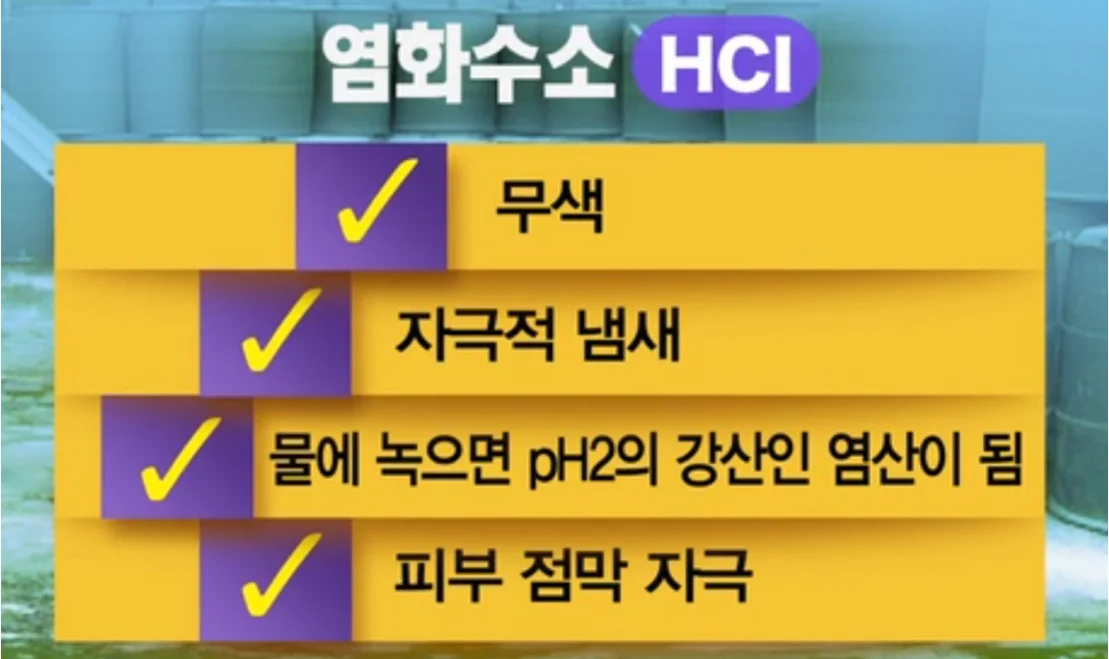
This site handles hydrochloric acid and methanol, both of which can release hazardous gases in an enclosed space, so the FIX800 was installed for safety monitoring. Hydrogen chloride, a gas commonly released from hydrochloric acid, can cause pulmonary edema and respiratory distress when inhaled in large quantities, posing a serious risk to life.
Research, training, and production are all important, but the safety of the personnel working in these spaces comes first. A hazard is not made safe simply because it cannot be seen — in fact, gases are more dangerous precisely because they are invisible. We encourage facilities to prioritize safety by having a gas detector in place in advance.
Beyond product sales, RS Korea also provides in-house calibration, domestic repair service, custom fabrication, and installation — offering end-to-end gas detection solutions tailored to each site, built on experience across a wide range of demonstration, survey, delivery, repair, and installation projects.
For inquiries about gas detector site surveys, installation, or other environmental monitoring instruments, please feel free to contact our team.
자주 묻는 질문 (FAQ)
Q1. Why was a gas detector installed in this cell culture research facility?
The facility uses hydrochloric acid and methanol in its research, development, and production processes. Because these substances can release hazardous gases in an enclosed space, a FIX800 fixed gas detector was installed to monitor residual gas concentrations and support worker safety.
Q2. What gases does the FIX800 monitor at this site?
The units at this site are configured to detect hydrogen chloride (HCl) and combustible gas (LEL), reflecting the specific hazards present in the facility's cell culture work.
Q3. How many gas sensors can a single FIX800 unit support?
A single FIX800 unit can be configured with up to 5 gas sensor channels, selected from roughly 40 available gas types, in either single-gas or multi-gas configurations.
Q4. Why wasn't a digital display board installed at this site?
Because the training and research room is continuously staffed, personnel can monitor the detector directly, so a separate remote digital display board was not required for this installation.
Q5. What health risk does hydrogen chloride (HCl) pose if inhaled?
Inhaling a large quantity of hydrogen chloride gas can cause pulmonary edema, leading to respiratory distress and posing a serious risk to life, which is why continuous gas monitoring is important in facilities that handle hydrochloric acid.
#WANDI #FIX800 #GasDetector #HydrogenChloride #CombustibleGas #CellCultureLab #LaboratorySafety #GasMonitoring #IndustrialSafety #RSKorea
![[레이먼드] 오,폐수 처리실 유해가스 모니터링](https://wandi.co.kr/storage/construction-cases/YxFUQVBZ8Unnk7pJzzfsmezr6xNe0LZvQRDmt7TL.jpg)
![[브이피이코리아] 종합병원 지하 밀폐공간 가스 측정기 설치_FIX800 & FIX-DS](https://wandi.co.kr/storage/construction-cases/gNOA28xSlEy5uU3AOxyHDRH5UfAe0TpMTgAt4Uag.jpg)

