Applied Markets
Installed Gases
Project Details
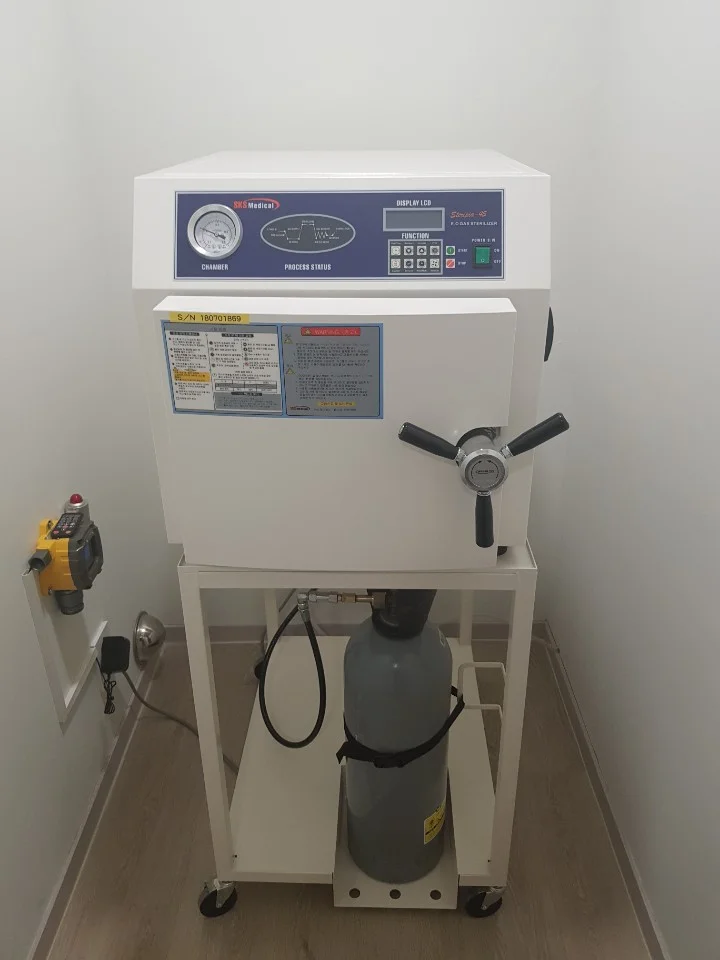
Hello. This is our team.
Today we're introducing an installation case for a gas leak detector used with sterilizers that hospitals use to disinfect endoscopy tools, surgical instruments, and similar equipment.
Most sterilizers inject a gas called EtO (ethylene oxide) — often referred to as "EO gas" — to perform sterilization.
As long as the EtO gas stays contained within the sterilizer, there is no issue, but if it leaks outside, it can have serious, potentially fatal effects on the human body.
Most sterilizers consist of an EtO (ethylene oxide) gas cylinder and the sterilizer unit itself. When the sterilizer operates, the EtO valve opens and the gas is injected into the sterilizer.
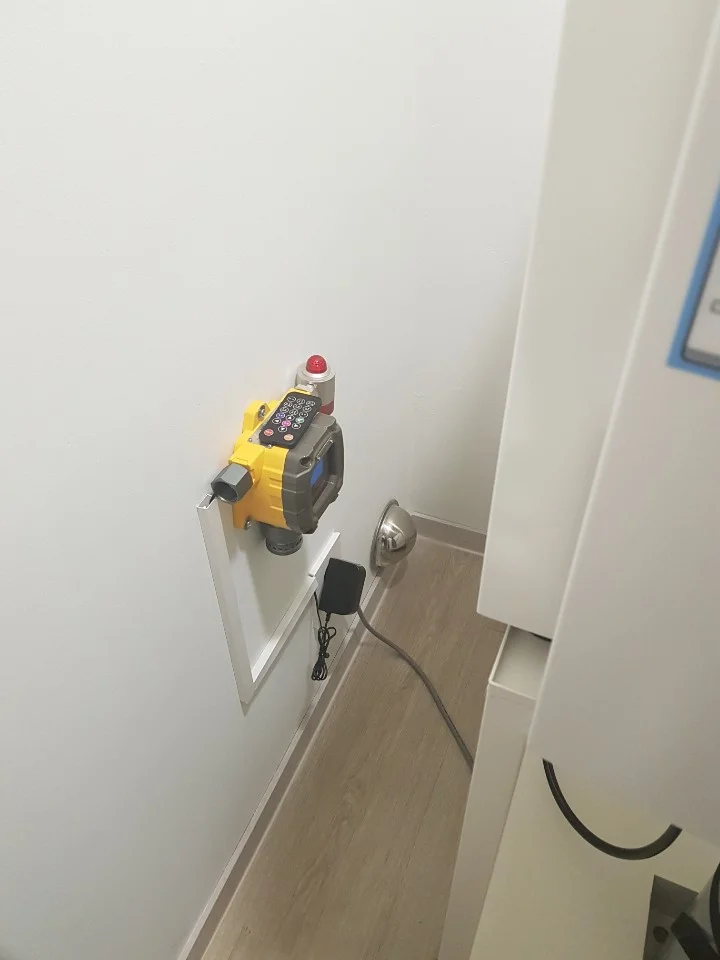
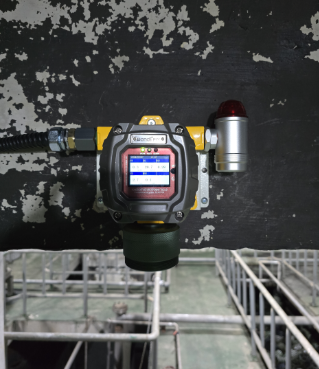
To detect any gas leaks while EtO is being injected into the sterilizer, we installed a FIX800 EtO gas detector.
This is especially important because most sterilizers are located in small, enclosed rooms or confined spaces, making leak-gas management essential.
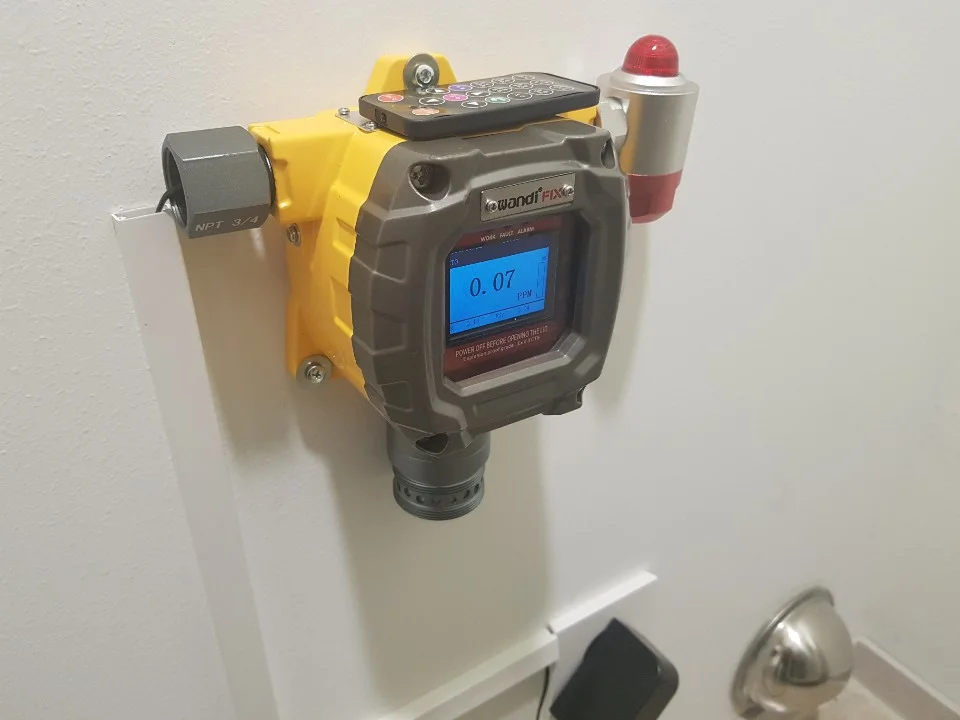
The detector measures leaking ethylene oxide in real time and displays the concentration.
If the gas concentration exceeds the configured threshold, the warning light triggers both a sound and light alarm.
That concludes this installation case for an EtO gas leak detector used with a hospital sterilizer. Thank you.
Frequently Asked Questions (FAQ)
Q1. What is EtO gas?
EtO refers to ethylene oxide, a gas injected into hospital sterilizers used to disinfect endoscopy tools, surgical instruments, and similar equipment.
Q2. Why is EtO leak detection important?
As long as EtO stays contained within the sterilizer, there is no issue, but if it leaks to the outside, it can have serious effects on the human body, making leak detection and management essential.
Q3. What detector was installed?
A FIX800 EtO gas detector was installed to monitor for leaks while EtO gas is being injected into the sterilizer.
Q4. How does the detector work?
It measures leaking ethylene oxide concentration in real time and displays the reading. If the concentration exceeds the configured threshold, a warning light triggers both a sound and light alarm.
Q5. Why does the sterilizer's location matter?
Most sterilizers are installed in small, enclosed rooms or confined spaces, so if a leak occurs, concentrations can rise quickly — making leak-gas management essential.
#WANDI #FIX800 #EthyleneOxide #EtODetector #HospitalSterilizer #GasLeakDetector #ConfinedSpaceSafety #MedicalFacilitySafety #GasMonitoring #IndustrialSafety
![설치] 원주 국토5호선 신림~판부간 터널공사 밀폐공간 안전용 가스측정기 FIX800 4GAS O2 CO CO2 LEL 설치!](https://wandi.co.kr/storage/construction-cases/Ekn7PulFgplHqjZgJUfOsevvzH0Kawa1G0h9NlH8.png)
![설치] 약품 폐수탱크 수위계와 인디게이터 설치 그리고 무선 모니터링까지 MP + SUP1100 + FIX-AP](https://wandi.co.kr/storage/construction-cases/UjHcHl5kWktnCXlnvMIgk6eQhh7pqwuf3u65iKLO.png)