Applied Markets
Installed Gases
Project Details
Hello, and thank you for reading.
This site was a confined space at a wastewater treatment plant. To prevent asphyxiation accidents among workers, a gas detector and alarm device were installed to trigger an alarm whenever hazardous gas is detected.

Gas detector installation location: selected based on worker movement patterns within the underground wastewater treatment area.
Alarm device: installed near the basement entrance.
Gas display board: installed at the first-floor entrance.
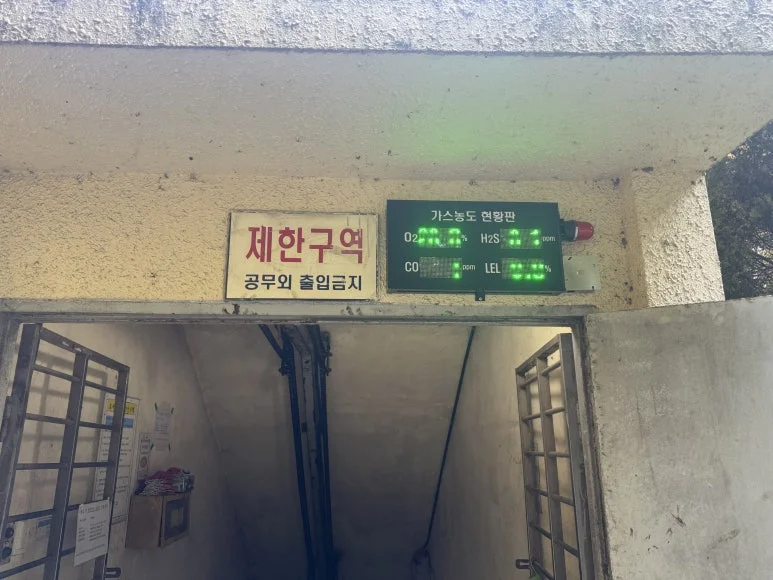
Before entering the confined space of the underground wastewater treatment area, workers can check the readings from the internal gas detector at a glance, thanks to the FIX-DS gas display board installed on the first floor.
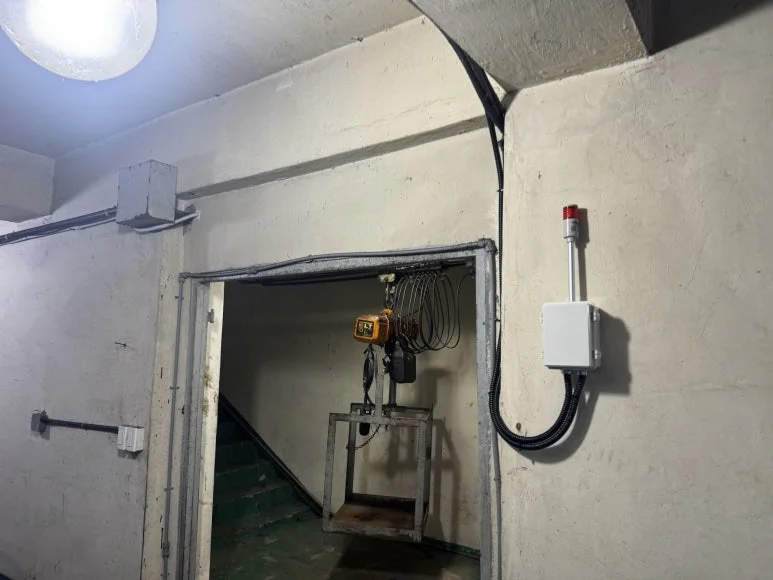
Because the noise from the wastewater treatment equipment can make it difficult to hear an audible alarm, an additional gas leak alarm device with a warning light was installed near the basement entrance.
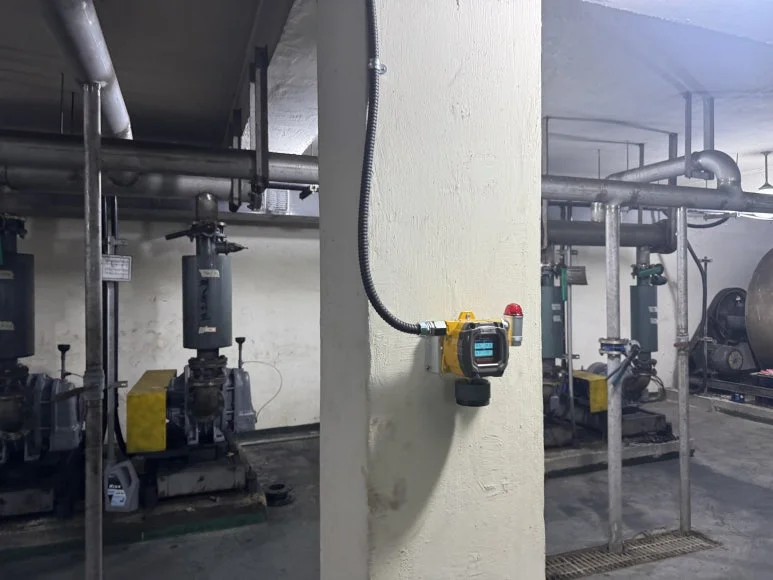
Gas detector: FIX800 fixed-type multi-gas detector
Measured parameters: oxygen (O2), hydrogen sulfide (H2S), carbon monoxide (CO), and combustible gas
Alarm type: audible and visual alarm
Communication protocol: RS-485 digital

After completing installation of the gas detector and display board, a trial run was carried out using standard calibration gas, and the facility manager was briefed on equipment operation and precautions.
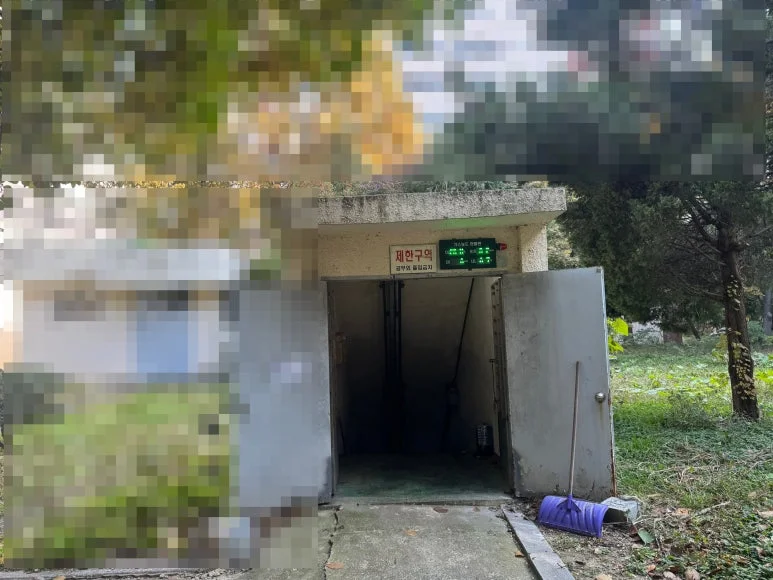
Confined-space asphyxiation accidents do not occur often, but unlike other types of safety incidents, they carry an especially high risk of fatality once they do occur, so constant caution is essential.
Stay safe on site.

Frequently Asked Questions (FAQ)
Q1. Why was a gas detector installed at this wastewater treatment plant?
The underground wastewater treatment area is a confined space, and hazardous gases can accumulate there. The detector and alarm device were installed to prevent asphyxiation accidents among workers by alerting them whenever hazardous gas is detected.
Q2. What gases does the detector measure?
The FIX800 fixed-type multi-gas detector measures oxygen (O2), hydrogen sulfide (H2S), carbon monoxide (CO), and combustible gas.
Q3. Why was an additional alarm device installed near the entrance?
Because ambient noise from the wastewater treatment equipment can make an audible alarm difficult to hear, an additional alarm device with a warning light was installed near the basement entrance to ensure workers notice a gas leak even in a noisy environment.
Q4. How can workers check the gas readings before entering the confined space?
A FIX-DS gas display board was installed at the first-floor entrance so that workers can check the internal gas detector readings at a glance before entering the underground confined space.
Q5. What communication protocol does the system use?
The gas detector and display board communicate via the RS-485 digital protocol, and both audible and visual alarms are provided.
#WANDI#FIX800#GasDetector#WastewaterTreatment#ConfinedSpaceSafety#H2SDetector#OxygenMonitoring#GasAlarmSystem#FIXDS#OccupationalSafety
![[레이먼드] 오,폐수 처리실 유해가스 모니터링](https://wandi.co.kr/storage/construction-cases/YxFUQVBZ8Unnk7pJzzfsmezr6xNe0LZvQRDmt7TL.jpg)
![[브이피이코리아] 종합병원 지하 밀폐공간 가스 측정기 설치_FIX800 & FIX-DS](https://wandi.co.kr/storage/construction-cases/gNOA28xSlEy5uU3AOxyHDRH5UfAe0TpMTgAt4Uag.jpg)


