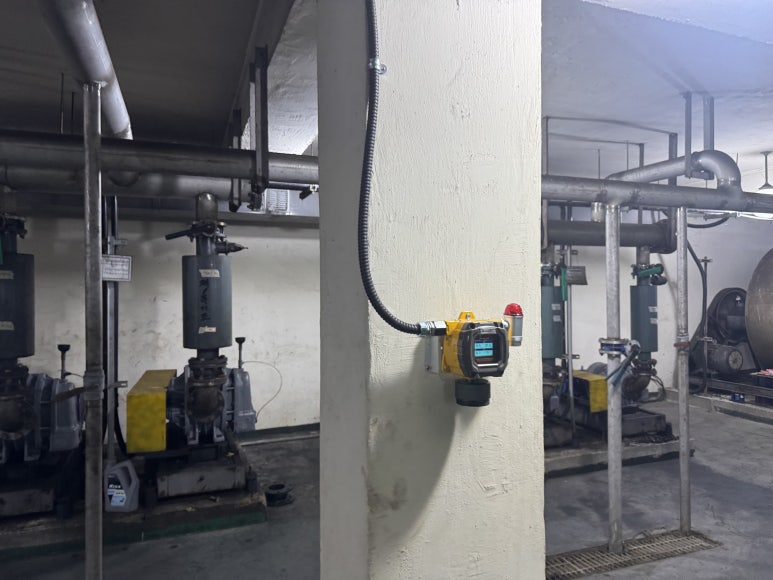
Project Details
Today's post covers a project from April to June 2021 at a production plant in Siheung, Gyeonggi-do. For confidentiality, we won't specify exactly what the client manufactures, but the key detail is this: production and R&D take place inside a cleanroom.
Cleanrooms are managed to strict standards for particulates, temperature, humidity, and differential pressure between rooms. So why was a gas detector needed in an environment like this?
The production process required periodic chemical cleaning, and if residual gas from those cleaning agents (VOC-based) remained in the room, it could compromise both worker safety and product quality by settling on materials. That was the reason for installing a detector — in short, indoor air quality monitoring inside a cleanroom. While fixed-type detectors are sometimes chosen for cleanrooms with gas lines (to guard against explosion risk), this was the first case of this kind for VOC monitoring specifically.
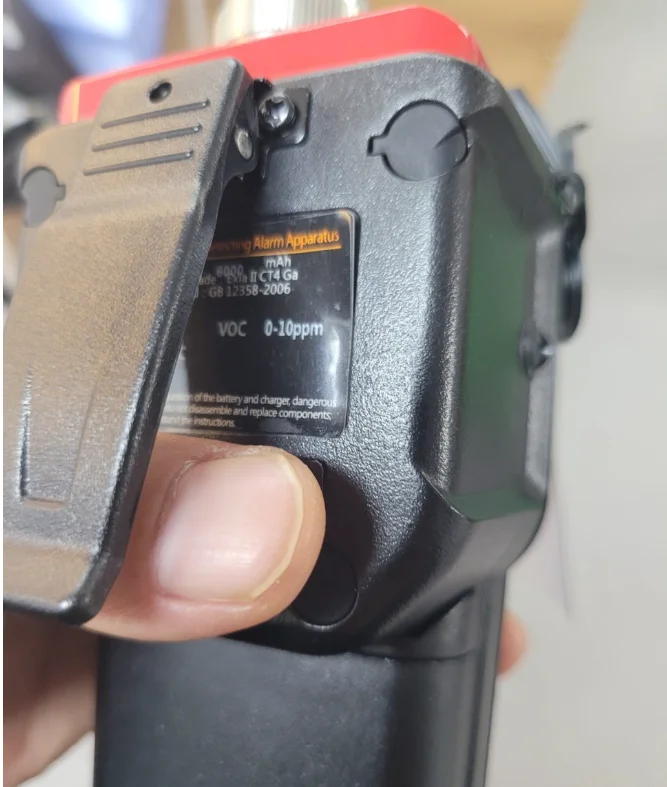
Indoor air quality measurement is usually done at a precise 0–2 ppm (2,000 ppb) range, but since exact information about the cleaning chemical wasn't available, we brought a slightly wider-range 0–10 ppm demo unit to the site as a precaution.
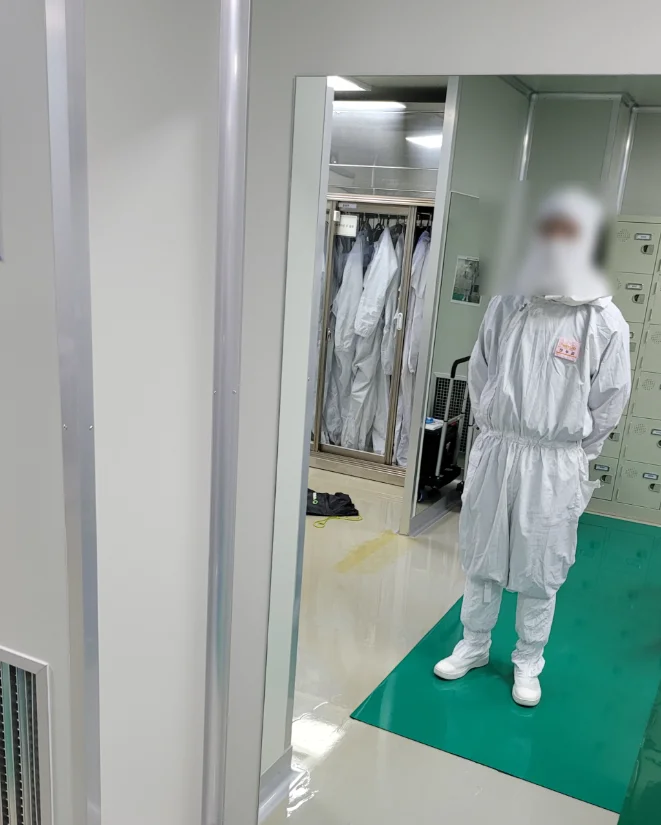
Meetings inside a cleanroom come with their own challenges — the hardest part is putting on the cleanroom suit. Seeing everyone dressed the same way for the site visit made it feel a bit like stepping into a dim sum restaurant.

We visited several points where VOC emissions were expected, ran a demo, and completed the meeting successfully. Given that only one room needed measurement, that real-time data logging and alarms were required, and that concentrations could exceed 2 ppm when disinfectant was used heavily, we decided on a configuration combining a fixed-type FIX800 VOC detector (10 ppm range) with an R9600 data logger for data management.
FIX800 product video: https://youtu.be/2qCmopTkHps
R9600 product video: https://youtu.be/fNz-ReE_P7w
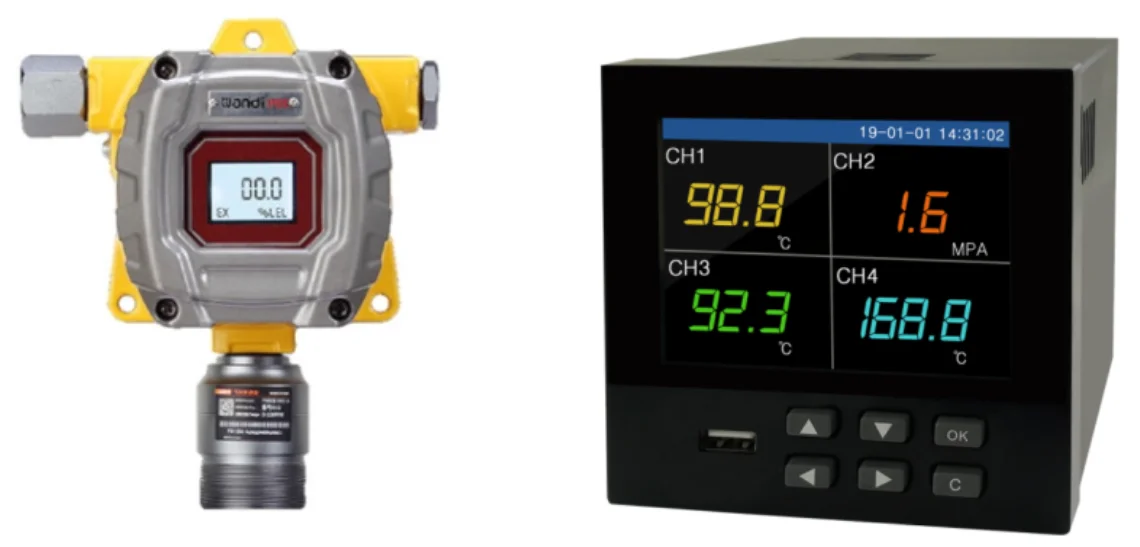
Note: the photo shows the representative image from the manual; the actual unit's display differs slightly in appearance.
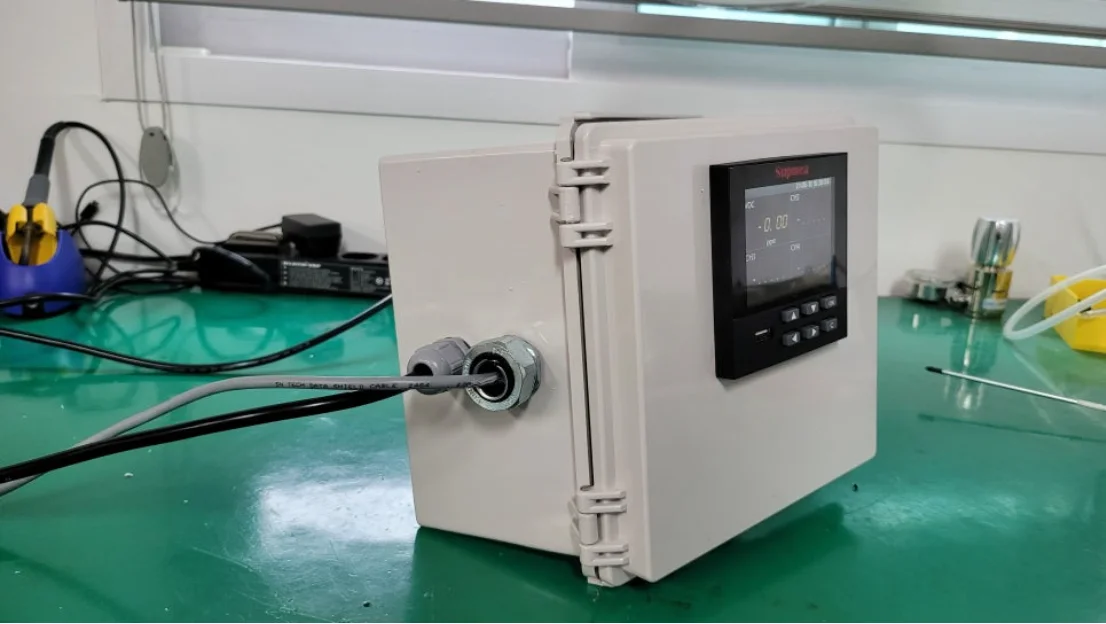
Since we couldn't cut a large opening into the cleanroom wall — where temperature, humidity, and pressure are carefully controlled — the data logger was configured in a compact enclosure.

Although only a single device was connected for this installation, we added a terminal block in case of future channel expansion.
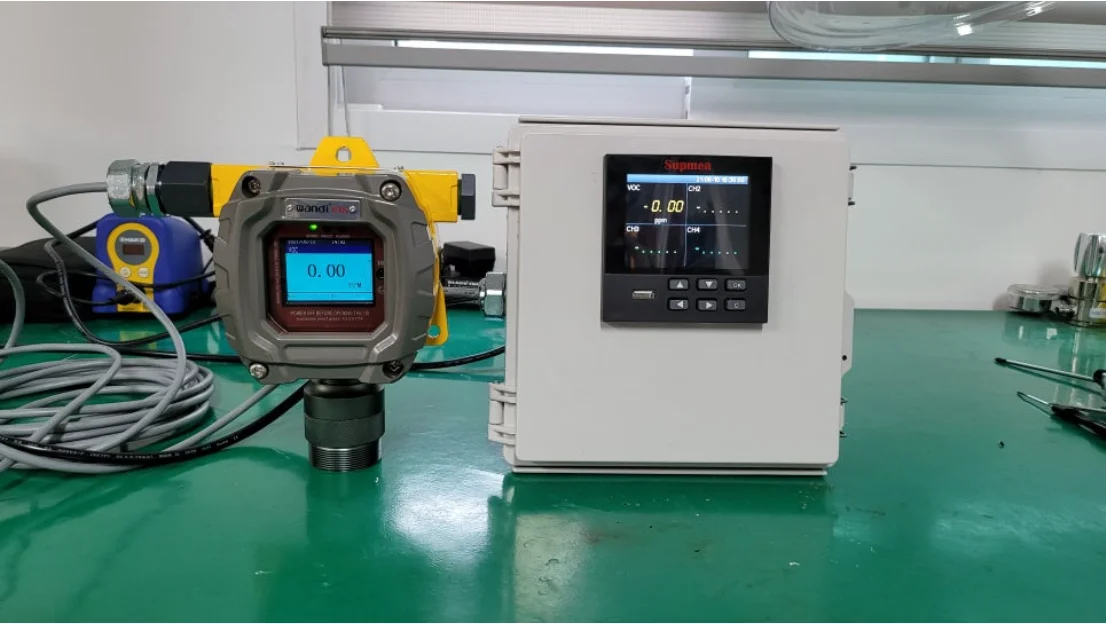
We checked the transmission signal from the device and confirmed reception at the data logger. Then came installation day.
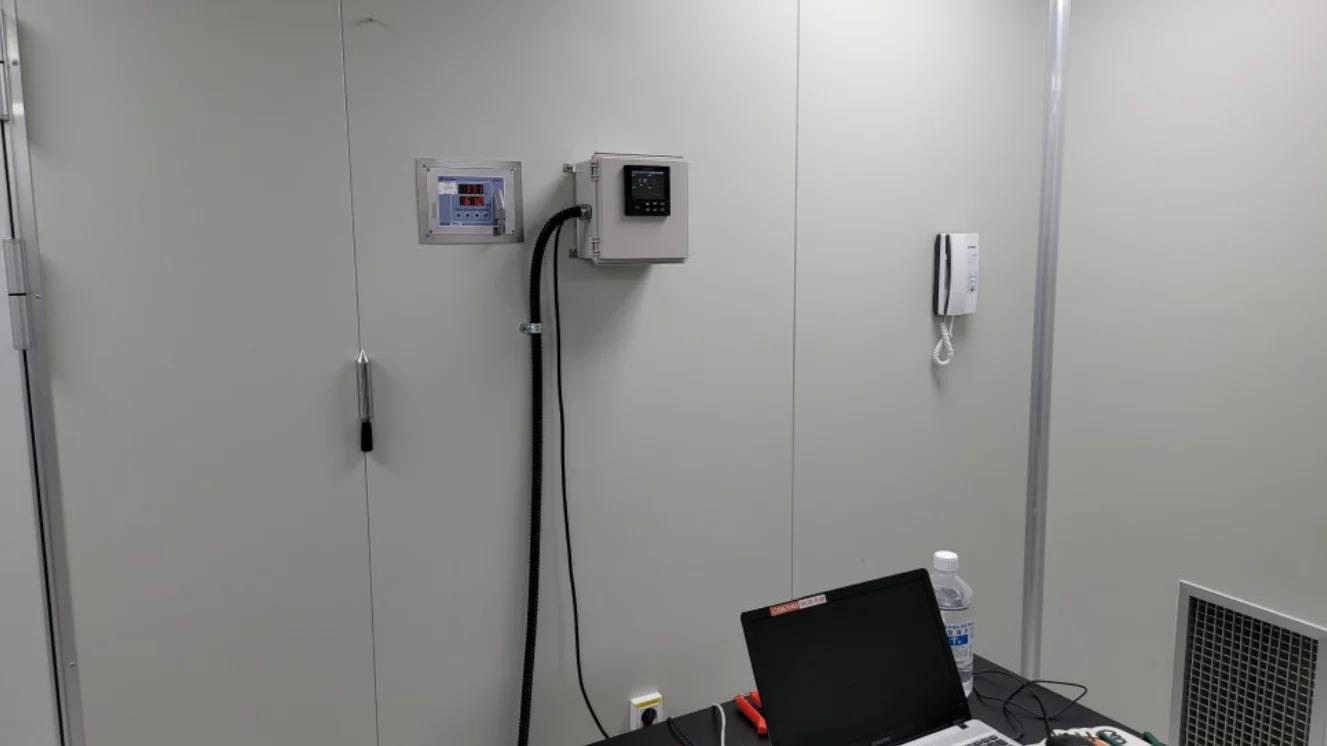
For easier data management, the data logger was installed near the temperature/humidity transmitter in the office area, with cabling run out from there.
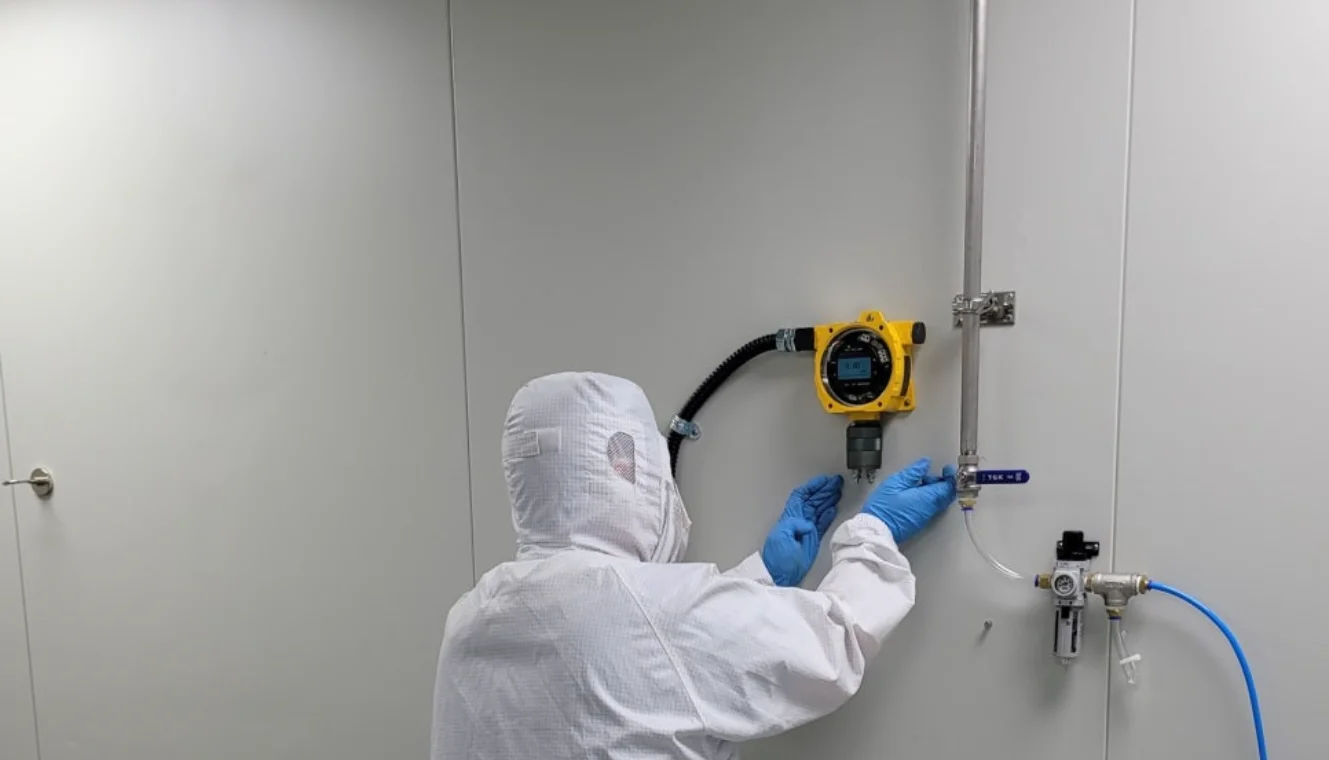
The gas detector itself was installed at the point requested by the client.
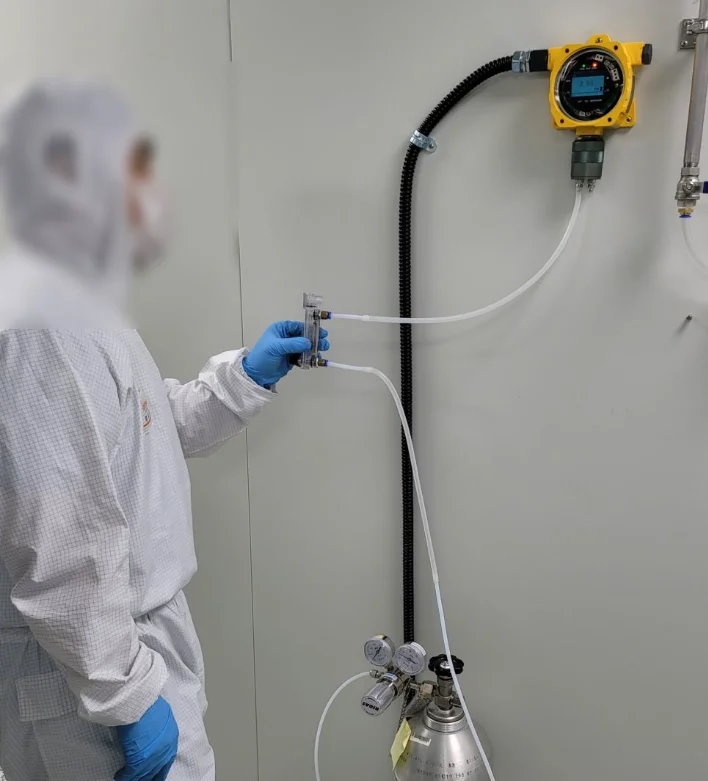
Although the unit ships already calibrated, we performed an on-site calibration check as a matter of standard practice — and, as expected, the results were accurate.
That would have been a tidy ending to the installation report — but then we got a follow-up call. As covered in an earlier post, a callback after installation usually means one thing.
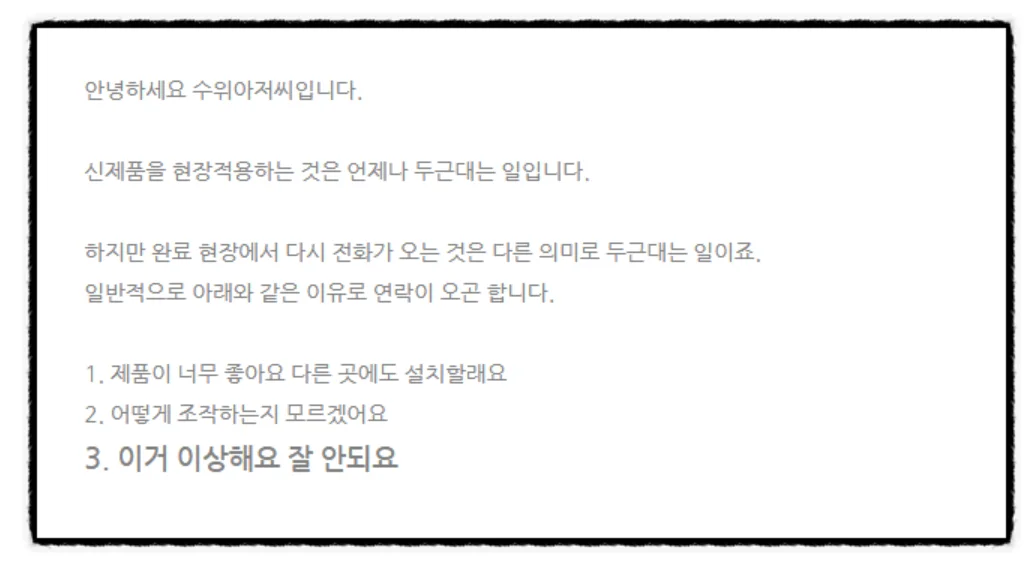
(Excerpt from a post dated February 18, 2021.) We went back to the site. The issue: even after several thorough cleanings, no VOC reading could be observed. Two possible causes came to mind: (1) the disinfectant was being used in such small amounts that it diluted below detectable levels almost immediately, or (2) the FIX800 was picking up air that had already been drawn away by the HVAC system before it could react with the VOC gas.
To test both hypotheses, we revisited the site. First, we sprayed disinfectant near the unit and tested its responsiveness — the detector responded correctly, confirming it was working as intended. However, readings dropped back to zero quickly after spraying. Repeating the spray test with a portable pump-type demo unit at a point slightly away from the installed detector produced a normal reading. This confirmed that the cleanroom's slightly negative-pressure environment was affecting the fixed unit — in other words, hypothesis two was correct.
The solution was to add an optional pump to the detector. This required some customization, so we prepared a revised quote and began the modification.
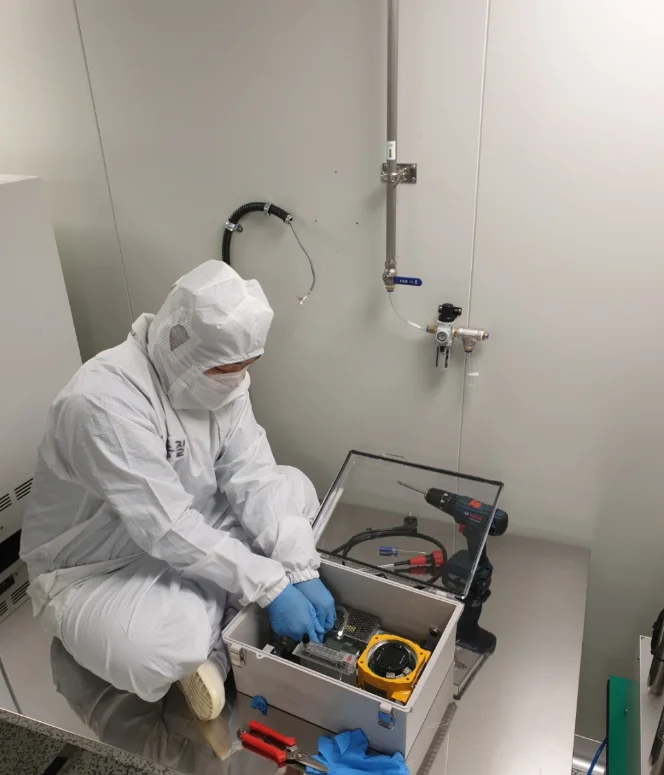
We returned to the site with the power supply and pump flow controller housed in a casing.

The detector performs best under the proper environment and flow rate. We adjusted the settings to match the modified configuration, ensuring the diffusion-type sensor wouldn't be overwhelmed by a sudden change in airflow.
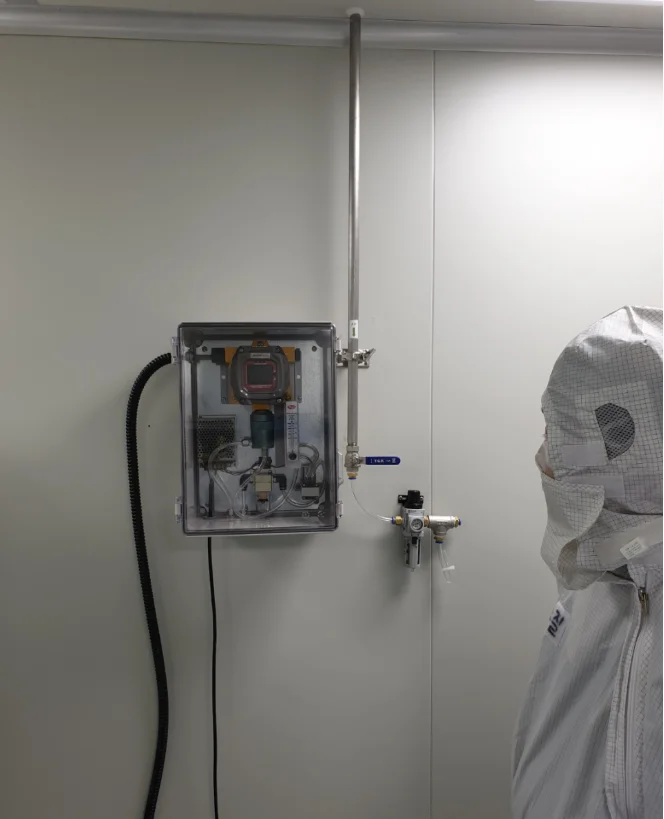
With installation complete, the unit was ready to be powered on for good.
To wrap up an unusually long installation report, here's the summary:
1. If you need indoor air quality monitoring inside a cleanroom,
2. use a fixed-type gas detector such as the FIX800.
3–4. It performs reliably.
5. In a negative-pressure environment, an additional pump is required.
Frequently Asked Questions (FAQ)
Why is VOC monitoring needed inside a cleanroom?
Periodic chemical cleaning inside cleanrooms can leave residual VOC (volatile organic compound) gas in the room. If undetected, this can affect worker safety and cause product defects by settling on materials, which is why continuous VOC monitoring is required.
Why was a 0–10 ppm range detector used instead of the more common 0–2 ppm range?
Because exact information about the cleaning chemical's composition wasn't available in advance, a slightly wider 0–10 ppm range was selected as a precaution to ensure the detector would stay within its measurement range.
What caused the initial "no reading" issue after installation?
Testing identified that the cleanroom's negative-pressure environment was drawing air (and the VOC gas) into the HVAC system before it could reach the fixed detector's diffusion-type sensor, preventing a reliable reading.
How was the no-reading issue resolved?
An optional sampling pump was added to the FIX800 unit, along with a power supply and flow controller, to actively draw air to the sensor rather than relying on passive diffusion — which resolved the issue under the negative-pressure conditions.
Can the data logger be expanded later?
Yes. Although only one channel was connected for this installation, a terminal block was added during setup to accommodate future channel expansion.
#Cleanroom #NegativePressureRoom #IndoorAirQuality #VOC #VolatileOrganicCompounds #FixedGasDetector #DataLogger #FIX800 #WANDI #GasDetectorInstallation
![[레이먼드] 오,폐수 처리실 유해가스 모니터링](https://wandi.co.kr/storage/construction-cases/YxFUQVBZ8Unnk7pJzzfsmezr6xNe0LZvQRDmt7TL.jpg)
![[브이피이코리아] 종합병원 지하 밀폐공간 가스 측정기 설치_FIX800 & FIX-DS](https://wandi.co.kr/storage/construction-cases/gNOA28xSlEy5uU3AOxyHDRH5UfAe0TpMTgAt4Uag.jpg)