Applied Markets
Installed Gases
Project Details
Hello.
Today's case is a gas detector installation at a sewage/wastewater treatment plant.
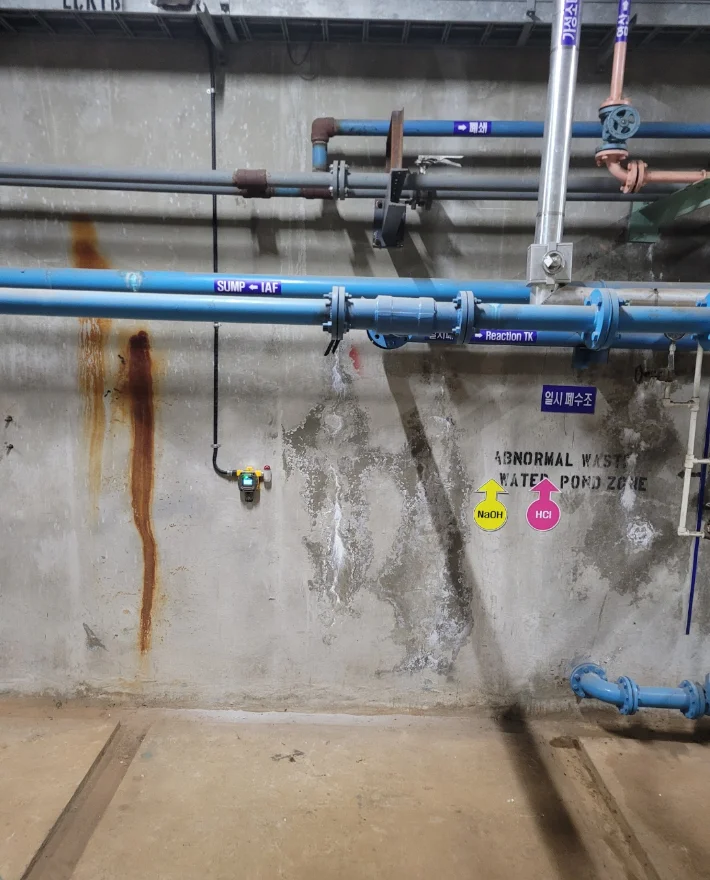
The most common question we get from wastewater treatment facilities is: which gas sensor should be chosen?
If the site has budget flexibility, we recommend installing all the gas components that can occur in wastewater — O2, CH4, H2S, and NH3. For a more economical setup, we recommend installing just a single O2 (oxygen) sensor.
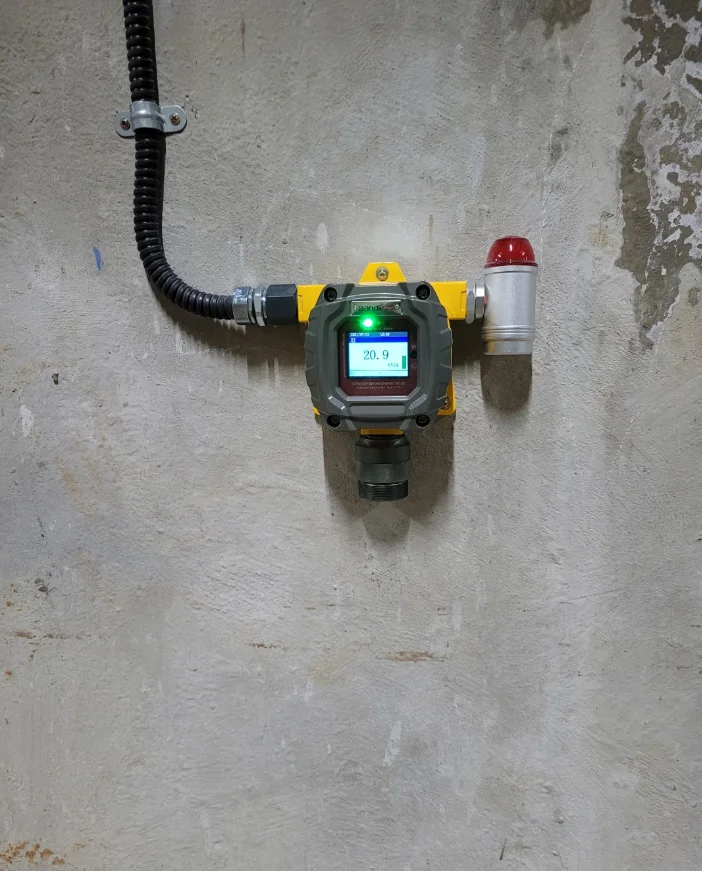
This is because, regardless of which gas leaks, oxygen levels drop when any gas leaks at a high concentration.
When only an oxygen detector is installed, small leaks of methane or hydrogen sulfide can't be directly detected, but a high-concentration leak can still be recognized through the drop in oxygen level, which keeps workers safe.
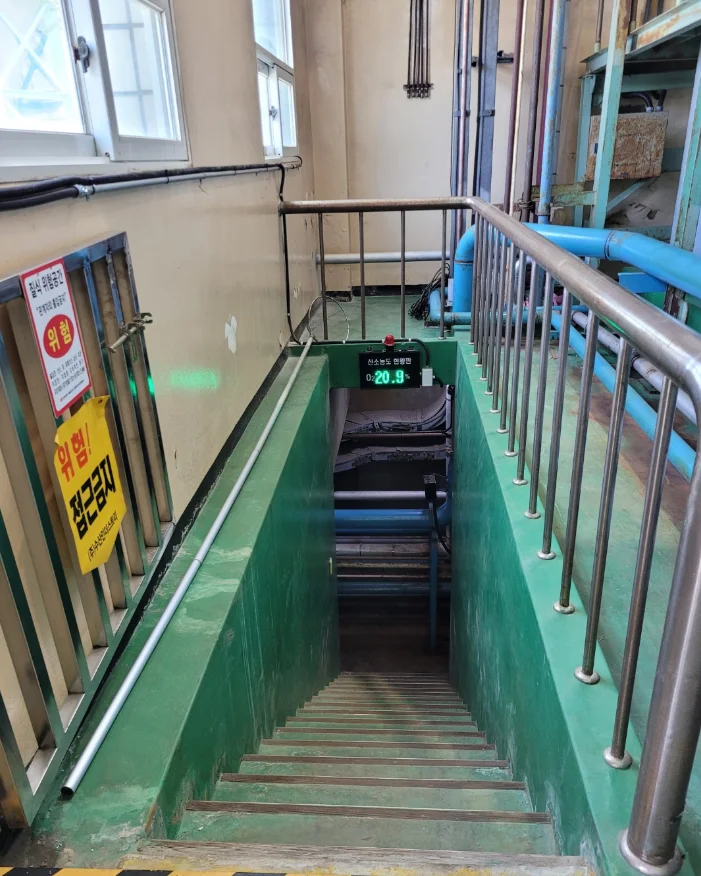
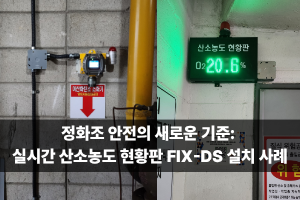
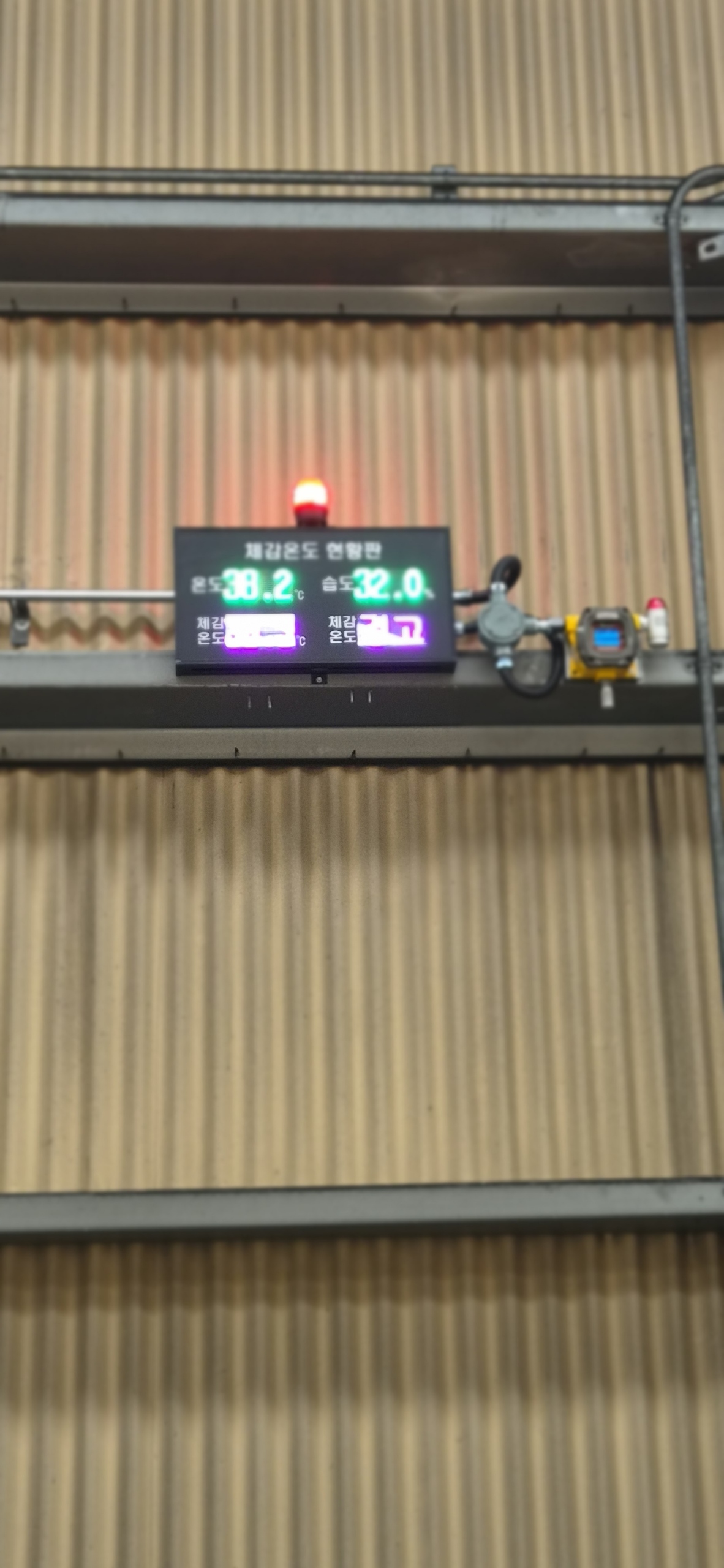
The configuration most customers are happiest with is the combination of a gas detector with a display board. Installing the detector inside the wastewater treatment area and the display board at the entrance ensures that workers' safety on site is clearly guaranteed.
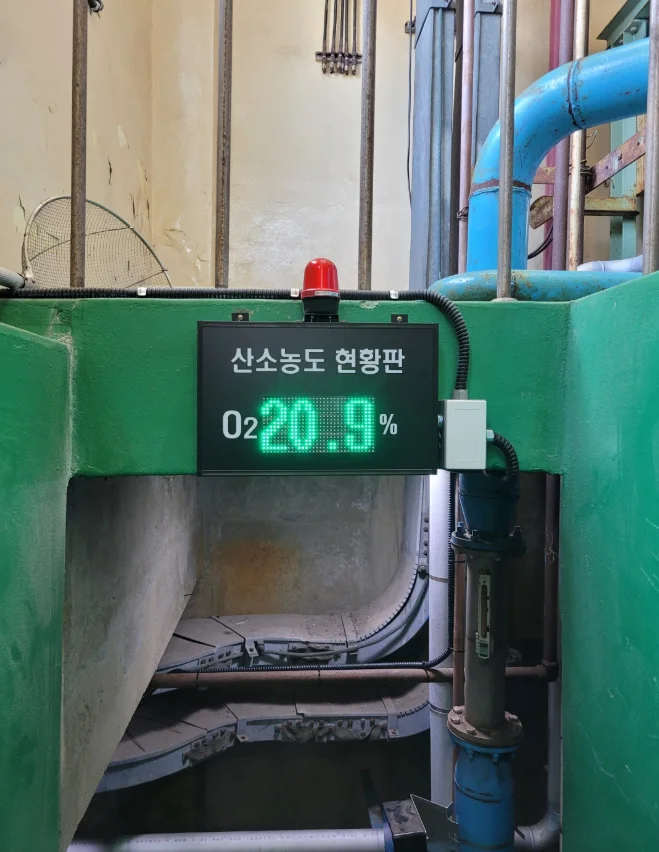
The FIX800 fixed-type gas detector is built to withstand humid or dusty environments, with an IP65-rated enclosure.
It's a detector whose performance has been proven through stable operation over several years at numerous sites, including compost treatment facilities, underground tunnel construction sites, wastewater treatment plants, and septic tanks.
This concludes today's introduction of a gas detector installation case at a wastewater/sewage treatment plant.
Thank you.
Frequently Asked Questions (FAQ)
Q1. Which gas sensor should be chosen for a wastewater treatment facility?
If budget allows, installing all gas components that can occur in wastewater — O2, CH4, H2S, and NH3 — is recommended. For a more economical setup, installing just a single O2 (oxygen) sensor is recommended.
Q2. Is it safe to install only an oxygen sensor?
Since oxygen levels drop when any gas leaks at a high concentration, an oxygen detector can't directly detect small leaks of methane or hydrogen sulfide, but it can still recognize high-concentration leaks through the drop in oxygen level, keeping workers safe.
Q3. What's the advantage of combining a gas detector with a display board?
This is the configuration most customers are happiest with. Installing the detector inside the wastewater treatment area and the display board at the entrance clearly guarantees the safety of workers on site.
Q4. What equipment was installed in this case?
A FIX800 fixed-type gas detector was installed. It's built with an IP65-rated enclosure to withstand humid or dusty environments.
Q5. How has the FIX800's performance been verified?
It's a detector whose performance has been proven through stable operation over several years at numerous sites, including compost treatment facilities, underground tunnel construction sites, wastewater treatment plants, and septic tanks.
#WANDI #FIX800 #OxygenDetector #WastewaterTreatmentPlant #SewageTreatmentPlant #IP65Rated #GasConcentrationDisplayBoard #IndustrialSafetyEquipment #FixedGasDetector #OccupationalSafety
![[레이먼드] 오,폐수 처리실 유해가스 모니터링](https://wandi.co.kr/storage/construction-cases/YxFUQVBZ8Unnk7pJzzfsmezr6xNe0LZvQRDmt7TL.jpg)
![[브이피이코리아] 종합병원 지하 밀폐공간 가스 측정기 설치_FIX800 & FIX-DS](https://wandi.co.kr/storage/construction-cases/gNOA28xSlEy5uU3AOxyHDRH5UfAe0TpMTgAt4Uag.jpg)

