Applied Markets
Installed Gases
Project Details
Hello.
Today we're introducing the GASTIGER2000, a product that can simultaneously measure the 4 key confined-space gases — oxygen, carbon monoxide, hydrogen sulfide, and combustible gas.
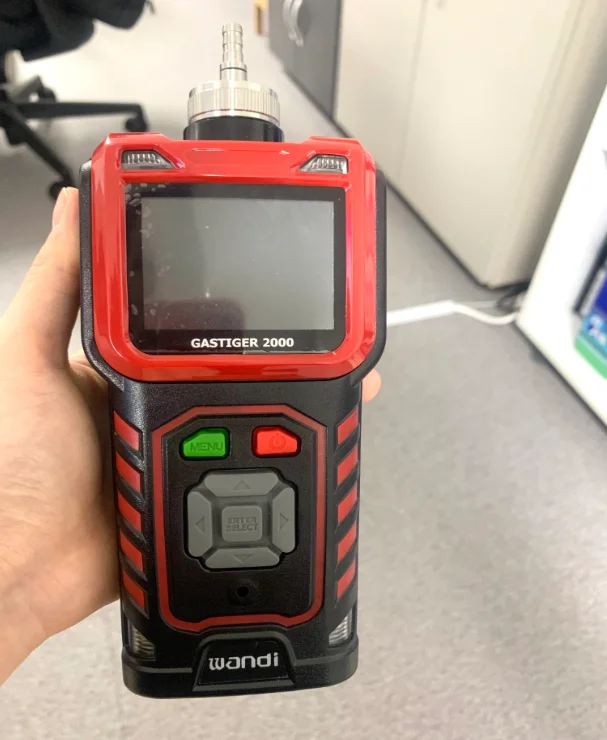
The GT2000 can check danger levels faster than any other device through rapid measurement in emergency situations.
One advantage of this product is that it can be equipped with up to 5 sensors chosen from around 40 sensor types to match the gas combination needed on site, and it has a high-capacity battery lasting over 30 hours.
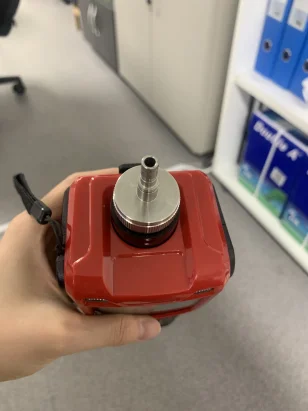
The top of the unit has a pump for gas detection, allowing measurement at specific points, and a manual pump can also be used to measure gas from farther away.
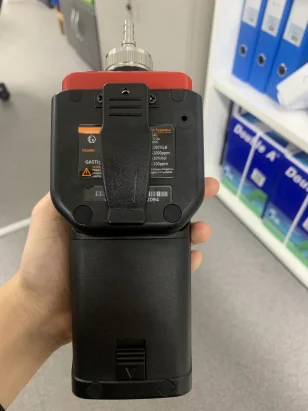
For more efficient use on site, a clip is mounted on the back of the unit, letting it be worn on a work vest or belt so it's always on hand for quick response in an emergency.
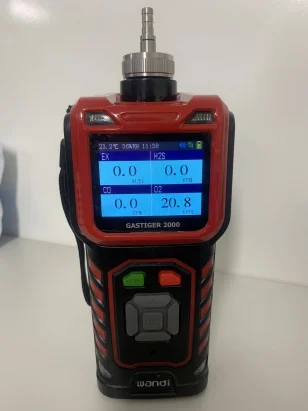
The GT2000 detector can be connected to a desktop computer for PC-based monitoring. Data can also be managed through software, but data values can also be checked as graphs directly on the device itself.
It also offers various storage methods including automatic save, periodic save, and manual save, allowing data to be managed according to the needs of the industrial site.
It supports USB charging, and real-time measurement and alarms can be triggered while connected to a computer. The unit is equipped with an SD card for backup to a computer, allowing data to be reviewed to analyze the cause and circumstances in the event of a site accident or issue.
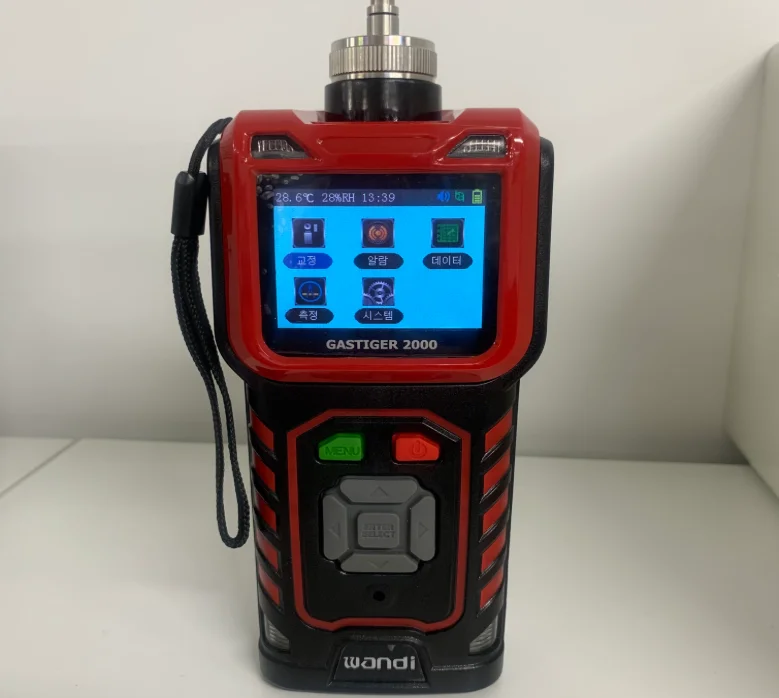
It provides a Korean-language display with all menus represented as icons for ease of use, so even beginners can operate it like a veteran.

Vibration and a red LED warning light alert users to danger, including when a person collapses. Setting an alarm threshold lets the device send a strong alarm signal to the user if the allowed limit is exceeded.
This concludes our product introduction for the portable gas detector GT2000.
Thank you.
Frequently Asked Questions (FAQ)
Q1. How many gases can the GASTIGER2000 measure simultaneously?
It can simultaneously measure the 4 key confined-space gases — oxygen, carbon monoxide, hydrogen sulfide, and combustible gas — and can be equipped with up to 5 sensors chosen from around 40 sensor types to match site requirements.
Q2. What about battery life and long-distance measurement?
It has a high-capacity battery lasting over 30 hours, and the top pump along with a manual pump allow measurement at specific points or from farther away.
Q3. How is data managed?
In addition to PC-based monitoring, data values can be checked as graphs directly on the device. It supports automatic, periodic, and manual save methods, and an SD card allows backup to a computer for cause analysis in the event of an accident.
Q4. Is the display easy to use?
It provides a Korean-language display with all menus represented as icons, so even beginners can operate it skillfully.
Q5. How are dangerous situations signaled?
Vibration and a red LED warning light alert users to danger, and a strong alarm signal is sent to the user if the set threshold is exceeded.
#WANDI #GASTIGER2000 #PortableGasDetector #MultiGasDetector #HighCapacityBattery #DataLogging #KoreanLanguageDisplay #GasLeakAlarm #IndustrialSafetyEquipment #4GasSimultaneousDetection
![[레이먼드] 오,폐수 처리실 유해가스 모니터링](https://wandi.co.kr/storage/construction-cases/YxFUQVBZ8Unnk7pJzzfsmezr6xNe0LZvQRDmt7TL.jpg)
![[브이피이코리아] 종합병원 지하 밀폐공간 가스 측정기 설치_FIX800 & FIX-DS](https://wandi.co.kr/storage/construction-cases/gNOA28xSlEy5uU3AOxyHDRH5UfAe0TpMTgAt4Uag.jpg)

