Installed Gases
Project Details
Dewatering Facility — Continuous H₂S and CH₄ Hazardous Gas Monitoring
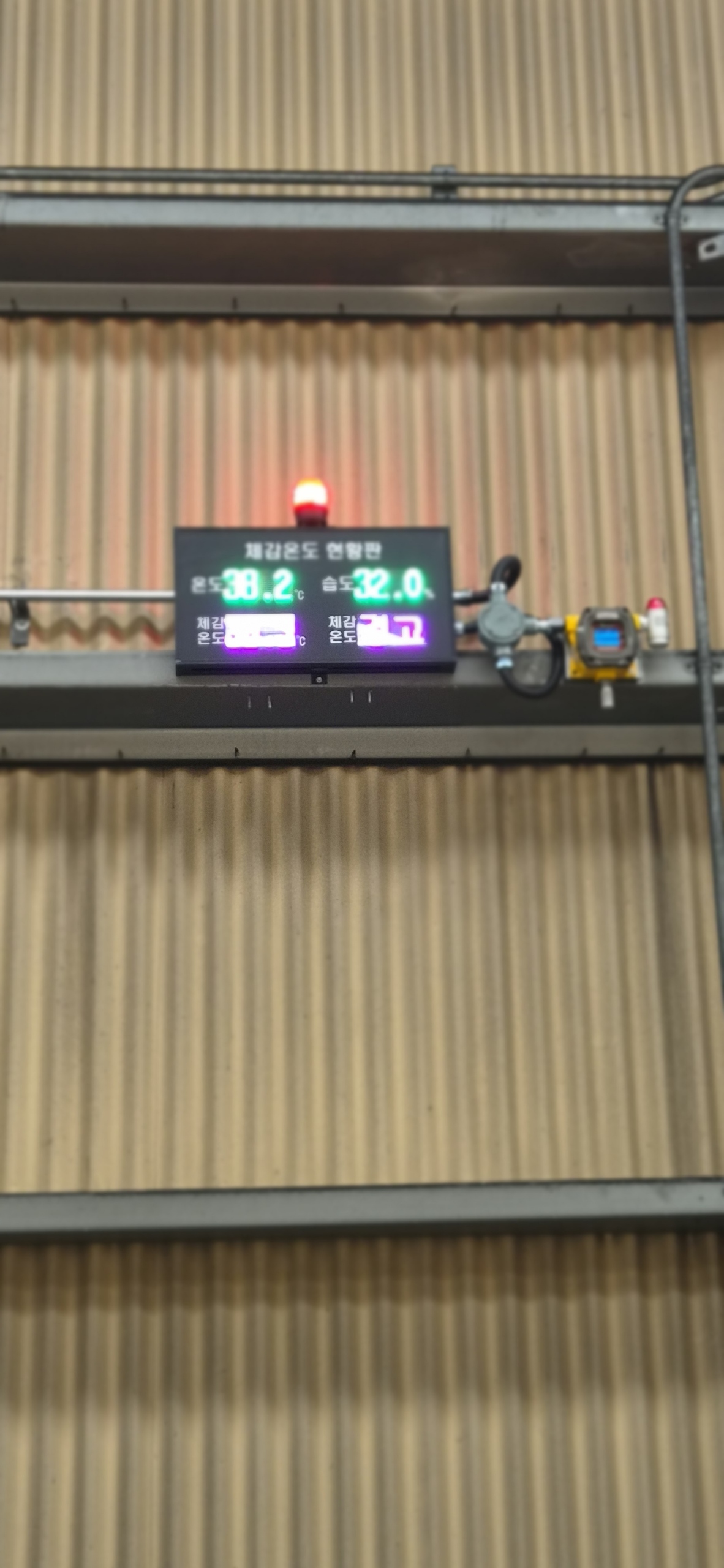
This project installed FIX800 fixed H₂S and CH₄ multi-gas detectors with a FIX-DS LED display board at a dewatering facility operated by an environmental company in Daejeon. Dewatering systems remove moisture from wastewater treatment sludge, a process that continuously generates H₂S (hydrogen sulfide) and CH₄ (methane) from the anaerobic decomposition of organic-rich sludge. Simultaneous monitoring of both gases in this confined, limited-ventilation environment prevents both toxic gas exposure and explosion incidents.
Installation Specifications
| Item | Details |
|---|---|
| Detector | FIX800 fixed multi-gas monitor |
| Sensor configuration | H₂S (hydrogen sulfide) + CH₄ (methane) — dual-gas |
| Display board | FIX-DS gas concentration LED display board |
| Installation environment | Dewatering facility confined space (environmental company) |
| Location | Daejeon |
FIX800 Sensor Selection Rationale — 40+ Sensor Options
FIX800 accepts one to four (or five, model-dependent) sensors selected from a lineup of more than 40 gas types. H₂S and CH₄ were selected for this dewatering facility on the following basis:
- H₂S selected because: The primary and most rapidly generated toxic gas from anaerobic decomposition of organic sludge. TWA of 1 ppm — extremely low permissible threshold
- CH₄ selected because: Primary combustible byproduct of anaerobic decomposition (LEL 5%). In high-confinement spaces such as dewatering tanks and sludge storage areas, CH₄ accumulation poses a direct explosion and ignition risk
- Site risk assessment determined that H₂S and CH₄ represented greater hazards than O₂ deficiency or CO for this specific facility type
Dewatering Facility Safety Management Points
- Verify gas concentrations before and after dewatering machine operation — H₂S can spike sharply during sludge agitation
- Monitor sludge transfer pipe connections closely — primary CH₄ leak points
- Insufficient ventilation allows CH₄ to accumulate to explosive concentrations — activate forced ventilation immediately upon alarm
- Personnel must confirm display board readings before entry — entry permitted only when all readings are within safe ranges
Frequently Asked Questions
Why are H₂S and CH₄ generated simultaneously at dewatering facilities?
The organic-rich sludge processed at dewatering facilities undergoes active anaerobic microbial decomposition. In this process, sulfur-containing organic compounds are converted to H₂S, while carbonaceous compounds are converted to CH₄. As both gases are generated concurrently by the same decomposition process, simultaneous monitoring is essential.
Why is CH₄ dangerous, and can it be detected without an instrument?
CH₄ is a colorless, odorless combustible gas that forms an explosive mixture with air in the 4–15% (40,000–150,000 ppm) concentration range. It is completely undetectable by human senses — only the FIX800's LEL catalytic sensor or a dedicated NDIR CH₄ sensor can detect it. The alarm is set at 10% LEL (approximately 4,000 ppm) to trigger evacuation before concentrations reach the explosive range.
Can O₂ and CO sensors be added to the H₂S and CH₄ configuration?
Yes. FIX800's four-to-five sensor slots allow H₂S and CH₄ to be supplemented with O₂ and CO sensors, achieving full Korea OSHA five-gas confined space coverage in a single unit. The sensor configuration should reflect the site risk assessment findings for each specific facility.
Why does H₂S concentration spike sharply during sludge agitation?
Agitating sludge releases H₂S that has accumulated beneath the surface in dissolved and trapped form. This sudden release can cause momentary H₂S concentrations to reach tens or hundreds of times the TWA threshold. Workers must evacuate immediately if the detector alarms during sludge agitation operations.
Is the FIX-DS display board strictly necessary, or can FIX800 operate alone?
The FIX800 detector is mounted inside the confined space, making its display unreadable from outside. Without a display board, there is no means for workers to verify gas concentrations before entering. The exterior display board is therefore an essential component of the pre-entry safety verification system — and is especially critical for maintaining situational awareness during night operations or emergencies.
#DewateringH2SCH4Monitor #FIX800H2SMethane #SludgeGasDetection #ConfinedSpaceExplosionPrevention #FixedGasAlarm #EnvironmentalCompanySafety #DaejeonInstallation #FIXDSDisplayBoard #WANDIKorea #RaymondKorea
![[레이먼드] 오,폐수 처리실 유해가스 모니터링](https://wandi.co.kr/storage/construction-cases/YxFUQVBZ8Unnk7pJzzfsmezr6xNe0LZvQRDmt7TL.jpg)
![[브이피이코리아] 종합병원 지하 밀폐공간 가스 측정기 설치_FIX800 & FIX-DS](https://wandi.co.kr/storage/construction-cases/gNOA28xSlEy5uU3AOxyHDRH5UfAe0TpMTgAt4Uag.jpg)

