Applied Markets
Installed Gases
Project Details
School Cafeteria Kitchen — CO and O₂ Hazardous Gas Monitor Installation
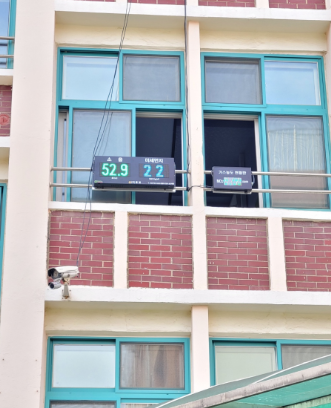
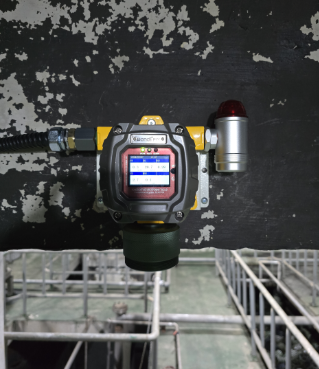
This project supplied and installed FIX800 fixed CO and O₂ gas detectors across school cafeteria kitchens nationwide. School cafeteria kitchens are high-intensity cooking environments operating large gas burners, commercial ovens, sterilizers, and disinfection equipment simultaneously. Incomplete combustion from these appliances generates carbon monoxide (CO), while the confined kitchen space and high oxygen consumption from continuous combustion create oxygen deficiency risk. Protecting the health of cafeteria staff — and maintaining compliant indoor air quality for the students they serve — makes gas monitoring both a safety priority and a legal obligation.
Gas Generation Sources in School Cafeteria Kitchens
| Source | Gas Generated | Hazard |
|---|---|---|
| Large gas burners (LPG/LNG) | CO (incomplete combustion) | Headache, nausea, loss of consciousness. TWA 25 ppm |
| Commercial ovens / cooking equipment | CO, NO₂ | Nitrogen oxides from high-temperature combustion |
| UV/ozone sterilizers and disinfection units | O₃ (ozone) | Respiratory irritation. TWA 0.05 ppm |
| Enclosed kitchen space | O₂ depletion | O₂ consumed by combustion — deficiency risk in poorly ventilated kitchens |
| Cleaning agents and detergents | VOC, NH₃ | Respiratory and dermal irritation with prolonged exposure |
Installation Specifications
| Item | Details |
|---|---|
| Detector | FIX800 fixed multi-gas monitor |
| Sensor configuration | CO (carbon monoxide) + O₂ (oxygen) |
| Air quality monitoring | Additional indoor air quality parameters linked (CO₂, temperature, humidity) |
| Installation environment | School cafeteria kitchen (high temperature, high humidity, grease vapor, particulates) |
| Delivery scope | Multiple schools nationwide |
Legal Basis for School Cafeteria Indoor Air Quality Management
- Indoor Air Quality Management Act, Article 5 — schools are designated multi-use facilities subject to mandatory indoor air quality maintenance standards
- School Health Act — regulation of hazardous substances in educational environments
- Occupational Safety and Health Standards — workplace health standards applicable to cafeteria kitchen workers (employees)
- CO maintenance standard: 10 ppm or below (Indoor Air Quality Management Act)
Frequently Asked Questions
What is the primary source of CO generation in school cafeteria kitchens?
The main source is incomplete combustion from large commercial gas burners. Higher heat output, longer cooking cycles, and insufficient ventilation all contribute to elevated CO concentrations. Blocked or degraded burner nozzles and irregular flame conditions further increase CO generation. Commercial ovens and deep fryers are additional emission sources.
Why is FIX800 well-suited to the school cafeteria kitchen environment?
School cafeteria kitchens combine high temperature, high humidity, cooking grease vapor, and particulates — a demanding environment for gas detection equipment. FIX800 operates stably under these conditions, with remote control functionality allowing alarm setpoint adjustment and zeroing at elevated installation heights without requiring a ladder. Relay output enables automatic ventilation fan activation upon alarm.
Why is an O₂ sensor installed alongside the CO detector?
In enclosed, high-combustion environments like commercial kitchens, oxygen is progressively consumed by burner operation. O₂ depletion often develops concurrently with rising CO concentrations. Monitoring both gases simultaneously provides a comprehensive picture of kitchen air quality and enables earlier detection of deteriorating conditions before either gas reaches alarm levels independently.
Why do the indoor air quality CO standard (10 ppm) and the industrial safety TWA (25 ppm) differ?
The Indoor Air Quality Management Act limit of 10 ppm is an environmental standard protecting all occupants — including students who are not occupational workers — from prolonged daily exposure. The occupational TWA of 25 ppm applies to adult workers over an 8-hour shift. In school cafeterias where both students and kitchen staff are present, the stricter 10 ppm indoor air quality standard is the appropriate reference for alarm configuration.
Is nationwide bulk delivery and installation to multiple schools available?
Yes. This project included coordinated delivery and installation across multiple schools in a single engagement. Projects are structured with customized sensor configurations for each site's specific conditions, phased delivery schedules, and on-site user training included as part of the service.
#SchoolCafeteriaCOMonitor #FIX800COOxygenDetector #KitchenHazardousGas #IndoorAirQualityManagement #IncompleteCombustionCO #SchoolSafetyHealth #NationwideSchoolDelivery #CafeteriaGasAlarm #WANDIKorea #RaymondKorea
![설치] 원주 국토5호선 신림~판부간 터널공사 밀폐공간 안전용 가스측정기 FIX800 4GAS O2 CO CO2 LEL 설치!](https://wandi.co.kr/storage/construction-cases/Ekn7PulFgplHqjZgJUfOsevvzH0Kawa1G0h9NlH8.png)
![설치] 약품 폐수탱크 수위계와 인디게이터 설치 그리고 무선 모니터링까지 MP + SUP1100 + FIX-AP](https://wandi.co.kr/storage/construction-cases/UjHcHl5kWktnCXlnvMIgk6eQhh7pqwuf3u65iKLO.png)