Applied Markets
Installed Gases
Project Details
Hello!
Today we'd like to introduce the GasTiger2000, which measures THT (tetrahydrothiophene) odorant and organic compounds.
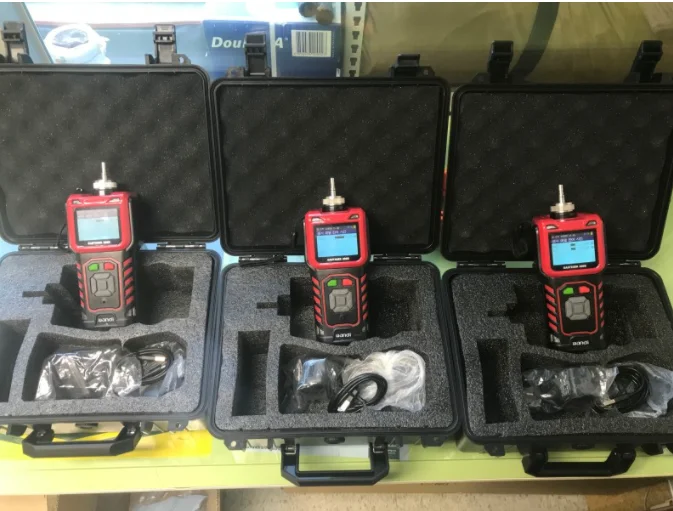
< GasTiger2000 Gas Detector >, which measures various toxic gases.
For reference, the pump performance has been upgraded, and the unit is now supplied with a high-performance compact pump capable of drawing in 1L per minute without issue.
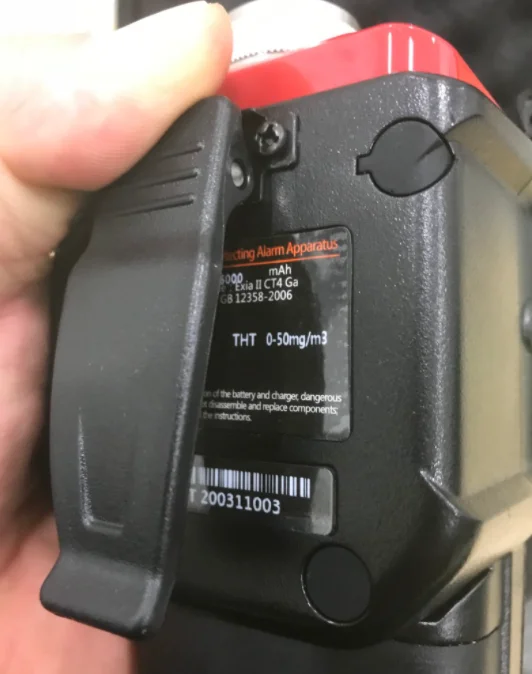
※ A quick note! ※
Let us explain a bit about THT (odorant), which may be somewhat unfamiliar.
① LNG (Liquefied Natural Gas)
: LNG, commonly used for household purposes, is a clean, colorless, and odorless gas with impurities (dust, sulfur, nitrogen, etc.) removed.
However, because it is colorless and odorless, a gas leak cannot be detected by smell, so a small amount of THT (odorant) is mixed in during supply.
② LPG (Liquefied Petroleum Gas)
: When LPG is used as fuel cell feedstock, removing the THT (odorant) it contains is essential.

For the LNG (liquefied natural gas) used in everyday life, a sulfur-based odorant is mixed in, so if a gas leak occurs, the pungent smell of the sulfur odorant allows the leak to be identified.
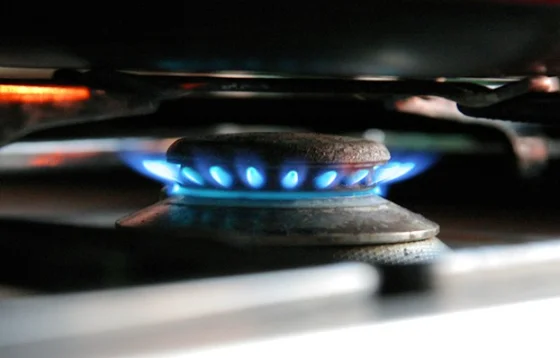
There is no need to worry, as only a small, harmless amount of about 13–14mg/m3 is injected.
Because sulfur compounds can cause corrosion, plants invest significant cost in operating desulfurization equipment.
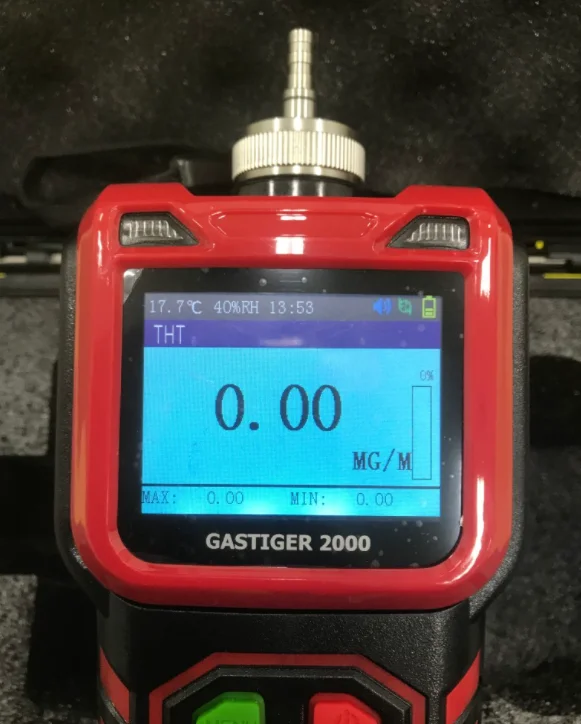
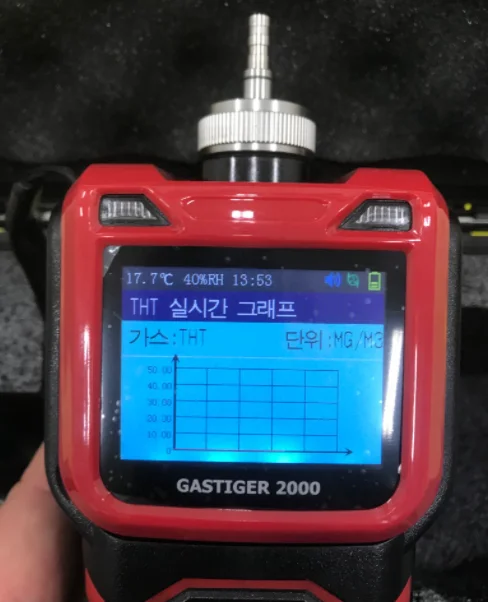
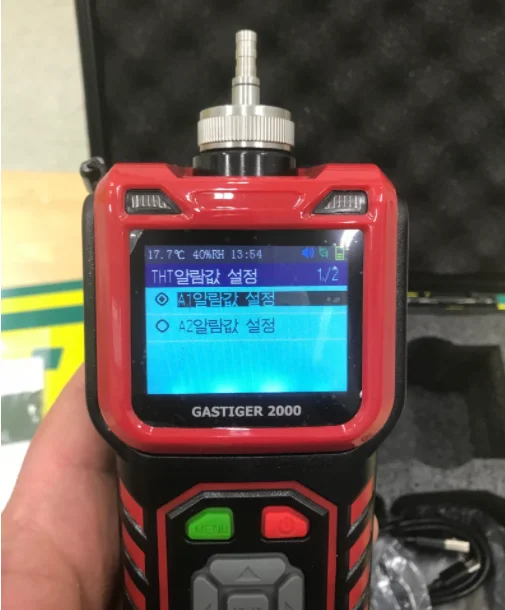
Since this is used to detect THT (odorant) or leaks, it should be managed using the alarm function.
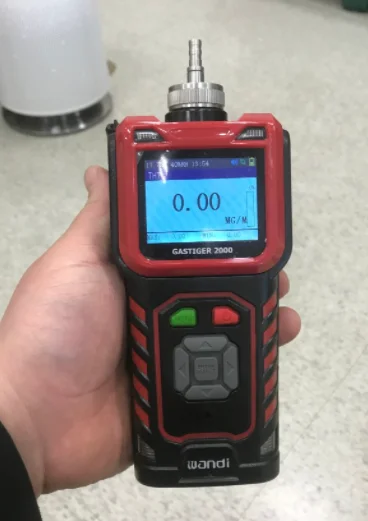
The GasTiger2000 gas detector can be equipped with toxic gas sensors in addition to THT (odorant), including:
Phosgene / Toluene / Volatile Organic Compounds /
Hydrofluoric Acid / Hydrogen Sulfide / Ammonia / Hydrogen, and more.
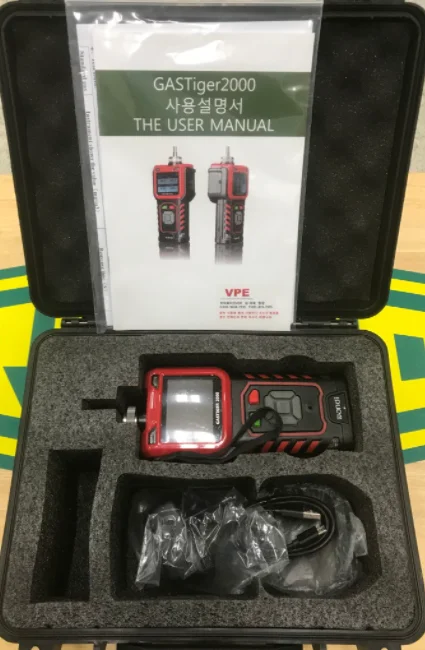
If you have any questions regarding THT odorant and toxic gas measurement, please feel free to contact us and we will be happy to assist.
That concludes this post on odorant gas measurement.
Frequently Asked Questions (FAQ)
Q1. What is THT (odorant)?
THT (tetrahydrothiophene) is an odorant added in small amounts to colorless, odorless LNG (liquefied natural gas) so that a gas leak can be detected by smell.
Q2. How is THT treated differently in LNG versus LPG?
Household LNG, being a clean colorless and odorless gas, has THT added in small amounts for leak detection, whereas LPG used as fuel cell feedstock requires the THT (odorant) it contains to be removed.
Q3. Is the amount of THT injected safe for humans?
Yes, only a small, harmless amount of about 13–14mg/m3 is injected, so there is no need for concern. However, because the sulfur content can cause corrosion, plants operate desulfurization equipment.
Q4. What gases besides THT can the GasTiger2000 measure?
It can be equipped with a variety of toxic gas sensors, including phosgene, toluene, volatile organic compounds, hydrofluoric acid, hydrogen sulfide, ammonia, and hydrogen.
Q5. What is the pump performance like?
The upgraded pump delivers high performance in a compact size, capable of drawing in 1L per minute without issue.
#WANDI #GasTiger2000 #THTOdorantDetection #LNGLeakDetection #LPGFuelCellMonitoring #ToxicGasDetector #VOCDetection #PhosgeneDetection #PortableGasDetector #PlantGasSafety
![[레이먼드] 오,폐수 처리실 유해가스 모니터링](https://wandi.co.kr/storage/construction-cases/YxFUQVBZ8Unnk7pJzzfsmezr6xNe0LZvQRDmt7TL.jpg)
![[브이피이코리아] 종합병원 지하 밀폐공간 가스 측정기 설치_FIX800 & FIX-DS](https://wandi.co.kr/storage/construction-cases/gNOA28xSlEy5uU3AOxyHDRH5UfAe0TpMTgAt4Uag.jpg)

