Applied Markets
Installed Gases
Project Details
Hello! Today we would like to introduce our FIX800 fixed-type gas detector configured for the toxic gas HCl (hydrogen chloride).
HCl is used across a wide range of environments, including the semiconductor, chemical, pharmaceutical, and food industries, and is one of the gases that requires essential management.
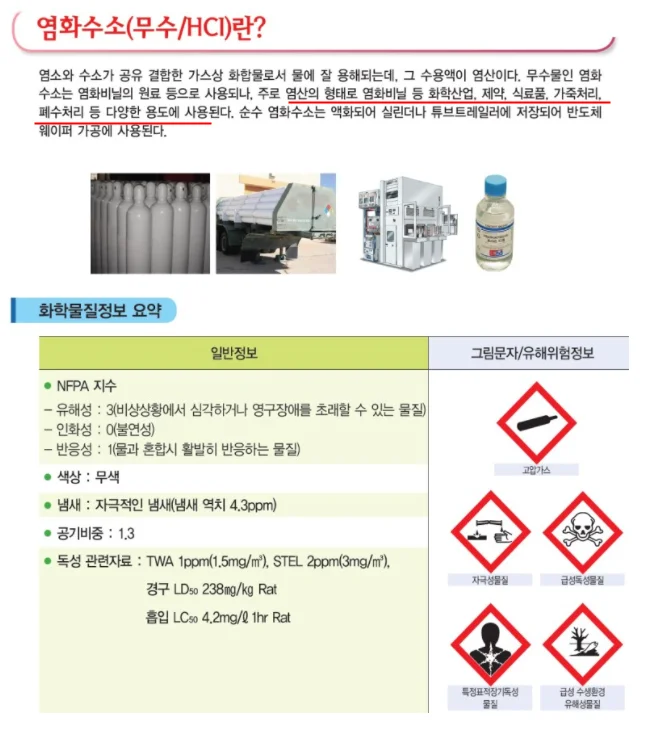
Exposure limits: TWA (Time-Weighted Average) refers to the average exposure limit over a one-day work shift, while STEL (Short-Term Exposure Limit) refers to the short-term exposure limit.
Because harmful effects on the human body can occur at exposure levels as low as around 1 ppm, accurate measurement at low concentrations is essential.
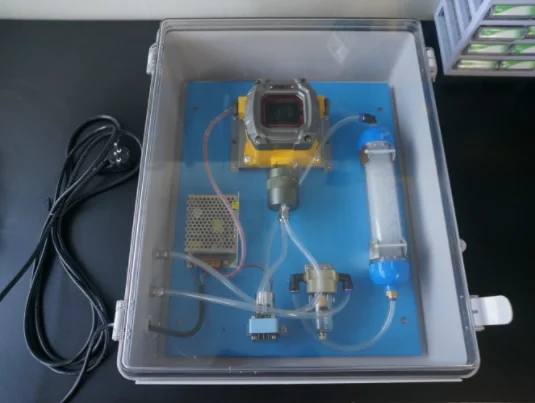
This application involved measuring HCl downstream of a scrubber, so we configured a low-range sensor (10 ppm) together with a moisture pre-treatment unit.
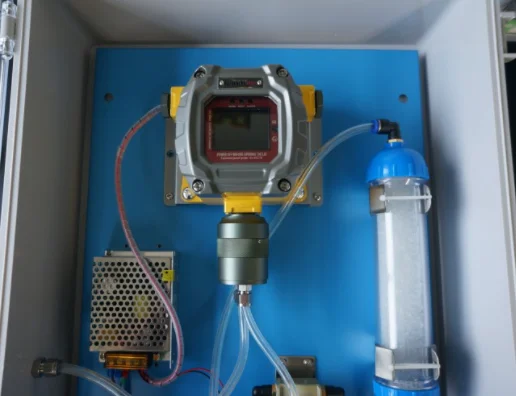
Since the FIX800 fixed multi-gas detector uses a diffusion-type sampling method, we can supply it configured with various pre-treatment devices depending on site conditions. It also supports both RS-485 and 4-20mA outputs.
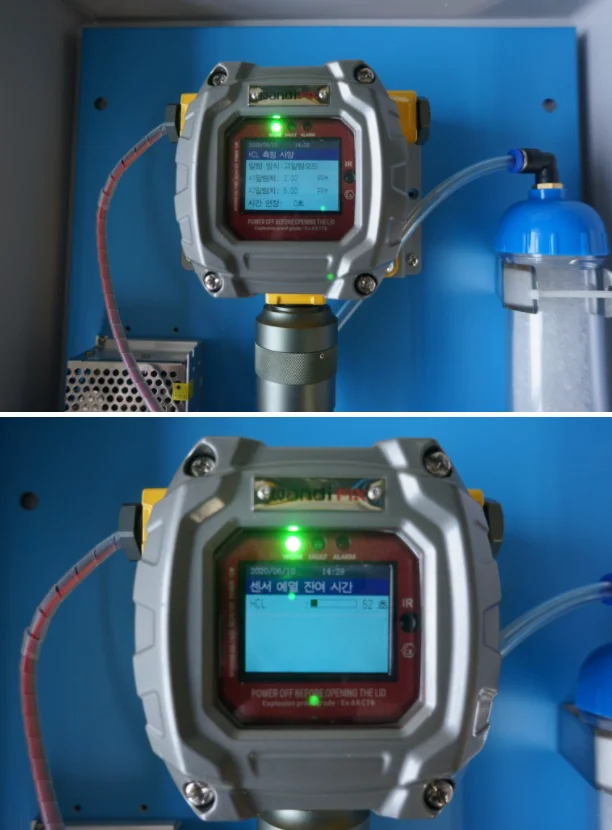
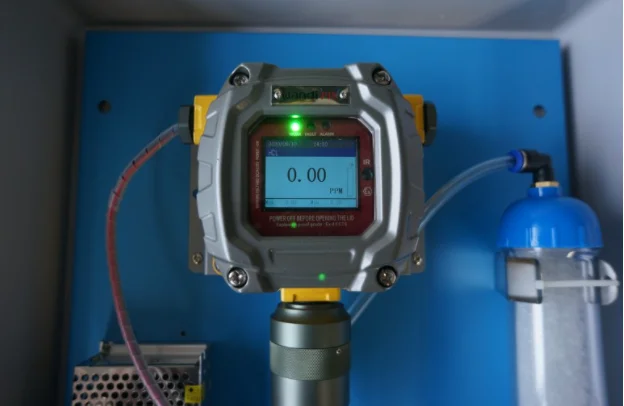
As a low-concentration measurement model, it offers a resolution of 0.01 ppm.
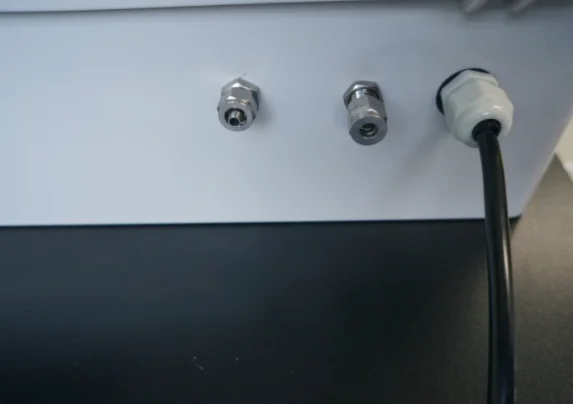
The exterior of the control box is fitted with 1/4" SAE ports for connecting hoses and sub-tubing (used for intake and exhaust).
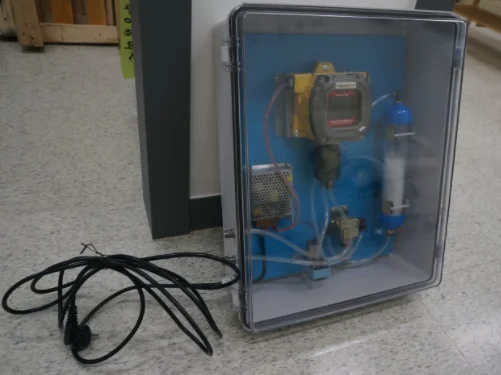 <FIX800 Fixed Multi-Gas Detector>
The FIX800 fixed multi-gas detector can be configured not only for HCl (hydrogen chloride) but also for various other toxic gases, including HF (hydrogen fluoride), F2 (fluorine), Cl2 (chlorine), and HCN (hydrogen cyanide).
This concludes our introduction of the FIX800 fixed-type gas detector for HCl (hydrogen chloride).
Frequently Asked Questions (FAQ)
Q1. In which industries is HCl (hydrogen chloride) monitoring especially important?
HCl is used across semiconductor, chemical, pharmaceutical, and food industries, and must be closely managed due to its toxicity to the human body.
Q2. What sensor configuration was used in this case?
A low-range 10 ppm sensor was applied for measuring low concentrations downstream of the scrubber, combined with a moisture pre-treatment unit.
Q3. What is the resolution of the FIX800 in this configuration?
As a low-concentration model, it offers a resolution of 0.01 ppm, allowing precise detection of even minor concentration changes.
Q4. What other gases can the FIX800 detect besides HCl?
The FIX800 can also be configured with sensors for HF (hydrogen fluoride), F2 (fluorine), Cl2 (chlorine), and HCN (hydrogen cyanide), among other toxic gases.
Q5. What communication outputs does it support?
It supports both RS-485 and 4-20mA outputs, allowing integration with a variety of monitoring systems.
#WANDI #FIX800 #HClDetection #HydrogenChloride #ToxicGasDetector #ScrubberMonitoring #LowConcentrationGasDetection #FixedGasDetector #SemiconductorGasMonitoring #EmissionCompliance
![[레이먼드] 오,폐수 처리실 유해가스 모니터링](https://wandi.co.kr/storage/construction-cases/YxFUQVBZ8Unnk7pJzzfsmezr6xNe0LZvQRDmt7TL.jpg)
![[브이피이코리아] 종합병원 지하 밀폐공간 가스 측정기 설치_FIX800 & FIX-DS](https://wandi.co.kr/storage/construction-cases/gNOA28xSlEy5uU3AOxyHDRH5UfAe0TpMTgAt4Uag.jpg)

