Applied Markets
Installed Gases
Project Details
Hello. Today we would like to introduce the <GasTiger 6000>, a portable multi-gas detector capable of conveniently analyzing three key hazardous gases found in ambient air: NO (nitrogen monoxide), NO2 (nitrogen dioxide), and SO2 (sulfur dioxide).
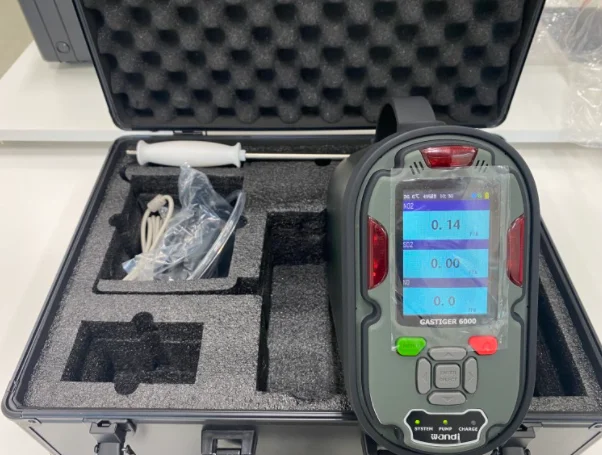
GasTiger 6000 Multi-Gas Detector — this portable multi-gas detector can be configured with up to 6 gas sensors.
Sensor specifications supplied for this case: NO (Nitrogen Monoxide) 0-20 ppm, NO2 (Nitrogen Dioxide) 0-100 ppm, SO2 (Sulfur Dioxide) 0-20 ppm.
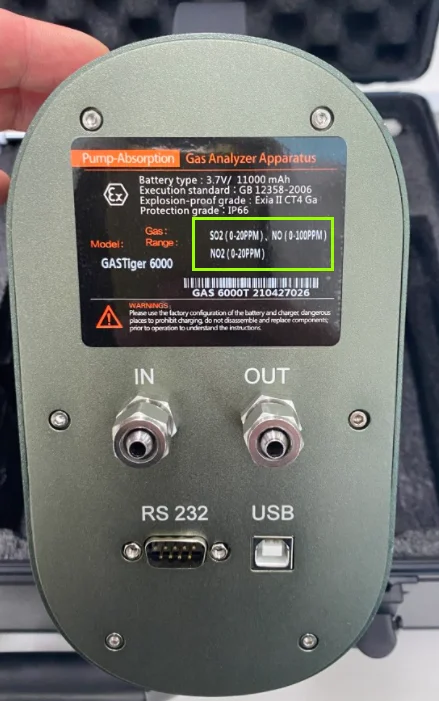 <Nitrogen Oxide Detector>
For hazardous gas analysis in ambient air, this 3-sensor configuration allows nitrogen oxides and sulfur oxides — substances strictly regulated under air quality preservation laws — to be measured simultaneously with integrated data management, all in a single GasTiger 6000 multi-gas detector.
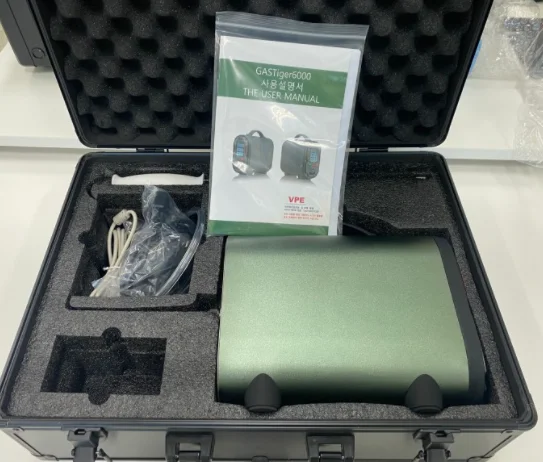
Standard components: detector body, gas sampling probe, urethane and silicone hoses, charging cable, manual, and manufacturer's calibration certificate.
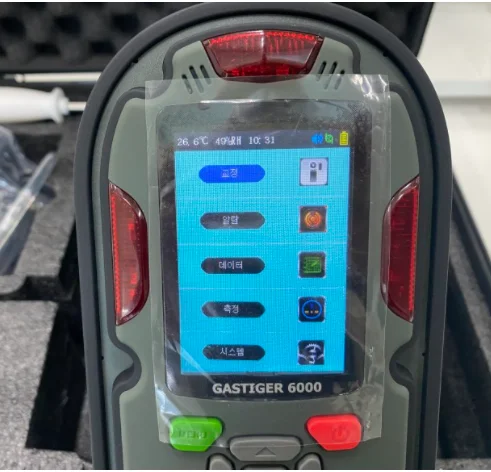 <Toxic Gas Detector>
Since this detector is also used for safety management purposes on industrial sites, an alarm function is essential.
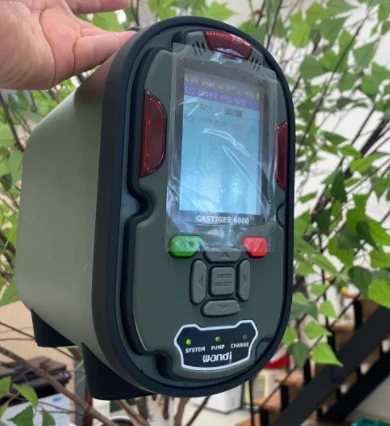
Thanks to its compact size, the GasTiger 6000 can be fitted with up to 6 gas sensors, allowing it to measure a wide variety of toxic and hazardous gases required across different field environments.
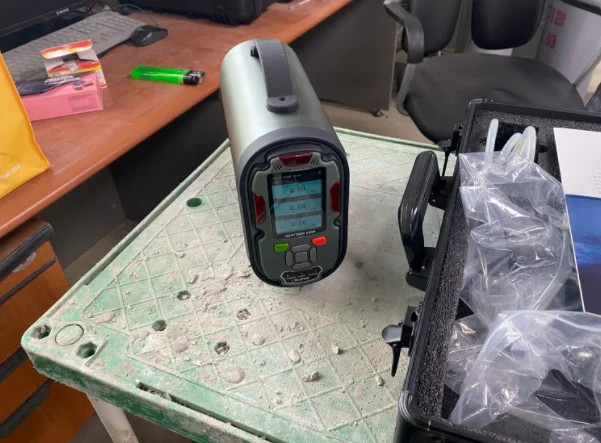 GasTiger 6000 Multi-Gas Detector
Please note that cross-sensitivity between different gases can occasionally lead to inaccurate readings. We recommend consulting a specialist before finalizing your sensor and equipment configuration.
This concludes our introduction of the GasTiger 6000 portable multi-gas detector for air quality monitoring.
Frequently Asked Questions (FAQ)
Q1. How many gases can the GasTiger 6000 measure at the same time?
It can be fitted with up to 6 gas sensors, allowing simultaneous measurement of up to 6 different gas types depending on the application.
Q2. Which gas types and measurement ranges were supplied in this case?
Three sensors were configured: NO (Nitrogen Monoxide) 0-20 ppm, NO2 (Nitrogen Dioxide) 0-100 ppm, and SO2 (Sulfur Dioxide) 0-20 ppm.
Q3. What is cross-sensitivity in gas detection?
Cross-sensitivity occurs when different gases affect the same sensor and influence its reading. To ensure accurate results, we recommend consulting a specialist before finalizing your sensor configuration.
Q4. In what environments is the GasTiger 6000 used?
It is used both for air-quality monitoring sites that must manage nitrogen oxides and sulfur oxides under air quality preservation regulations, and for safety management on industrial sites.
Q5. What is included with the product?
The package includes the detector body, a gas sampling probe, urethane and silicone hoses, a charging cable, a manual, and the manufacturer's calibration certificate.
#WANDI #GasTiger6000 #MultiGasDetector #AirQualityMonitoring #NitrogenOxideDetection #SulfurOxideDetection #PortableGasDetector #NOxMeasurement #SOxMeasurement #GasDetector
![[레이먼드] 오,폐수 처리실 유해가스 모니터링](https://wandi.co.kr/storage/construction-cases/YxFUQVBZ8Unnk7pJzzfsmezr6xNe0LZvQRDmt7TL.jpg)
![[브이피이코리아] 종합병원 지하 밀폐공간 가스 측정기 설치_FIX800 & FIX-DS](https://wandi.co.kr/storage/construction-cases/gNOA28xSlEy5uU3AOxyHDRH5UfAe0TpMTgAt4Uag.jpg)

