Why Fixed ClO2 Detectors Are Essential — Portable Devices Alone Are Not Enough
Facilities that continuously operate with chlorine dioxide (ClO₂) — water treatment plants, paper mills, and food sterilization lines — require 24/7 unmanned monitoring. When ClO₂ generators operate during nights and weekends without workers present, portable devices alone have fundamental limitations. The WANDI FIX800 fixed multi-gas detector provides continuous detection 365 days a year while powered, and connects with the FIX-DS gas concentration display board so hazardous conditions can be visually confirmed before entering a space.
💡 Key Point
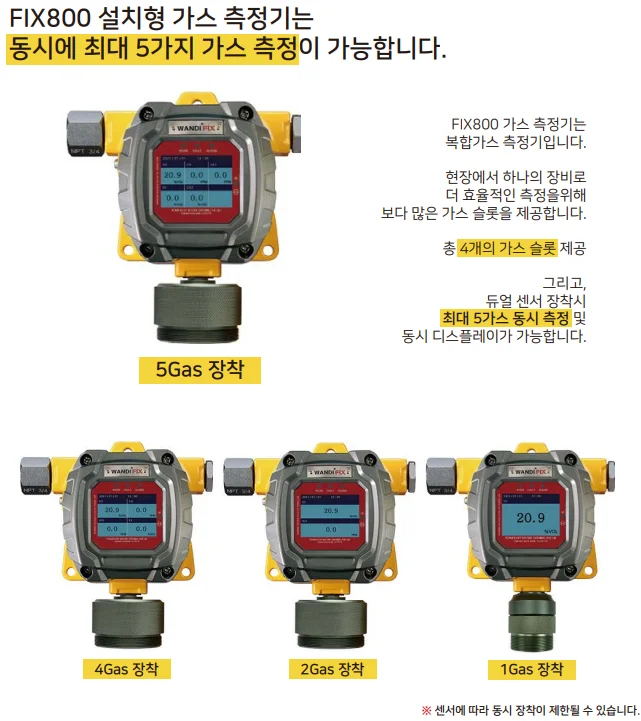
FIX800 simultaneously measures up to 5 gases as a fixed installation. With a dedicated ClO₂ sensor, it detects from concentrations as low as 0.05 ppm, and can connect with warning lights, display boards, and remote alarms.
Health Effects Table for Chlorine Dioxide (ClO2)
| Concentration (ppm) | Exposure Duration | Health Effects | Risk Level |
|---|---|---|---|
| 0.1 | 8 hours | NIOSH TWA permissible limit | ⚠️ Caution |
| 0.3 | Short-term | Nasal, throat, and eye mucous membrane irritation, coughing begins | 🟡 Warning |
| 1–3 | Short-term | Headache, vomiting, severe breathing difficulty | 🟠 Dangerous |
| 5 | Short-term | IDLH — pulmonary edema, decreased consciousness | 🔴 Immediately Dangerous |
| 10 or above | Short-term | Acute lung injury, possible death | 💀 Fatal |
Source: NIOSH Pocket Guide to Chemical Hazards (2024), ACGIH TLV-TWA standards
Real ClO2 Gas Accident Cases
🇩🇪 ClO2 Generator Explosion and Leak at a German Paper Mill (2015, Saxony)
At a paper mill in Saxony, an overload in a ClO₂ generator caused an explosion that released a large amount of chlorine dioxide inside the plant. About 200 residents of a nearby village were evacuated, and 3 workers were hospitalized. The investigation found that no fixed ClO₂ detector had been installed and no alarm system was in place. (Source: German Federal Environment Agency, Störfallstatistik 2015)
🇰🇷 ClO2 Leak at a Korean Water Treatment Plant Equipment Room (2020, Chungnam)
At a water treatment plant in Chungnam, a defective pipe joint in the chlorine dioxide dosing equipment room caused a ClO₂ leak. Since no fixed gas detector was present in the equipment room, the incident was only discovered when a patrolling employee felt irritation symptoms, and the area was closed for more than 2 hours. (Source: National Institute of Environmental Research, Chemical Accident Response Case Collection, 2020)

WANDI FIX800 — Fixed Multi-Gas Detector for Up to 5 Gases Simultaneously
| Item | FIX800 Specification |
|---|---|
| Simultaneous Gas Detection | Up to 5 gases (ClO₂, O₂, CO, H₂S, EX, NH₃, etc. configurable) |
| Installation Method | Wall-mounted fixed installation (permanent power connection) |
| Alarm Integration | Warning light, siren, FIX-DS display board, remote alarm |
| Data Management | Web monitoring integration, concentration history logging |
| Application | Water treatment plants, paper mills, food factories, chemical facilities |
| Entry Control Integration | External entry display board integration → hazard check before entry |
If FIX800 Had Been Installed? — ClO2 Leak Prevention Scenario
- 1Continuous monitoring catches minor leaks: FIX800 inside the ClO₂ generator equipment room triggers a Stage 1 alarm the moment 0.1 ppm is reached — never missed even during unmanned night hours
- 2Entry display board blocks access: The FIX-DS board outside the equipment room shows RED → workers check the hazardous concentration before entering and automatically decide to evacuate
- 3Automatic warning light and siren: At Stage 2 (warning concentration exceeded), the warning light and siren activate automatically → prompting all nearby workers to evacuate
- 4Remote response via web alarm: A web alarm is sent to the remote manager → enabling immediate emergency instructions and maintenance team dispatch
Considerations for Installing Continuous ClO2 Detection
- Install within 1–2 m of the ClO₂ generator or dosing inlet is recommended (considering the gas dispersion path)
- Sensor placement: since ClO₂ is heavier than air (molecular weight 67.45), installation near the floor is advantageous
- In high-humidity environments, shorten the calibration interval (recommended within 6 months)
- Install the FIX-DS display board outside the entrance so concentration can be checked before entry
- Post stage-by-stage action guidelines linked to the emergency response manual
📋 Related Regulations
Under Article 38 (Safety Measures) of the Occupational Safety and Health Act and Article 23 of the Chemicals Control Act, facilities handling ClO₂ are required to install gas detectors and establish emergency response plans. FIX800 automatically secures data history as evidence for compliance with the Serious Accidents Punishment Act.
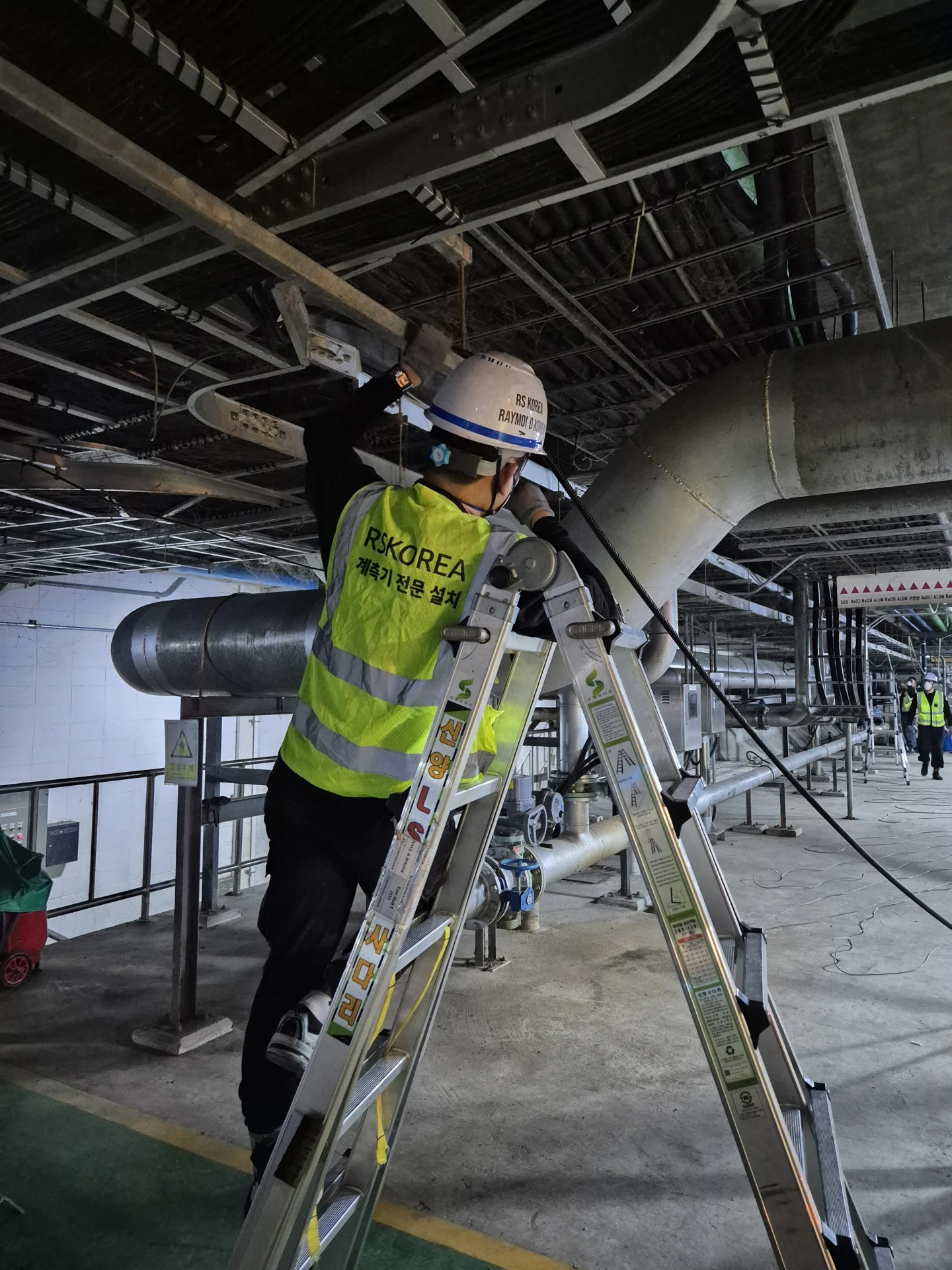
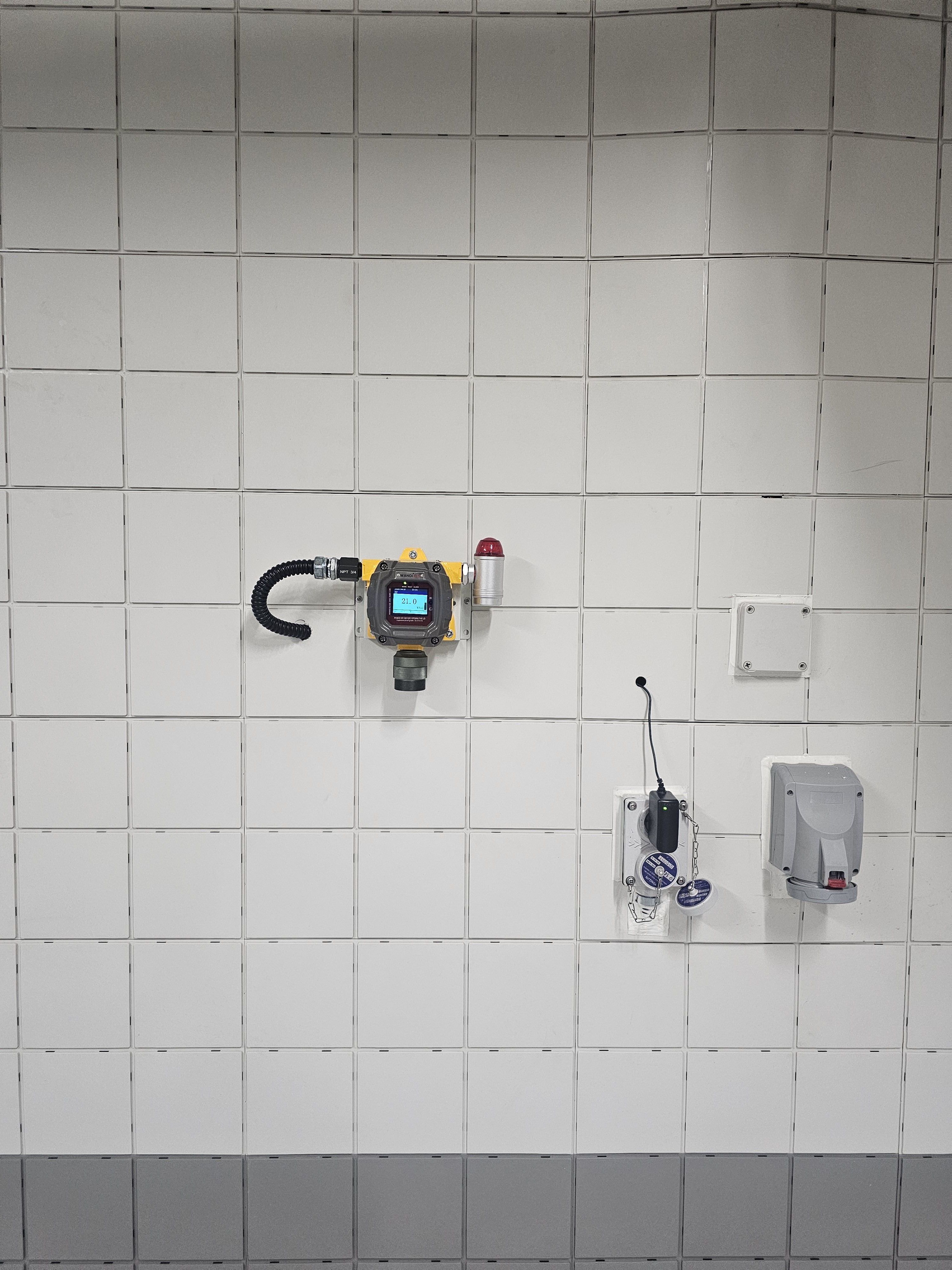
A Closer Look at the WANDI FIX800 Product and Installation
Below are real photos of the WANDI FIX800 fixed multi-gas detector.