📌 3 Key Takeaways
- The gases you must monitor at a wastewater treatment plant are five: hydrogen sulfide (H₂S), methane (CH₄), carbon dioxide (CO₂), oxygen deficiency (O₂) and ammonia (NH₃) — all continuously produced by organic decomposition.
- Confined-space asphyxiation caused 348 casualties and 165 deaths (47.4%) over 10 years — an extremely high fatality rate — with wastewater treatment and septic work the most frequent (Korea MOEL).
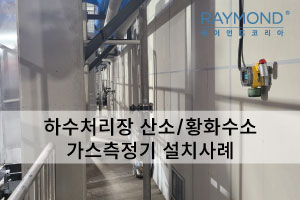
- The FIX800 fixed detector monitors up to five gases 24/7 and, with explosion-proof housing, an FIX-DS display board and automatic ventilation-fan linkage, blocks danger in real time before entry and during work.
Wastewater treatment plants see the most confined-space asphyxiation accidents of any industrial site. Organic matter in sewage, wastewater and sludge is broken down by microbes, continuously releasing hydrogen sulfide, methane and carbon dioxide while consuming oxygen and creating oxygen deficiency. The danger is that these gases are mostly colorless, and H₂S paralyzes the sense of smell at high concentration — so human senses cannot detect the hazard. This guide covers the five gases you must check at wastewater plants, their dangers, real accident cases, and how the WANDI FIX800 fixed detector provides 24-hour monitoring.
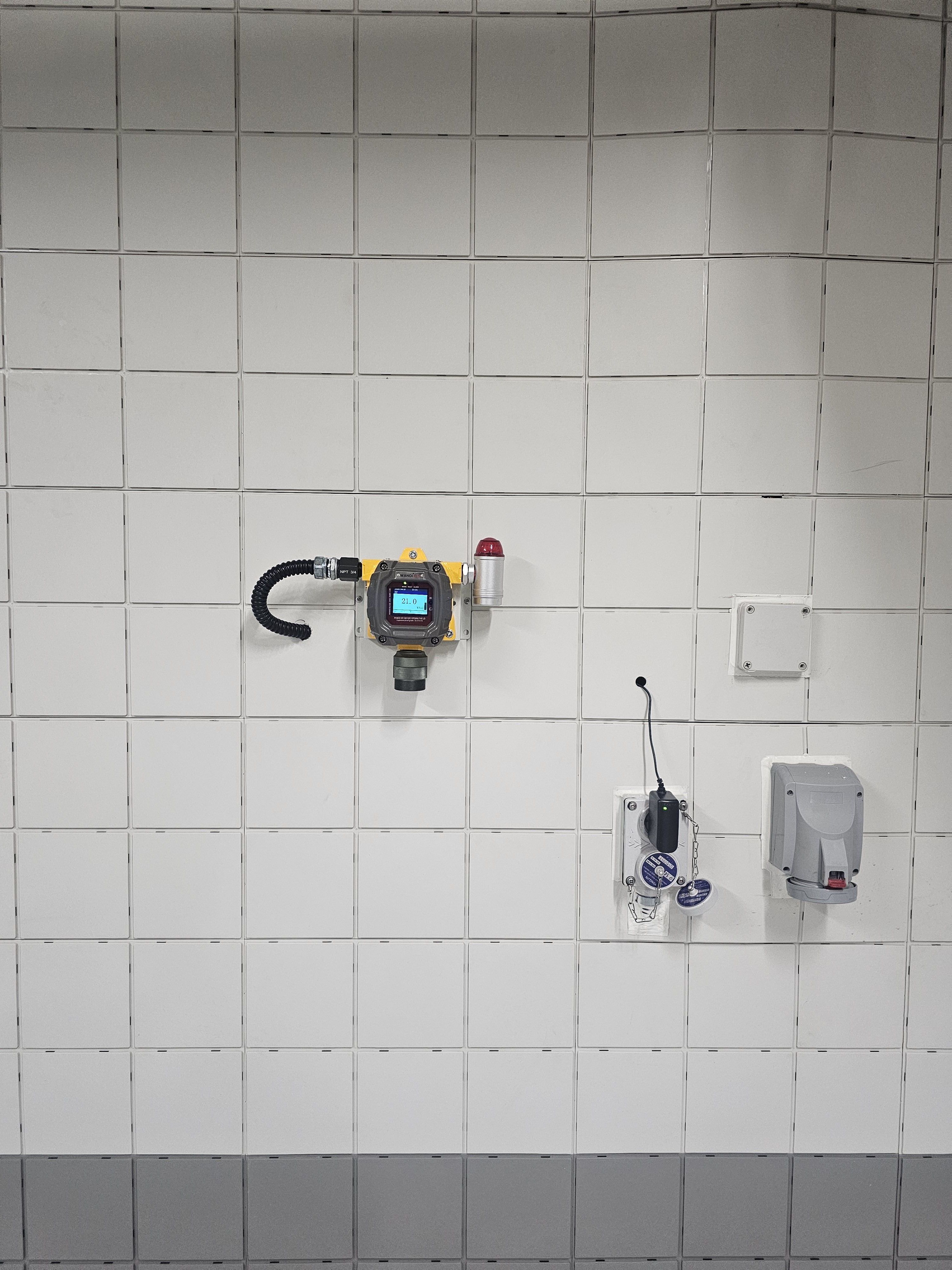
Why Gases Keep Forming at Wastewater Plants — The Decomposition Principle
Gas generation at wastewater plants comes down to one principle: organic decomposition. The sewage, wastewater and sludge being treated contain large amounts of organic matter — proteins, fats, waste — and as microbes break it down, several gases are released. Under oxygen-free (anaerobic) conditions, decomposition intensively produces hydrogen sulfide and methane, while microbes consuming oxygen rapidly lower the oxygen level of the enclosed space. Confined structures like sludge tanks, septic tanks, sedimentation basins, digesters and manholes trap these gases and let them accumulate to high concentrations.
| Gas | Cause of formation | Main locations |
|---|---|---|
| H₂S (hydrogen sulfide) | Anaerobic decomposition of sulfur-bearing organics | Sludge tanks, septic tanks, sedimentation basins, manholes |
| CH₄ (methane) | Anaerobic decomposition of organics (flammable) | Digesters, sludge tanks, sealed piping |
| CO₂ (carbon dioxide) | End product of organic decomposition | Lower parts of tanks, confined-space floors |
| O₂ deficiency | Oxygen consumed by microbes / displaced by other gases | Sealed treatment tanks, inside manholes |
| NH₃ (ammonia) | Decomposition of nitrogen organics (protein, waste) | Deodorization facilities, blower rooms, sludge handling |
In short, a wastewater plant is an environment where hazardous gases inevitably form at all times. That is why these sites are designated confined spaces under Korea's occupational safety law and gas measurement is mandatory.
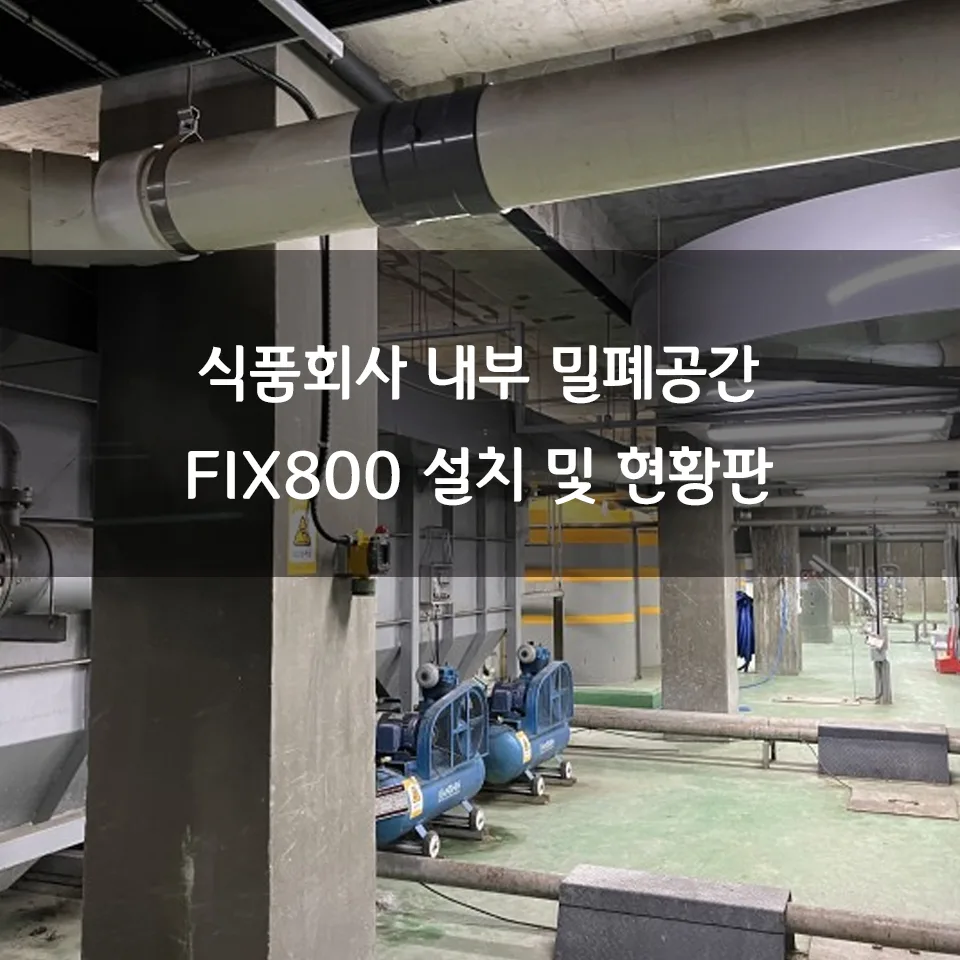
The 5 Gases — Effects on the Body and Exposure Limits
Each gas is dangerous even at low concentration, and H₂S is lethal in tiny amounts. Below are the health effects by concentration based on Korea's occupational exposure limits (MOEL notice) and the Confined Space Work Manual (2014).
| Gas | Exposure limit (TWA / STEL) | Effects by concentration |
|---|---|---|
| H₂S | 10 / 15 ppm | 10ppm eye/respiratory irritation · 100–200ppm smell paralysis · 700ppm↑ loss of consciousness and death within seconds |
| O₂ | Safe 18–23.5% | Below 18% deficiency · 16% headache/nausea · 10% fainting · 6% death within minutes |
| CO₂ | 5,000 / 30,000 ppm | 3% headache/faster breathing · 5% breathing difficulty · 10%↑ loss of consciousness |
| CH₄ | LEL 5 vol% | 5–15% explosive range · at high levels displaces oxygen (simple asphyxiant) |
| NH₃ | 25 / 35 ppm | 25ppm irritation · 300ppm IDLH · pulmonary edema at high levels |
※ Sources: "Exposure Limits for Chemical Substances and Physical Agents" (MOEL notice); "Confined Space Work Manual" (2014). Acceptable air in confined spaces: oxygen 18–23.5%, H₂S under 10ppm, CO under 30ppm, combustible gas under 10% LEL.
Notably, H₂S paralyzes the sense of smell at high concentration, so the moment a worker feels "the smell is gone" is the most dangerous. The core lesson of confined-space accidents is that the human nose cannot serve as an alarm.
Real Accidents — Why Wastewater Confined Spaces Kill Repeatedly
Confined-space asphyxiation is not frequent by count, but its fatality rate is dozens of times higher than ordinary accidents. Key statistics and cases:
- Over 10 years (2012–2021), confined-space asphyxiation caused 348 casualties, of whom 165 (47.4%) died, with wastewater treatment, septic tanks and livestock-waste handling the most frequent tasks (source: Korea MOEL).
- July 6, 2025, Gyeyang-gu, Incheon — a worker surveying a sewer line in a manhole died of asphyxiation from hazardous gas (source: Safety1st News, 2025).
- Wastewater plant sludge tank — a serious-accident case reported a worker poisoned by H₂S leaking from the top manhole cover (source: KOSHA serious-accident case).
These accidents share a pattern: the coworker who enters to rescue also dies — a secondary accident. Confined-space gases are invisible and often already at lethal levels the moment of entry. Only continuous monitoring that shows gas concentrations in real time before entry and during work can prevent this.
Why You Need the FIX800 Fixed Detector — Where Portables Fall Short
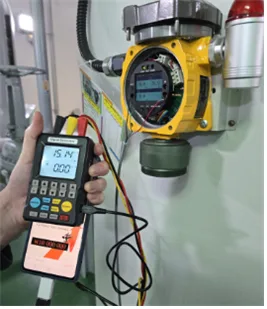
Many sites rely on a single portable measurement before entry. But at wastewater plants gas keeps forming and fluctuating during the work itself, and stirring sludge can release H₂S explosively. A safe reading at the moment of entry does not mean the air stays safe. That is why the fixed, 24-hour FIX800 is needed.
| Item | Portable (measured at entry) | FIX800 fixed detector |
|---|---|---|
| Monitoring | One-time at entry | 24-hour continuous |
| Gases | Up to 5 (handheld) | Up to 5 simultaneously (O₂·H₂S·CH₄·CO₂·CO, etc.) |
| Explosion-proof | Varies by model | Ex d housing (for flammable environments) |
| External linkage | ❌ None | RS485·4–20mA·relay → auto-links ventilation fan/display board |
| Pre-entry check | Must enter to measure | Check outside the entrance via FIX-DS board |
| Durability | Portable, easy to misplace | Rugged aluminum housing, fixed at the hazard point |
Mapping FIX800's key features to wastewater-plant hazards:
- 24-hour continuous monitoring — never misses rapidly changing H₂S/CH₄ levels during work; instant alarm
- Up to 5 gases at once — monitors O₂·H₂S·CH₄(EX)·CO₂·CO from one unit (NDIR, electrochemical, catalytic sensors)
- Explosion-proof housing (Ex d) — safely installed in hazardous areas where methane and other flammables form
- RS485/relay auto-linkage — on alarm, automatically runs ventilation/exhaust fans to purge gas, actively removing the hazard
- FIX-DS display board — before entering a confined space, workers check internal O₂·H₂S·LEL from outside the entrance
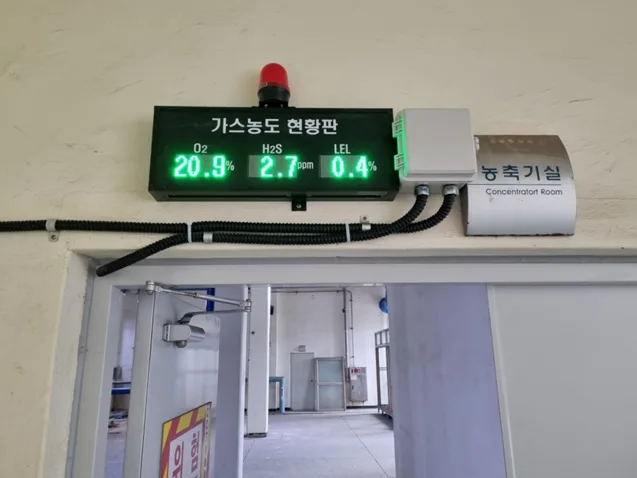
The Legal Duty to Measure Gas in Confined Spaces
Korea's Rules on Occupational Safety and Health Standards (confined-space provisions) make it the employer's duty to measure oxygen and hazardous-gas concentrations before and during confined-space work. Wastewater plants are a prime confined space, and the following are required together:
- Pre-work measurement and verification of acceptable air — oxygen, H₂S, CO, combustible gas
- Continuous ventilation and gas monitoring during work
- A designated standby monitor, plus evacuation/rescue equipment and procedures
Installing the FIX800 with an FIX-DS display board automatically satisfies this measure-monitor-record duty at all times, reducing management burden while protecting workers.
Closing
The hazard at a wastewater plant is not "occasional" — it is constant. Hydrogen sulfide, methane, carbon dioxide, oxygen deficiency and ammonia form endlessly through decomposition, and human senses cannot detect them. Not a single measurement at entry, but 24-hour continuous monitoring with ventilation linkage, is the key to preventing fatalities. Contact WANDI (+82-31-340-6952) for FIX800 fixed gas detector inquiries and on-site surveys — we will propose the right sensor configuration, display board and ventilation linkage for your site.