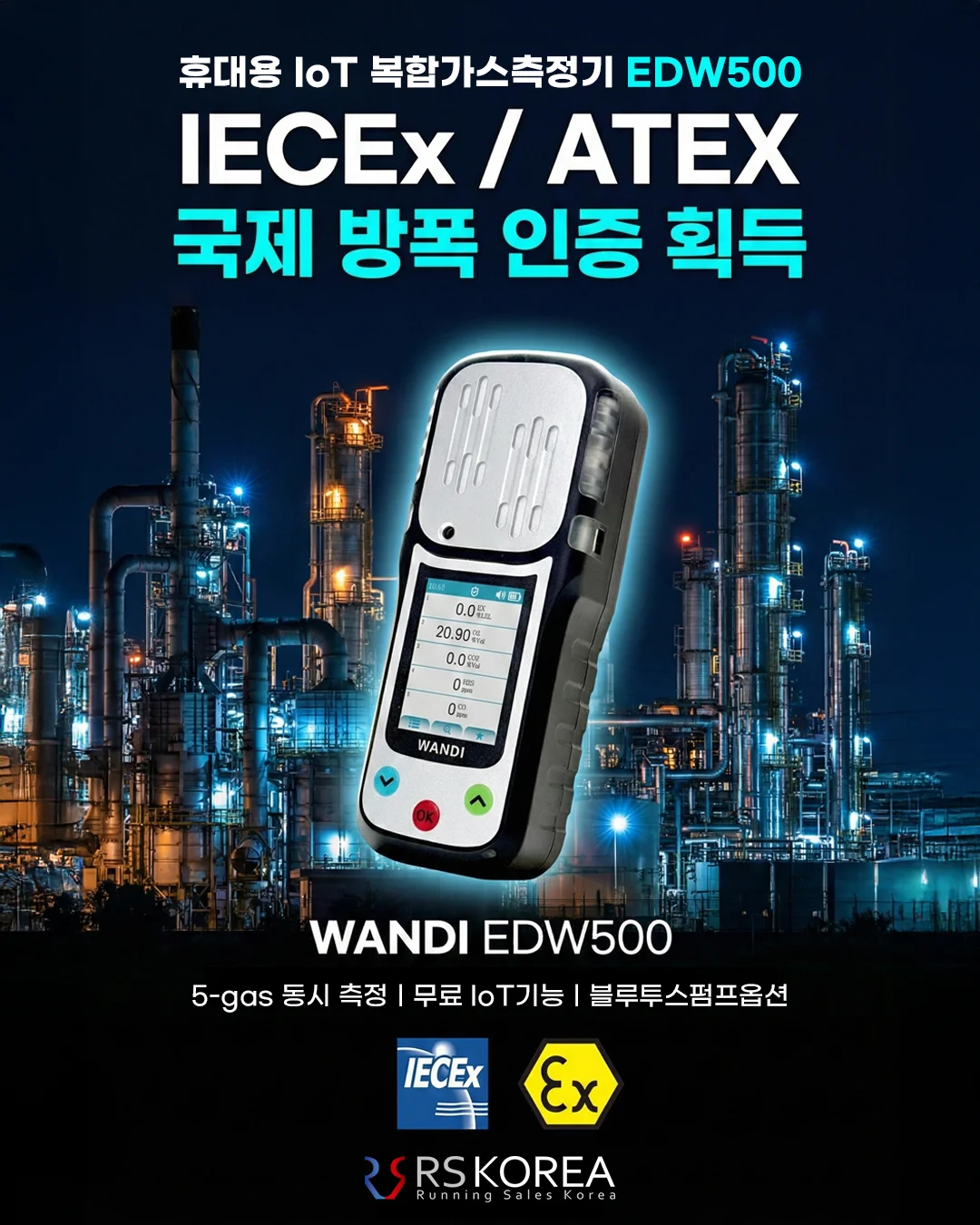
Nitrogen dioxide (NO₂) is a reddish-brown toxic gas with a pungent odor generated in a wide range of industrial environments, including vehicle exhaust, thermal power generation, and nitric acid manufacturing. Even at a low concentration of 0.2 ppm, long-term exposure causes respiratory damage, and at 20 ppm or above it becomes an immediate threat to life. The WANDI EDW500 portable multi-gas detector simultaneously measures up to 5 gases including NO₂, and holds IECEx international explosion-proof certification for safe use in all industrial sites, including explosion-hazard zones.
What Is Nitrogen Dioxide (NO₂)?
NO₂ is a secondary pollutant formed when NO reacts with atmospheric oxygen during high-temperature combustion. It is a reddish-brown gas whose odor can be detected at 1–3 ppm, but at low concentrations it is difficult to recognize, and repeated exposure causes olfactory fatigue, making it possible to fail to notice dangerous concentrations. It is a potent respiratory toxicant that penetrates deep into the lungs and damages the alveoli.
💡 Characteristics of NO₂
NO₂ reacts with water to form nitric acid (HNO₃) and nitrous acid (HNO₂), causing direct chemical damage upon contact with moisture in the airways. It is so toxic that its TLV-TWA is just 0.2 ppm.
NO₂ Health Effects and Exposure Standards
| Concentration (ppm) | Exposure Duration | Health Effects | Standard |
|---|---|---|---|
| 0.2 ppm | 8-hr (TWA) | ACGIH permissible limit (caution for long-term respiratory effects) | ACGIH TLV-TWA |
| 1–3 ppm | Short-term | Odor becomes detectable, nose/throat irritation begins | WHO |
| 3 ppm | 15 min (STEL) | Short-term exposure limit — coughing, chest pain | ACGIH STEL |
| 5 ppm | 8 hours | OSHA permissible limit — airway irritation | OSHA PEL |
| 20 ppm | Immediate | IDLH — pulmonary edema, immediate life threat | NIOSH IDLH |
| 150 ppm or above | Short-term | Death possible within minutes | Toxicology literature |
※ Sources: ACGIH TLVs and BEIs (2024), OSHA 1910.1000, NIOSH Pocket Guide to Chemical Hazards, WHO Air Quality Guidelines
Real NO₂ Gas Accident Cases
Case 1: NO/NO₂ Leak During Plasma Treatment at a Changwon Electrical Research Institute (Korea)
At a research institute in Changwon, NO and NO₂ were rapidly generated during an atmospheric plasma treatment experiment, and researchers reported symptoms of airway irritation. In plasma treatment environments, nitrogen and oxygen combine under high energy to form NOx, making real-time monitoring essential. (Source: wandi.co.kr Installation Case Study — Raymond Korea, 2022)
Case 2: NO₂ Leak at a German Nitric Acid Plant Forces Resident Evacuation (2012)
In 2012, a pipe rupture on a nitric acid production line at a Bayer Leverkusen chemical plant in Germany caused a large NO₂ gas leak, forcing the evacuation of roughly 1,000 residents within a 2 km radius. Five workers were hospitalized with poisoning symptoms, and a delayed initial alarm was identified as a factor that worsened the damage. (Source: European Chemical Industry Council, Safety Alert, 2012)
How WANDI EDW500 Prevents NO₂ Gas Accidents
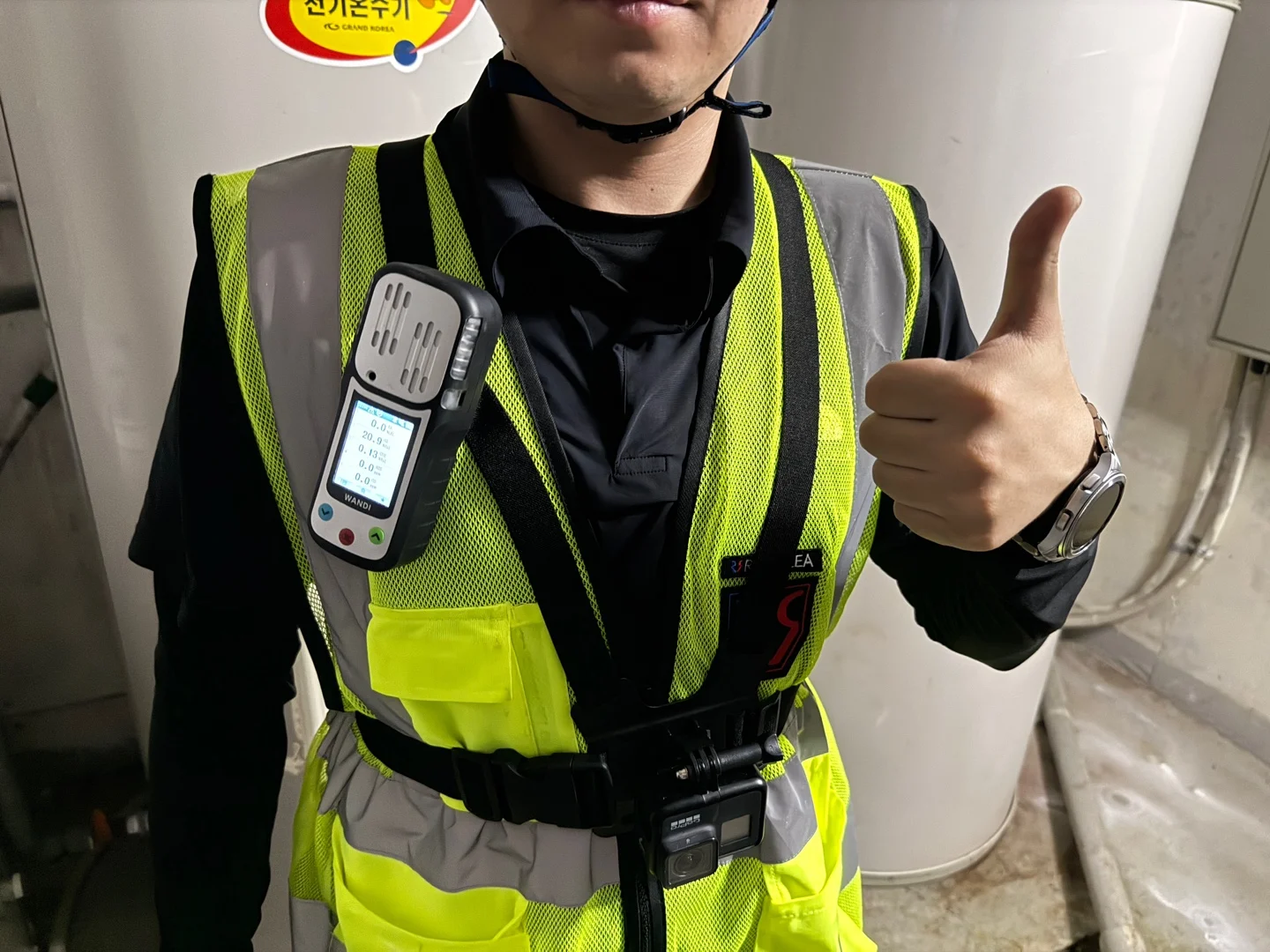
The EDW500 is a portable multi-gas detector that workers wear on their bodies or use as a pre-entry measurement tool before entering hazardous zones. For a gas like NO₂ that is highly toxic even in trace amounts, it accurately detects from low concentrations and immediately triggers alarms so workers can recognize danger.
- 1Pre-entry check: Measure NO₂ concentration with the EDW500 before entering confined spaces or chemical process areas
- 2Wearable monitoring: Wear the EDW500 during work for continuous real-time NO₂ concentration monitoring
- 3Two-stage alarms: Stage 1 alarm (STEL warning) → Stage 2 alarm (IDLH approaching), with staged audible and vibration alerts
- 4Immediate evacuation: Stop work and evacuate to an area with fresh air immediately upon alarm
- 5Data logging: Measurement history is stored, securing before-and-after concentration data — useful for industrial safety audits
WANDI EDW500 International Explosion-Proof Certification (IECEx)
🏆 IECEx International Explosion-Proof Certification Obtained
The EDW500 holds IECEx TPS 25.0057X international explosion-proof certification (certifying body: TÜV SÜD). Explosion-proof rating: Ex da ia IIC T4 Ga / Zone 0 (EPL Ga) — safe for use even in Zone 0, the highest-risk area where flammable gases are constantly present. It is a detector optimized for explosion-proof-required environments such as nitric acid plants, chemical processes, and painting facilities where NO₂ is generated.
| Certification Item | Details |
|---|---|
| Certificate Number | IECEx TPS 25.0057X |
| Certifying Body | TÜV SÜD (Germany) |
| Explosion-Proof Rating | Ex da ia IIC T4 Ga |
| Applicable Zones | Zone 0, Zone 1, Zone 2 (EPL Ga) |
| Gas Group | IIC (all flammable gases including hydrogen) |
| Temperature Class | T4 (maximum surface temperature 135°C) |
| Number of Gases Measured | Up to 5 gases simultaneously |
Industrial Sites Where NO₂ Gas Measurement Is Essential
- Vehicle tunnels and parking garages: Large amounts of NO₂ generated from vehicle exhaust
- Nitric acid and fertilizer manufacturing plants: NO₂ generated directly during nitric acid synthesis
- Thermal power plants and boiler rooms: NOx emitted during fuel combustion
- Plasma treatment research labs: NO/NO₂ formed during atmospheric plasma generation
- Welding and metal processing: NO₂ generated at high temperatures during arc welding
- Semiconductor component disassembly and incineration facilities: NOx emitted during combustion processes


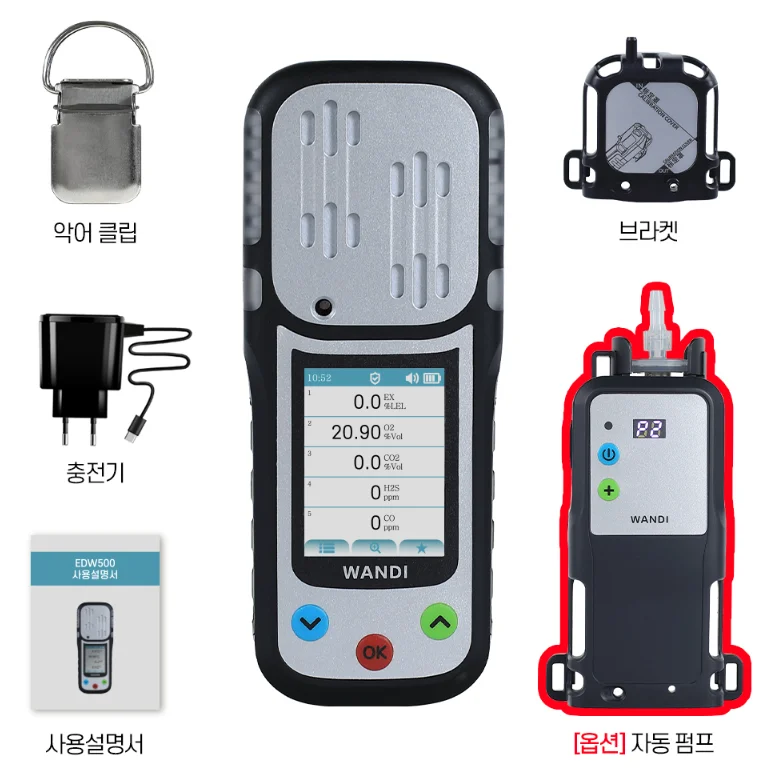
A Closer Look at the WANDI EDW500 Product and Field Use
Below are real photos of the WANDI EDW500 portable multi-gas detector.