What is PH3 (Phosphine)? The Most Dangerous Fumigation Gas
Phosphine (PH₃) is a colorless, highly toxic gas used in grain warehouse fumigation, ship cargo and container fumigation, semiconductor processes, and chemical synthesis. It has a garlic- or rotten fish-like odor, but at high concentrations the sense of smell becomes paralyzed and the odor can no longer be detected. Its IDLH (Immediately Dangerous to Life or Health) is just 50 ppm, and the Korean exposure limit is an extremely low 0.3 ppm (TWA).
💡 Key Point
Phosphine remains as residual gas inside fumigated containers and warehouses, exposing workers to serious danger when the space is opened or entered. Entering a fumigated space without measuring residual phosphine levels is absolutely prohibited.
How PH3 Gas Affects the Human Body
| Exposure Level | Duration | Health Effect |
|---|---|---|
| 0.3 ppm | 8-hr TWA | Korea/OSHA PEL — headache, fatigue |
| 1 ppm | Short-term | Nausea, vomiting, respiratory irritation |
| 10 ppm | Tens of minutes | Severe breathing difficulty, chest pain, dizziness |
| 50 ppm | Immediate | IDLH — immediately life-threatening |
| 400–600 ppm | Immediate | Pulmonary edema, cardiac arrest, risk of instant death |
(Source: NIOSH Pocket Guide to Chemical Hazards; Korea Ministry of Employment and Labor Notice on Chemical Exposure Limits)
Major PH3 Occurrence Sites
- Grain and food warehouse fumigation: Use of aluminum phosphide tablets for pest eradication
- Container and ship cargo fumigation: Pest control for imported grain, timber, and dried food
- Semiconductor processes: Used as a doping gas (ultra-high-purity PH₃)
- Silos (large grain storage towers): Large amounts of residual gas after fumigation
- Wastewater and sewage treatment plants: Trace natural generation from organic matter decomposition

Real PH3 Accident Cases
🇰🇷 Fatal Container Fumigation Accident in Korea (2022)
In 2022, at Incheon Port, one worker died and two others were seriously injured while opening an imported cargo container that had been treated with phosphine fumigation. Although the container was marked as fumigation-complete, the workers entered without measuring the residual phosphine concentration with a gas detector, which was the cause of the accident. (Source: Korea Ministry of Employment and Labor, Serious Accident Investigation Results, 2022)
🌏 Mass Poisoning at a Fumigated Warehouse in India (2017)
In Rajasthan, India, a family from a nearby community entered a grain warehouse that had been fumigated with aluminum phosphide, resulting in 9 deaths. Adequate ventilation and confirmation of residual gas levels using a detector had not been carried out. (Source: India National Disaster Management Authority Report, 2017)
How WANDI EDW500 Prevents PH3 Accidents
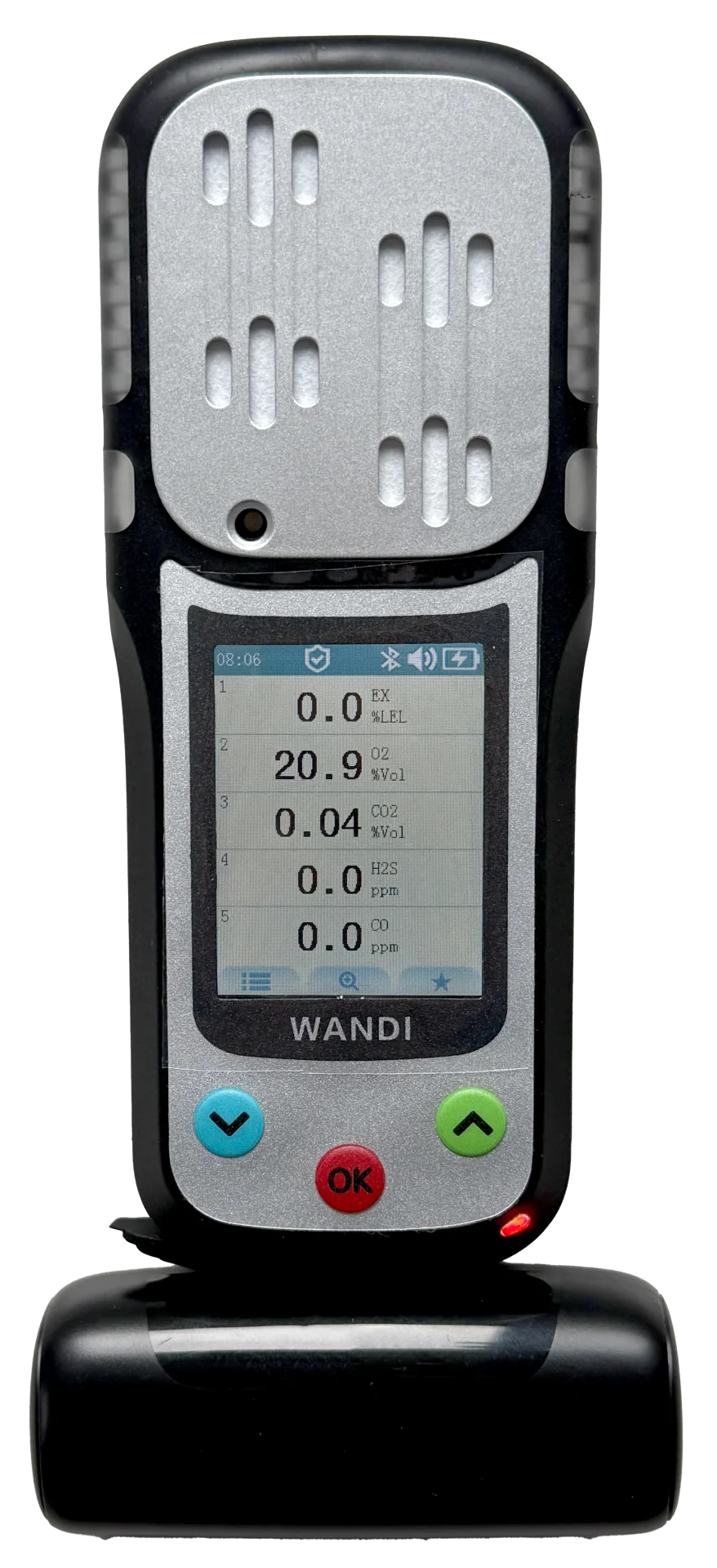
PH3 Detection Features of the EDW500
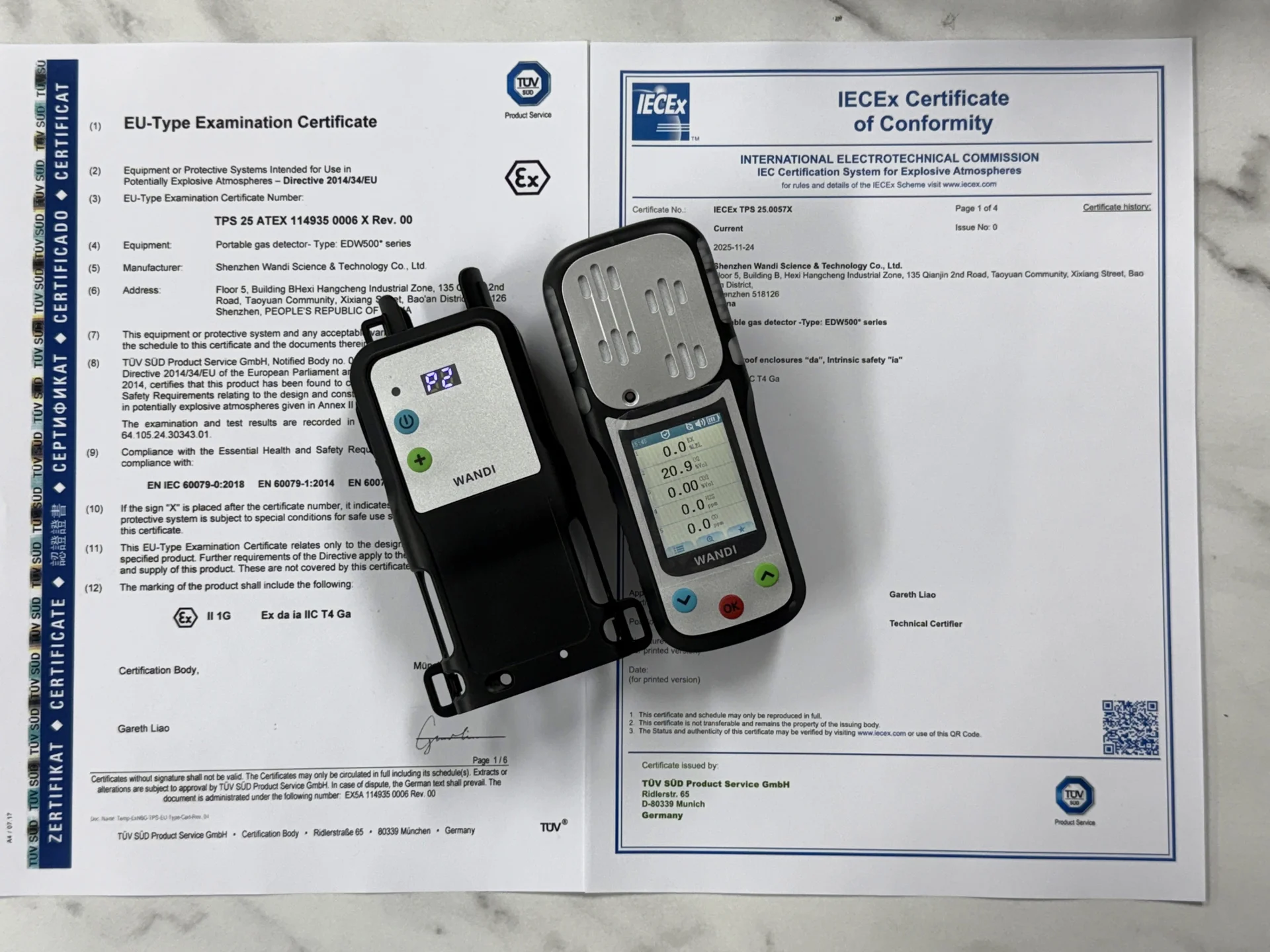
- IECEx international explosion-proof certification: IECEx TPS 25.0057X (TÜV SÜD certified), applicable to Zone 0
- PH₃ electrochemical sensor: High-sensitivity measurement in the 0.1–20 ppm range (detects well below the 0.3 ppm exposure limit)
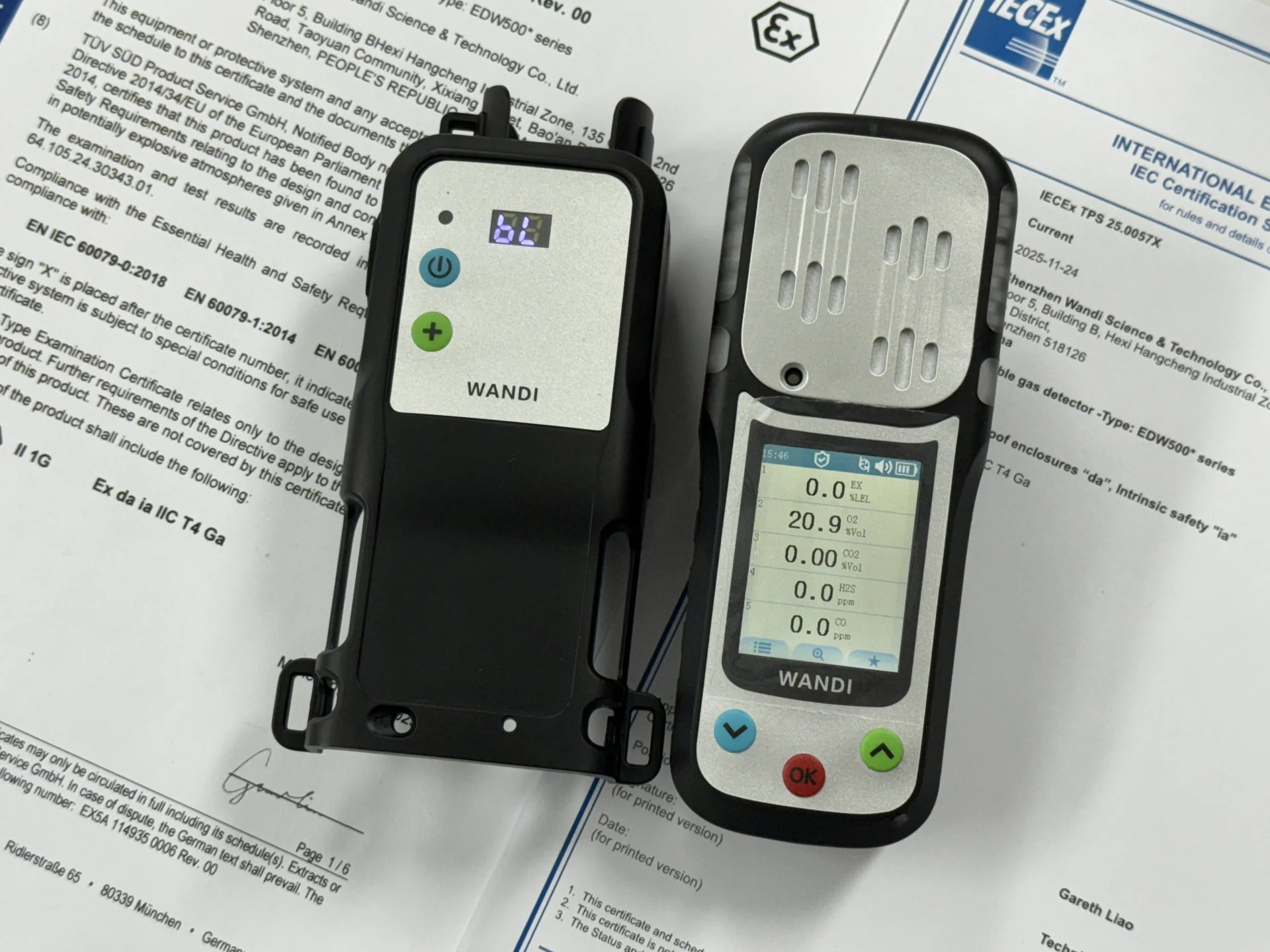
- Simultaneous 5-gas measurement: PH₃, O₂, CO, H₂S, EX measured together for complex gas environments
- IoT cloud integration: Real-time data logging, remote transmission of hazard alarms
- Essential measurement tool before opening fumigated spaces: Safety verification before opening containers and warehouses
If the EDW500 Had Been in Use: A Prevention Scenario
- 1Before opening the container: Sample the internal air with the EDW500 from outside the container
- 2PH₃ detected above 0.3 ppm: Trigger an immediate alarm and prohibit entry
- 3Additional ventilation: Re-measure after forced ventilation and confirm below 0.3 ppm before entry
- 4Continuous monitoring during entry: Wear the EDW500 for ongoing monitoring during work
- 5Cloud record-keeping: All measurement history is automatically saved and retained as a legal record
EDW500 IECEx International Explosion-Proof Certification
| Item | Details |
|---|---|
| Certificate Number | IECEx TPS 25.0057X |
| Certifying Body | TÜV SÜD (Germany) |
| Explosion-Proof Rating | Ex da ia IIC T4 Ga |
| Applicable Zone | Zone 0 (highest hazard zone) |
A Closer Look at the WANDI EDW500 Product and Field Use
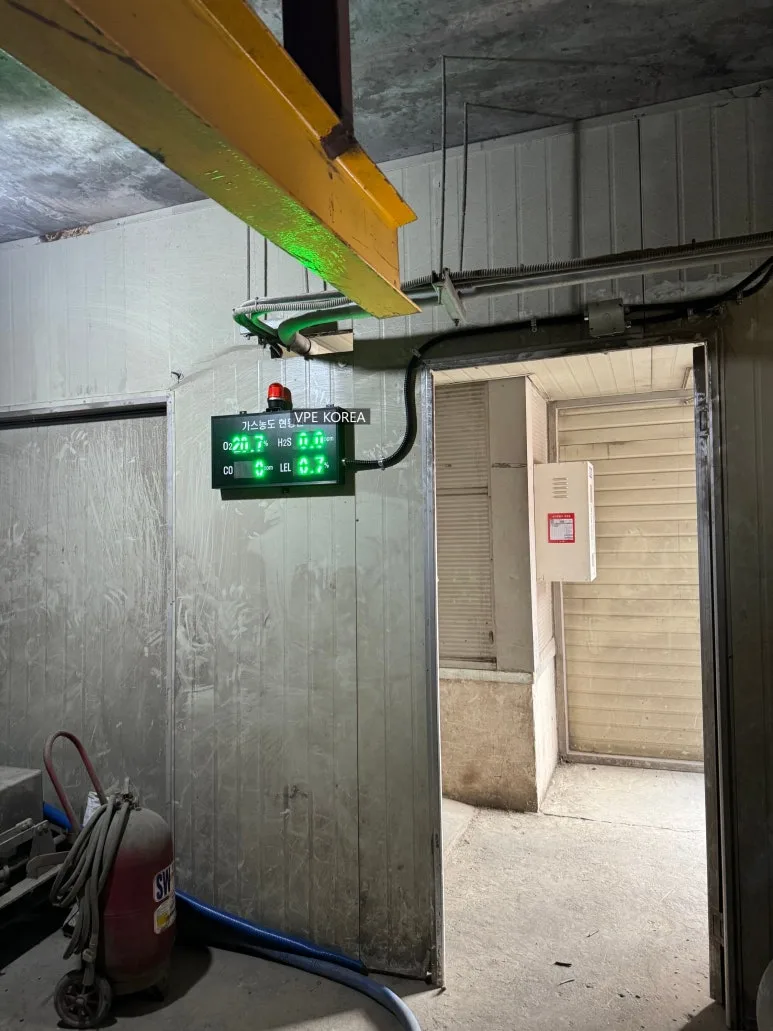
Below are real photos of the WANDI EDW500 portable multi-gas detector and its use in the field.