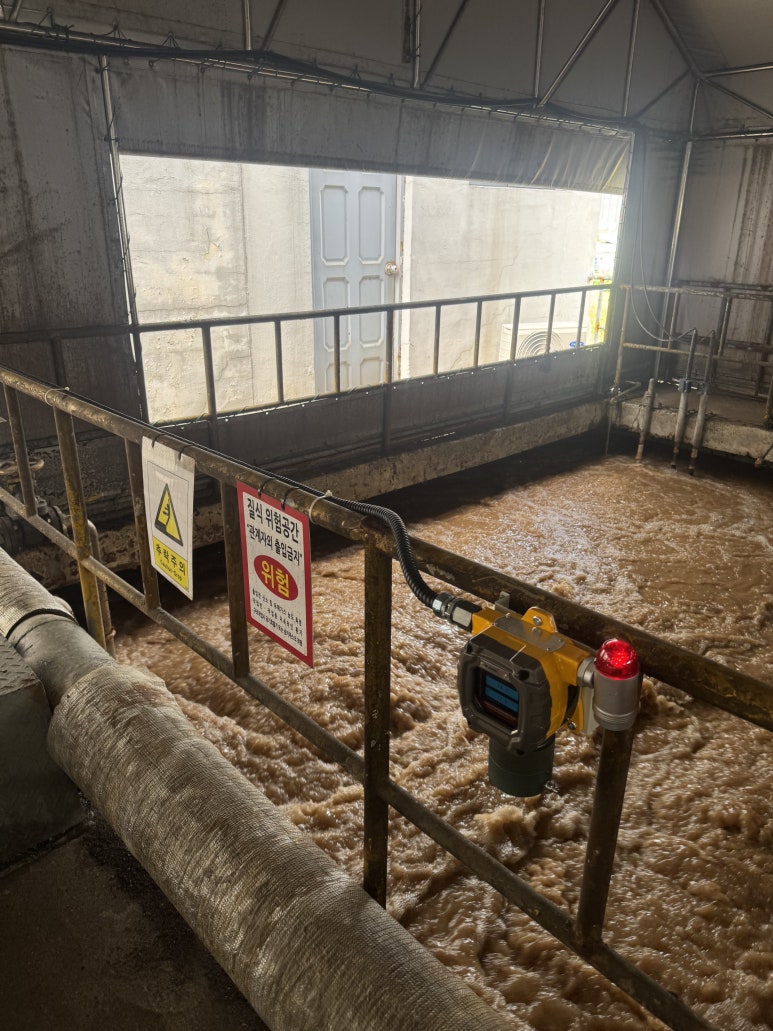
Hydrogen sulfide (H₂S) generated in pig farm septic tanks and slurry pits can paralyze the nervous system with a single breath. The real issue is not human rights — it is the absence of a gas detection system. WANDI EDW500 simultaneously monitors H₂S and 4 other gases, sounding the alarm before workers ever enter a danger zone.
⚠️ Key Fact
At 100 ppm H₂S, a worker loses consciousness within minutes. At 1,000 ppm, a single breath is fatal. When the rotten-egg smell seems to disappear, it means the olfactory nerve is already paralyzed — not that the gas is gone.

Why Pig Farms Are the Highest H₂S Risk Environment
Slurry pits and septic tanks where pig manure decomposes anaerobically continuously generate hydrogen sulfide. During agitation or pumping operations, concentrations can spike tens of times higher in seconds.
H₂S Health Effects by Concentration
| Concentration (ppm) | Symptoms | Risk Level |
|---|---|---|
| 1–5 ppm | Rotten egg odor, eye irritation | ⚠️ Caution |
| 50–100 ppm | Olfactory paralysis, severe respiratory irritation | 🔴 Danger |
| 300–500 ppm | Pulmonary edema, unconsciousness within minutes | 💀 Immediately Dangerous (IDLH) |
| 1,000+ ppm | Instant death from a single breath | 💀 Fatal |
Sources: NIOSH Pocket Guide, KOSHA Guide W-12-2020, Korean Ministry of Employment and Labor (TWA = 1 ppm)
Recurring Suffocation Accidents at Livestock Farms
- 🔴 June 2025, Ganghwa, Incheon — A worker in his 50s died and 3 were injured from gas poisoning at a public livestock manure treatment facility. Even professionally managed facilities are not immune to H₂S.
(Source: Incheon Fire Department, 2025.06.18) - 🔴 2021, Jindo, South Jeolla — A Korean farm owner died and 2 workers were injured during manure handling.
- 🔴 2017, Yeoju, Gyeonggi — A Korean manager died attempting to rescue a foreign coworker. H₂S does not discriminate by nationality.
How EDW500 Protects Workers — 3 Layers of Defense

Step 1: Pre-Entry Detection
Before entering a slurry pit or septic tank, the worker checks gas levels at the entry point with the EDW500. If H₂S exceeds the set threshold (e.g., 10 ppm), a triple alarm (vibration + audio + visual) immediately blocks entry.
Step 2: Real-Time Alarm During Work

If agitation causes a sudden gas spike mid-task, the EDW500 detects it within 2–3 seconds and sounds the alarm. Most pig farm suffocation accidents happen exactly during agitation — these seconds determine survival.
Step 3: Automatic Data Logging and Remote Alert
Connected to DCMS cloud, the EDW500 auto-saves all readings and sends instant email/app notifications to supervisors when thresholds are exceeded. Data is retained for 3 years per Korean safety law.
Why EDW500 Is Purpose-Built for Livestock Environments
| Feature | Spec | Farm Benefit |
|---|---|---|
| 5-Gas Simultaneous Detection | H₂S, O₂, CO, EX, CO₂ | Full coverage of complex slurry pit gas environment |
| IECEx · ATEX Certification | Dual international explosion-proof | Safe use in explosive methane zones |
| Triple Alarm | Vibration + Audio + Visual | Instantly perceived even in noisy barns |
| DCMS Cloud | Wireless real-time data upload | Remote monitoring via smartphone |
| IP67 Rating | Dustproof and waterproof | Durable in high-humidity, manure-exposed environments |
Legal Requirements — What Every Farm Must Have Now
Korean law mandates: pre-entry gas measurement in confined spaces (Occupational Safety and Health Act Article 619); 5-gas simultaneous monitoring with 3-year data retention (2024 amendment); and under the Serious Accident Punishment Act, farm owners face 1+ year imprisonment or fines up to KRW 1 billion for fatal accidents. The EDW500 satisfies all these obligations in one device.