📌 3 Key Takeaways
- The main odor gases, hydrogen sulfide (H₂S) and ammonia (NH₃), are designated odor substances under Korea's Odor Prevention Act and lethal industrial gases. Above 100 ppm, H₂S paralyzes the sense of smell, so odor can no longer warn you.
- Accidents keep recurring — wastewater-plant H₂S poisoning, an NH₃ leak at a Gunsan cold-storage facility, and an NH₃ explosion at a Gwangju cold-storage warehouse that killed 2 and injured 10.
- The FIX800 fixed gas detector monitors up to 5 gases including H₂S and NH₃ around the clock and can automatically trigger ventilation fans via relay outputs — solving odor complaints and preventing accidents at once.
The site dismissed as "a bit smelly" is often the most dangerous one. Hydrogen sulfide (H₂S) and ammonia (NH₃) — the main components of odor at wastewater plants, septic tanks, livestock farms and food-waste facilities — are designated odor substances under Korea's Odor Prevention Act and, at the same time, gases that cause asphyxiation, poisoning and explosions. This article covers the risks, real accident cases, and how to build a 24/7 monitoring system with the WANDI FIX800 fixed gas detector.
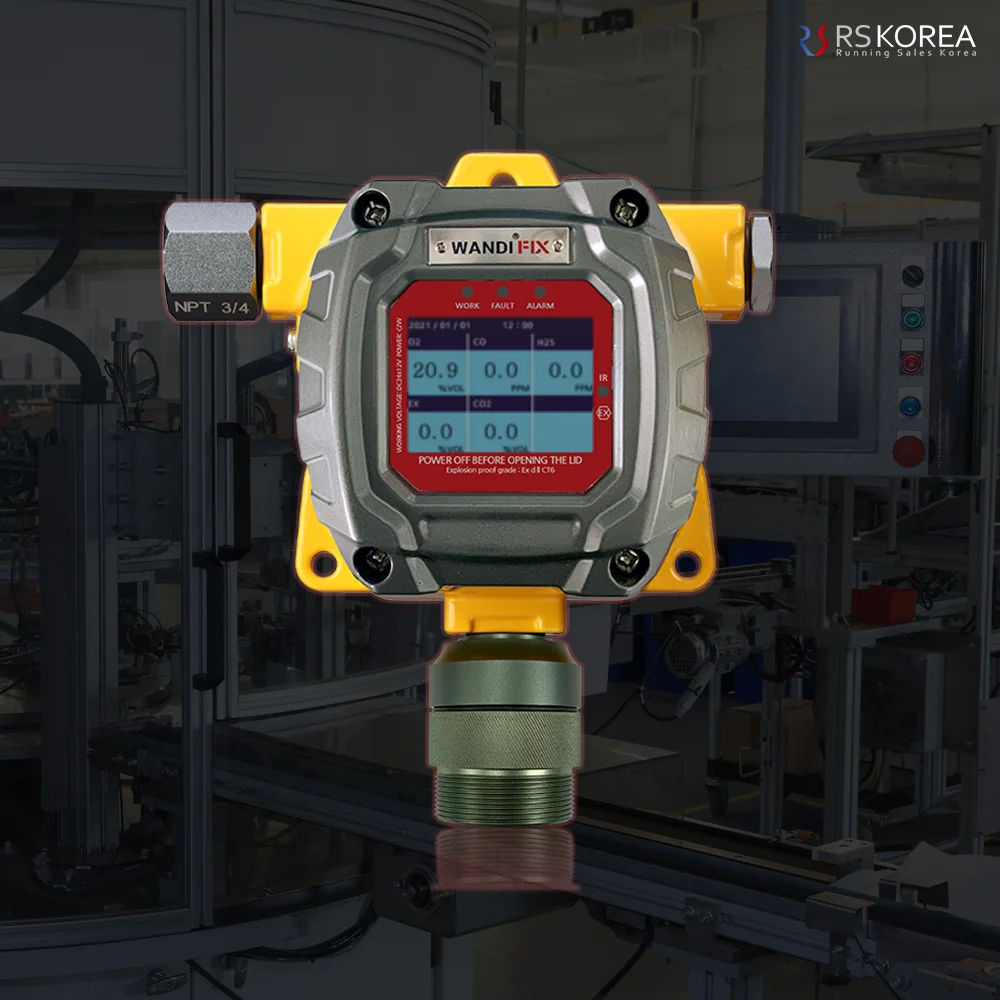
Where Odor Gases Occur — Main H₂S·NH₃ Sites
H₂S forms as organic matter decays; NH₃ comes mainly from manure, urea and refrigerant systems. Both are among the 22 designated odor substances under Korea's Odor Prevention Act (reference: Ministry of Environment odor management materials).
| Site | Main odor gases | Cause |
|---|---|---|
| Sewage/wastewater plants, septic tanks | H₂S, NH₃ | Organic/sludge decay, anaerobic decomposition |
| Livestock farms, manure facilities | NH₃, H₂S | Manure decomposition, slurry-pit agitation |
| Food-waste facilities | H₂S, NH₃ | Food decay and fermentation |
| Cold storage, food plants | NH₃ | Ammonia refrigerant (R-717) pipe leaks |
| Fertilizer and chemical plants | NH₃ | Raw-material and process gas leaks |
Why You Can't Rely on Smell — Health Effects by Concentration
The most frightening property of H₂S is that above about 100 ppm it paralyzes the sense of smell — the moment you think "the smell is gone" is the most dangerous moment. NH₃'s pungent odor makes work difficult even at low levels, and at 15–28 vol% in air it forms an explosive mixture.
| Gas | Exposure limit (MOEL) | Effects by concentration |
|---|---|---|
| Hydrogen sulfide (H₂S) | TWA 10 ppm / STEL 15 ppm | ~0.1 ppm odor detection (rotten egg) / 50–100 ppm eye and respiratory irritation / ≥100 ppm olfactory paralysis / 200–300 ppm pulmonary edema / 500 ppm loss of consciousness / ≥700 ppm immediate death risk |
| Ammonia (NH₃) | TWA 25 ppm / STEL 35 ppm | ~5 ppm odor detection (pungent) / 50 ppm eye, nose and throat irritation / 300 ppm immediately dangerous to life (IDLH) / ≥700 ppm corneal damage, breathing difficulty / 15–28 vol% explosive range |
※ Based on MOEL exposure limits (Notice 2016-41) and KOSHA data
Legally, Korea's Rules on Occupational Safety and Health Standards (Article 619-2) mandate oxygen and toxic-gas measurement before confined-space work, and H₂S is managed under the acceptable-air criterion of below 10 ppm for confined spaces.
Real Accidents — Recurring H₂S·NH₃ Disasters
- H₂S poisoning of a wastewater worker — An occupational-disease case report documents a worker poisoned by hydrogen sulfide from sludge inside a wastewater collection basin. At high concentrations, one or two breaths of H₂S can cause loss of consciousness (source: Central Occupational Disease Center, gas poisoning case).
- July 2023, Gunsan cold-storage ammonia leak — NH₃ refrigerant leaked from a cold-storage facility, alarming nearby residents. The same company had a similar accident in 2018 (source: Jeonmin Ilbo, July 2023).
- Gwangju (Gyeonggi) cold-storage ammonia explosion — 2 dead, 10 injured — Ammonia refrigerant leaking during welding repair ignited and exploded, proving NH₃ is an explosive gas, not just an odor nuisance (source: Korea Safety Education Association accident analysis).
All three sites had one thing in common: no equipment showing gas concentrations in real time. The answer is continuous measurement.
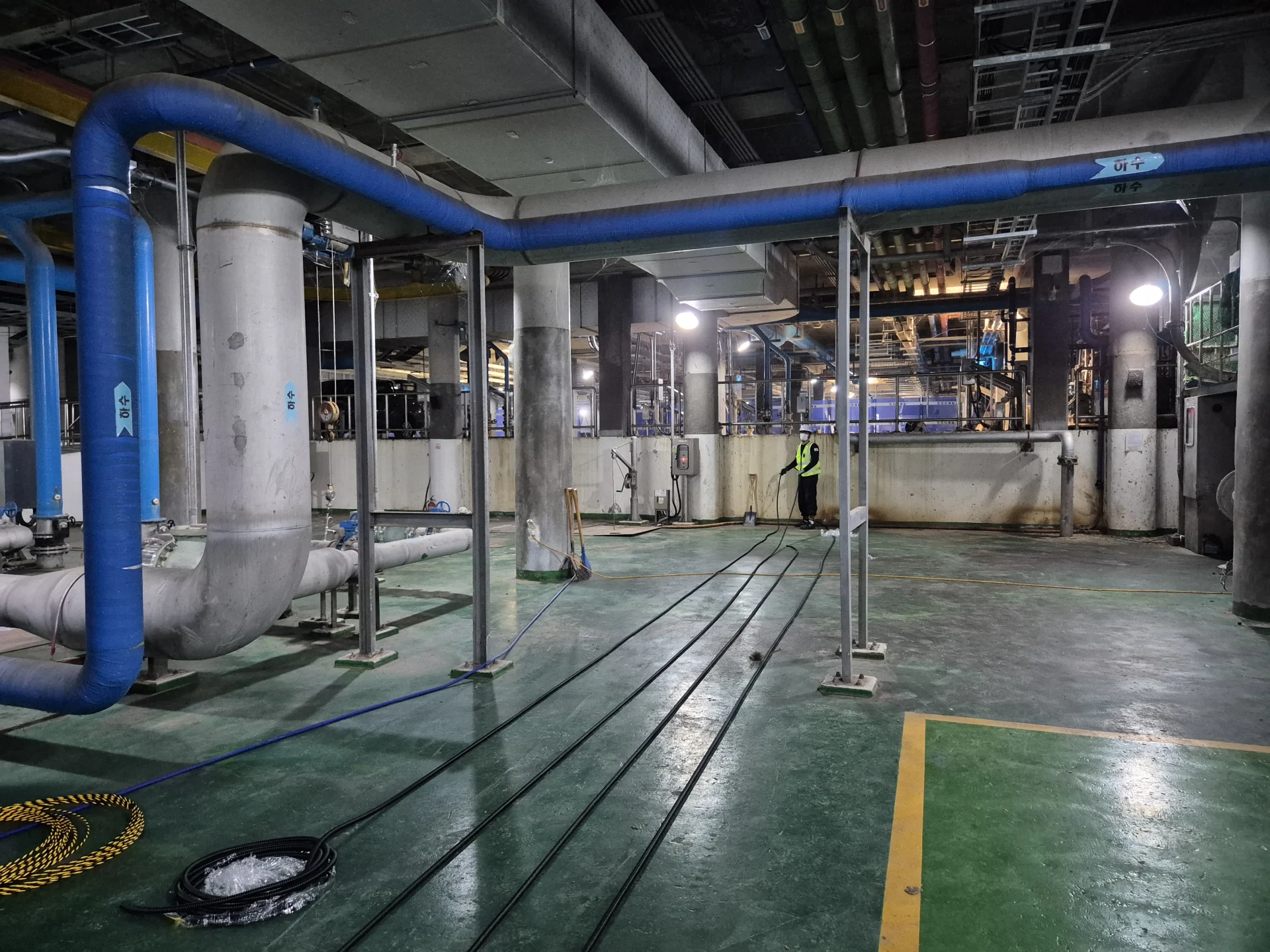
How the FIX800 Removes Risk from Odor Sites
- Sensors replace the nose — H₂S is precisely measured from low ppm levels with an electrochemical (EC) sensor, which keeps reading accurately in the high range where human smell fails. A dedicated NH₃ sensor can be configured to order (reference: FIX800 gas list and official manual).
- Check before entry — A FIX-DS display board at the entrance lets workers visually confirm internal H₂S·NH₃ levels before entering septic tanks or collection basins.
- Automatic ventilation interlock — With 4–20 mA, RS485 Modbus outputs and alarm relays, ventilation fans start automatically at set concentrations — handling odor complaints and safety at the same time.
- Remote monitoring and records — With the FIX-AP wireless gateway and DCMS cloud, managers view live readings and export per-minute logs. Communication and cloud costs are free for life.
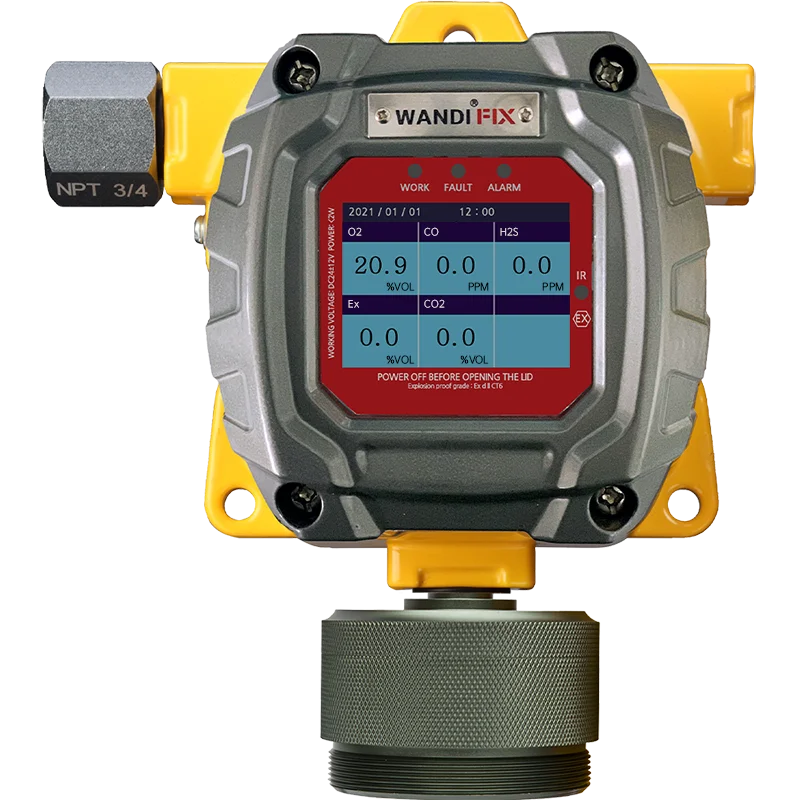
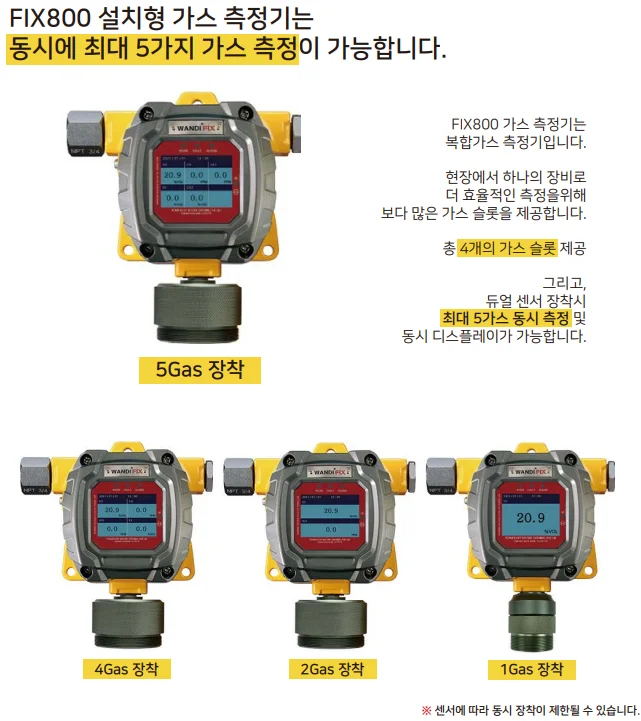
FIX800 Key Specs — Up to 5 Gases Including H₂S and NH₃
The FIX800 is a fixed multi-gas detector that measures up to five gases simultaneously with one unit. Beyond the standard five-gas set (O₂·CO·H₂S·LEL·CO₂), gas combinations including NH₃ are built to order (reference: official FIX800 manual and gas list).
- NDIR, electrochemical (EC), PID and catalytic sensors — 30+ gases supported
- Atmospheric diffusion sensing — install near expected leak points, 24/7 monitoring
- FIX-DS display board and strobe — light and sound alarms visible from outside
- Alarm relays — automatic interlock with ventilation fans and suppression systems
- Pre-treatment enclosure for hot, humid or dusty sites such as sludge areas
- Sensor life around 2 years (CO₂ around 5 years); lead time from 3 days, ~3 weeks for special sensors
See the 9 FIX800 installation cases for site photos, the EDW500 portable NH₃ guide for portable needs, and the FIX800 display board and FIX-AP setup guide for system building.
Closing
Odor is a matter of life before it is a matter of complaints. A smelly site means toxic gas is already being generated — and a site where the smell has "disappeared" may be even more dangerous. Contact WANDI (+82-31-340-6952) for FIX800 inquiries and on-site surveys — we will propose the right gas combination and mounting locations for your site.
Frequently Asked Questions (FAQ)
Q1. Which odor-generating sites need installation?
Sewage and wastewater plants, septic tanks, livestock farms, food-waste facilities and cold-storage warehouses using ammonia refrigerant are typical. Since the FIX800 uses atmospheric diffusion sensing, mount it as close as possible to expected sources such as collection basins, sludge areas and refrigerant piping.
Q2. If it smells, can't workers just avoid it?
Above about 100 ppm, H₂S paralyzes the sense of smell, making the gas seem to disappear. At the most dangerous moment, your nose tells you nothing. Only a detector showing concentrations as numbers provides a reliable basis for judgment.
Q3. Can the FIX800 measure H₂S and NH₃ at the same time?
Yes. The FIX800 measures up to five gases simultaneously with one unit, and combinations including H₂S and NH₃ are built to order. They can also be combined with O₂, CO, LEL and CO₂.
Q4. What sensor types are used?
H₂S and NH₃ use electrochemical (EC) sensors that measure precisely from low ppm levels, while NDIR, PID and catalytic sensors cover 30+ gases depending on gas characteristics. Expected sensor life is about 2 years.
Q5. Isn't a portable detector enough?
Portable units only work when workers are present, but odor gases keep accumulating during unmanned hours. The fixed FIX800 monitors 24/7 and alarms immediately at dangerous levels — combining it with a portable unit for pre-entry checks is the safest practice.
Q6. Can it automatically vent odor through fans?
Yes. Alarm relays plus 4–20 mA and RS485 Modbus outputs can start ventilation fans automatically at set concentrations. Adding the FIX-AP gateway enables DCMS cloud remote monitoring with per-minute data logging.
Q7. What real accidents have occurred?
Reported cases include occupational H₂S poisoning at a wastewater collection basin, the 2023 Gunsan cold-storage ammonia leak, and a cold-storage ammonia explosion in Gwangju, Gyeonggi that killed 2 and injured 10. None of these sites had real-time gas monitoring equipment.
Q8. How do I get a quote?
Use the quote request page on the WANDI website or call +82-31-340-6952. Configurations vary by gas combination and site conditions (heat, humidity, dust), so a tailored quote follows an on-site survey. Lead time is from 3 days, about 3 weeks for special sensors.