Ammonia (NH3): The Invisible Threat in Cold Storage, Livestock, and Chemical Facilities
Ammonia (NH3) is a colorless gas with a characteristically pungent odor, widely used as a refrigerant in cold-chain facilities, fertilizer production, livestock operations, and wastewater treatment plants. Many Korean cold-storage and food-processing factories rely on NH3 refrigerant systems, making NH3 leak incidents an ongoing industrial hazard.
NH3 has an explosive range of 15–28% and causes severe chemical damage to the respiratory tract, eyes, and skin at high concentrations. While its sharp smell provides early warning, prolonged exposure leads to olfactory fatigue, eliminating this sensory alarm.

NH3 Health Effects by Concentration
| NH3 Level | Health Effect | Note |
|---|---|---|
| 1–5 ppm | Odor detectable | Sensory threshold |
| 25 ppm | Korean 8-hr TWA occupational limit | MoEL standard |
| 35 ppm | STEL (15-min short-term limit) | 15 minutes max |
| 50–100 ppm | Eye, nose, throat irritation; tearing, coughing | Strong discomfort |
| 300 ppm | IDLH — immediately dangerous to life and health | NIOSH standard |
| 1,700 ppm | Potentially fatal within 30 minutes | Pulmonary edema risk |
| ≥5,000 ppm | Rapidly fatal | Immediately lethal |
※ Source: Korean MoEL Chemical Exposure Standards (2023), NIOSH Pocket Guide, ACGIH TLV
Real Accident Cases
Case 1 — Cold-Storage Ammonia Leak (2023, South Jeolla)
At a seafood cold-storage factory in South Jeolla, an NH3 refrigerant pipe burst, exposing three workers to respiratory and eye injuries requiring hospital treatment, and triggering a neighborhood evacuation. Although an automatic detection system was installed, the sensor calibration interval had lapsed. (Source: Korean MoEL Serious Accident Cases 2023)
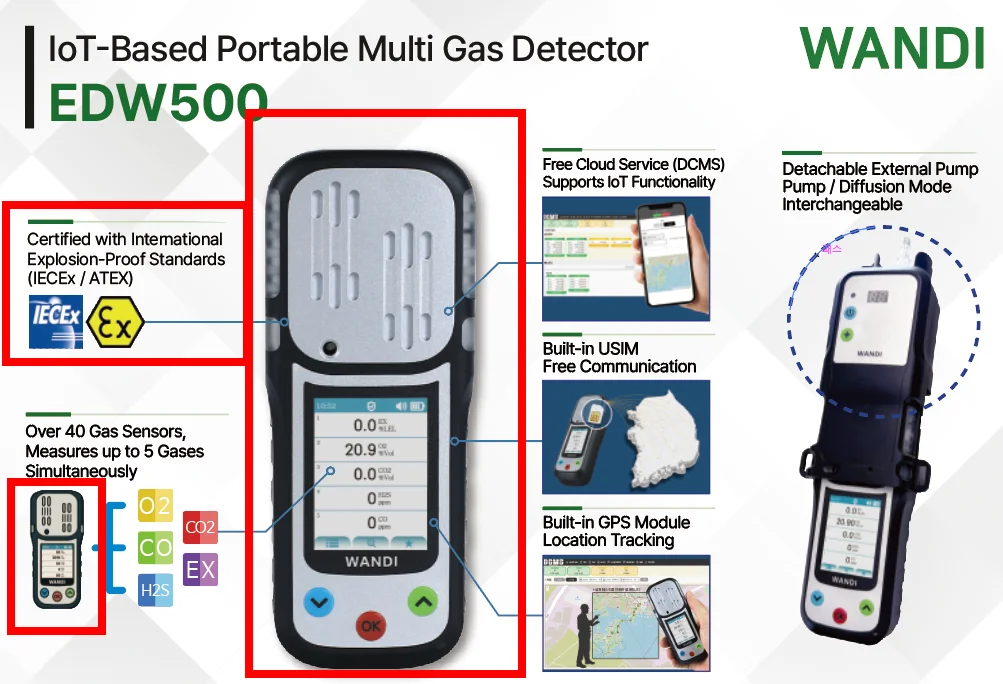
WANDI EDW500 — IECEx-Certified Portable 5-Gas Detector for NH3
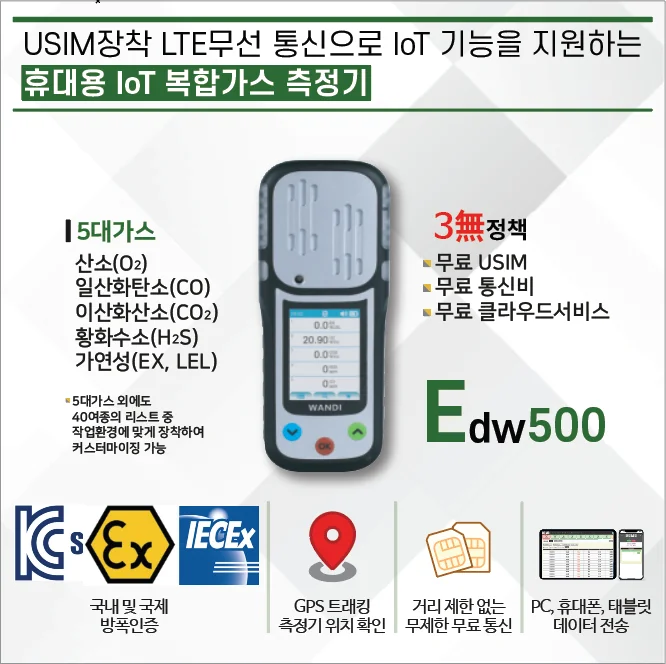
The WANDI EDW500 holds IECEx certificate TPS 25.0057X (TÜV SÜD) with explosion-protection marking Ex da ia IIC T4 Ga, certified for Zone 0 use. It simultaneously measures NH3, O2, CO, H2S, and combustibles (EX), providing real-time cloud data and three-mode alarms to protect workers in ammonia-risk environments.
Prevention Scenario
In the 2023 South Jeolla incident, an EDW500 with a calibration-status reminder would have alerted management to the expired sensor before the day's work, ensuring valid detection. Upon pipe rupture, the 25 ppm alarm would have triggered immediate evacuation, preventing the three injuries.
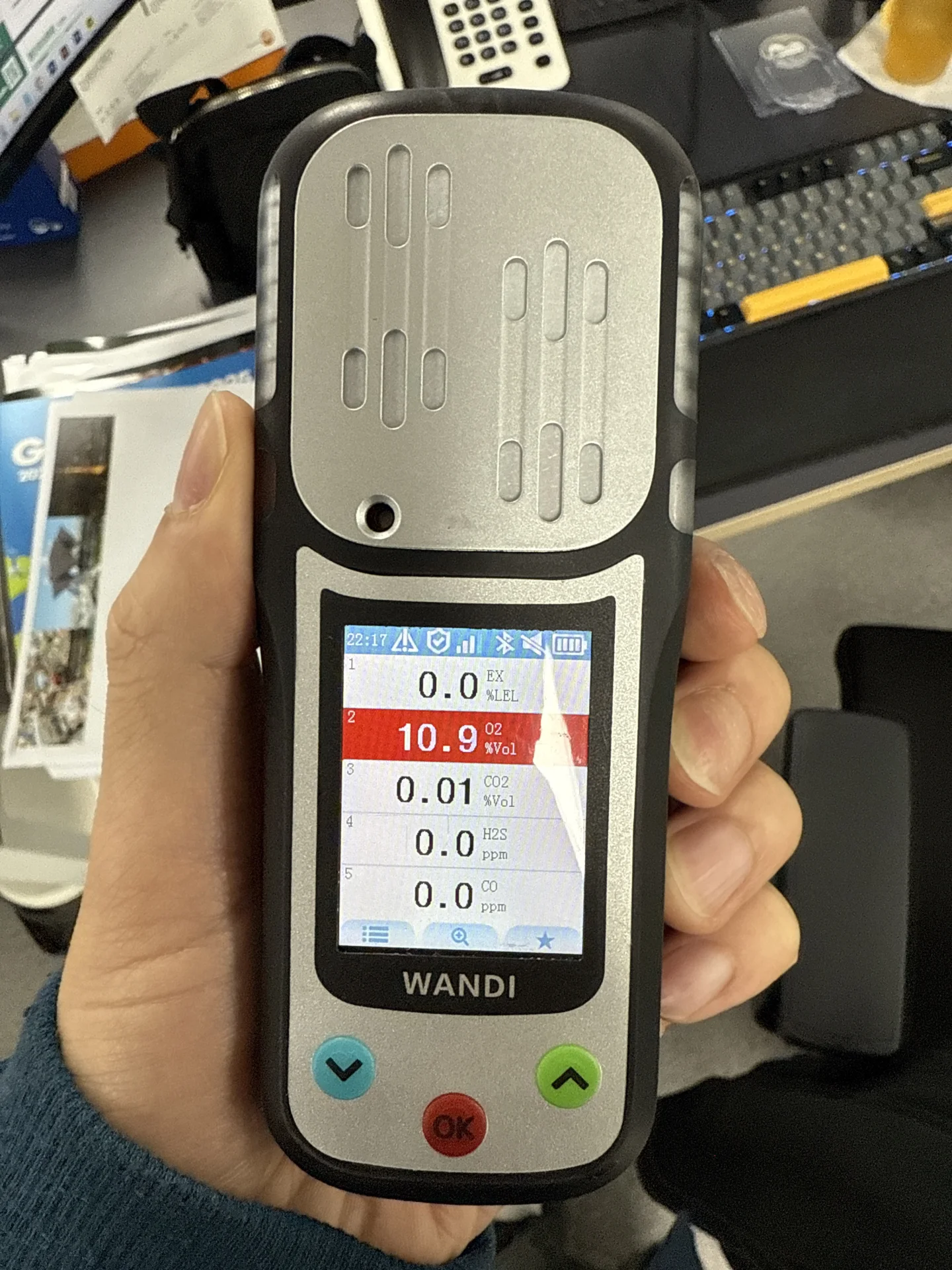
A Closer Look at the WANDI EDW500
Below are real photos of the WANDI EDW500 portable multi-gas detector.