Applied Markets
Installed Gases
Project Details
FIX800 Fixed Oxygen Detector — Disaster Prevention Room Confined-Space Safety Installation (Paju, Gyeonggi-do)
This case covers a 3-set FIX800 fixed gas detector installation for worker safety in a disaster prevention room (confined space) at a government-affiliated facility in Paju. Each unit was paired with an LED display board for pre-entry monitoring at the entrance.

FIX800 — Configurable Multi-Gas Detector
The FIX800 is a custom-configured gas detector that supports up to 4 gas sensors simultaneously, selected according to site requirements. Real-time readings are displayed on the built-in screen and can be mirrored to an external display board.
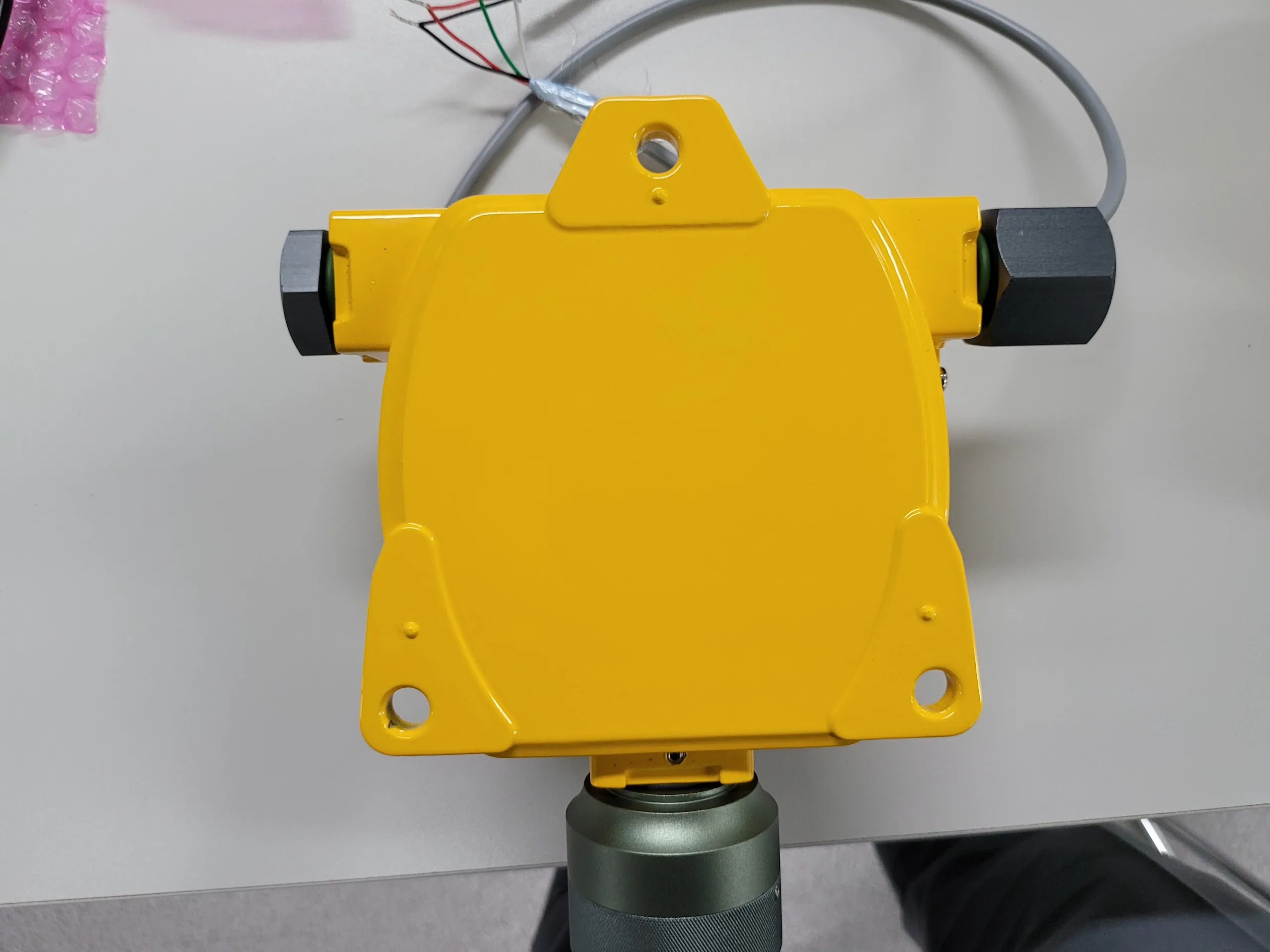
Bracket Mounting — Simplified Maintenance
The rear of the FIX800 includes mounting holes for direct wall attachment.
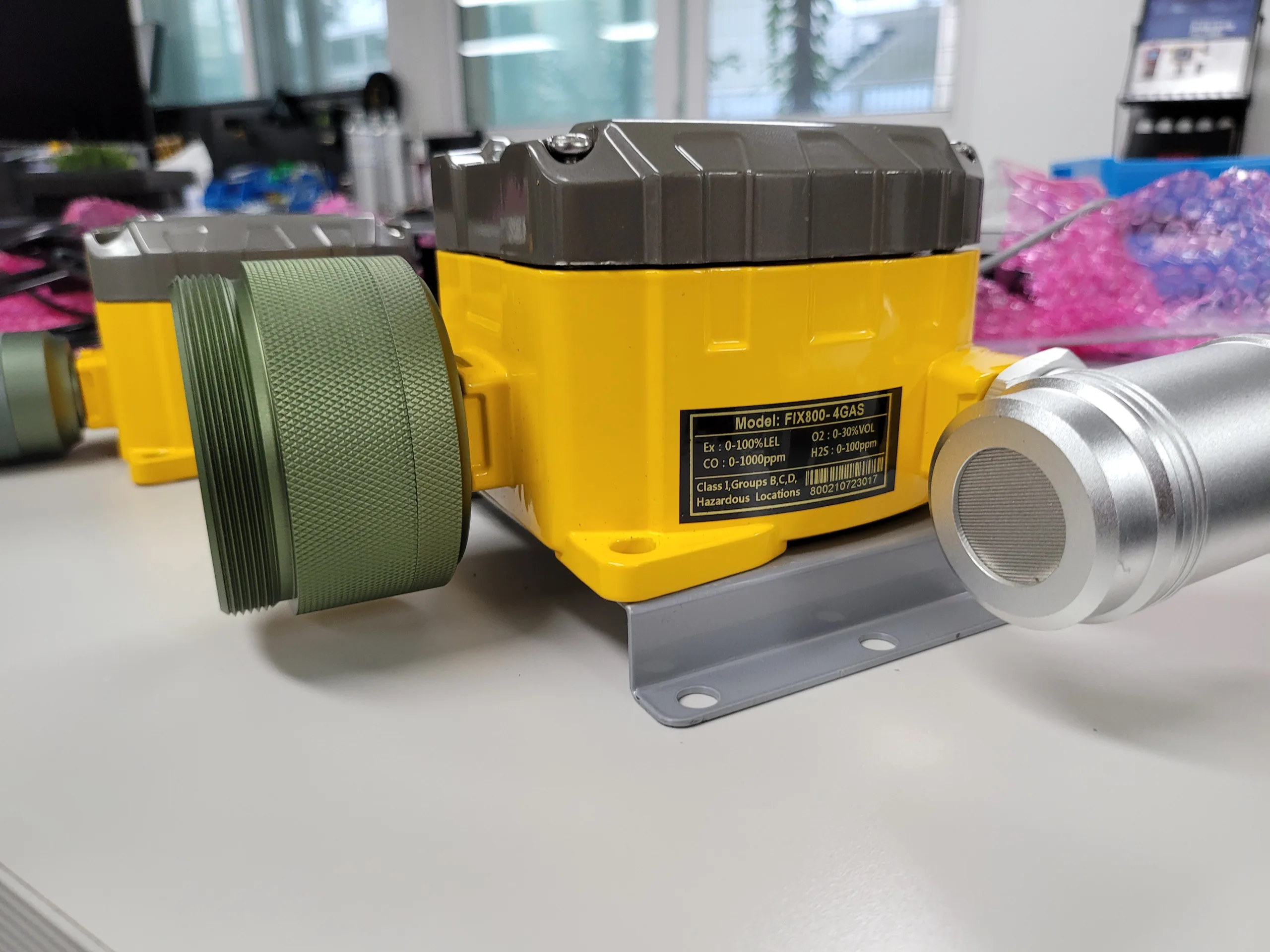
Although this order was for a single-gas (O₂) configuration, a wall bracket was ordered for future maintenance convenience. When calibration or sensor replacement is required, the unit can be removed from the bracket in seconds and sent to the service team — without any re-wiring of the wall installation.
LED Display Board — 1:1 Paired with FIX800
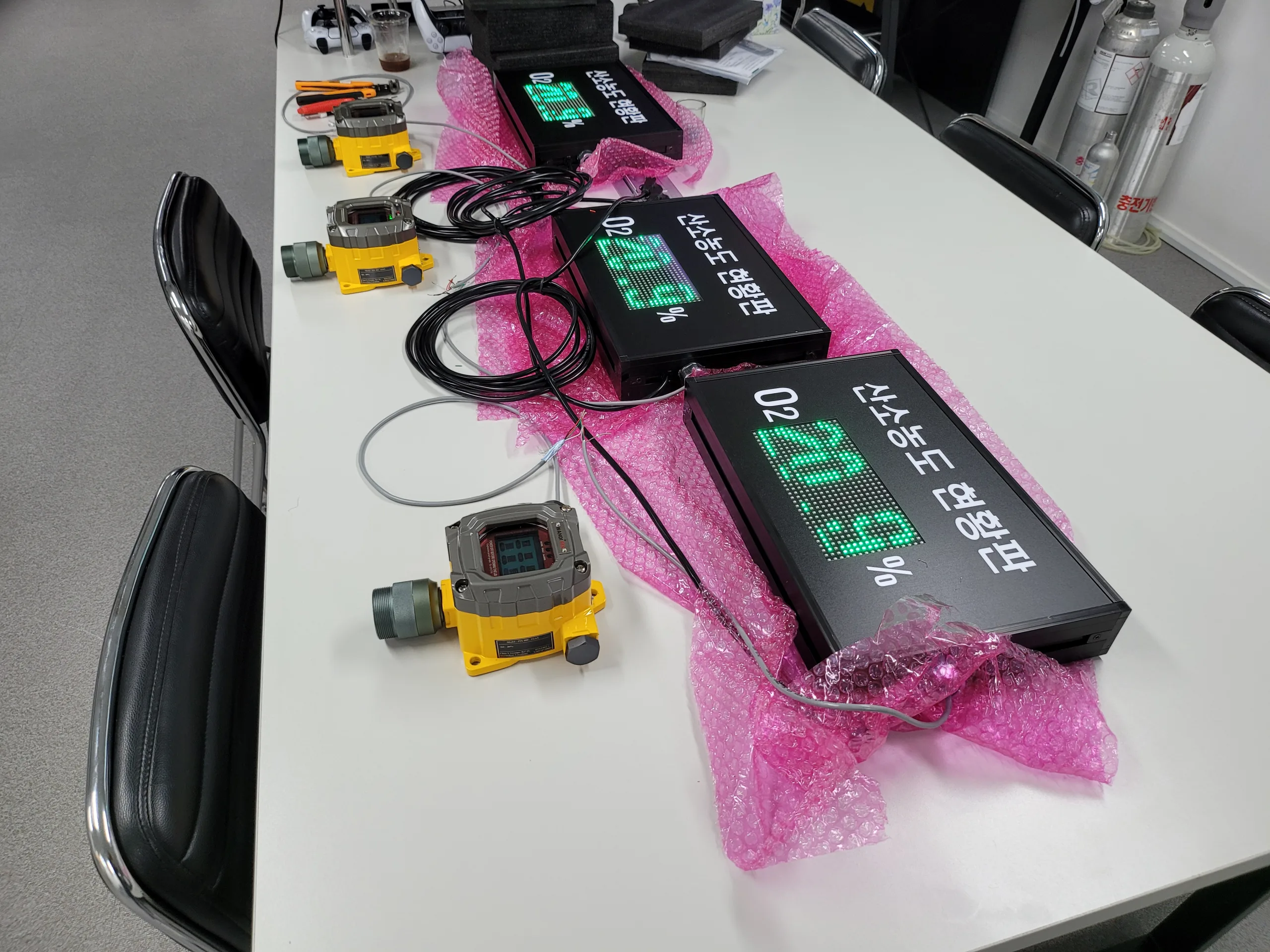
Each FIX800 was paired 1:1 with a custom display board. The FIX800 includes relay output, 4–20 mA analog output, and RS-485 digital communication as standard — no additional options required. This installation used RS-485 for data transmission to the display board, which is the most widely used configuration in practice due to its multi-drop capability and noise resistance.
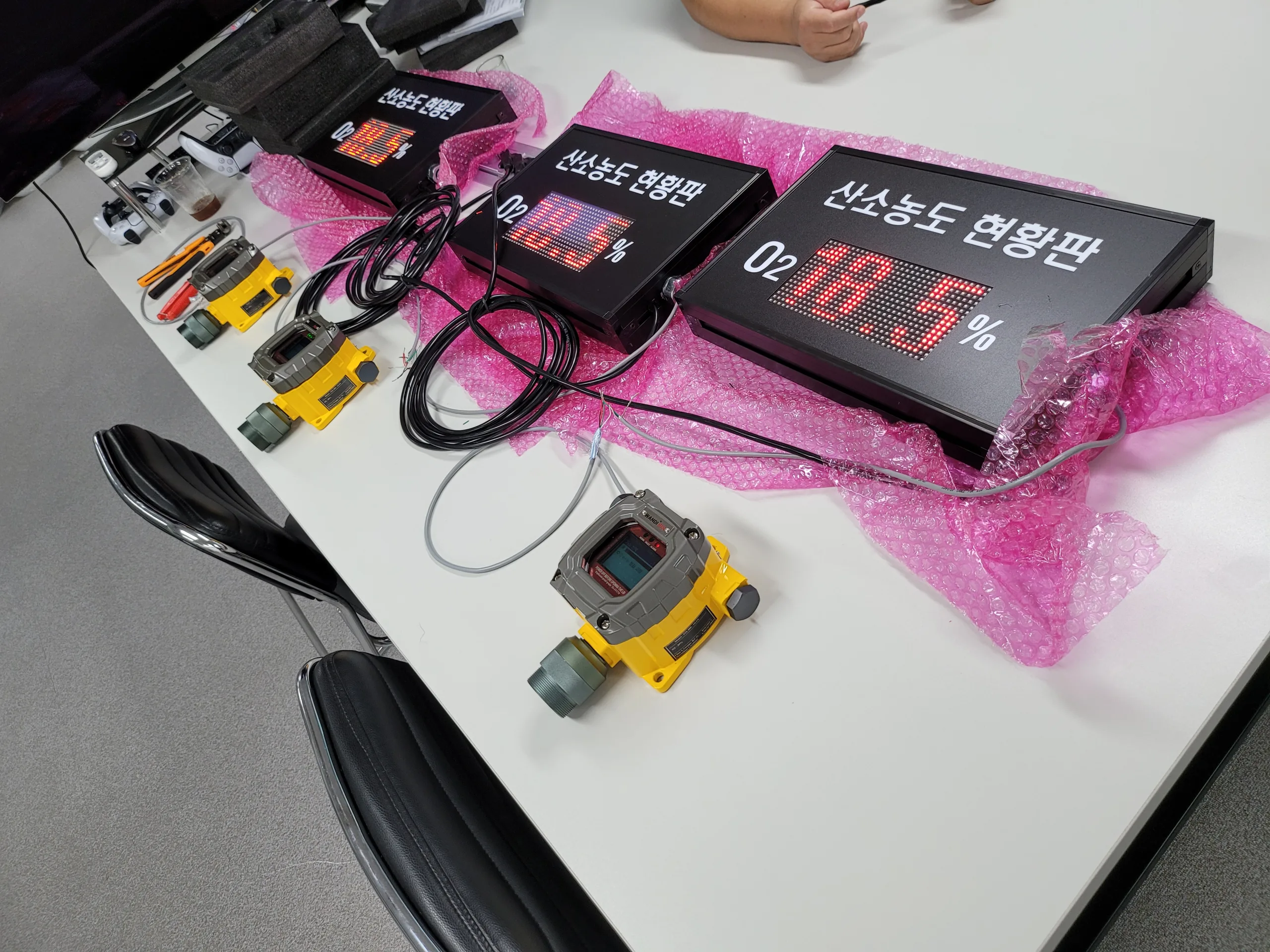
The display board text color changes according to user-configured thresholds or regulatory limits when gas concentration changes. Audible and visual alarm options can be added.
Wiring — 4-Wire Connection, Instant Operation
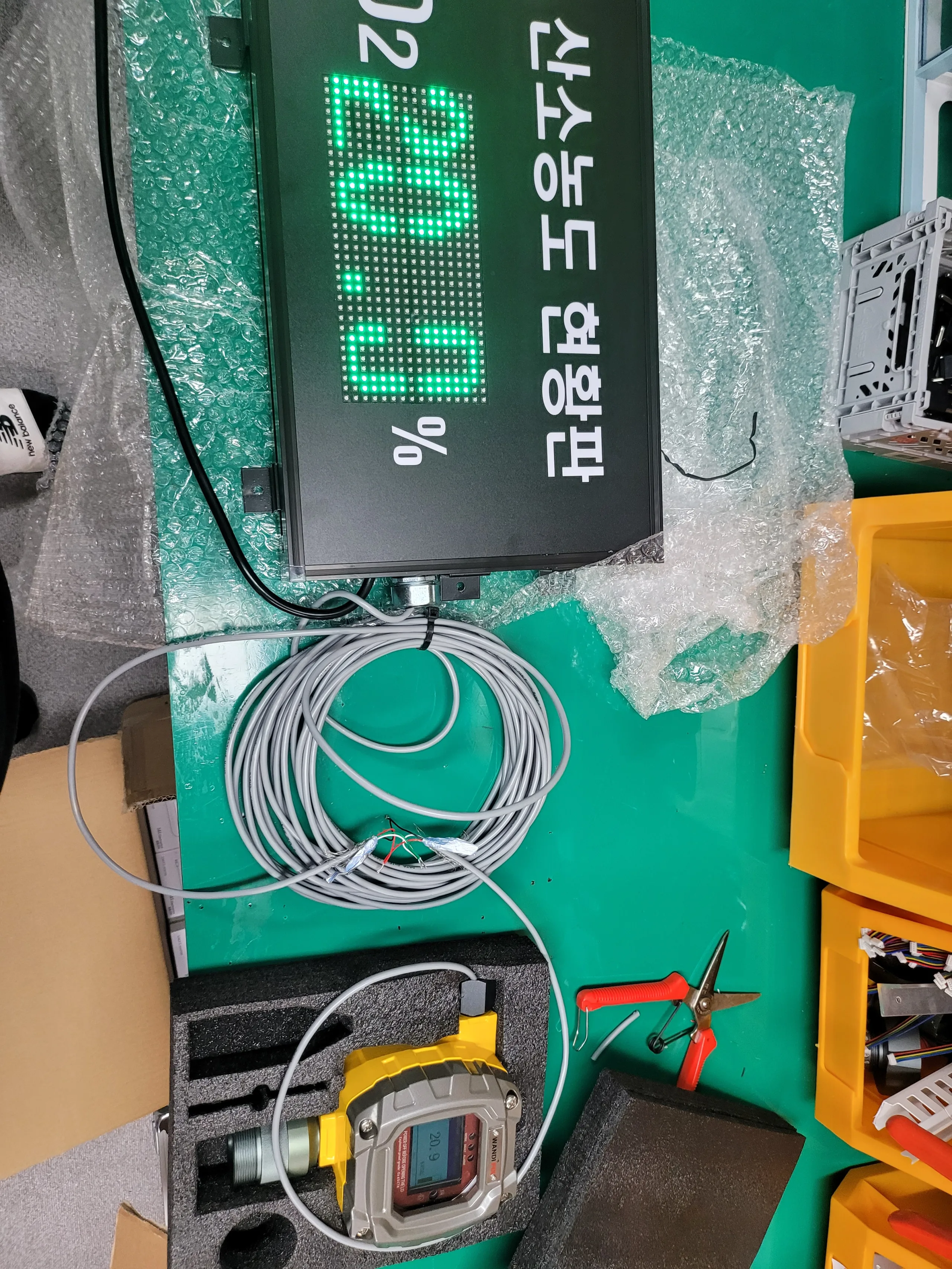
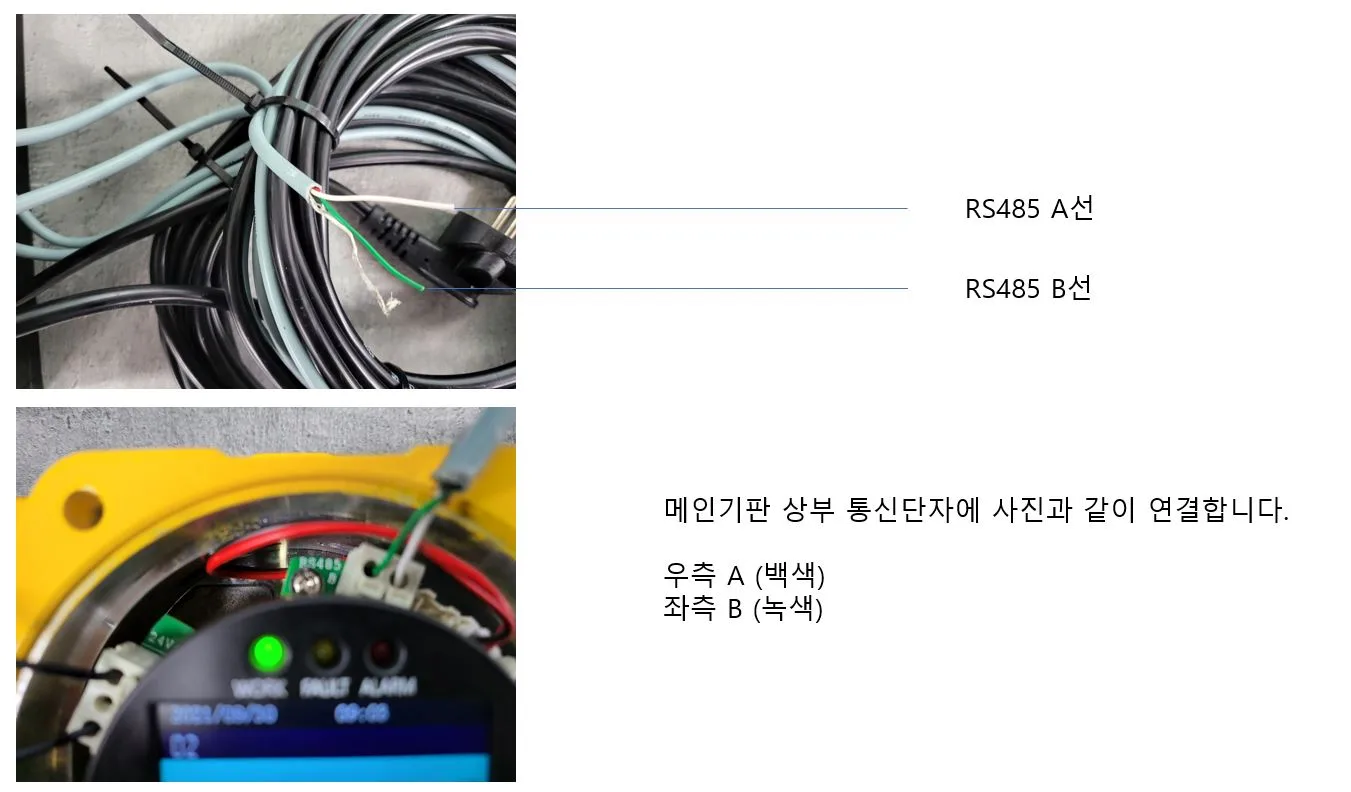
The connection between detector and display board is straightforward. The board is powered at 220V and provides 24V to the detector. Only 4 wires are needed — RS-485 A/B for communication plus power +/– — and the system is operational immediately.
Frequently Asked Questions
Q1. Why is a government facility disaster prevention room classified as a confined space?
Disaster prevention rooms often house CO₂ fire suppression systems, battery banks, or other equipment that can release hazardous gases. Poor natural ventilation and infrequent worker occupancy mean hazardous concentrations could develop undetected. Under Korea's OSHA, such rooms are classified as confined spaces requiring gas monitoring before worker entry.
Q2. Why use a wall bracket even for a single-gas configuration?
When sensor calibration or replacement is needed, the entire unit must be removed and sent to service. A bracket allows the unit to be detached in seconds without disturbing the wiring. Direct wall mounting requires re-wiring at every service event, increasing both downtime and labor cost.
Q3. Is RS-485 or 4–20 mA more commonly used in practice?
RS-485 is the most widely used. It supports multiple detectors on a single bus, handles cable runs up to 1.2 km, and provides strong noise immunity. The 4–20 mA output is preferred when direct integration with existing DCS or PLC instrumentation loops is required.
Q4. What is the advantage of powering the detector from the display board?
It eliminates the need for a separate power circuit to the detector — only a single 4-wire cable connects the two units. This reduces conduit work, wall penetrations, and installation time, and makes relocating the system later much simpler.
Q5. Can 3 FIX800 units installed simultaneously be integrated into a central monitoring system?
Yes. All three units on the RS-485 bus can be connected to an upper-level PC or HMI simultaneously, enabling real-time monitoring of all three points on a single screen with automatic data logging and trend history.
#DisasterPreventionRoomOxygenMonitor #FIX800 #PublicFacilityGasDetector #GasDisplayBoard #RS485GasMonitoring #ConfinedSpaceSafety #FixedGasDetector #IndustrialSafety #WANDI #Paju
![[레이먼드] 오,폐수 처리실 유해가스 모니터링](https://wandi.co.kr/storage/construction-cases/YxFUQVBZ8Unnk7pJzzfsmezr6xNe0LZvQRDmt7TL.jpg)
![[브이피이코리아] 종합병원 지하 밀폐공간 가스 측정기 설치_FIX800 & FIX-DS](https://wandi.co.kr/storage/construction-cases/gNOA28xSlEy5uU3AOxyHDRH5UfAe0TpMTgAt4Uag.jpg)

