Installed Gases
Project Details
FIX800 4-Gas Detector with LED Display Board — Seoul Nowon Dongbuk Line Light Rail Tunnel Construction (Nowon-gu, Seoul)
Like the previous Dangjin case, this is another tunnel construction installation — the two cases make a useful comparison.
Pre-Installation Preparation — Cable Threading at the Office
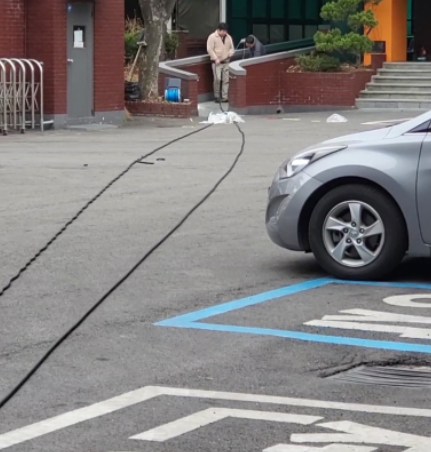
Before departing for site, 4-wire communication cable was pre-threaded into 100 m of corrugated conduit near the office. This preparation eliminates the time-consuming cable insertion step at the tunnel site.
Work Zone 1 — Display Board at Tunnel Entrance
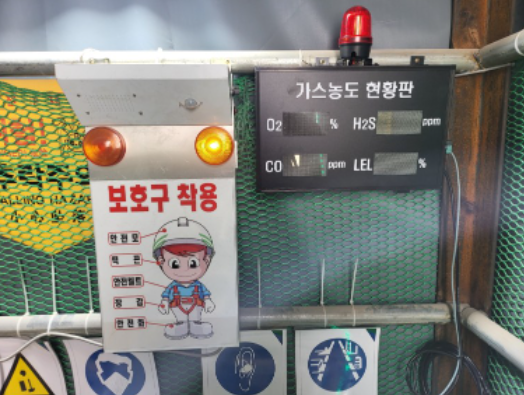
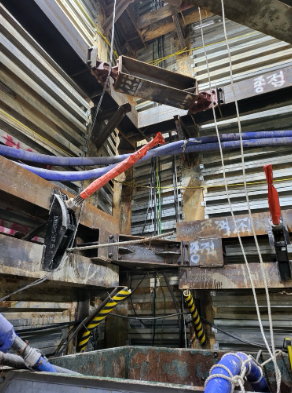
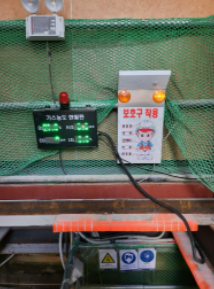
After arriving fully prepared, the LED display board was installed at the tunnel entrance. Pre-prepared communication cable was connected and routed between existing wires in the corner conduit space.
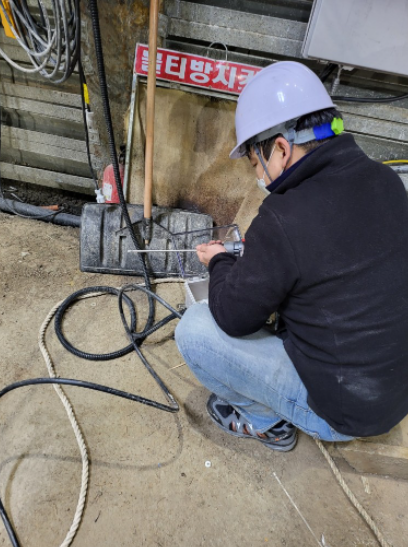
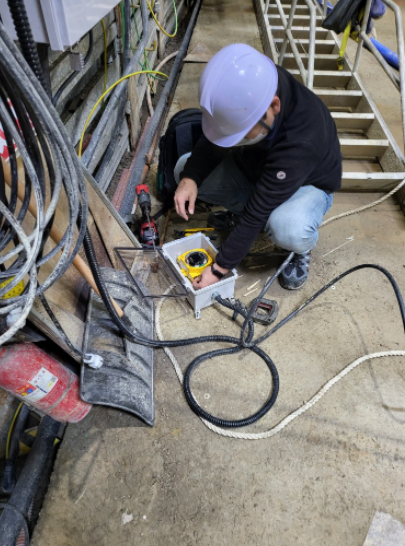
Working at pace, wiring was completed in approximately 1.5 hours from start.
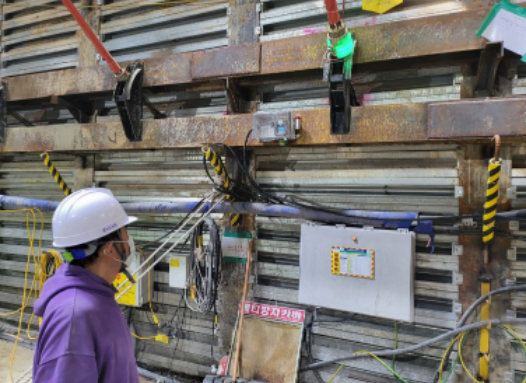
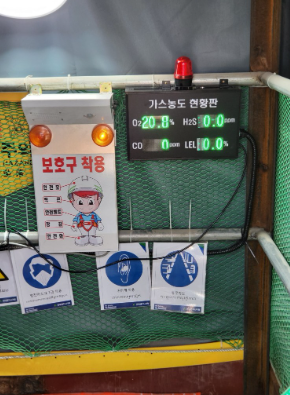
Power was applied, the product was demonstrated to site personnel, and the team moved to the second location.
Work Zone 2 — Similar Tunnel Structure
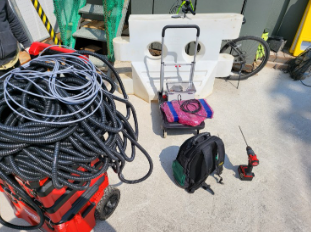
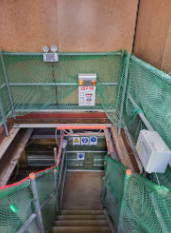
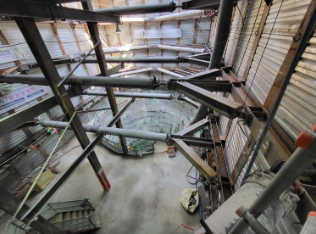
Products and materials are prepared and photographed. The tunnel structure is nearly identical to the first zone.
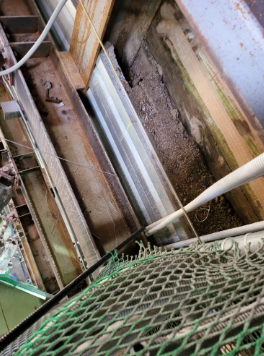

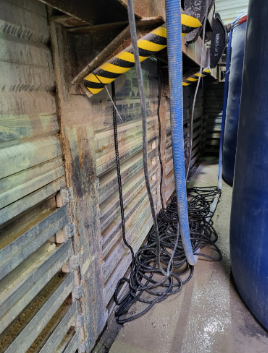
Routing Through H-Beam Gap — Wrench as Counterweight
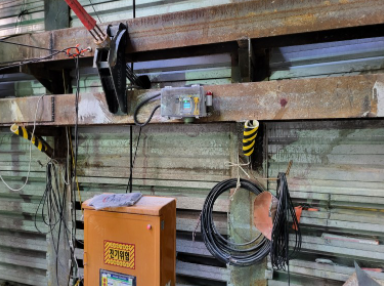
The corrugated conduit must be lowered through a narrow gap between the concrete wall and an H-beam. A monkey wrench was firmly attached to the end of the cable as a counterweight, allowing gravity to guide it down through the gap.
Installation Complete — Span Gas Testing
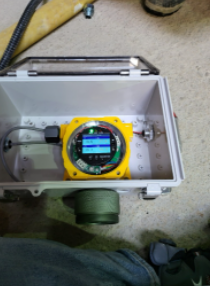
After completing all wiring, calibration gas was injected to verify sensor response, alarm activation, and display board integration. The detector was attached to the steel structure with its magnetic bracket. The combination of pre-prepared cable, magnetic bracket mounting, and optimized team task allocation significantly reduced installation time.
Frequently Asked Questions
Q1. Why is 4-gas monitoring mandatory at Dongbuk Line tunnel construction sites?
Urban railway tunnel excavation is a confined-space operation. Blasting and drilling generate CO and CO₂; geological strata may release CH₄ and H₂S. Korea's OSHA mandates monitoring of O₂, CO, H₂S, and EX before confined-space entry. Vertical shafts and tunnel portals with restricted ventilation require continuous fixed monitoring — a pre-entry check alone is insufficient.
Q2. Why is cable pre-threading done before leaving the office?
Threading cable into corrugated conduit in a narrow, congested tunnel environment takes significantly more time and effort than doing the same work in a clear, open space. Pre-threading at the office eliminates this step at the site — reducing time on site and lowering the difficulty of working in a confined space.
Q3. How does using a tool as a counterweight help with wiring in tight spaces?
In narrow gaps between H-beams and concrete walls, it is physically impossible to push conduit through by hand. Attaching a heavy tool — such as a monkey wrench — to the end of the cable allows gravity to pull it down through the gap, establishing the cable path without the need for access from below.
Q4. What makes it possible to complete two work zones in a single day?
Three factors combined: pre-prepared cable (eliminates the threading step on site), magnetic brackets (eliminates drilling), and optimized team task allocation based on the first zone's experience. The efficiency gained at the first zone directly accelerated the second, making same-day completion of both zones achievable.
Q5. Are there additional gas monitoring requirements for urban railway tunnels compared to general industrial tunnels?
The core 4–5-gas monitoring requirements are the same. Urban railway tunnel sites are often in or near residential areas, so ambient air quality impact on surrounding communities may be a consideration. Post-blast CO and NOx management and re-entry waiting periods tend to be applied more strictly. In this case, display boards at every vertical shaft — allowing workers to verify gas concentrations before entry — were the key safety measure implemented.
#DongbukLineTunnelGasDetector #FIX800 #ConfinedSpace4Gas #UrbanRailwayTunnelSafety #GasDisplayBoard #MagneticBracket #ConstructionSiteSafety #RSKorea #WANDI #Nowon
![[레이먼드] 오,폐수 처리실 유해가스 모니터링](https://wandi.co.kr/storage/construction-cases/YxFUQVBZ8Unnk7pJzzfsmezr6xNe0LZvQRDmt7TL.jpg)
![[브이피이코리아] 종합병원 지하 밀폐공간 가스 측정기 설치_FIX800 & FIX-DS](https://wandi.co.kr/storage/construction-cases/gNOA28xSlEy5uU3AOxyHDRH5UfAe0TpMTgAt4Uag.jpg)

