Applied Markets
Installed Gases
Project Details
Gas detector delivery case for a waste treatment resource recovery facility — CO2
Hello.
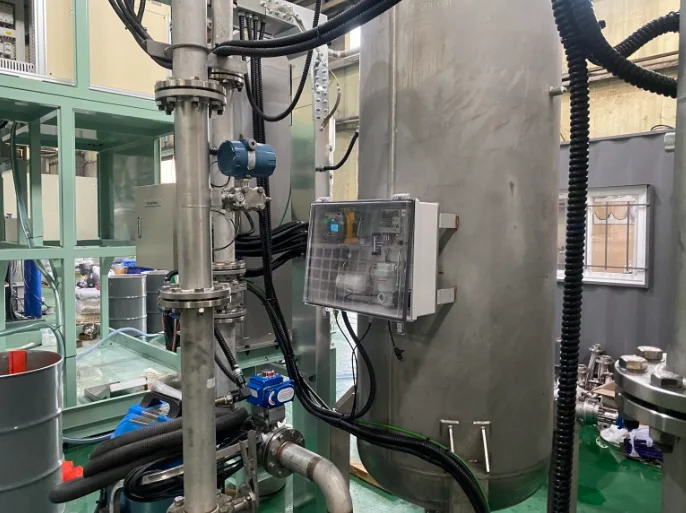
Today we're writing up a delivery case for fixed gas measurement equipment at a waste treatment resource recovery facility.
For this delivery, the purpose was to measure CO2 (carbon dioxide) generated during the waste treatment process to check the level of carbon emissions, so measurement equipment was installed at 3 locations to allow before-and-after treatment comparison.
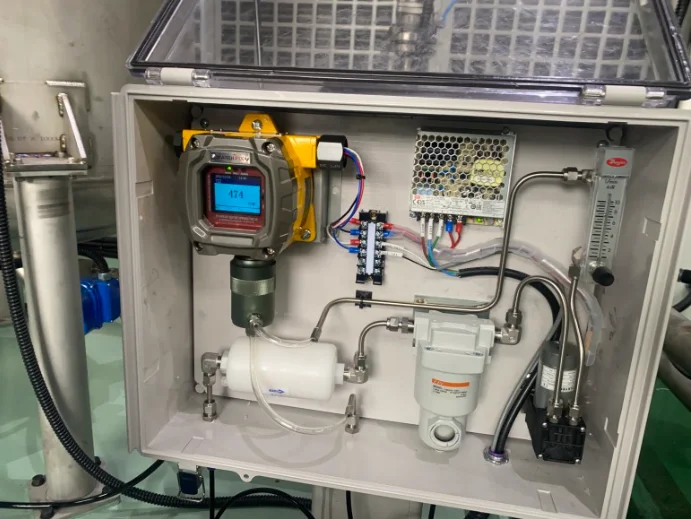
Because the waste treatment process generates a large amount of moisture, the system was supplied together with a gas pre-treatment unit fitted with dust and moisture filters.
- FIX800 CO2 detector, 50,000 ppm
- Gas pre-treatment unit
- Connected via diaphragm pump and stainless steel (SUS) tubing
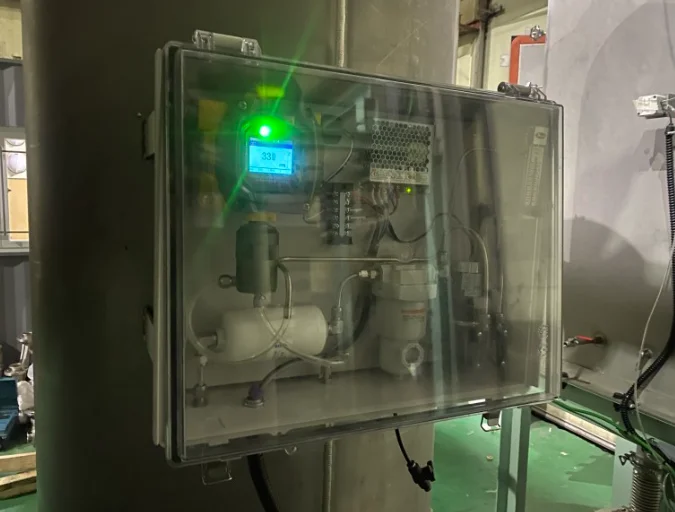
Since this setup was built for testing purposes, the gas pre-treatment unit was constructed using 1/4" stainless steel lock fittings to prevent any harmful gas leakage during the measurement process.
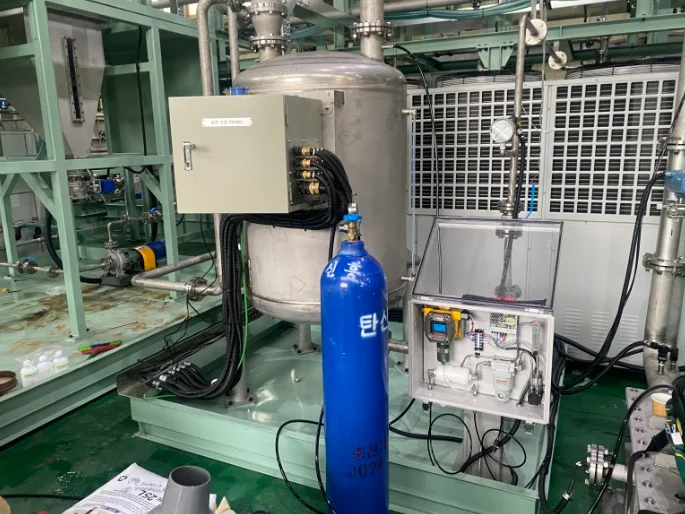
After installation, a leak test was performed on all connection points, and the trial run was completed using standard reference gas.
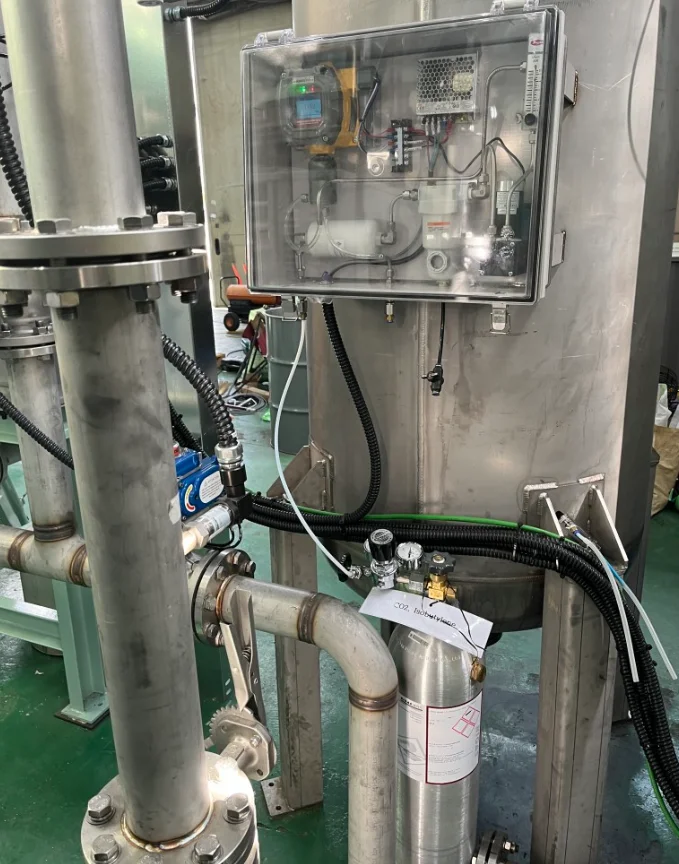
The gas sensors installed in the detector are very vulnerable to moisture.
A gas pre-treatment unit does not remove 100% of moisture, so if liquid water — rather than water vapor — is drawn in, the sensor will corrode and fail completely.
In addition, because the pump has strong suction, care must be taken to prevent water from flowing back into the piping.
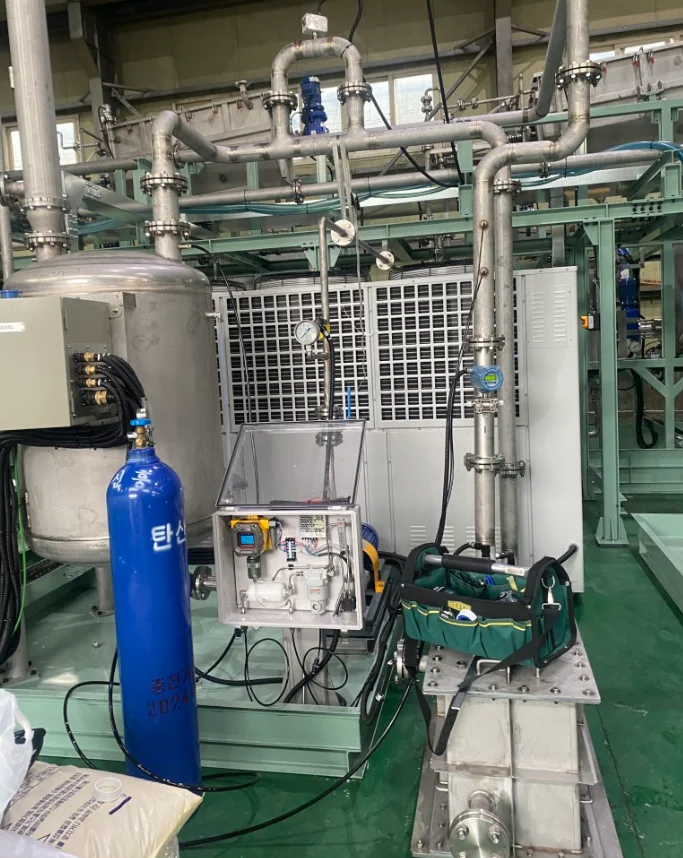
Beyond the environment covered in this delivery, gas must be measured in a wide variety of testing environments, so selecting equipment suited to each specific testing condition is important.
Other gases we work with include:
CO2 — carbon dioxide
HCL — chlorine dioxide
HF — hydrogen fluoride
HCN — hydrogen cyanide
CL2 — chlorine
VOC — volatile organic compounds
NH3 — ammonia
and others.
We can configure gas sensors for 50 or more different gas types.
We can also supply a configuration with an integrated monitoring display panel and smartphone app for checking real-time measurement values. If you need an installation like this, please feel free to contact us anytime!
Frequently Asked Questions (FAQ)
Q1. What gas was measured in this case, and why?
CO2 (carbon dioxide) was measured to check the level of carbon emissions generated during the waste treatment process, with equipment installed at 3 locations for before-and-after comparison.
Q2. Why was a gas pre-treatment unit included?
Because the waste treatment process generates a large amount of moisture, a pre-treatment unit with dust and moisture filters was added to protect the gas sensor, which is highly vulnerable to moisture.
Q3. Can a gas pre-treatment unit remove all moisture?
No. It cannot remove 100% of moisture. If liquid water is drawn into the sensor rather than water vapor, the sensor will corrode and fail completely, so care must also be taken to prevent water backflow in the piping.
Q4. How many gas types can be configured?
We can configure sensors for 50 or more different gas types, including CO2, chlorine dioxide, hydrogen fluoride, hydrogen cyanide, chlorine, VOCs, and ammonia.
Q5. Is remote monitoring available for this setup?
Yes. We can also supply a configuration with an integrated monitoring display panel and a smartphone app for real-time measurement values.
#WANDI #FIX800 #CO2Detector #WasteTreatmentFacility #GasPreTreatment #CarbonEmissionMonitoring #DiaphragmPump #GasSensorProtection #IndustrialGasMonitoring #RemoteMonitoring
![[레이먼드] 오,폐수 처리실 유해가스 모니터링](https://wandi.co.kr/storage/construction-cases/YxFUQVBZ8Unnk7pJzzfsmezr6xNe0LZvQRDmt7TL.jpg)
![[브이피이코리아] 종합병원 지하 밀폐공간 가스 측정기 설치_FIX800 & FIX-DS](https://wandi.co.kr/storage/construction-cases/gNOA28xSlEy5uU3AOxyHDRH5UfAe0TpMTgAt4Uag.jpg)

