Applied Markets
Installed Gases
Project Details
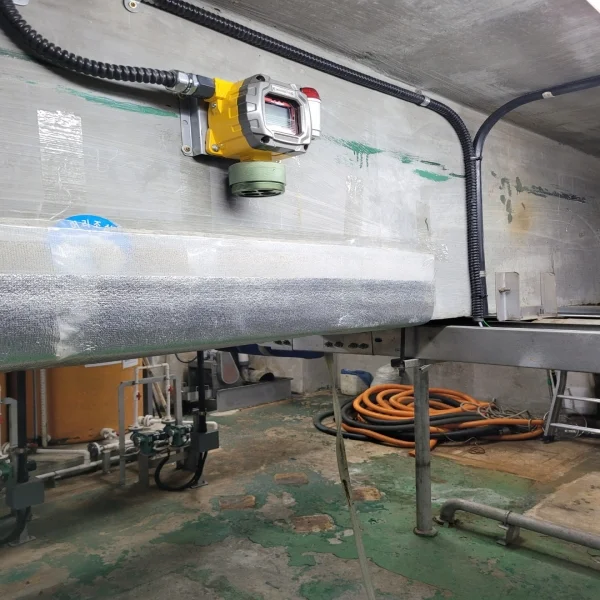
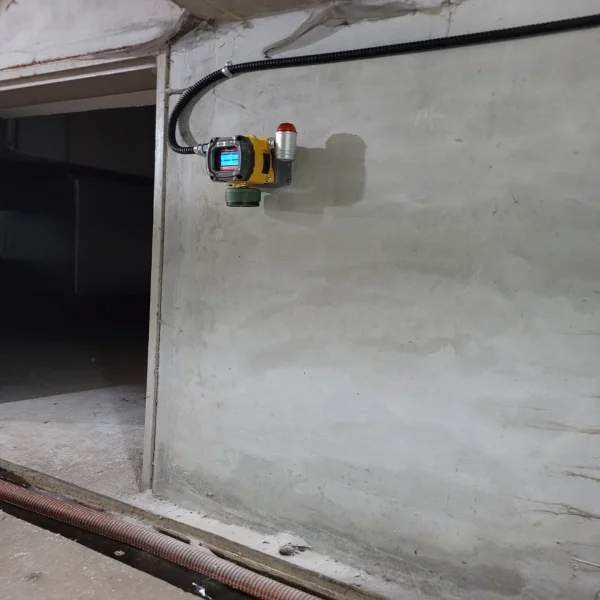
Today's site is a set of confined spaces in a large hospital.
A large hospital used by many people contains more confined spaces than one might expect. With a large number of wards and restrooms, plus wastewater generated by various medical activities that must be discharged through a sewage treatment facility, it is a facility with many large confined spaces.
In this case, the confined spaces of a large hospital were surveyed on site, suitable gas detectors were selected, and the installation work was carried out.
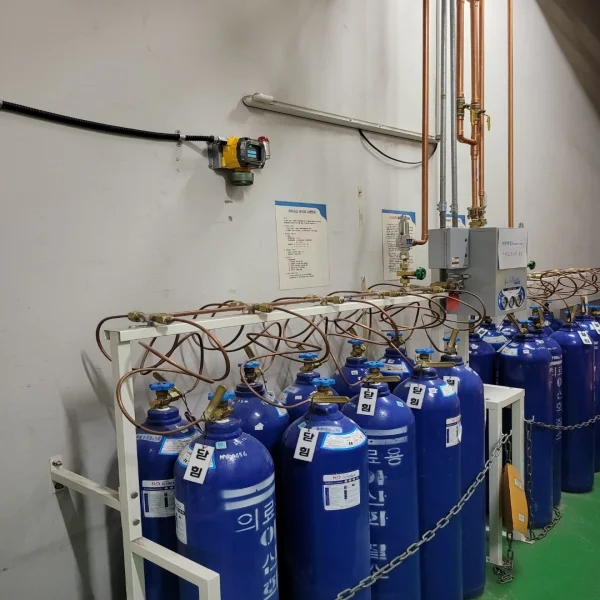
First, the extinguishing gas room and the protected area. A large hospital relies on high-value medical equipment for surgery and treatment, and in intensive care units oxygen generators help keep critically ill patients alive.
If a fire or gas accident disrupts the power system, the resulting damage could be enormous. For this reason, areas such as the emergency generator room and the electrical room of a large hospital are equipped with carbon dioxide extinguishing systems, a suffocation-type system that can suppress a fire quickly.
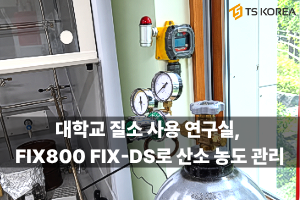
Because a malfunction of such a carbon dioxide extinguishing system carries a high risk of asphyxiation, oxygen detectors were installed in these areas.
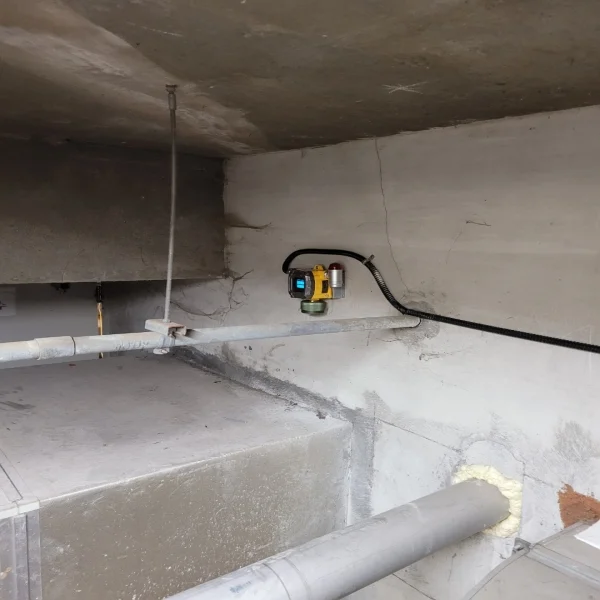
Next, the sewage treatment facility and the pit room. Wastewater used and discharged by a hospital basically includes wastewater from restrooms as well as permitted discharges from medical use.
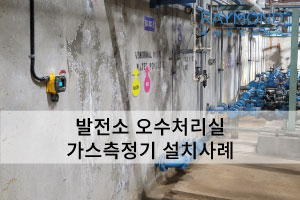
In a sewage treatment room where these various types of wastewater collect, mixed reactions can generate harmful gases that are difficult to anticipate. For the wastewater facilities and septic tanks of a large hospital, an O₂ (oxygen), H₂S (hydrogen sulfide), LEL (combustible gas) and CO (carbon monoxide) multi-gas detector is recommended.
O₂ and H₂S are the most essential gases. CO is a gas detected in the event of a fire, so an accident can be recognized through gas measurement in the early stage of a fire. The combustible gas (LEL) channel detects roughly 100 kinds of flammable and volatile gases, making it a broadly useful measurement for preventing safety accidents.
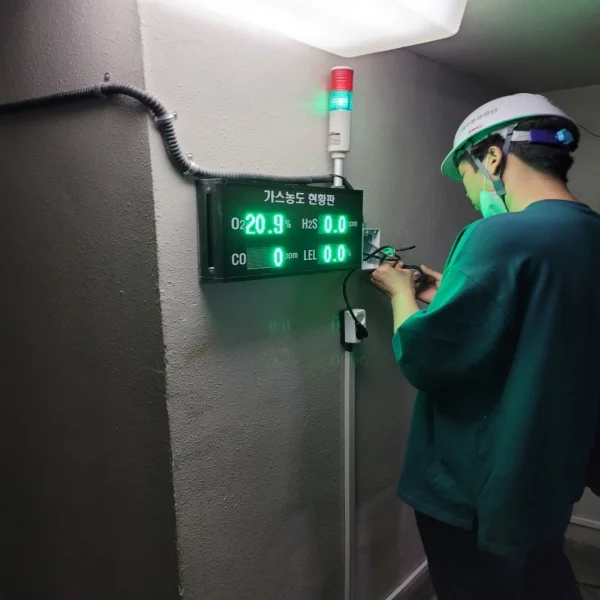
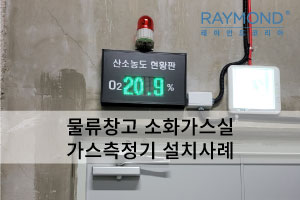
For safer and more reliable prevention, display boards were installed at the entrance of each confined space so that workers can see the gas concentration inside before entering.
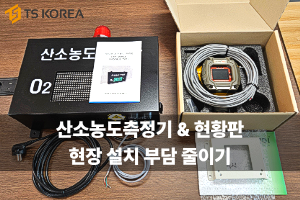
The gas concentration monitoring display board shows green LED characters while the concentration is within the safe level under the Occupational Safety and Health Act standards, and the text switches to red LED when a dangerous concentration occurs. When the optional beacon light on top is added, an alarm also sounds at the same time as the red LED is displayed.
Configuring each confined space with a fixed gas detector and a display board in this way enables dependable local safety management on an optimal budget. Although not implemented on this occasion, a wireless repeater called FIX-AP can also be added so that facility staff can monitor the gas concentration of all confined spaces in real time from a PC in the control room.
This concludes the large hospital gas detector installation case.
Frequently Asked Questions (FAQ)
Q1. Why are gas detectors needed in a large hospital?
A large hospital has many wards and restrooms and must discharge wastewater from various medical activities through a sewage treatment facility, so it contains a large number of sizable confined spaces that call for gas monitoring.
Q2. Why was an oxygen detector installed in the carbon dioxide extinguishing areas?
Areas such as the emergency generator room and the electrical room use carbon dioxide extinguishing systems. If such a system malfunctions, the risk of asphyxiation is high, so oxygen detectors were installed in these zones.
Q3. Which gases are recommended for the sewage treatment room and septic tank?
An O₂, H₂S, LEL and CO multi-gas detector is recommended. Mixed wastewater reactions can generate unexpected harmful gases; O₂ and H₂S are the most essential, CO helps recognize a fire in its early stage, and the LEL channel detects around 100 kinds of flammable and volatile gases.
Q4. How does the gas concentration display board work?
It shows green LED characters at safe concentrations under the Occupational Safety and Health Act standards and switches to red LED when a dangerous concentration occurs. With the optional beacon light, an alarm also sounds together with the red LED.
Q5. Can all confined spaces be monitored from one location?
Yes. Although it was not implemented on this occasion, adding a wireless repeater called FIX-AP allows facility staff to monitor the gas concentration of all confined spaces in real time from a PC in the control room.
#GasDetector#ConfinedSpace#Hospital#OxygenMonitoring#H2S#LEL#CarbonMonoxide#LEDDisplayBoard#WANDI#SafetyMonitoring