Applied Markets
Installed Gases
Project Details
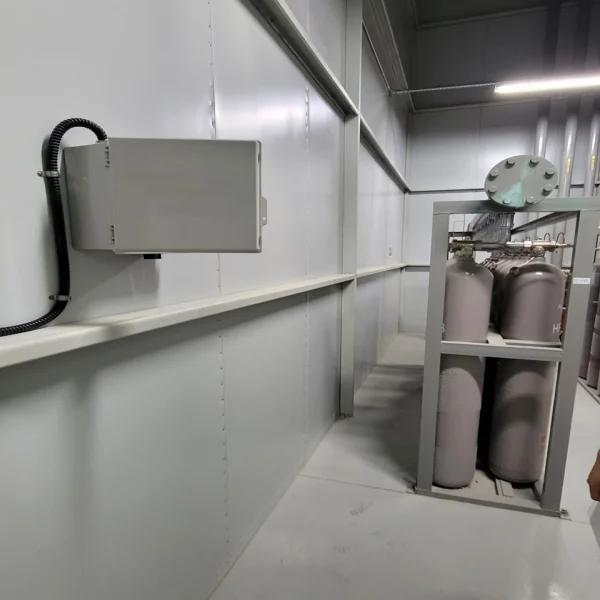
Hello. Today's case is an installation inside a CO2 fire suppression room at a large logistics warehouse operated by a well-known company.
CO2 suppression systems are most often found in large facilities where fire damage could be severe, such as power plants, broadcasting stations, and data centers. This site houses a large warehouse, refrigeration and cold-storage equipment, and critical electrical and mechanical systems, and it is protected by a carbon dioxide suppression system.
The main advantage of a CO2 suppression system is that it discharges a high concentration of CO2 almost instantly, rapidly lowering the oxygen level and extinguishing the fire.
The drawback is that the oxygen concentration drops abruptly, so an accidental discharge in an area where workers are present can lead to asphyxiation. For this reason, Korea's occupational safety authority announced an enforcement decree under which, from the second half of 2024, spaces that use CO2 suppression gas are classified as confined spaces and must be equipped with either an oxygen alarm or a CO2 alarm.
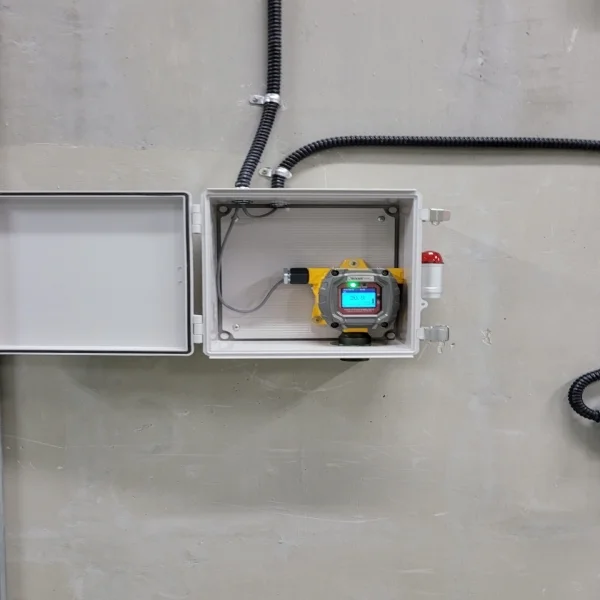
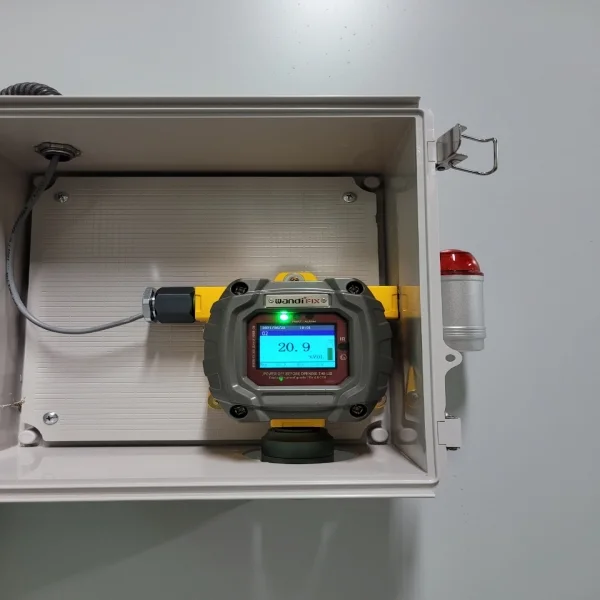
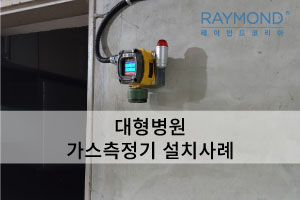
The instrument shown in the photos, the FIX800 gas detector, is designed to measure exactly these gases. A single unit can be fitted with both O2 and CO2 sensors for simultaneous measurement, or with just one of them.
Because the decree allows either an oxygen alarm or a CO2 alarm, the choice can be made according to budget: a comparatively economical O2 model, or a CO2 model that costs somewhat more but can detect even minor CO2 leaks.
In some cases the instrument is mounted inside a plastic enclosure, as seen here. This option is chosen when the detector needs extra protection from moisture, for example when the warehouse is washed down or cleaned.
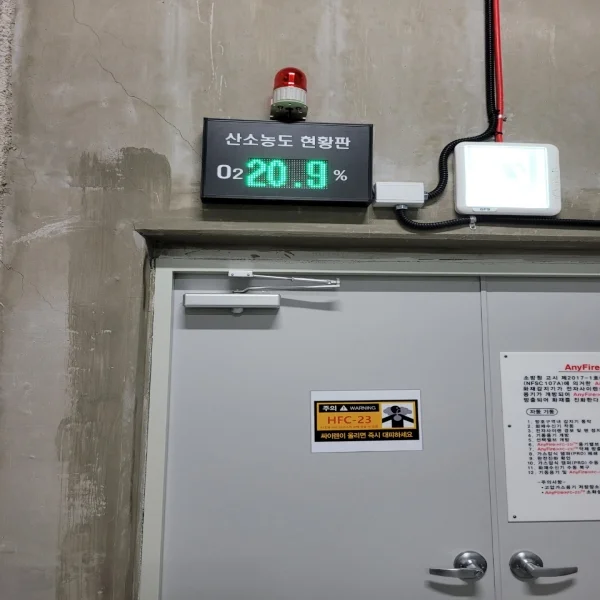
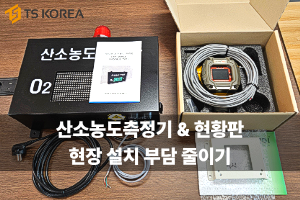
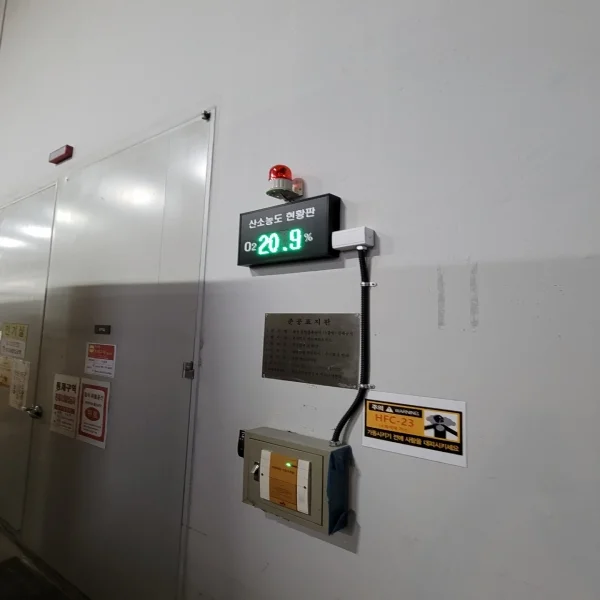
Finally, there is the entrance gas display board, which serves as the last line of safety.
In most facilities with CO2 suppression systems, the agent storage room and the protected area where the gas is discharged are kept closed during normal operation. Workers entering therefore have no way of knowing the oxygen level inside. The gas concentration display board addresses this risk by receiving the real-time concentration measured by the internal oxygen or carbon dioxide detector and showing it continuously on a highly visible LED display.
This concludes the case of the CO2 suppression room installation at a logistics warehouse. Thank you.
Frequently Asked Questions (FAQ)
Why is gas monitoring needed in a CO2 fire suppression room?
A CO2 system lowers the oxygen level rapidly to extinguish a fire. If it discharges accidentally while workers are in the area, it can cause asphyxiation, so the oxygen or CO2 concentration needs to be monitored continuously.
Is an oxygen alarm or a CO2 alarm required?
According to the decree described in this case, spaces that use CO2 suppression gas are treated as confined spaces from the second half of 2024, and either an oxygen alarm or a CO2 alarm must be installed. The choice can be made based on budget and the sensitivity required.
Can the FIX800 measure O2 and CO2 together?
Yes. A single FIX800 body can be fitted with both O2 and CO2 sensors for simultaneous measurement, or with only one of them.
Why was the detector installed in a plastic enclosure?
In areas that are washed or cleaned, an enclosure gives the instrument more reliable protection against moisture.
What is the purpose of the entrance gas display board?
The protected area is normally kept closed, so workers cannot judge the internal oxygen level before entering. The display board shows the real-time O2 or CO2 concentration on a bright LED display outside the entrance.
#CO2FireSuppression#ConfinedSpace#FIX800#OxygenDetector#CO2Detector#LogisticsWarehouse#GasDisplayBoard#WANDI#SafetyMonitoring#Yongin