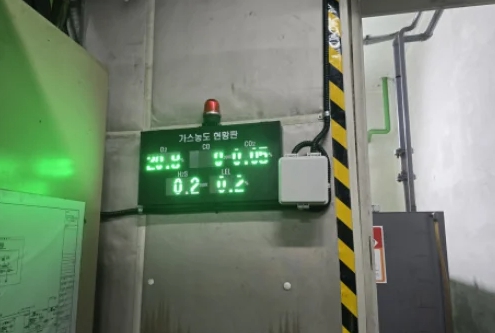
Applied Markets
Installed Gases
Project Details
Hello, this is RS Korea. Today's installation project takes place at a youth training center located in Gangwon-do, South Korea.
We were called in to install a 4-gas safety detection system (O2, CO, H2S, LEL) for confined-space worker safety at the on-site wastewater treatment facility that collects and treats wastewater generated at the training center.
Wastewater Treatment Process
A wastewater treatment facility improves the quality of wastewater before discharge or reuse, and is commonly used to treat sewage generated by cities or factories. The general treatment process is as follows.
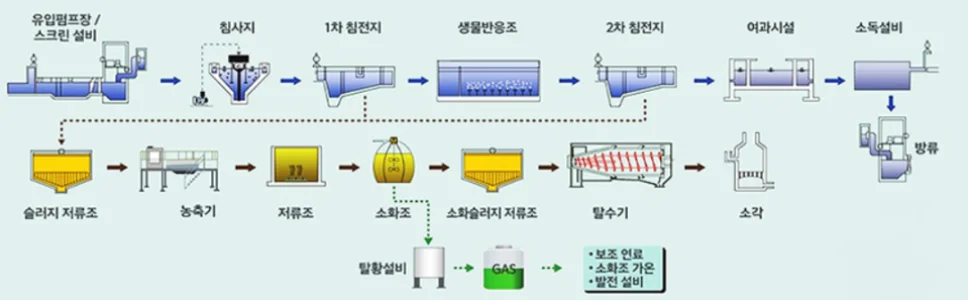
Grit chamber → Primary sedimentation tank → Biological reactor → Secondary sedimentation tank → Filtration → Disinfection → Discharge
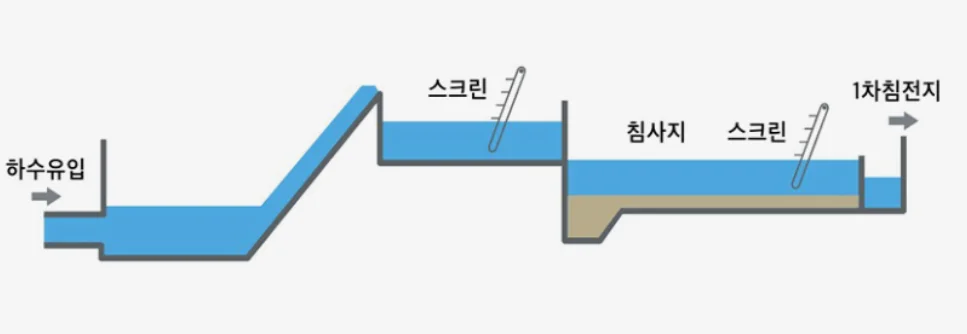
Inflow / Grit chamber: The point where incoming wastewater first arrives. Foreign materials such as vinyl and paper are filtered out with screens, and heavier materials are separated and removed in the grit chamber.
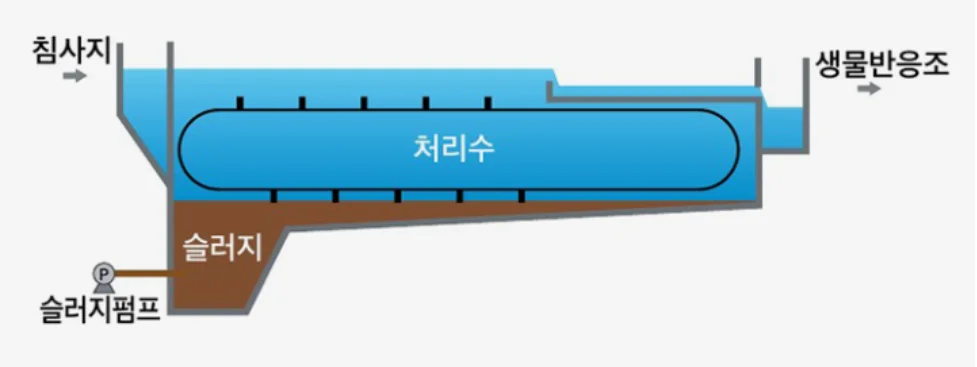
Primary sedimentation tank: Suspended solids in the water are settled and removed over a set retention time.
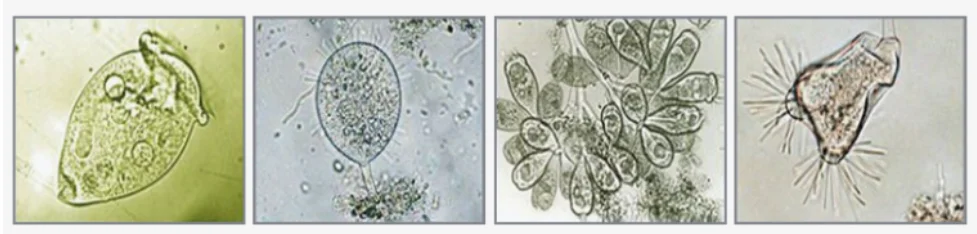
Biological treatment: Air is injected into the supernatant, and aerobic microorganisms (bacteria) that thrive on oxygen are used to break down pollutants.
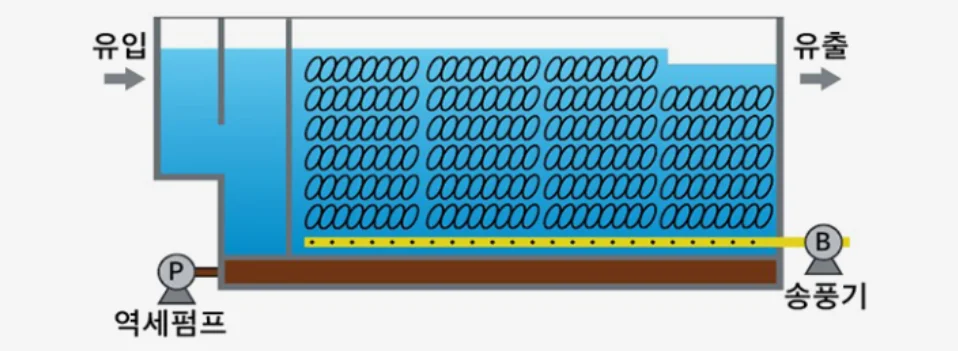
Secondary sedimentation tank: Relatively small solid particles are settled and removed, separating sludge from the treated water. The separated treated water is sent to the filtration facility (tertiary treatment).

Filtration facility: Tertiary treatment is carried out using porous filter media populated with microorganisms, after which the water is discharged.
Installed Product
The product installed is the FIX800, a fixed-type gas detector from WANDI, a specialist gas detection brand.
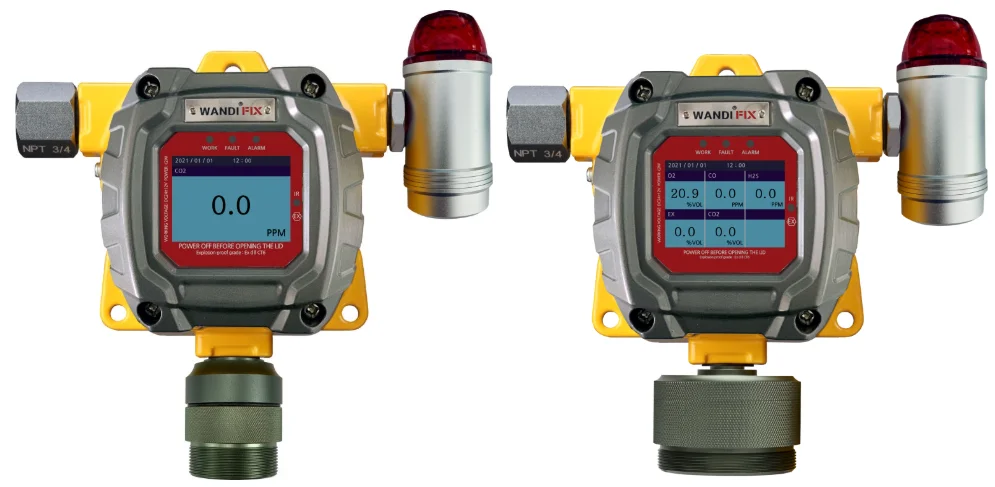
Fixed gas detector (single / multi-gas): A single detector can be configured with the safety-related 5 gases required under Korea's Occupational Safety and Health Act (O2, CO, H2S, LEL, CO2). Please refer to the photos above — the left photo shows a single-gas configuration, and the right photo shows a multi-gas configuration.
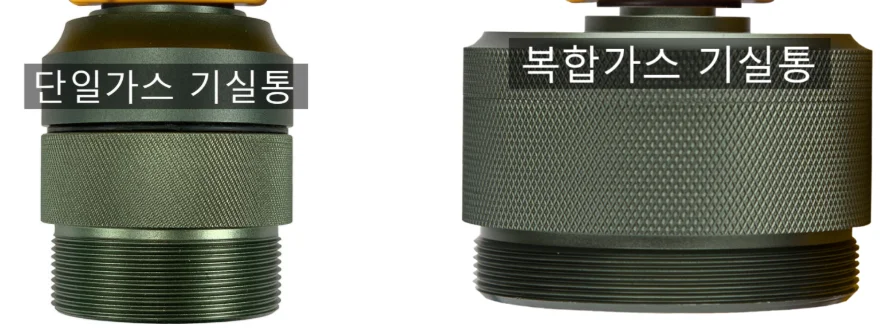
Detector housing (single / multi-gas): The size of the lower sensor housing differs depending on configuration. A single-gas unit has one sensing element and a slimmer housing, while a multi-gas unit has two or more sensing elements and a thicker housing.
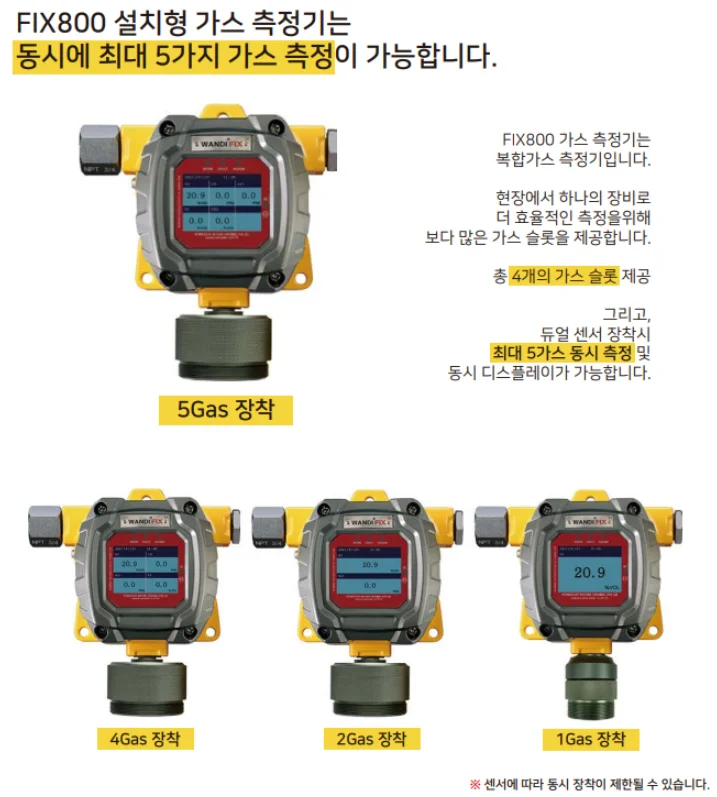
The WANDI FIX800's housing — and its display — differ depending on whether it is configured for single-gas or multi-gas detection. Out of roughly 40 available gas types, the unit can be configured from a single gas up to a maximum of 5 gases when dual sensors are installed, with all configured gases displayed simultaneously in real time. It can also be connected to optional accessories such as remote displays or a PLC, allowing readings to be monitored remotely and triggering immediate alarms when a hazardous level is reached.
Installation Environment / Points
Environment: The installation environment for this project is a confined space inside the wastewater treatment facility.
Gases / Concentration ranges (4 safety gases): Oxygen, carbon monoxide, hydrogen sulfide, and combustible gas.
O2 (Oxygen): 0–30% Vol
CO (Carbon Monoxide): 0–1,000 ppm
H2S (Hydrogen Sulfide): 0–100 ppm
LEL (Combustible Gas): 0–100% LEL
Installation points: Detector — inside the wastewater treatment facility (confined space). Remote display — outside the facility entrance.
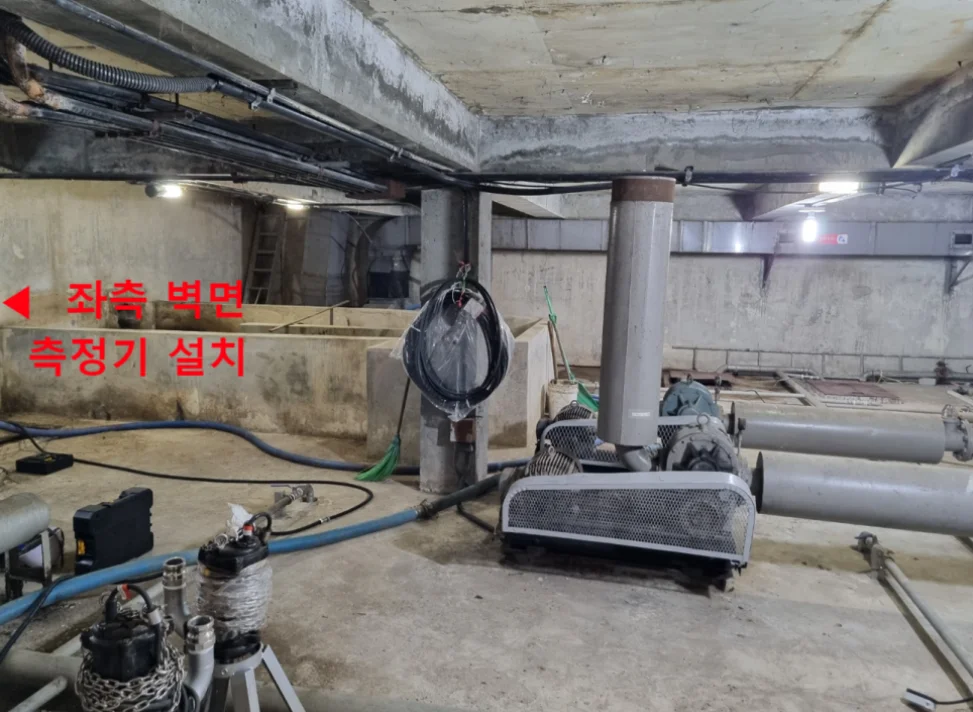
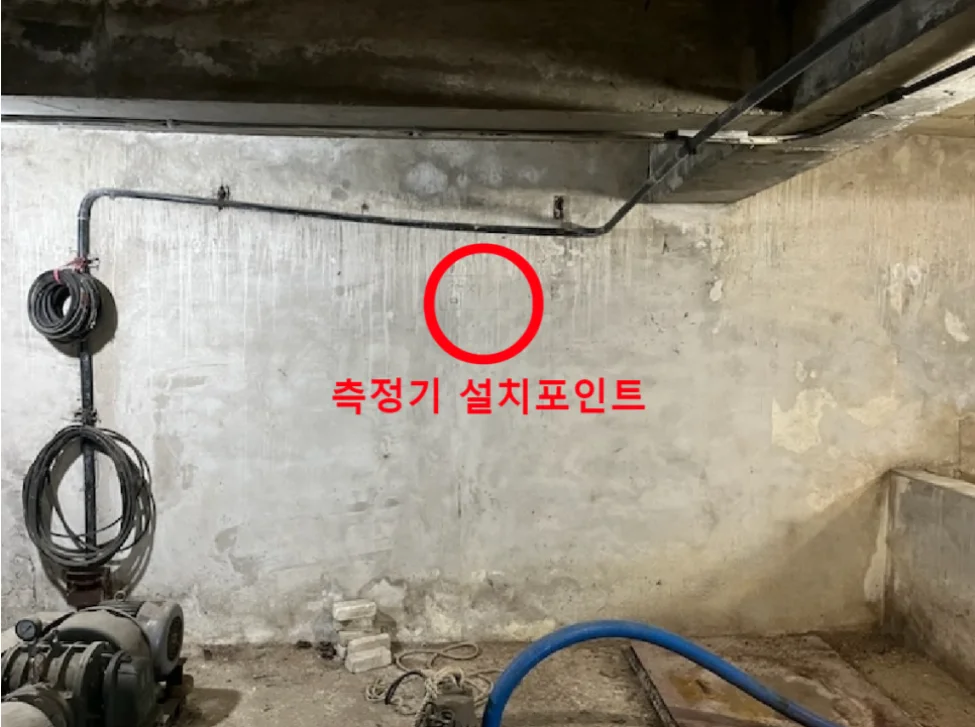
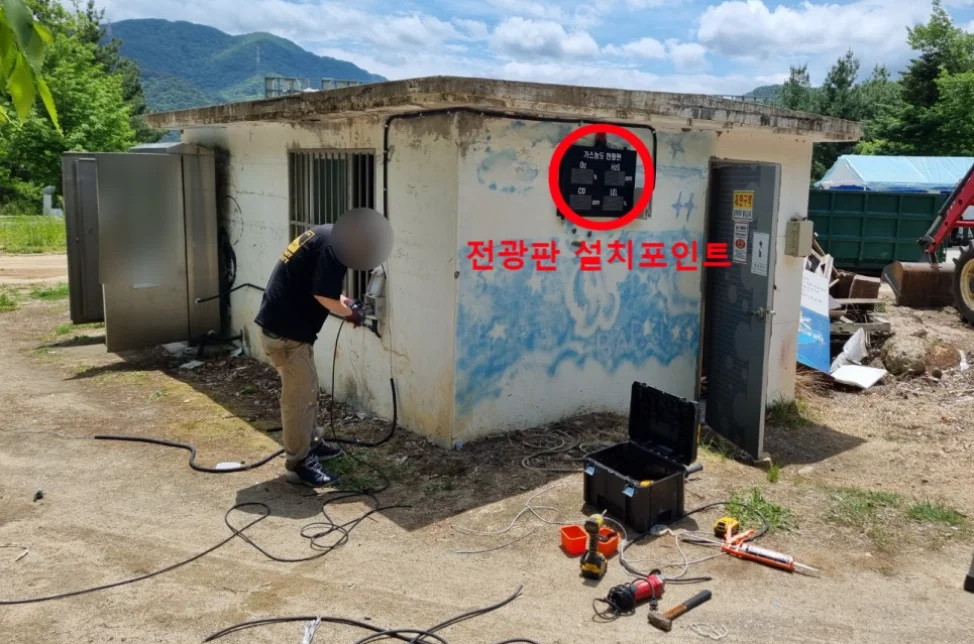
Installation
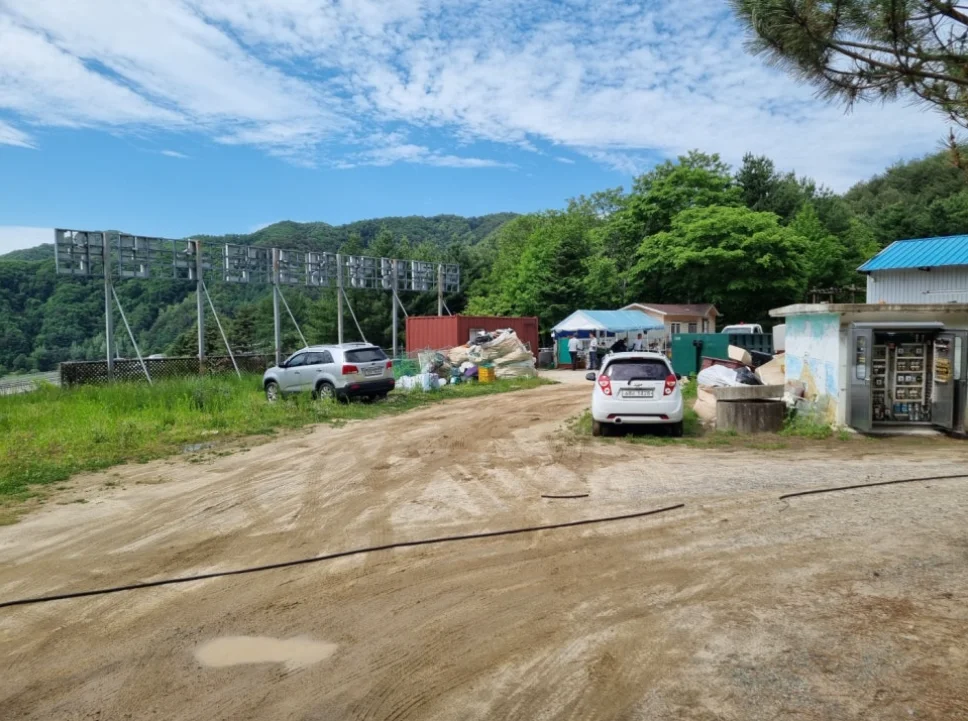
It was a somewhat warm day, but with good weather we started the work in good spirits.
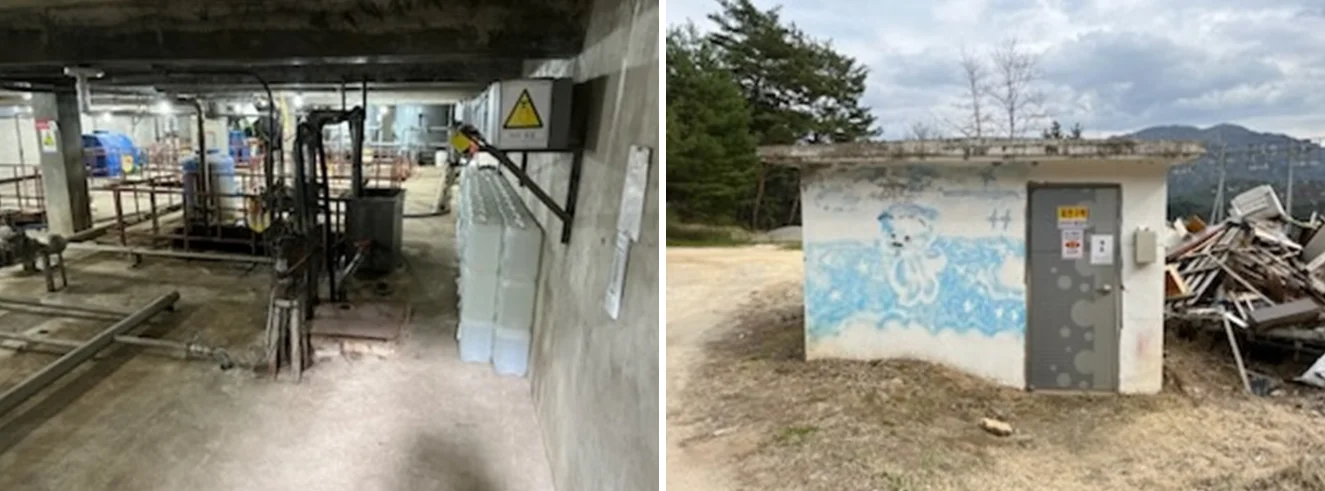
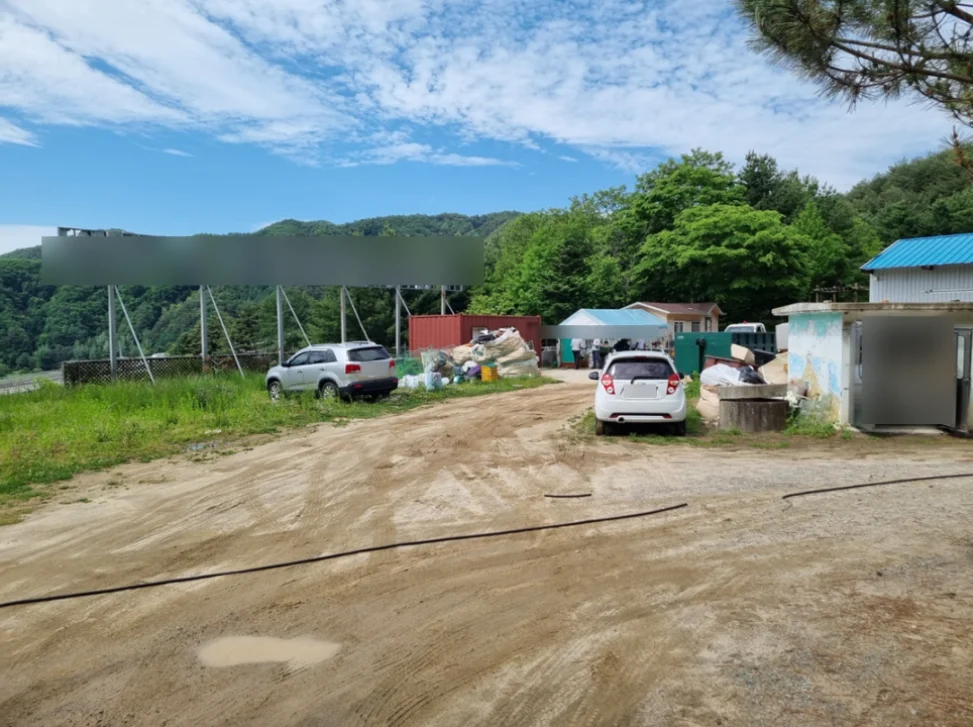
These are photos of the site — the interior of the wastewater treatment facility where the detector would be installed, and the entrance area outside where the remote display would go. The entrance itself looked like a small storage shed, but after opening the door and checking the interior conditions with a portable gas detector, we proceeded inside. Descending the stairs revealed a spacious wastewater treatment facility.
During the pre-construction site survey, the detector and display installation points had already been agreed upon, but the facility manager asked to move them to locations that were more visible or more consistent with prior installations. Drawing on data from previous installations, we placed the detector at the point inside the facility where odor levels are typically highest, and positioned the remote display outside the entrance before beginning work.
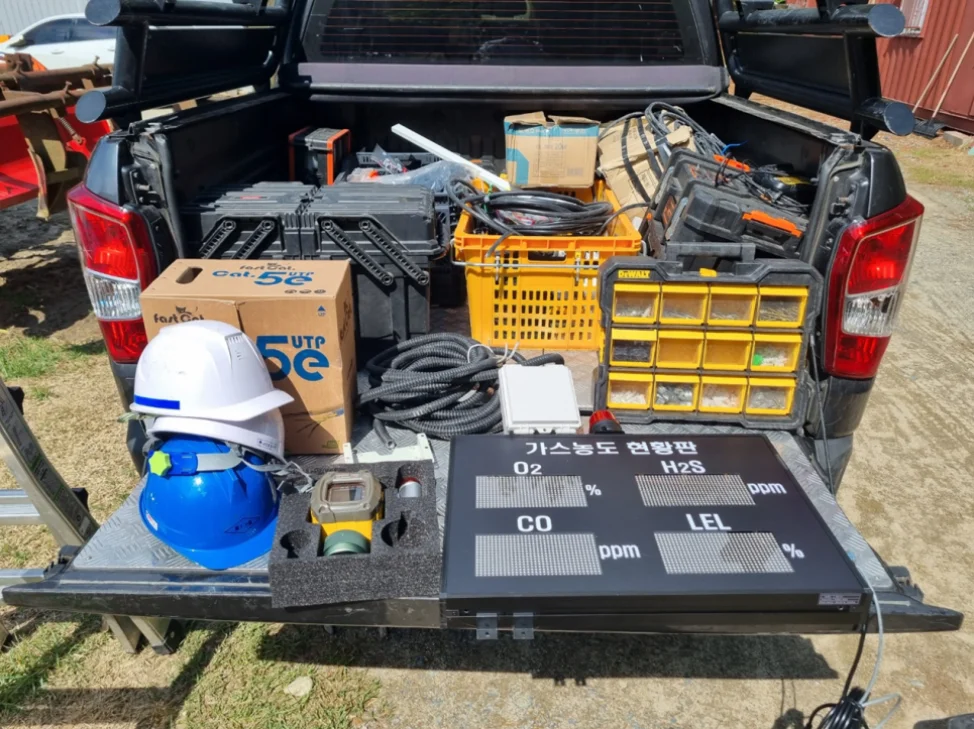
These are today's installation materials — the gas detector, mounting brackets, the gas concentration display, and other components.
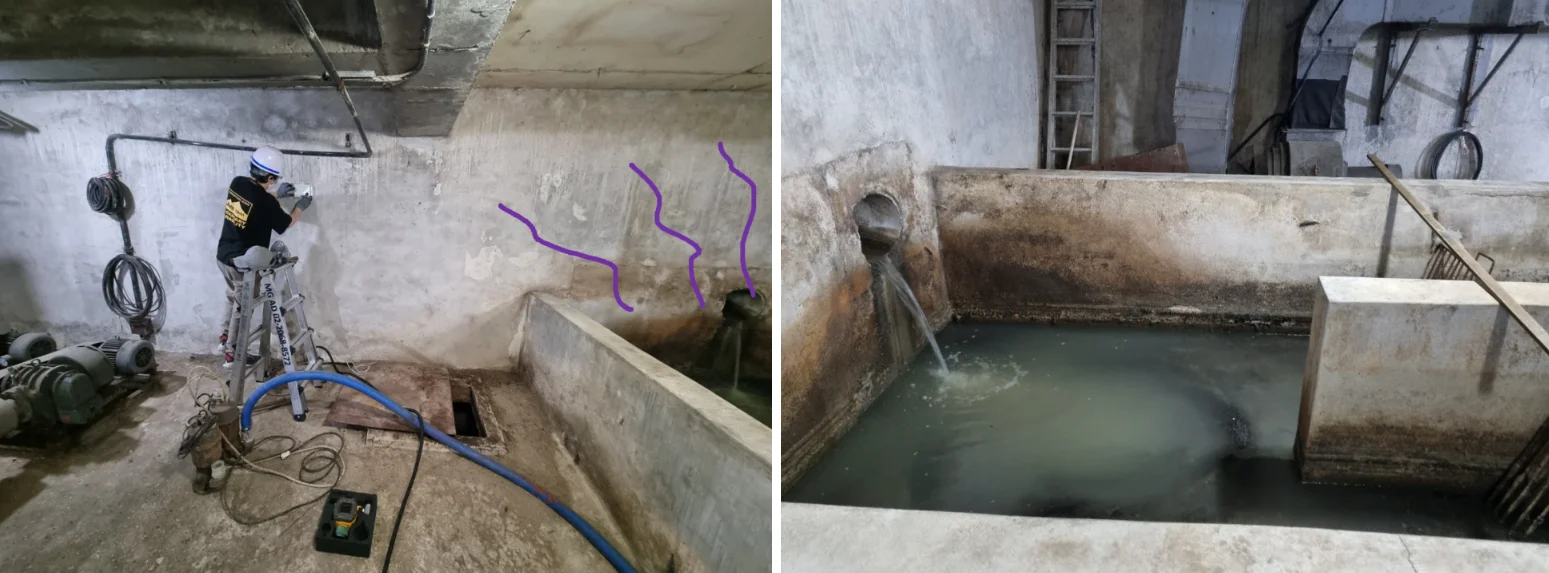
This is the inflow / grit chamber, the first stage of the wastewater treatment process — a naturally odorous area. We secured the mounting bracket on the side of the grit chamber for detector installation.
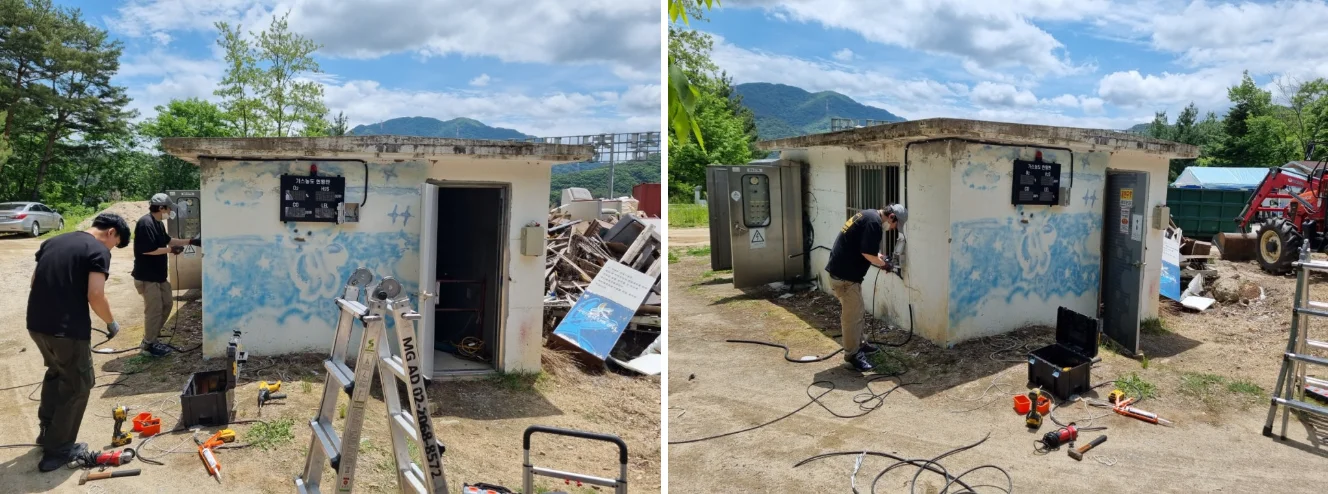
Stepping back outside into fresh air was a relief. The remote display was mounted at the entrance area, alongside the site's mascot figure.
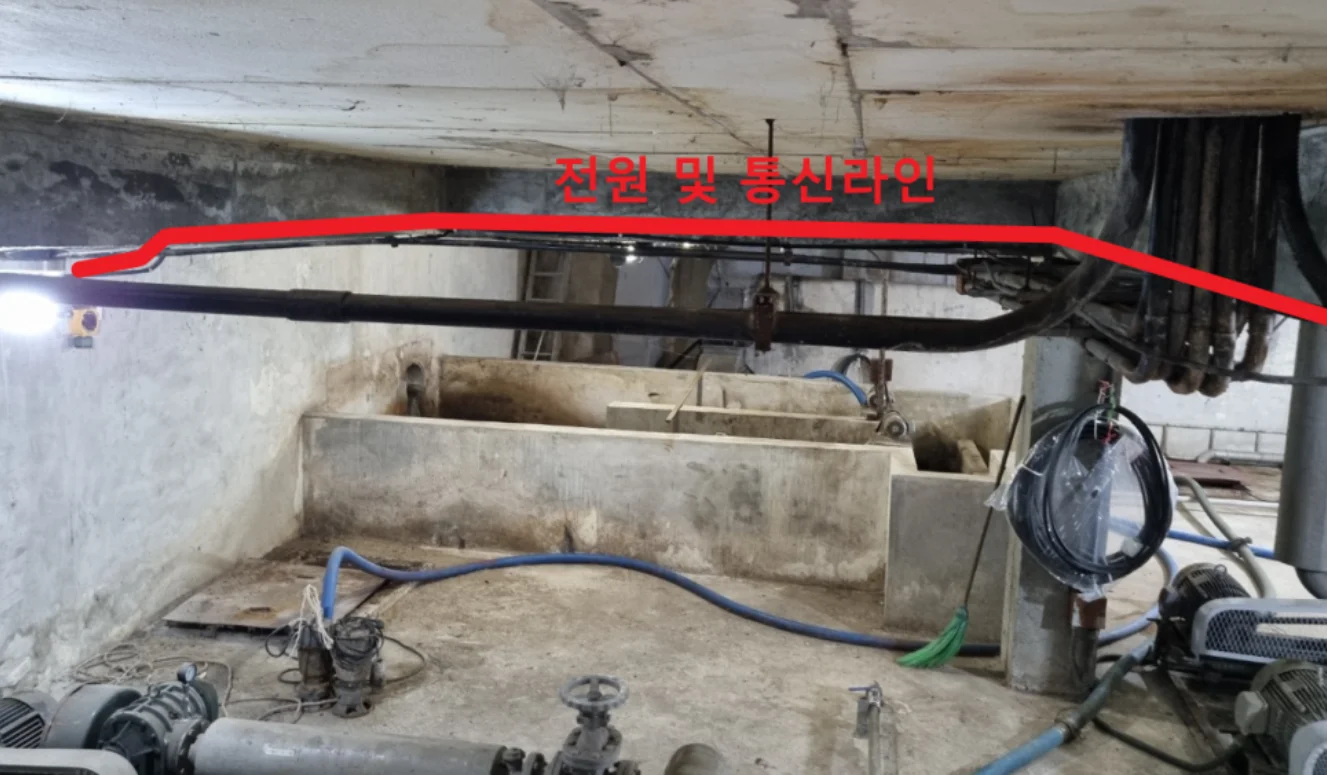
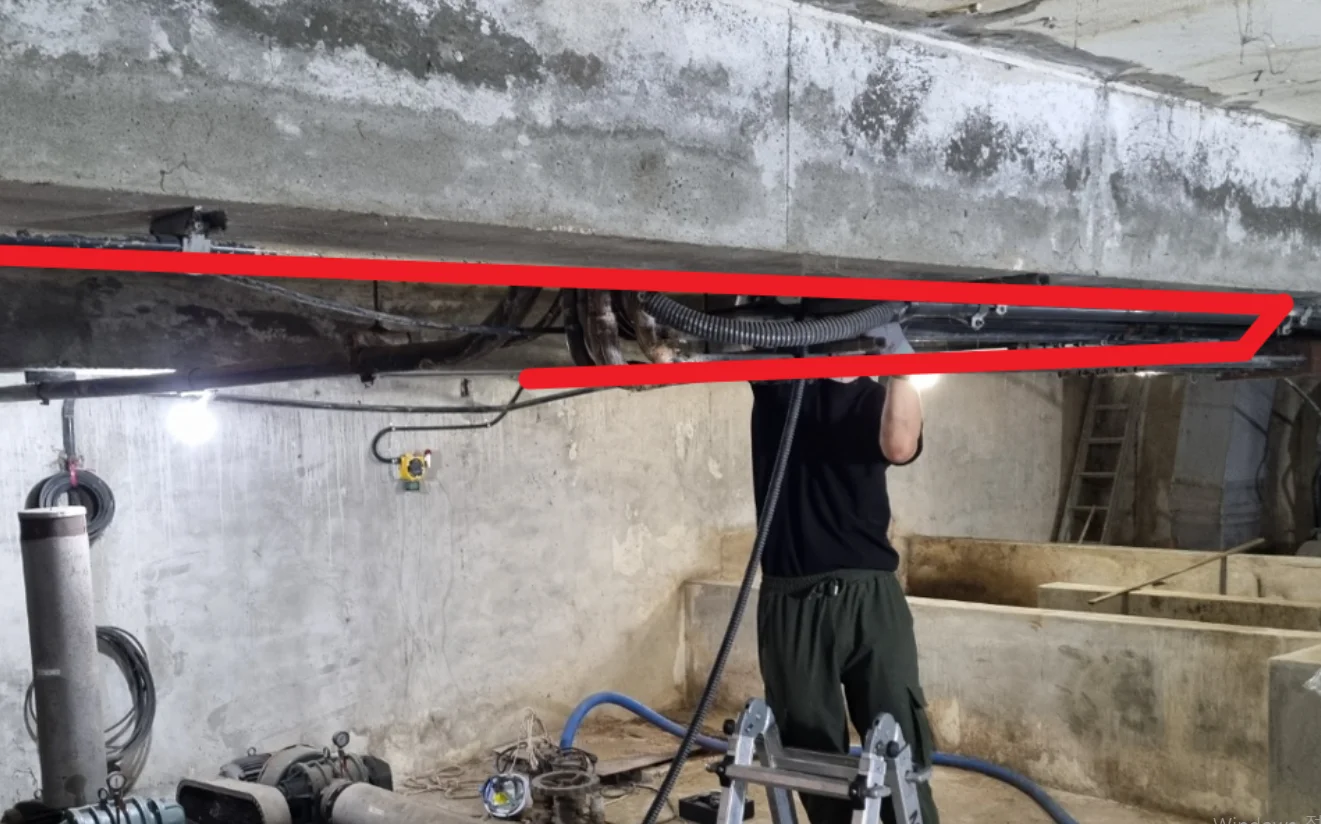
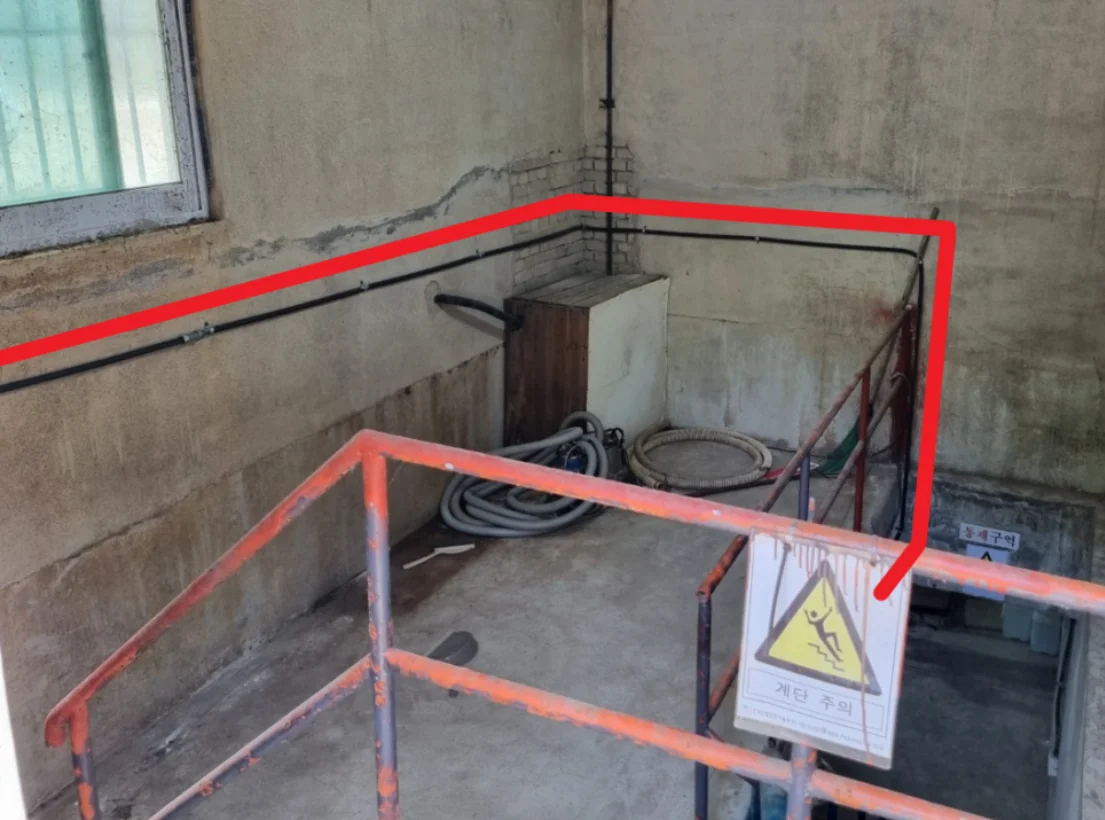
These are the power and communication lines. We used GW waterproof flexible conduit, secured in place with cable saddles.
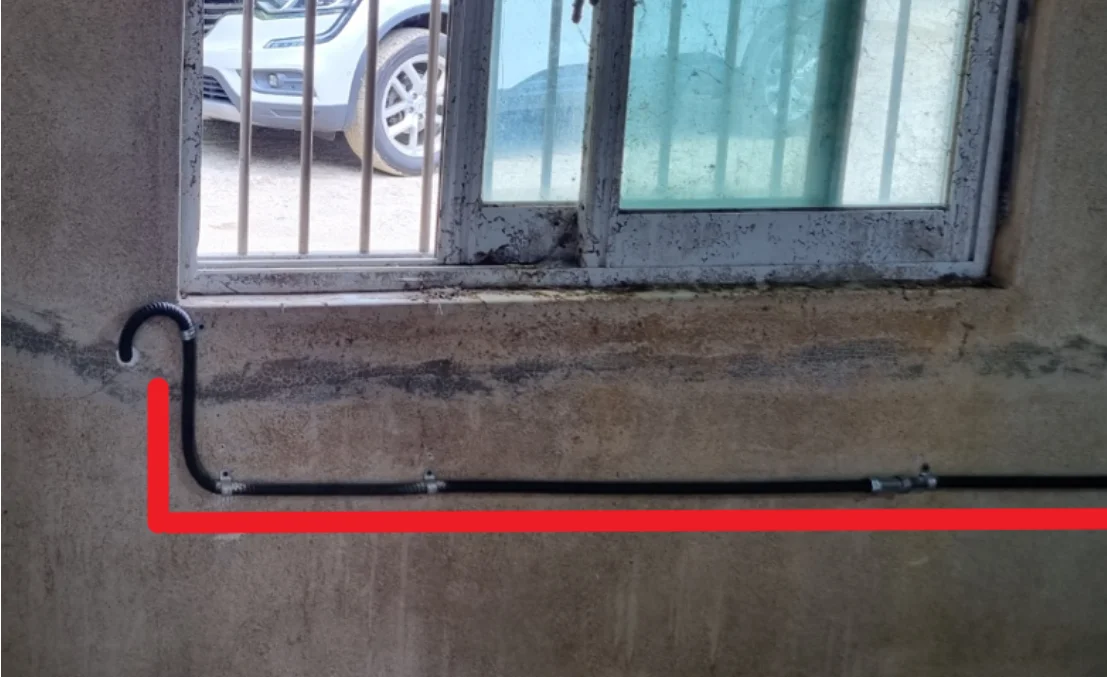
Holes were drilled to route the power and communication lines to the outside.
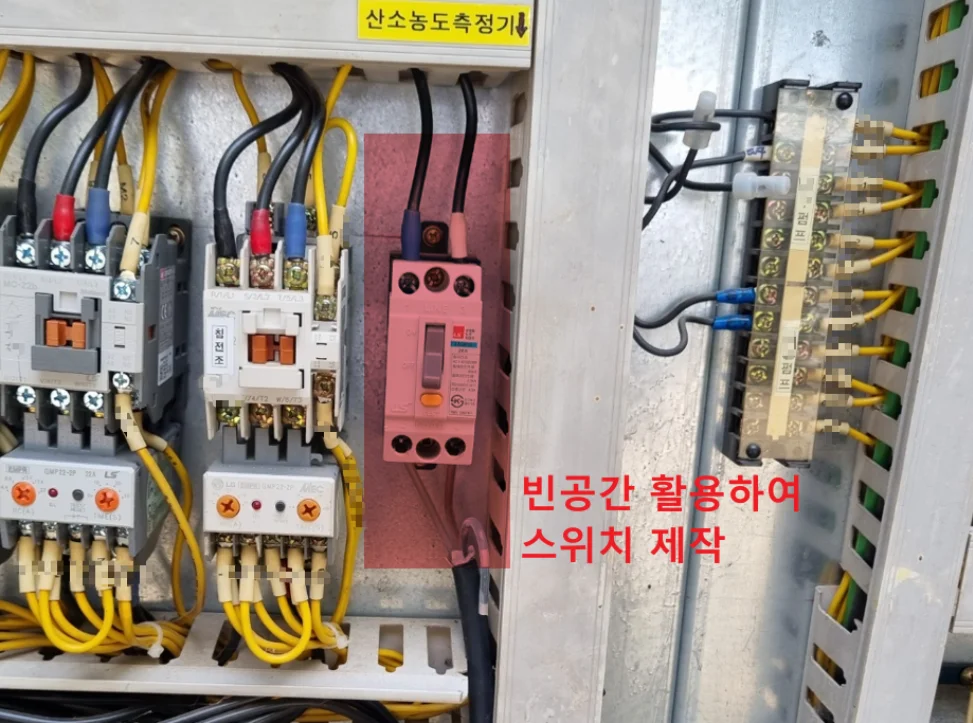
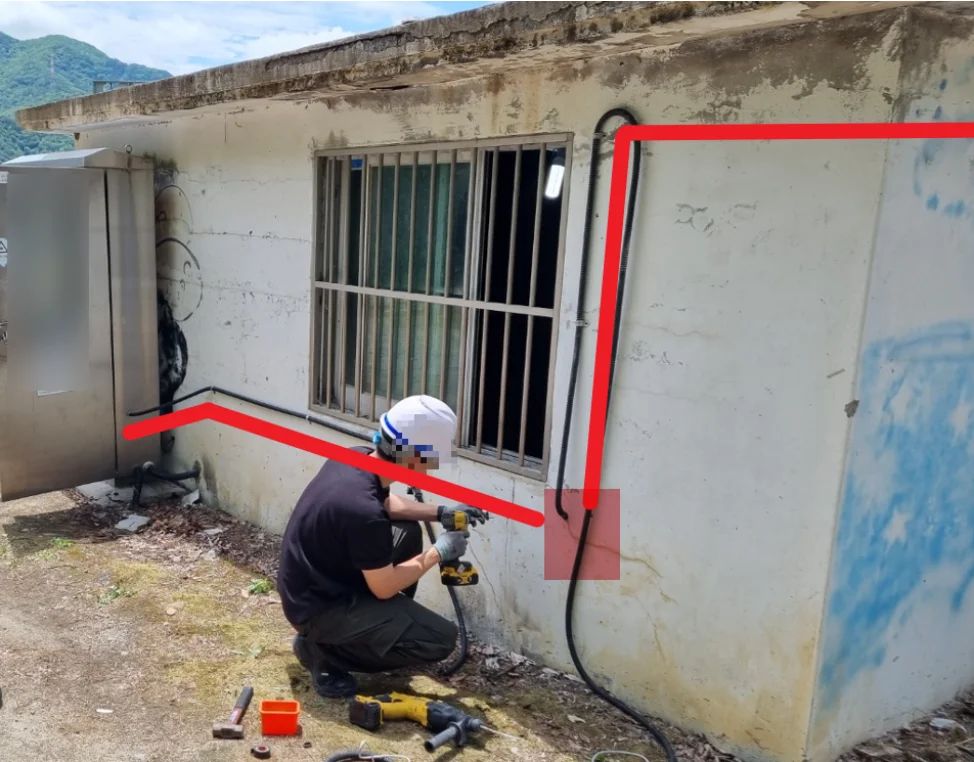
A control box was installed at the translucent red junction box location to organize the wiring.
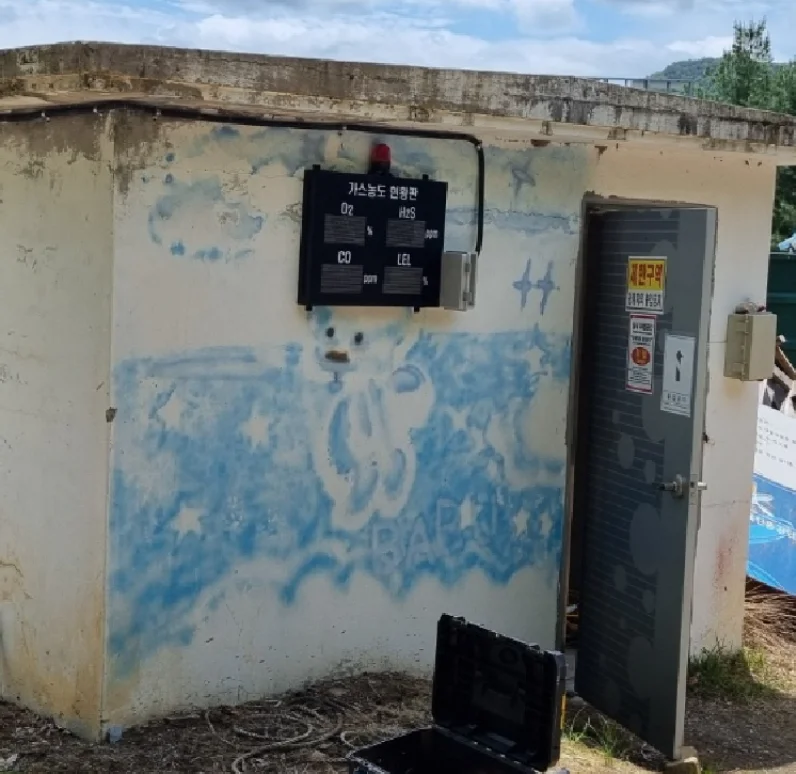
Installation Complete
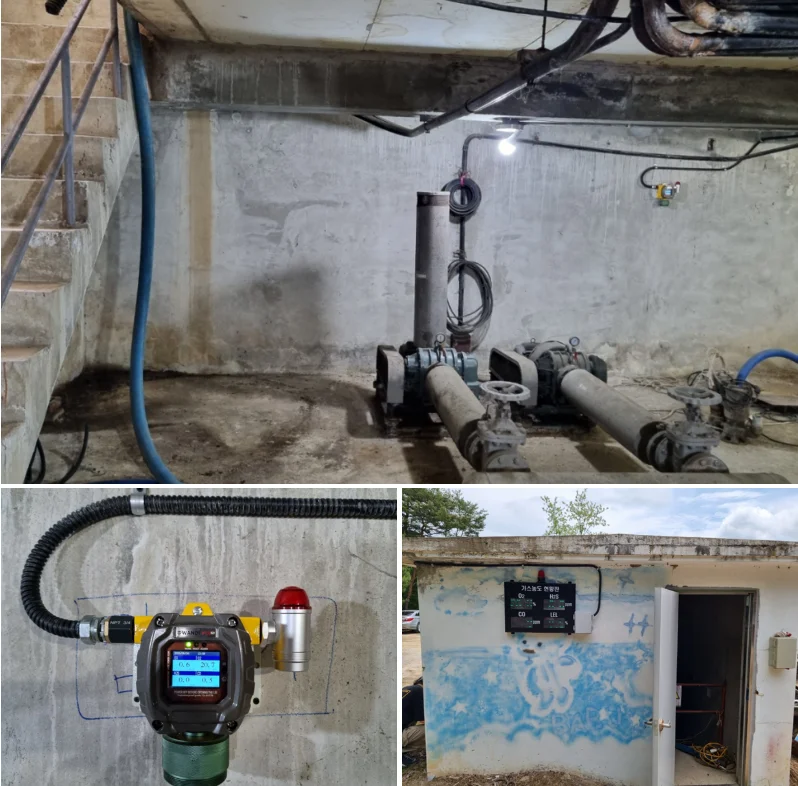
After completing the installation, we injected test gas on site to carry out calibration and functional verification.
The post-installation test followed four steps: power supply to the remote display; power relay from the display to the detector; RS-485 communication from the detector to the display; and confirming that both the detector and display trigger an alarm once readings reach the alert threshold.
After completing this testing process, we demonstrated the product to the facility manager and explained maintenance and operating procedures before wrapping up the installation.
When you don't know what gases may be present in a given environment — or you know the gas type but aren't certain of the exact concentration — it can be difficult to select the right equipment before purchase. A thorough consultation with a specialist, taking into account environmental factors, the gases involved, frequency, and concentration, is the safest way to choose a gas detector with the correct measurement range.
RS Korea is a gas-detection specialist offering more than product sales alone — including in-house calibration, domestic repair service, custom manufacturing, and installation work. Drawing on experience across demonstrations, site surveys, deliveries, repairs, and installations in a wide range of environments, we provide tailored one-to-one solutions for each gas measurement environment.
Project Summary
Purpose: Confined-space worker safety at a youth training center's wastewater treatment facility
Products: Gas detector / Gas concentration display
Gases and ranges: O2 0–30% Vol, CO 0–1,000 ppm, H2S 0–100 ppm, LEL 0–100% LEL
Crew and duration: 4 people, 7 hours
Notes: Gas detector installed inside the wastewater treatment facility; gas concentration display installed outside the entrance; all exposed wiring routed through GW flexible conduit; both the detector and display are functioning normally.
This concludes our blog post on the gas detector and gas concentration display installation at a wastewater treatment facility. If you have any questions about installation, commissioning, on-site repair, or other environmental measurement instruments, please feel free to reach out to us. This has been RS Korea — thank you.
자주 묻는 질문 (FAQ)
Q1. What gases does the FIX800 detector monitor in this installation?
In this project, the FIX800 was configured to monitor the four safety-related gases required for confined-space work: oxygen (O2, 0–30% Vol), carbon monoxide (CO, 0–1,000 ppm), hydrogen sulfide (H2S, 0–100 ppm), and combustible gas (LEL, 0–100% LEL).
Q2. Why was the detector installed inside the facility while the display was placed outside?
The detector needs to sample air directly at the point where hazardous gas is most likely to accumulate — in this case, inside the confined wastewater treatment space. The remote display was placed outside the entrance so that workers can check gas conditions before entering and receive an alarm without having to go inside first.
Q3. How many gases can a single FIX800 unit support?
A single FIX800 unit can be configured with one of roughly 40 available gas types, and up to a maximum of 5 gases simultaneously when dual sensors are installed, with all readings displayed in real time.
Q4. What was verified during the post-installation test?
Four items were verified: power supply to the display, power relay from the display to the detector, RS-485 communication between the detector and display, and that both units trigger an alarm once gas levels reach the configured threshold.
Q5. What type of wiring was used for this installation?
All exposed power and communication cabling was routed through GW waterproof flexible conduit and secured with cable saddles for durability and protection.
#GasDetectorInstallation #MultiGasDetector #FixedGasDetector #WANDI #FIX800 #4GasDetector #WastewaterTreatment #ConfinedSpaceSafety #HydrogenSulfideDetector #ToxicGasDetector
![[레이먼드] 국가기관 연구,실험실 산소측정기 설치사례](https://wandi.co.kr/storage/construction-cases/ogqQFGyXcoOyta5vuCszUCcWmN0oo6Gis1YTgRHg.jpg)
![설치] 알루미늄 캔 공장 약품 탱크 수위 측정 및 무선 모니터링 시스템 SUPMEA ZP 외 기타 등등등](https://wandi.co.kr/storage/construction-cases/umwMkgAPcZND3d5TfsLq9VCZRcfh967Vsa1BZ8Yj.webp)
![설치] 의약품 및 의료기기 검수실 설치형 가스측정기 FIX800 O2, H2, C2H2 설치 공사](https://wandi.co.kr/storage/construction-cases/v1Y8LfXzmvnJjbTYzIGovNFaIB1I9K1ETHSuDAKM.png)
![설치] 오폐수처리장 유입펌프실 설치형 가스측정기 FIX800 O2 CO H2S LEL 안전용 4Gas 설치 공사](https://wandi.co.kr/storage/construction-cases/hYKhpXn368sjQPw1STjiGpKuFCaB2gqRT2rO3vmY.png)