Applied Markets
Installed Gases
Project Details
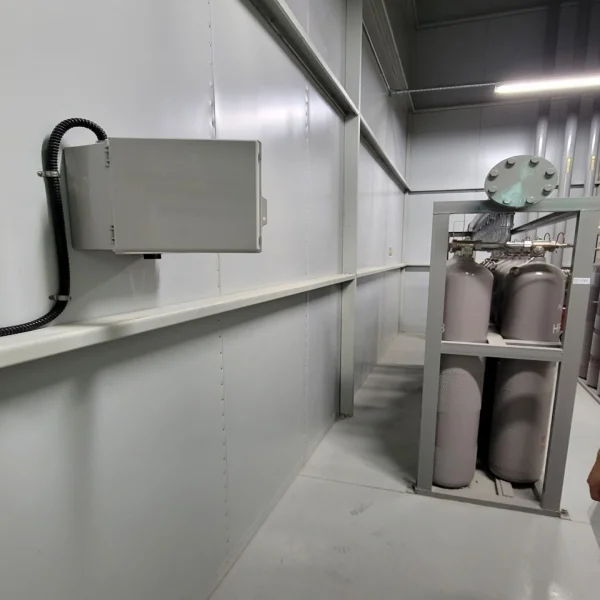
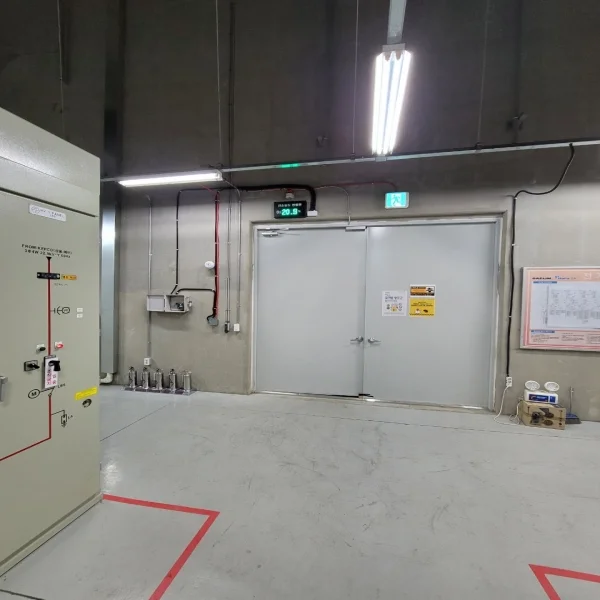
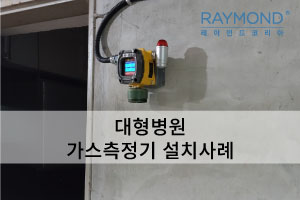
Hello. This installation case involves a gas detector installed inside a fire-suppression gas room, and it has one particularly notable feature.
When gas detectors are installed in fire-suppression gas rooms or protected areas, most facilities that request installation use CO2 (carbon dioxide) suppression gas.
This is because CO2 suppression gas works through an asphyxiation-based extinguishing method that drops the oxygen level to near zero the instant it is discharged, which is extremely dangerous if a worker is present during an accidental or actual discharge. For this reason, Korean regulations require that any facility using carbon dioxide as an extinguishing agent must install an oxygen or carbon dioxide alarm.
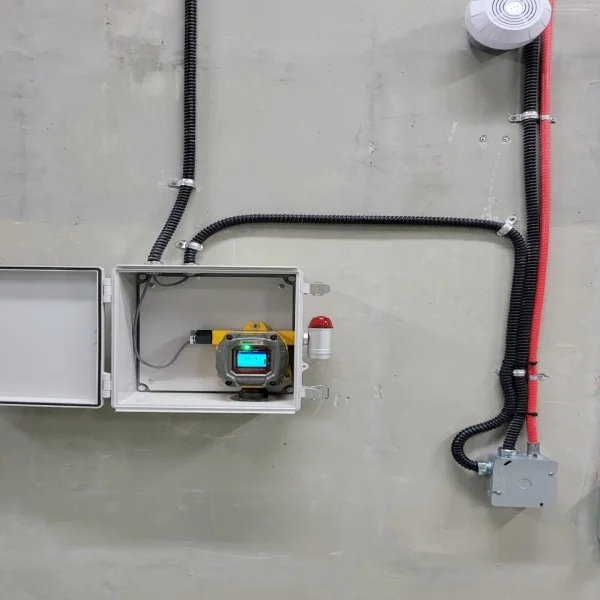
However, this particular fire-suppression gas room used not carbon dioxide but Halon (halogenated) gas as its suppression agent. So is halogen-based refrigerant suppression gas actually safe?
The answer is no. In fact, both carbon dioxide and halogenated refrigerant suppression agents are discharged as highly compressed gas in an instant in order to suppress a fire. Halogen-based agents therefore also carry a risk of asphyxiation, but because reported incidents are less frequent than with carbon dioxide agents, they tend to receive less attention and awareness.
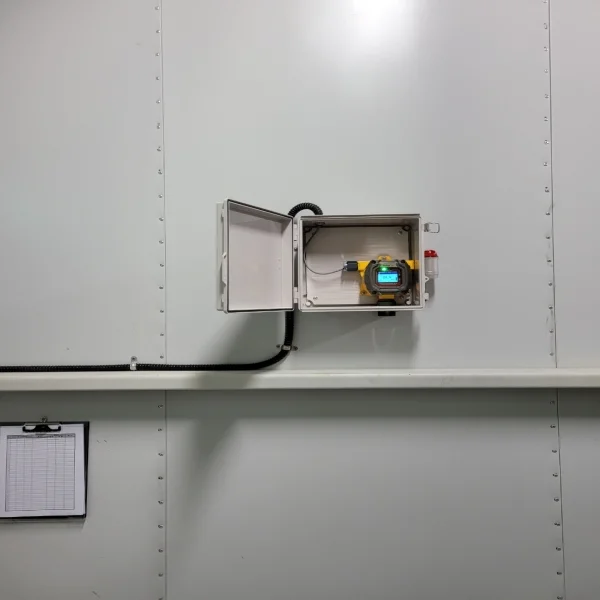
Halon suppression gas can be measured either with a refrigerant sensor matched to the specific suppression gas type, or with an oxygen sensor. A refrigerant sensor can detect even minor leaks, while an oxygen sensor generally needs a somewhat larger release, closer to the volume of an accidental discharge, before it can detect a change, although this difference has little practical impact.
This is because Halon suppression gas does not work through an asphyxiation-based extinguishing method, so there is comparatively more time to notice the drop in oxygen concentration and evacuate or prepare, compared with carbon dioxide suppression agents.
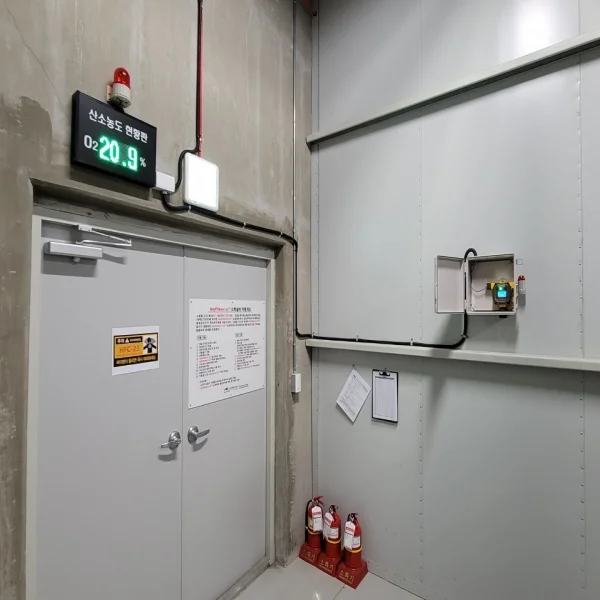
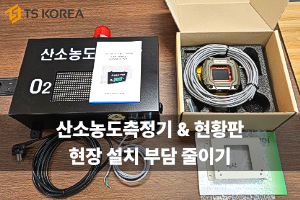
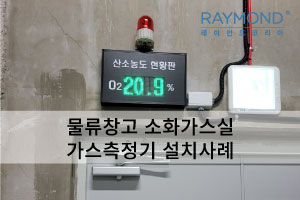
We believe an electronic display board at the entrance is essential for any fire-suppression gas room. These rooms must always remain closed, and their outer walls are often thicker than those of other facilities, which makes it relatively difficult to notice a gas leak from outside even if one occurs.
That is why an external display board should always be installed as a safety measure, allowing anyone entering or passing by to immediately check the gas concentration inside.
This concludes our introduction to this installation case for an oxygen concentration detector in a Halon, rather than carbon dioxide, fire-suppression gas room.
From a free on-site survey and tailored solution to installation, and through to responsible after-sales service and ongoing maintenance, our team is ready to support your gas detector needs.
Thank you.

Frequently Asked Questions (FAQ)
What type of gas detector should be installed in a Halon suppression gas room?
A Halon (halogenated) suppression gas room can be equipped with a gas detector using either a refrigerant sensor matched to the specific suppression gas, or an oxygen sensor. A refrigerant sensor can detect even minor leaks, while an oxygen sensor detects the drop in oxygen concentration that occurs during an accidental or actual discharge.
Is Halon suppression gas as dangerous as CO2 suppression gas?
Both gases are discharged under high pressure and carry a risk of asphyxiation. However, CO2 works through an asphyxiation-based extinguishing method that drops oxygen levels to near zero almost instantly, while Halon gas does not, which generally allows more time to notice the change and evacuate. Even so, both gases pose real risks, so installing a gas detector is essential in either case.
Why is an electronic display board needed at the entrance of a suppression gas room?
Suppression gas rooms must remain closed at all times and often have thicker outer walls than other facilities, making it difficult to notice a leak from outside. Installing a display board at the entrance allows anyone approaching to immediately check the gas concentration inside before entering.
Is a gas detector legally required in suppression gas rooms?
Facilities using carbon dioxide as a suppression agent are legally required in Korea to install an oxygen or carbon dioxide alarm. For facilities using other suppression gases such as Halon, installing a gas detector is strongly recommended to protect worker safety.
What kind of maintenance is needed after installation?
Regular inspection and sensor calibration are needed after installation. We provide support from a free on-site survey through installation, responsible after-sales service, and ongoing maintenance.
#WANDI #GasDetector #HalonGas #SuppressionGasRoom #OxygenDetector #GasSensor #AsphyxiationRisk #ProtectedArea #IndustrialSafety #GasLeakDetection