Project Details
Hello, this is RS Korea. Today's post covers the inspection, repair, and relocation of a fixed, single-gas oxygen detector (FIX800) installed inside an automotive parts factory.
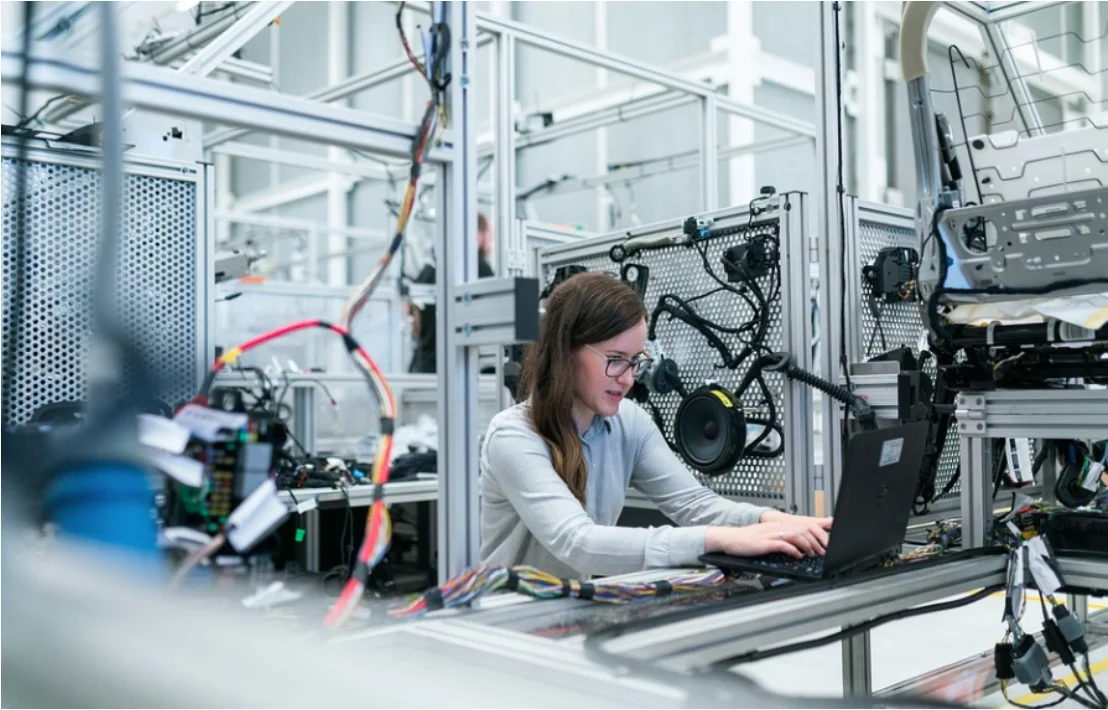
※ Reference photo of the automotive parts factory. At the client's request, no on-site photography was carried out during this repair and relocation; aside from a few photos provided by the client, substitute reference photos have been used in this post — thank you for your understanding.

For gas detector inspections and repairs, portable detectors or a small number of fixed units can typically be sent in by courier along with a brief description of the issue. However, when a customer manages a larger quantity of equipment, or when the fixed detectors are registered as company assets, courier drop-off is impractical, so we carry out the work as an on-site visit instead.
The on-site calibration, inspection, and repair process follows these steps: inquiry, quotation, visit-date coordination, and on-site visit. Visit fees vary by region — please contact the number below for details.
☎ 031-340-6952

Product repaired
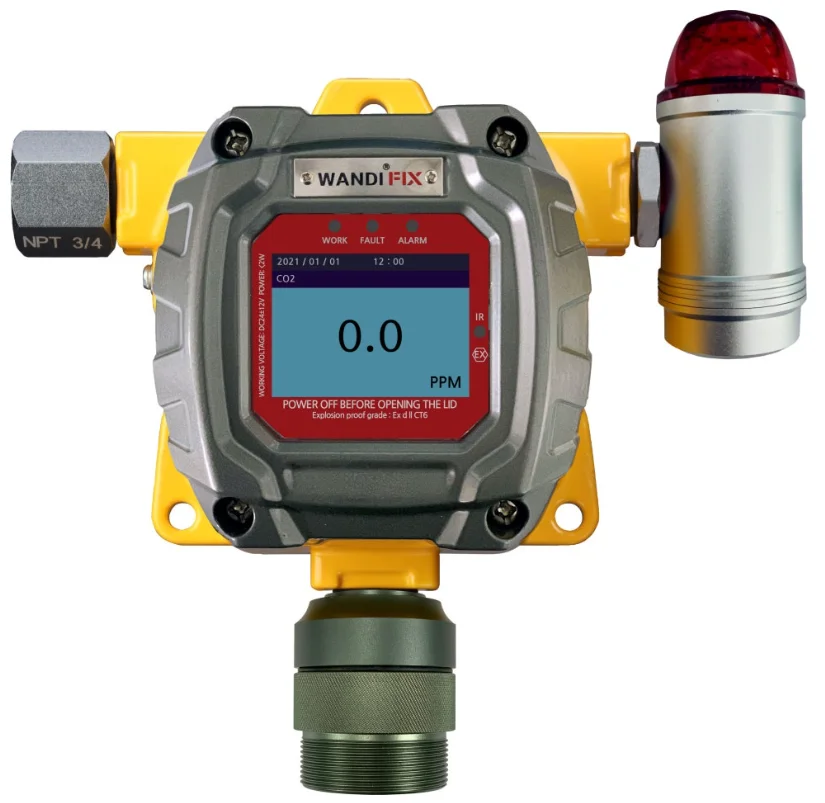
This is the FIX800, a fixed-type gas detector from WANDI, a brand specializing in gas detection equipment.
From a list of roughly 40 available gases, the FIX800 can be configured from a single gas up to five gases with a dual sensor, with all configured gases measured and displayed simultaneously. It can be connected to a remote display panel or PLC, allowing readings to be checked and managed from outside the room.
It can also be paired with a customizable gas sampling pretreatment system suited to the measurement environment, removing interfering elements so that only the target gas is measured accurately.
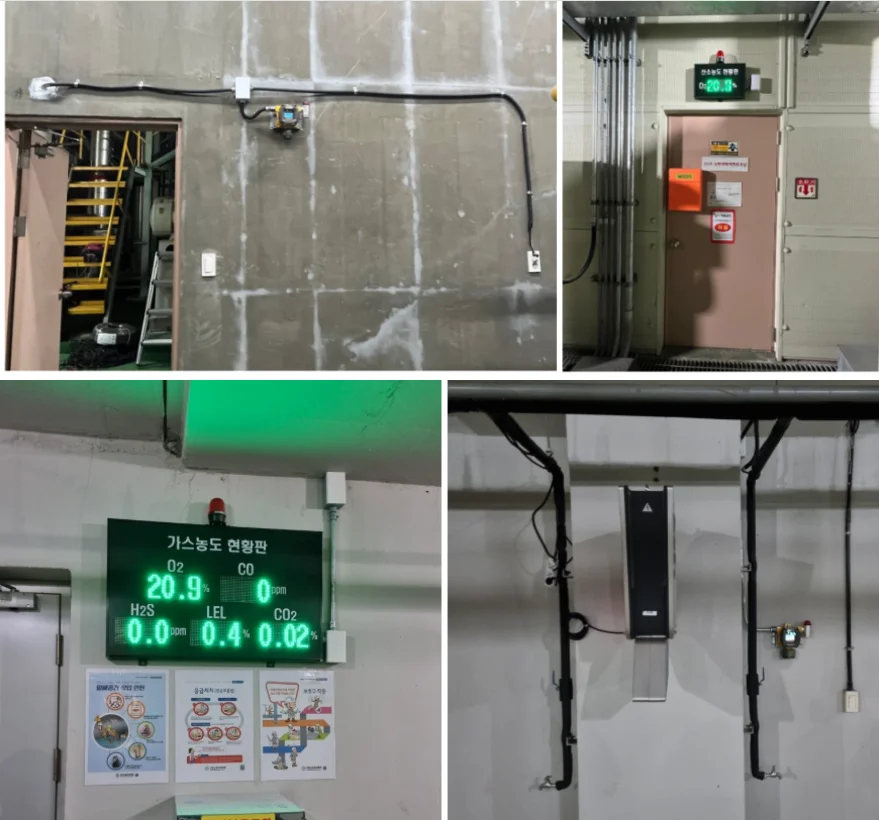
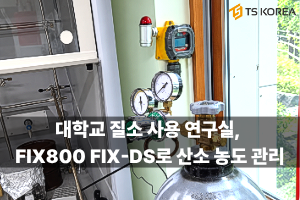
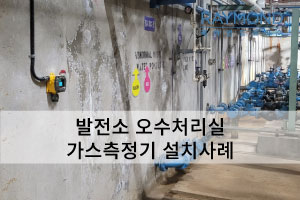
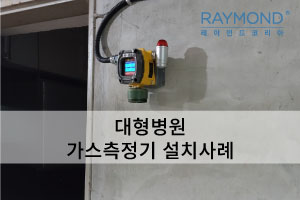
Example installation: fire-suppression agent storage room / septic tank room.
Initial installation and environment
The unit was originally installed in the second half of 2020. Two full years had passed since installation, and considering the sensor's service life, the customer contacted us for an inspection and relocation.
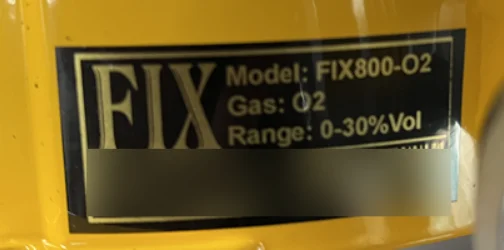
Installed gas: O2 (oxygen), 0–30% Vol.
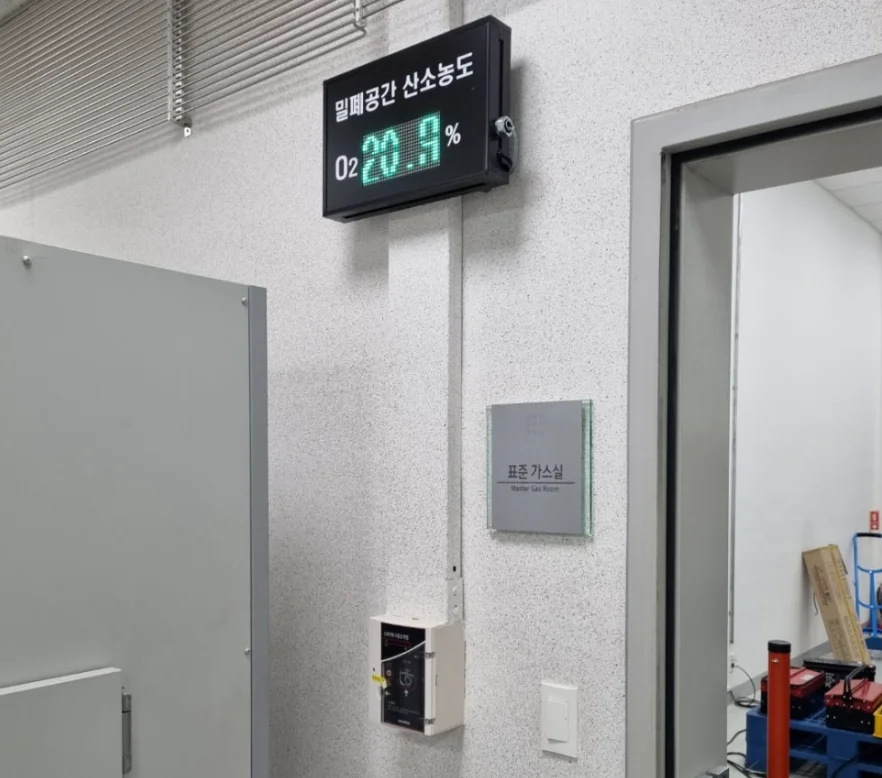
Environment: inside an automotive production factory, in a room used to store standard gases. An oxygen detector was installed for confined-space safety, with a remote display panel mounted to the left of the entrance.
Repair and relocation
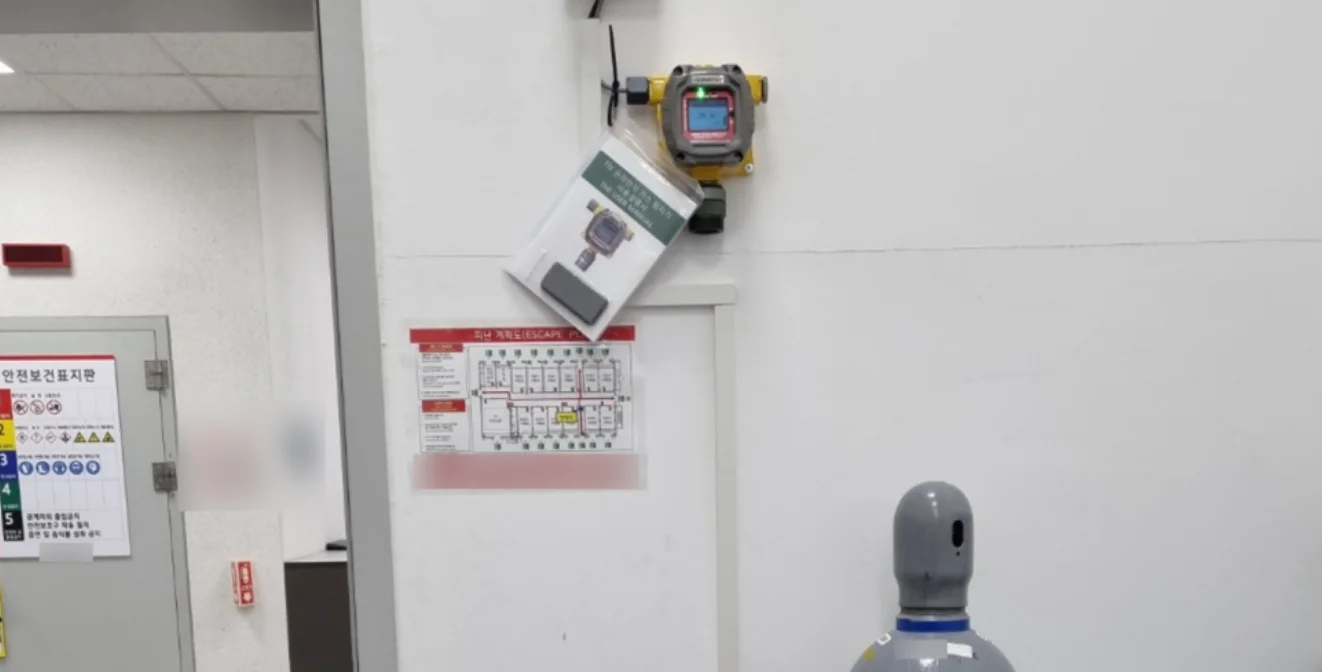
Inspection and repair: before starting the repair, we inspected the unit's condition. After two full years of service, the oxygen sensor was found to have reached the end of its service life. Since the confined space held only normal ambient air, no leakage had occurred at the sensor board, but the customer requested it be replaced as well, so it was replaced together with the sensor.
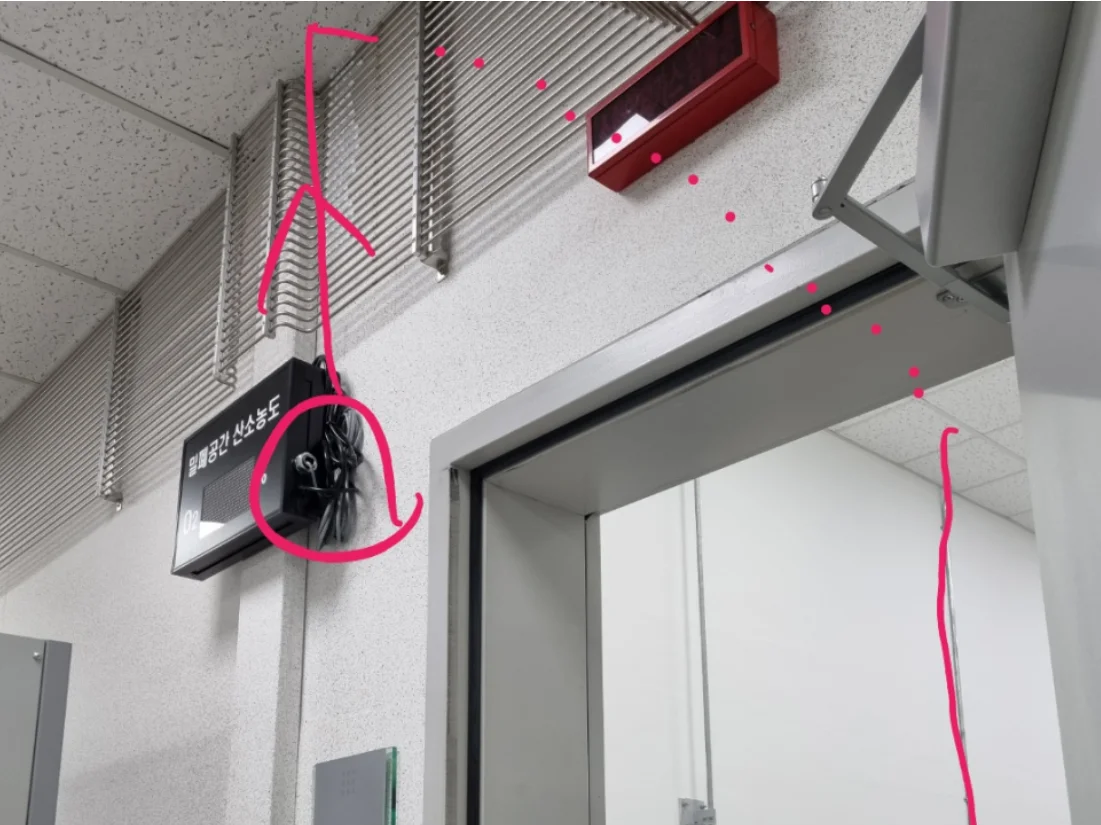
Relocation: the display panel's power supply had originally been wired through the room's light switch, so turning off the room lights also cut power to both the display panel and the detector. To resolve this, we carried out drilling and wiring work to relocate the power supply.
Repair and relocation completed
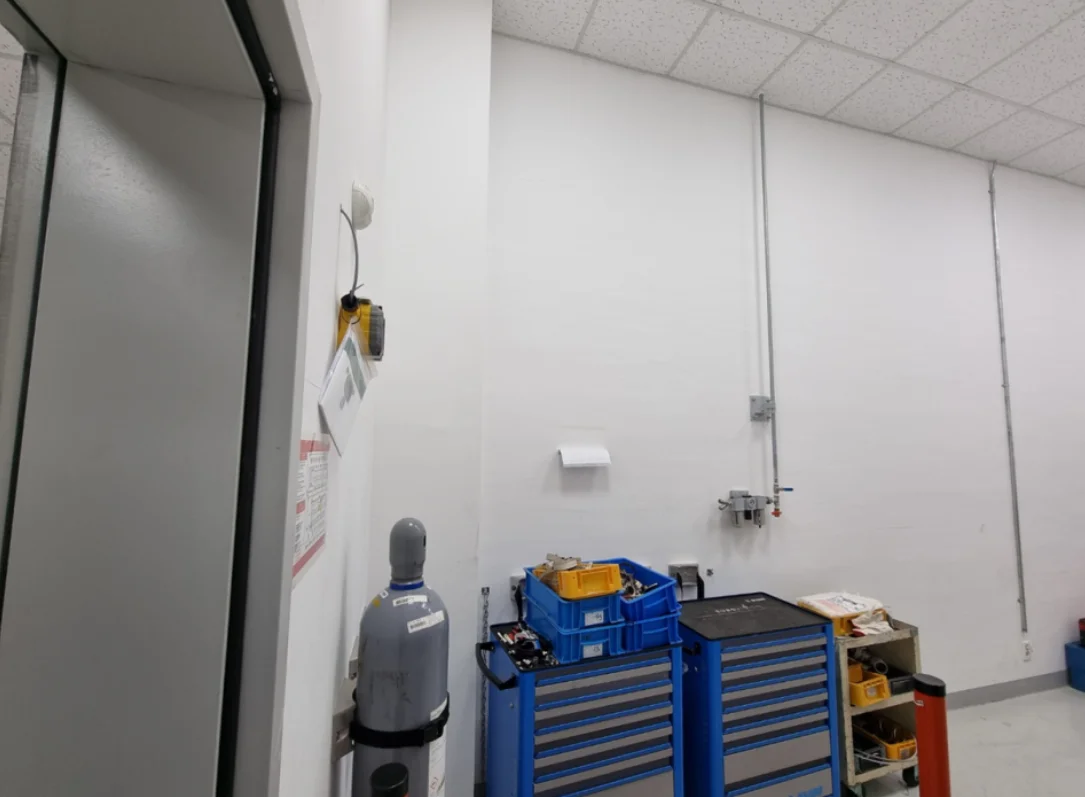
After replacing the O2 sensor and sensor board, calibration gas was injected to complete the calibration, and the relocation was carried out without issue. The repair and relocation were completed after a final walkthrough of usage and product guidance with the on-site staff.
As a general guideline, we recommend a 1-year calibration cycle and a 2-year sensor replacement cycle. Calibration validity lasts one year, and readings can drift after that period, so we recommend calibrating annually and replacing the sensor every two years. Actual sensor life may vary depending on the gas being measured and environmental conditions.
Confined spaces are legally required to monitor and manage hazardous gases. While periodic inspection and repair are not themselves a legal requirement, we recommend them on a regular cycle for worker safety.
Beyond simply supplying products, RS Korea specializes in gas detection with in-house calibration, domestic repair service (A/S), custom manufacturing, and installation. Backed by experience across demonstrations, site surveys, deliveries, repairs, and installations in a wide range of environments, we provide tailored, one-on-one solutions for each customer's measurement environment.
Project summary
Environment: automotive parts factory, gas management room.
Product: WANDI FIX800.
Gas and range: oxygen (O2), 0–30% Vol.
Repair items: oxygen sensor, sensor board.
Relocation: detector and display panel power supply.
Notes: inspection, repair, and relocation were carried out two years after the initial installation; the unit was located inside a standard gas storage room under normal ambient conditions, with no leakage or corrosion observed; the display panel's power had been linked to the room light switch, causing both the display and detector to shut off when the lights were off; drilling and wiring work was carried out to relocate the power supply; calibration and a product briefing were completed after replacement.
This concludes our blog post on the inspection, repair, and relocation of a FIX800 gas detector at an automotive parts production factory. For any inquiries about gas detectors, gas analyzers, measurement environments, or installation/site surveys, please contact us at the number below.
☎ 031-340-6952
This has been RS Korea. Thank you.
Frequently Asked Questions (FAQ)
What gas does this FIX800 unit monitor, and what is its measurement range?
This unit monitors oxygen (O2) with a measurement range of 0–30% Vol, used for confined-space safety inside a gas storage room at an automotive parts factory.
Why did this unit need repair and relocation?
Two years after the initial installation, the oxygen sensor had reached the end of its service life. In addition, the display panel's power had originally been linked to the room light switch, so both the display and detector powered off whenever the room lights were turned off — the relocation resolved this wiring issue.
How many gases can the FIX800 monitor at once?
The FIX800 can be configured with a single gas or, with a dual sensor, up to five gases simultaneously, selected from a list of roughly 40 available gas types, with all readings displayed at the same time.
How often should the sensor and calibration be checked?
As a general guideline, we recommend calibration once a year and sensor replacement every two years, since calibration validity is about one year and readings can drift afterward. Actual intervals may vary depending on the gas and the environment.
What services does RS Korea provide beyond product sales?
Beyond supplying products, RS Korea offers in-house calibration, domestic repair service (A/S), custom manufacturing, and installation, with tailored solutions based on experience across a wide range of measurement environments.
#FIX800#GasDetector#OxygenMonitoring#ConfinedSpaceSafety#GasDetectorRepair#SensorCalibration#WANDI#AutomotiveIndustry#FixedGasDetector#IndustrialSafety