Applied Markets
Installed Gases
Project Details
Hello. This is RS Korea's team.
Today's post covers the installation of WANDI's FIX800 gas detector — a 5-gas [O2, CO, CO2, H2S, LEL] configuration for a fire-suppressant agent room / septic tank room, and an O2 (0–30%) configuration — for this project.
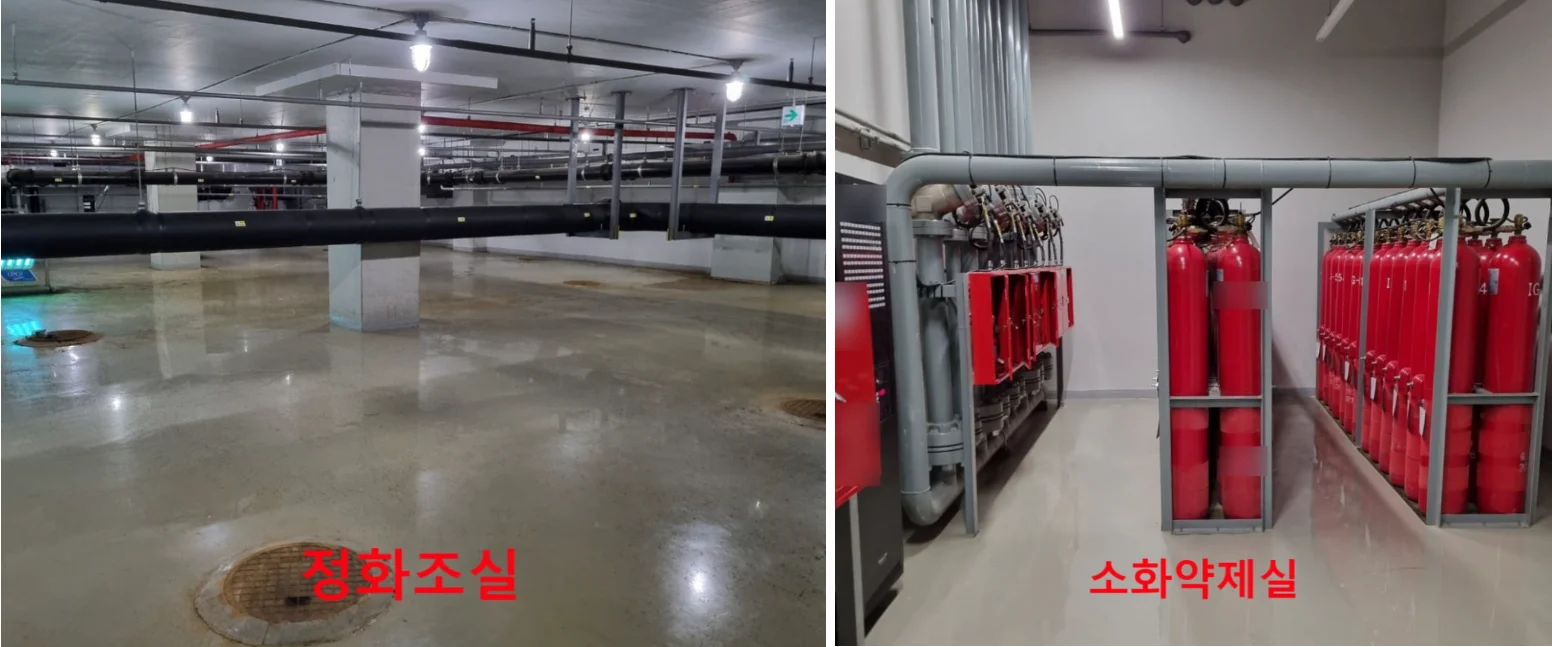
We visited the head office building of a Korean mid-sized company in Seoul to carry out installation work in the septic tank room and the fire-suppressant agent room.
In the septic tank room, we planned to install the FIX800 with the 5-gas safety configuration [O2, CO, CO2, H2S, LEL] along with a gas display board. In the fire-suppressant agent room, we planned to install the FIX800 with an O2 (0–30%) sensor along with a gas display board.
Septic Tank Room
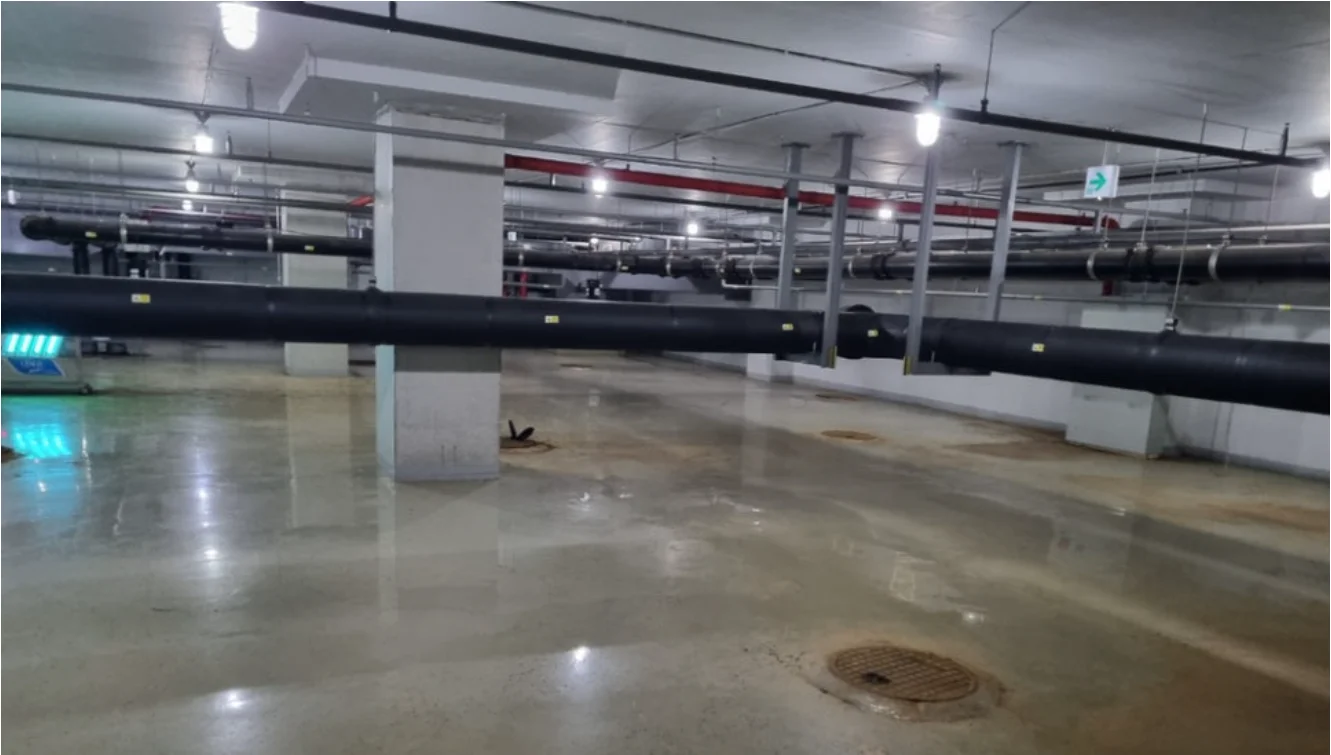
Wastewater is discharged from every building. The septic tank room is where contaminated water, including sewage, is collected and purified through processes such as coagulation and sedimentation.
The septic tank room is a confined space with a sewer-like odor.
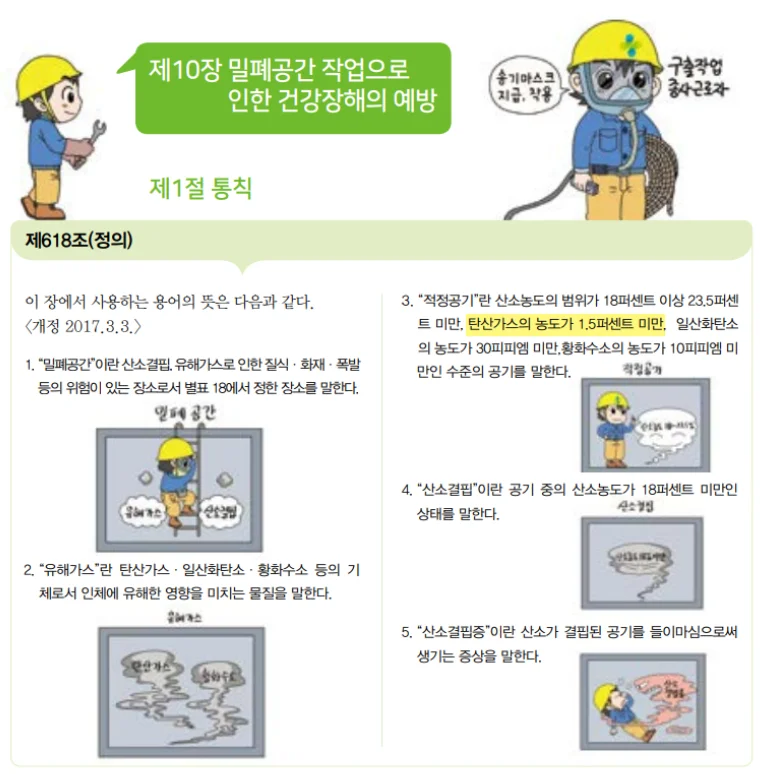
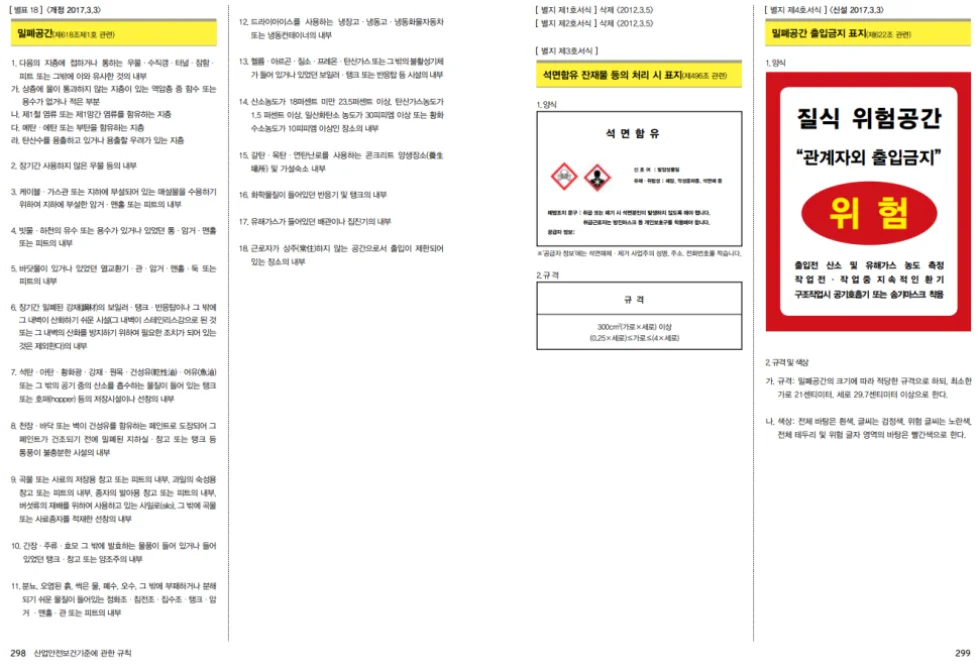
Following a March 2017 revision to the Occupational Safety and Health Act, confined spaces must now measure a total of five gas concentrations — adding carbon dioxide to the previous four gases — and maintain what is defined as "adequate air."
The gases that must be measured are oxygen, carbon monoxide, hydrogen sulfide, combustible gas, and carbon dioxide. These are collectively known as the "five confined-space safety gases."
Confined-space measurement gases and adequate air levels:
Oxygen (O2): 18% or above, below 23.5% — below this range, dizziness and asphyxiation can occur; above this range, fire risk increases.
Carbon Dioxide (CO2): below 1.5% — legally referred to as carbonic acid gas, released during human respiration; when absorbed into the body it interferes with the even distribution of oxygen and can cause dizziness.
Carbon Monoxide (CO): below 30 ppm — a toxic gas produced during incomplete combustion; in fires, death from CO asphyxiation is more common than death from flames.
Hydrogen Sulfide (H2S): below 10 ppm — produced as sludge decomposes; this is the familiar restroom odor and comes with a foul smell.
Fire-Suppressant Agent Room
There are three basic principles of fire suppression: asphyxiation (cutting off oxygen), cooling (removing heat), and inhibition (interrupting the chain reaction).
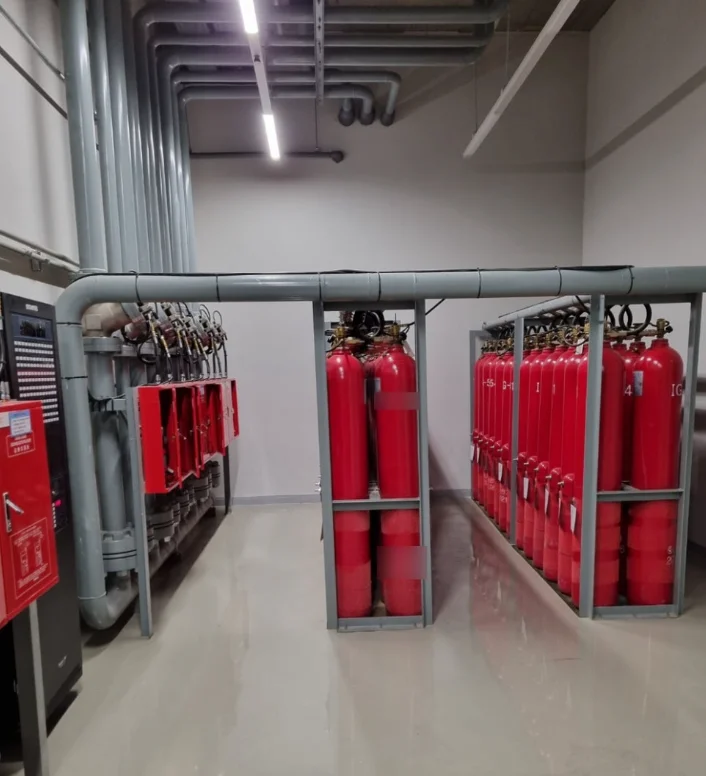
Fire suppression systems are useful for extinguishing fires by cutting off the oxygen supply, but because of the risk of asphyxiation, proper maintenance and management of the system is critical.
However, because leaked suppressant gas is colorless, odorless, tasteless, and non-irritating, it cannot be detected by human senses, and casualties have continued to occur. In response, the Ministry of Employment and Labor introduced new safety standards and announced a revision to the Occupational Safety and Health Standards regulation, mandating gas alarm devices in suppressant agent storage container rooms, among other requirements.
New safety standard to prevent asphyxiation from fire suppression systems (effective October 18, 2022): safety measures are now required when entering protected zones and suppressant container storage areas during inspection and maintenance of carbon dioxide fire suppression systems. Protected zones and suppressant container storage rooms above a certain size must be equipped with a gas detector and an alarm device, so that workers can immediately recognize a suppressant release and evacuate.
Accordingly, workplaces currently operating fire suppression systems must install the required alarm devices by October 18, 2024.
Installed Product
The product installed for this project is the FIX800, a fixed gas detector from WANDI, a company specializing in gas detection equipment.
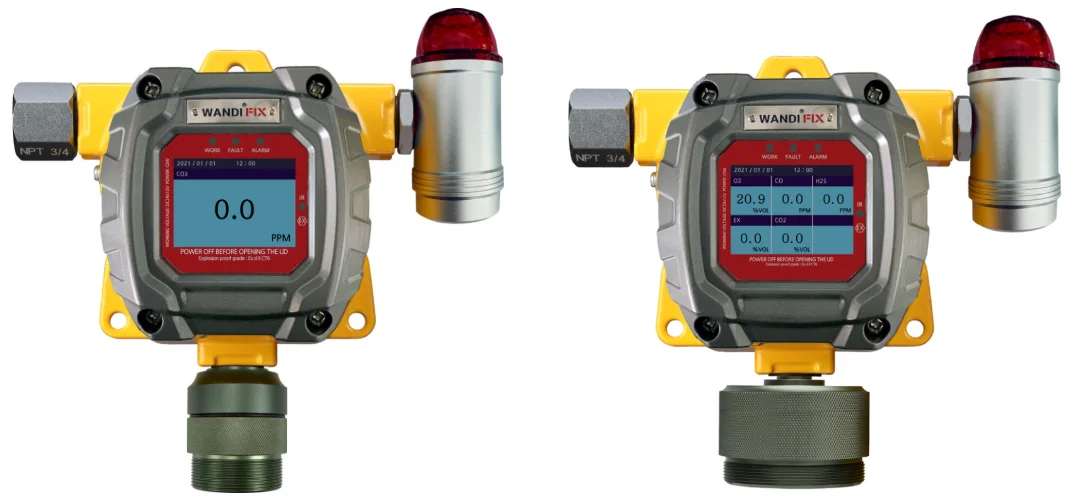
Left: single-gas sensor / Right: multi-gas sensor configuration. In the photo, the unit on the left has a single-gas sensor installed, and the one on the right has a multi-gas sensor configuration. The lower part of the display is the sensing section; the single-gas model has a slimmer sensor housing, while the multi-gas model has a wider housing.
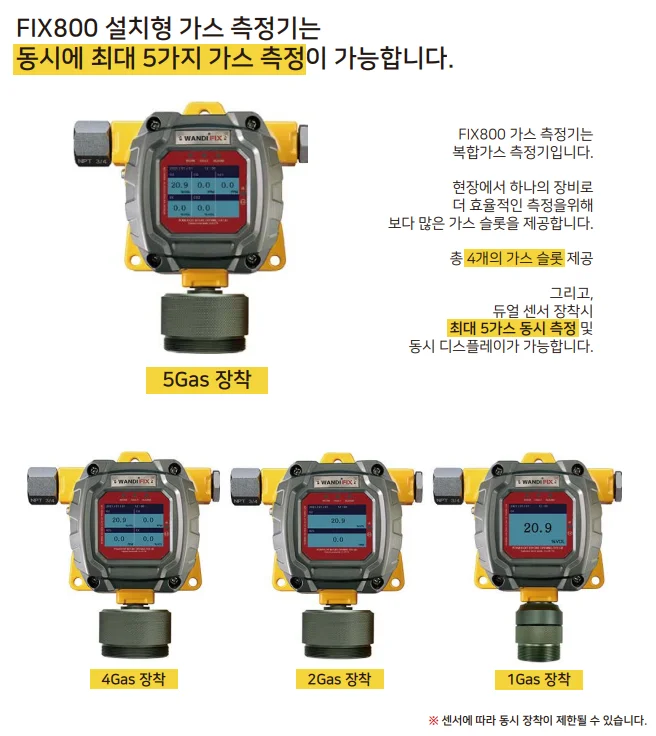
This fixed gas detector can simultaneously measure and display anywhere from a single gas up to five gases (with a dual sensor installed), selected from around 40 available gas types. It can also be connected to an optional display board or PLC, allowing measured values to be checked remotely in real time, with alarms enabling an immediate response in the event of a hazard.
For a full list of supported gases, please visit our website.
Installation Points
This project's site was the head office building of a mid-sized company comparable in scale to a large corporation.
We were asked to install fixed gas detectors and external gas concentration display boards in the building's septic tank room and fire-suppressant agent room.
It was clear that this company pays close attention to worker safety, even in spaces that aren't visible to the public.
Septic Tank Room — FIX800 5-gas safety configuration [O2, CO, CO2, H2S, LEL] and gas display board
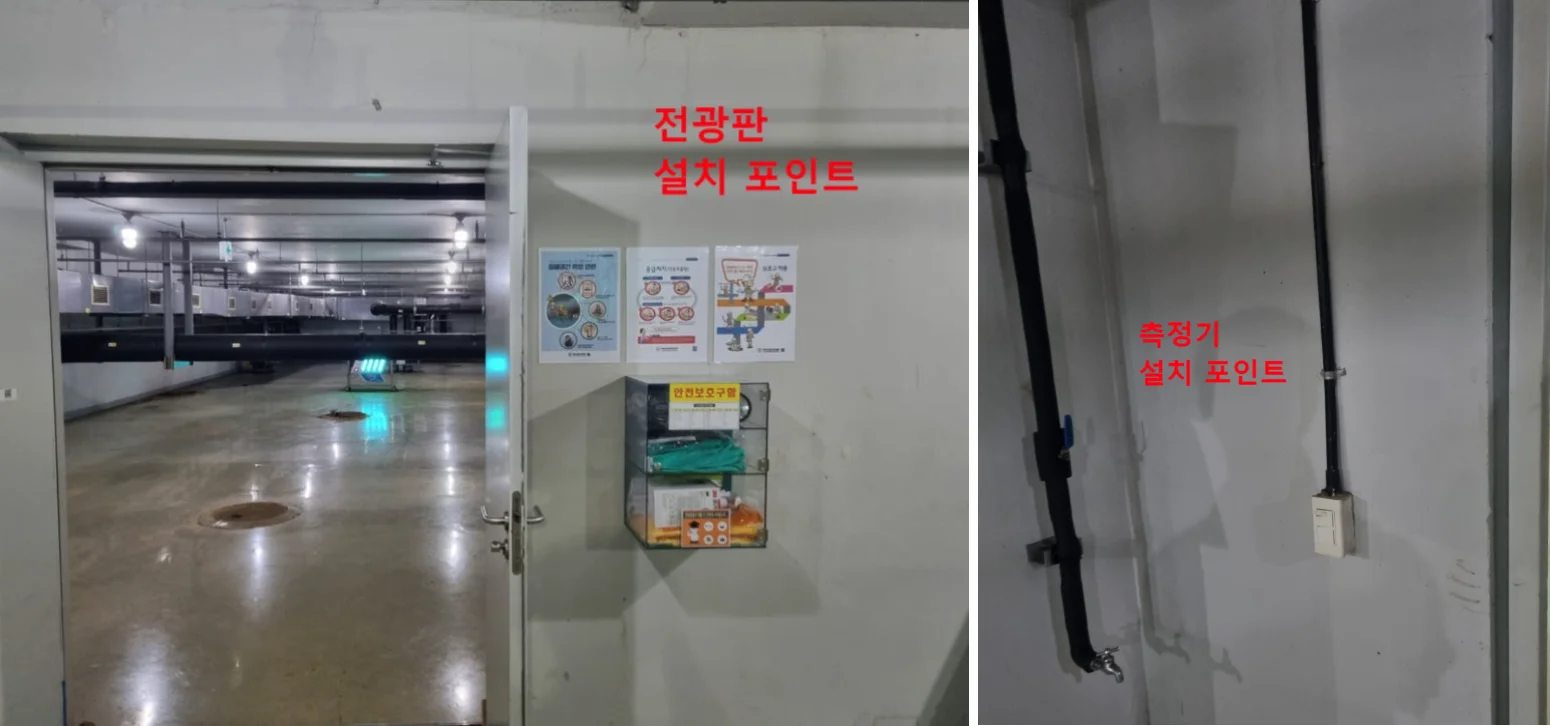
This is the installation point in the septic tank room. The 5-gas safety display board was planned for the right side of the entrance, and the fixed gas detector FIX800 was planned for inside the septic tank room.
Fire-Suppressant Agent Room — FIX800 O2 (0–30%) and gas display board
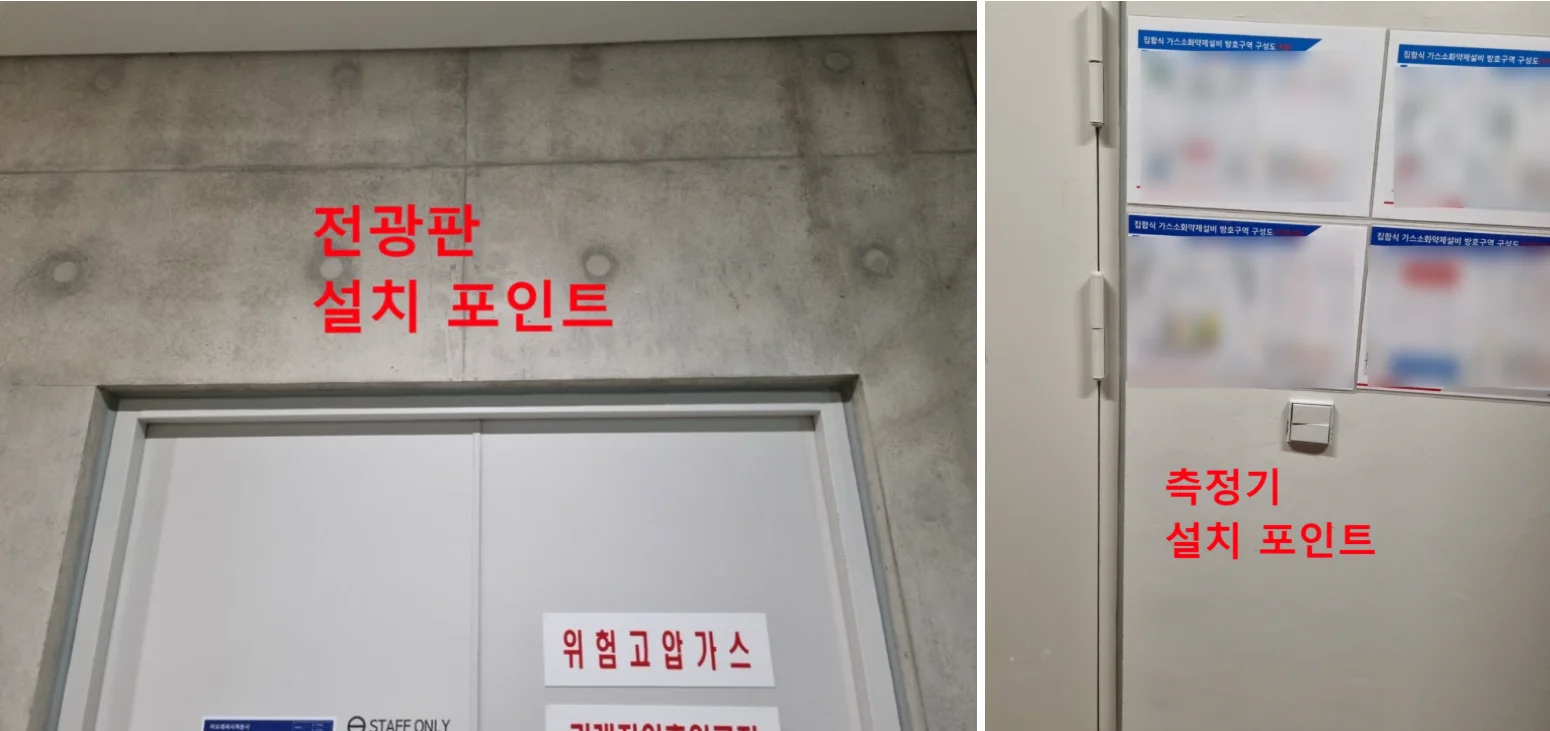
This is the installation point in the fire-suppressant agent room. The oxygen concentration display board was planned for the left side of the entrance, and the fixed gas detector FIX800 was planned for inside the fire-suppressant agent room.
Installation
Septic Tank
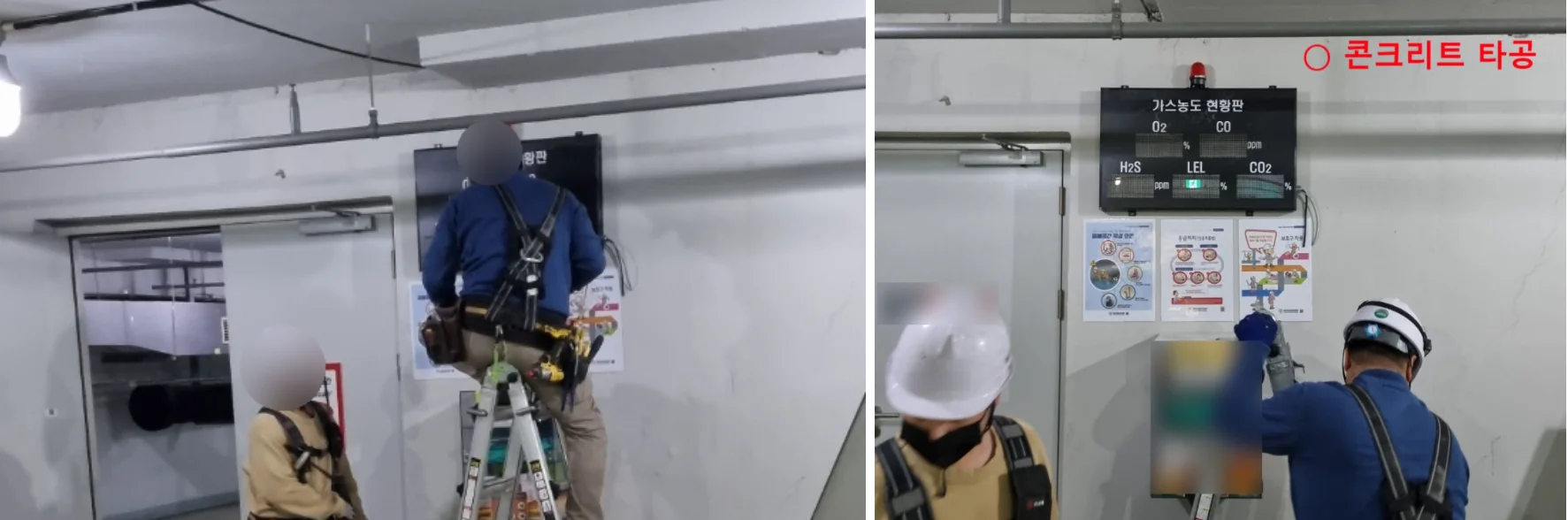
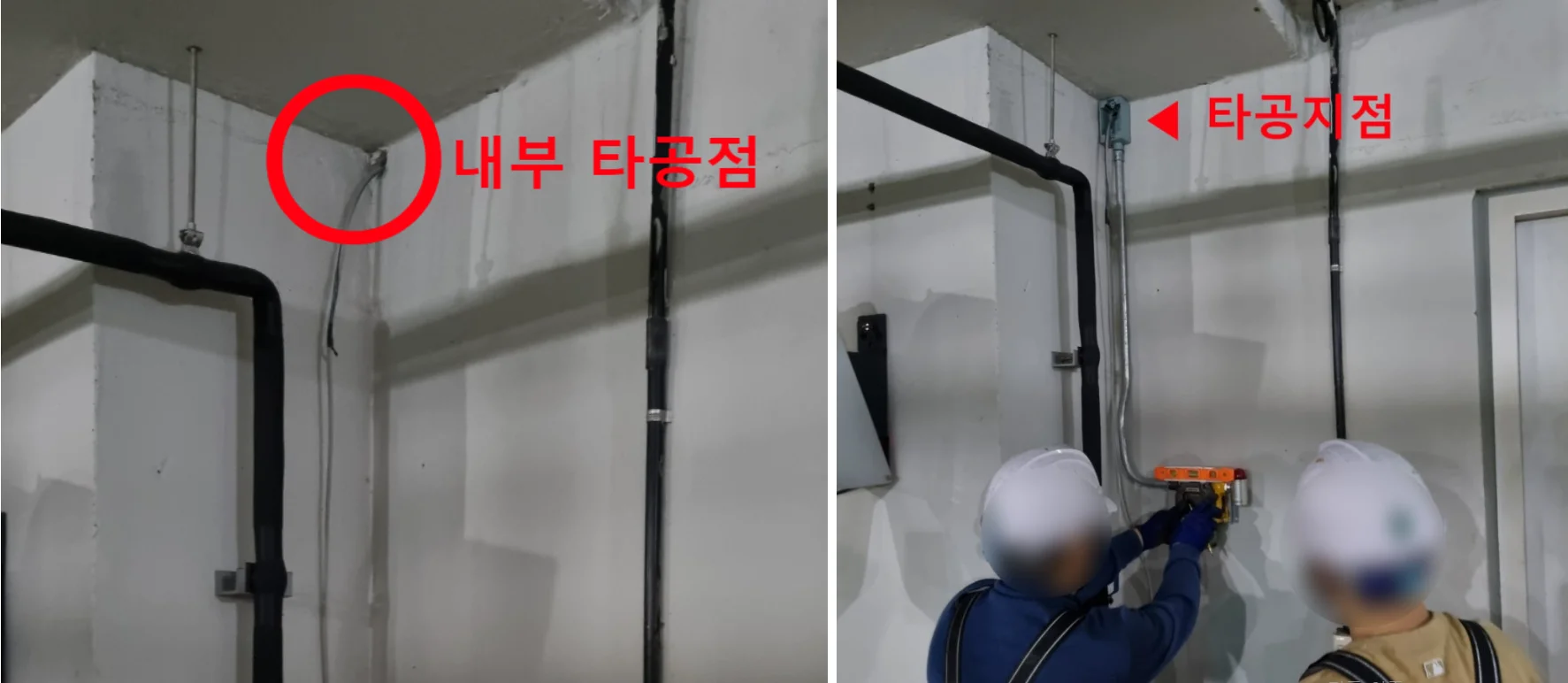
Concrete drilling was carried out at the upper right of the gas concentration point; the interior drilling point is at the upper-left ceiling area near the detector.
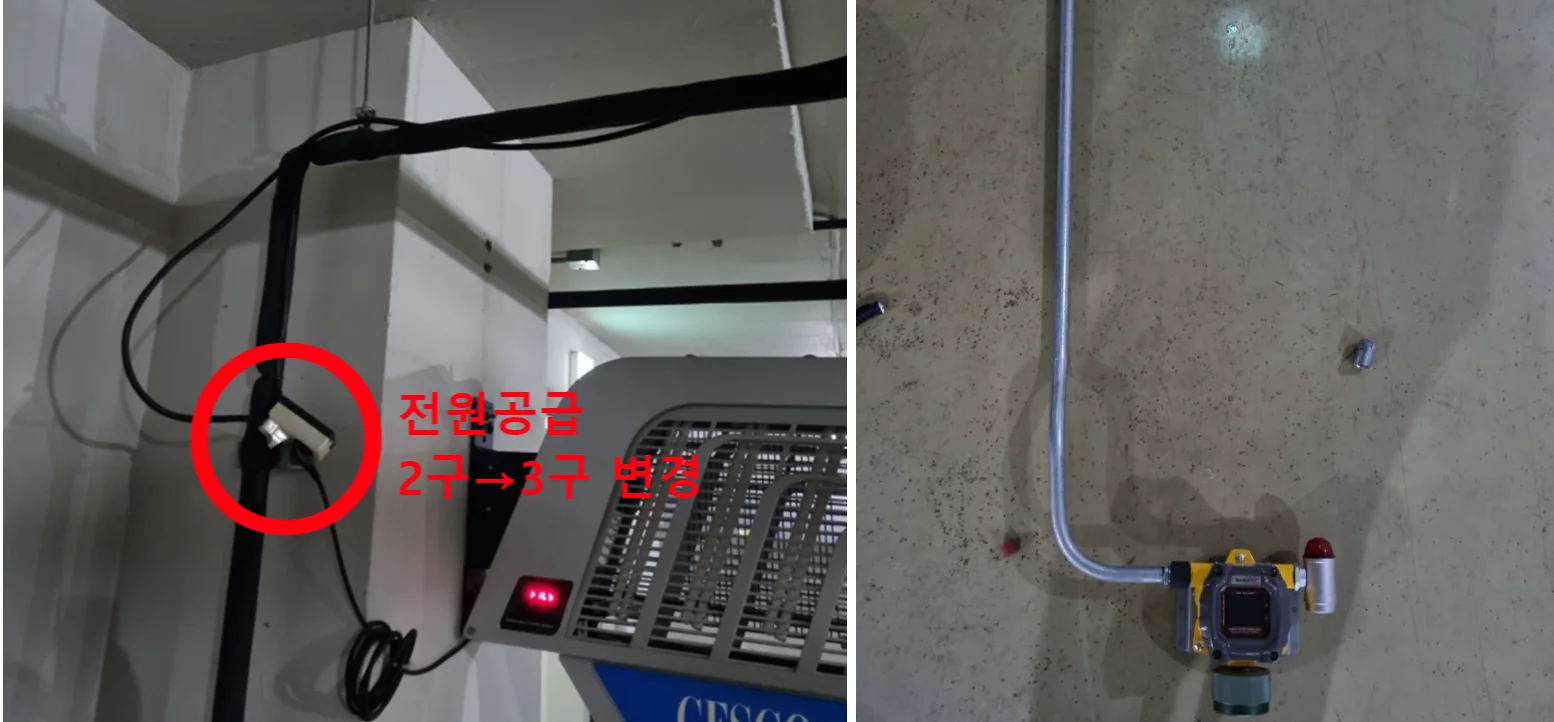
Power was supplied by converting a 2-outlet receptacle inside the septic tank to a 3-outlet receptacle. Since all exposed exterior wiring was required to run through metal conduit, metal conduit was used from the display board to the drilling point and from the detector to the drilling point.
Fire-Suppressant Agent Room
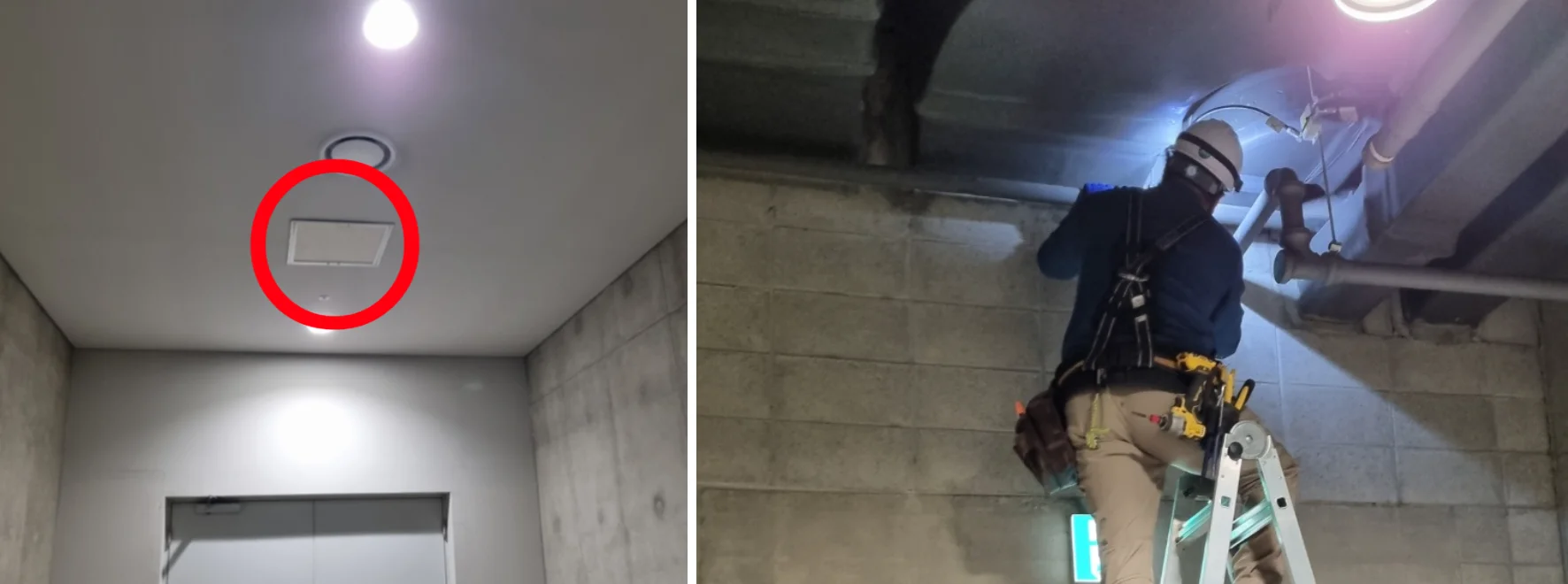
Power was supplied via a jump connection through the ceiling access panel in the corridor of the gas storage room (fire-suppressant agent room). The access panel was about 4 meters high, requiring elevated work.
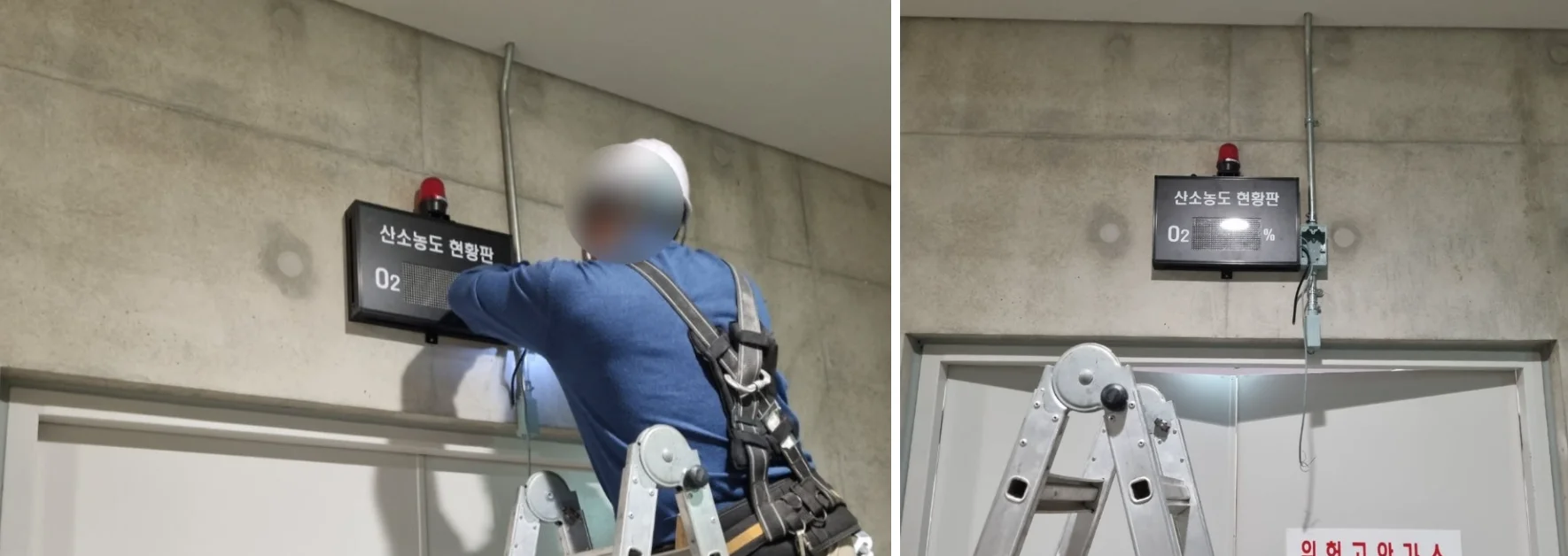
As with the septic tank room, exposed exterior wiring in the fire-suppressant agent room was required to run through metal conduit, so metal conduit was used from the display board to the power source and from the display board to the drilling point.
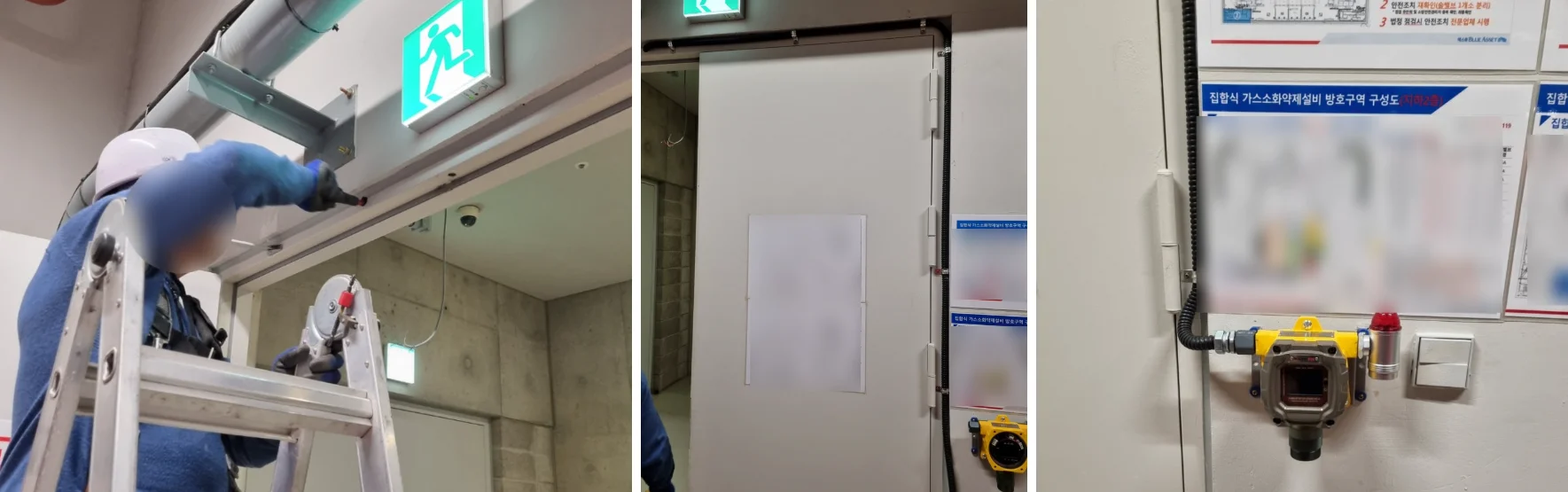
In the fire-suppressant agent room, caulking through the door gap was requested instead of concrete drilling, so no concrete drilling was performed. A waterproof corrugated (flexible) conduit was used inside the agent room.
Installation Complete
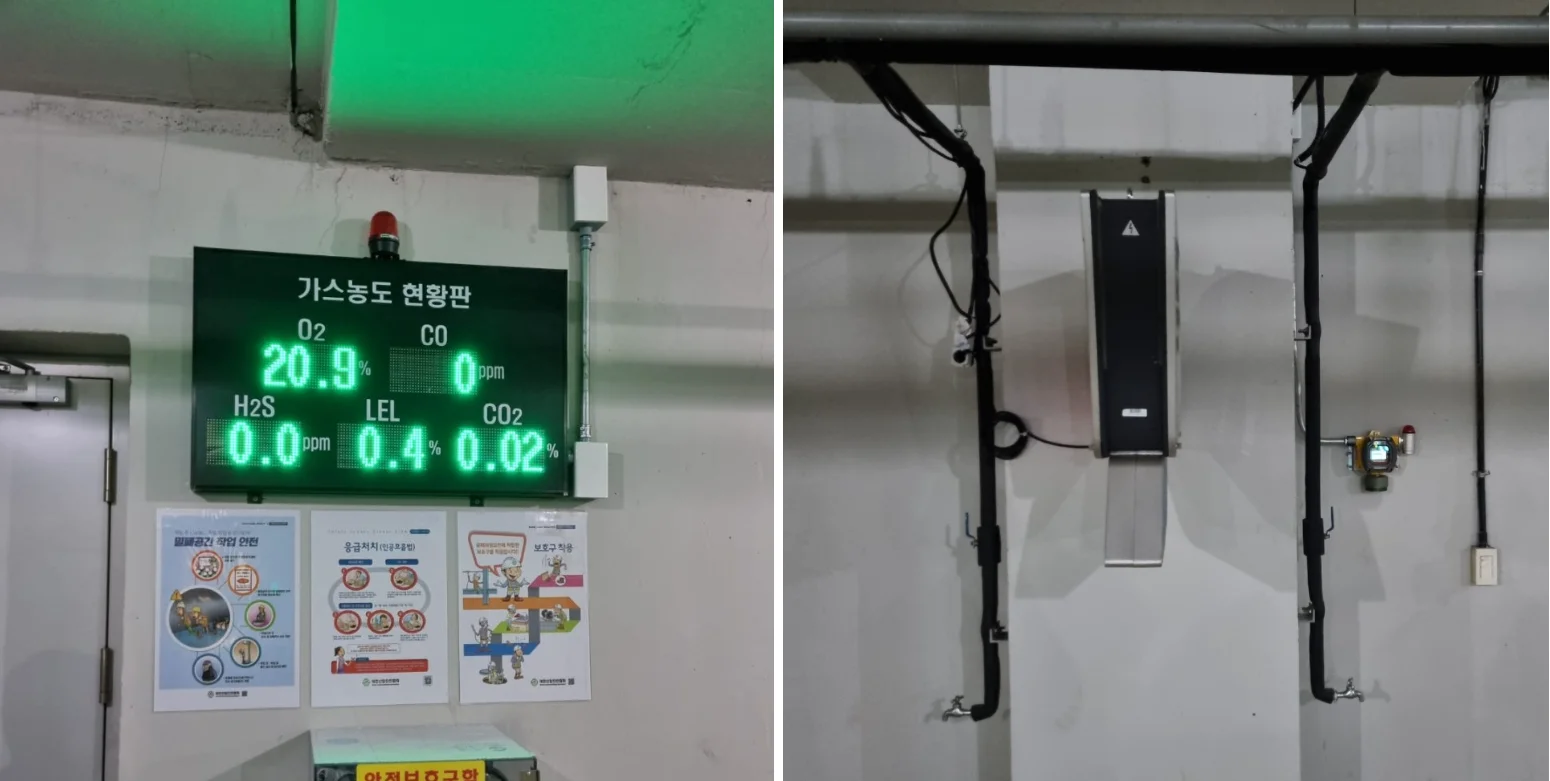
Septic tank room: 5-gas safety detector and gas concentration display board installed.
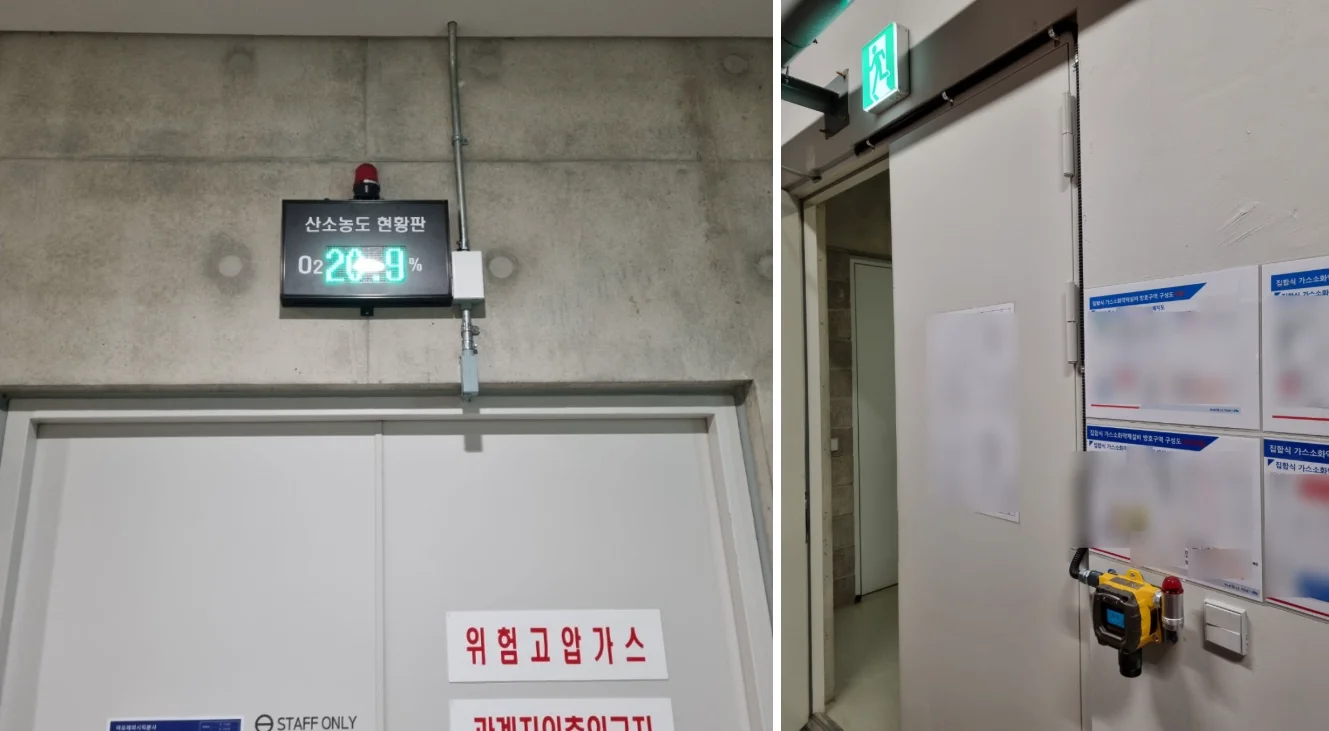
Fire-suppressant agent room: oxygen concentration detector and gas display board installed. The installation was completed with commissioning, product orientation, and training provided to the site personnel.
Spaces such as fire-suppressant agent rooms, septic tank rooms, and wastewater treatment areas are essential parts of any building and are confined spaces.
In confined spaces, poor air circulation or isolation from outside air means that a gas leak or drop in oxygen concentration can cause asphyxiation. In particular, in environments where hazardous gases are generated — such as fire-suppressant agent rooms and wastewater treatment plants — even a leak alone can cause asphyxiation, so confined-space gas monitoring is no longer optional but essential for worker safety.
Because these hazards are invisible and cannot be detected by the human senses, their importance can easily go unnoticed. This is precisely why complacency about safety occurs. Please always keep in mind that safety issues can arise from carelessness, and take preventive measures in advance.
RS Korea is a gas-specialized company that goes beyond simple product sales to offer in-house calibration, domestic after-sales repair, manufacturing and shipping, and installation services. Based on our experience conducting demonstrations, site surveys, deliveries, repairs, and installation work across a wide range of environments, we provide one-to-one customized solutions tailored to each gas-measurement environment.
Today's Summary
Environment: Septic tank room / fire-suppressant agent room inside the building
Product: WANDI FIX800 + display board / warning light
Gas / Measurement range:
O2 (Oxygen): 0–30%
CO (Carbon Monoxide): 0–1,000 ppm
CO2 (Carbon Dioxide): 0–5%
H2S (Hydrogen Sulfide): 0–100 ppm
LEL (Combustible): 0–100% LEL
Other notes:
- 3-person team, 1 day
- Two installation points total (septic tank room, fire-suppressant agent room)
- Septic tank room: concrete drilling / agent room: caulking through door gap
- Metal conduit and flexible conduit used for wiring
- Power supply: converted septic tank room outlet from 2 to 3 receptacles / used the ceiling access panel in the fire-suppressant agent room
- Elevated work required for the power wiring connection
This concludes our post on the installation of the FIX800 fixed gas detector with a warning light and display board. If you have any questions about site surveys, gas detector installation, or other environmental monitoring equipment, please feel free to reach out to our team.
This has been RS Korea's team. Thank you.
FAQ
What are the five confined-space safety gases required by law?
Oxygen (O2), carbon monoxide (CO), hydrogen sulfide (H2S), combustible gas (LEL), and carbon dioxide (CO2) — carbon dioxide was added to the original four gases under the March 2017 revision to the Occupational Safety and Health Act.
Why is a gas detector required in a fire-suppressant agent room?
Since October 18, 2022, new safety standards require a gas detector and alarm device in eligible fire-suppressant storage rooms, because leaked suppressant gas is colorless, odorless, and undetectable by human senses, posing an asphyxiation risk. Facilities have until October 18, 2024 to comply.
What is the measurement range for each gas in this installation?
O2: 0–30%, CO: 0–1,000 ppm, CO2: 0–5%, H2S: 0–100 ppm, and LEL (combustible gas): 0–100% LEL.
How was the detector powered in these confined spaces?
Power was supplied by converting an existing outlet in the septic tank room and through a ceiling access panel in the fire-suppressant agent room, with all exposed wiring routed through metal conduit as required.
How many gases can the FIX800 measure at once?
A single FIX800 unit can measure and display anywhere from one gas up to five gases simultaneously (with a dual sensor installed), selected from around 40 available gas types.
#FIX800#5GasDetector#ConfinedSpaceSafety#FireSuppressionSafety#SepticTankRoom#GasDisplayBoard#WANDI#OccupationalSafety#OxygenDetector#FixedGasDetector