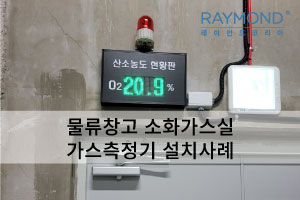
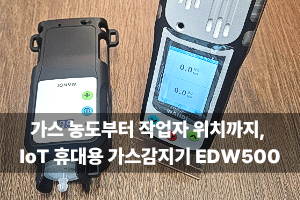
Installed Gases
Project Details
Hello, this is our technical sales team at RS Korea (Wandi Korea).
Last spring, our team completed the installation of an FIX800 4-gas detector (O2/CO/H2S/EX) and a status display panel for confined-space worker safety at a vertical shaft on the Seoul Metro Dongbuk Line tunnel construction site, commissioned by a major general contractor.
Every sales professional can relate to this: while a large one-time order is always welcome, nothing beats a repeat order from an existing site. We believe repeat orders for the same product only happen when customers have full confidence in the product and trust in the supplier.
We were glad to bring the new equipment to the site ourselves. Here is an overview of the installation.
Project Overview
- General Contractor: Hyundai Engineering
- Installation Location: Ventilation shafts along the Seoul Metro Dongbuk Line tunnel construction site, Nowon-gu, Seoul
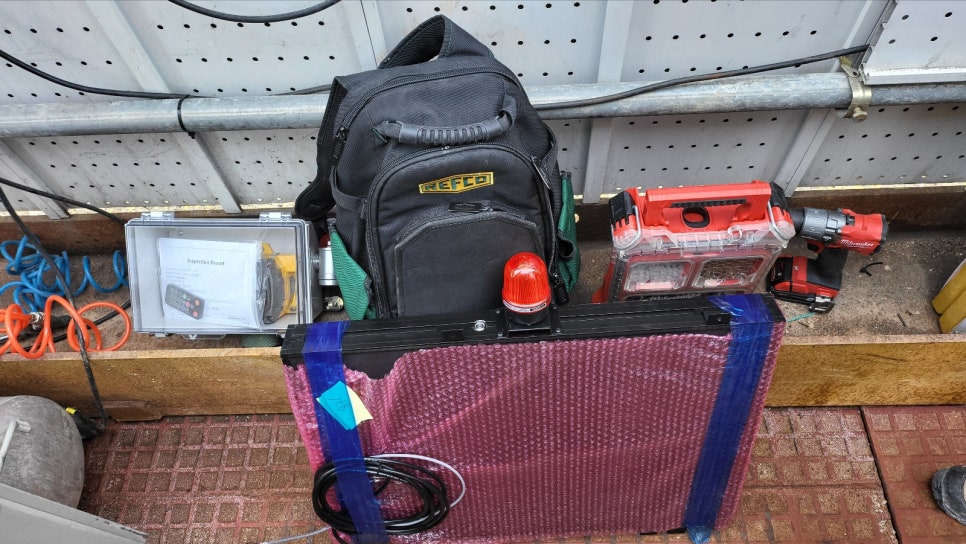
- Installed Equipment: FIX800 4-Gas Detector (O2/CO/H2S/EX) with an outdoor-rated enclosure, a custom magnetic mounting bracket, and a 4-channel status display panel
- Installation Date: February 15, 2023, starting at 10:00 AM
- Installation Crew: 2 technicians
- Notes: Magnetic bracket mounting; power supplied from a standard 220V outlet with no additional electrical work required; roughly 100m of corrugated conduit and AWG shielded cable were pre-installed to reduce on-site work time; limited parking and material access due to the downtown location; extra cable length was left coiled to allow future relocation of the detector as tunnel construction progresses; the unit originally installed at the vertical shaft was later relocated to a horizontal tunnel section.
Prologue
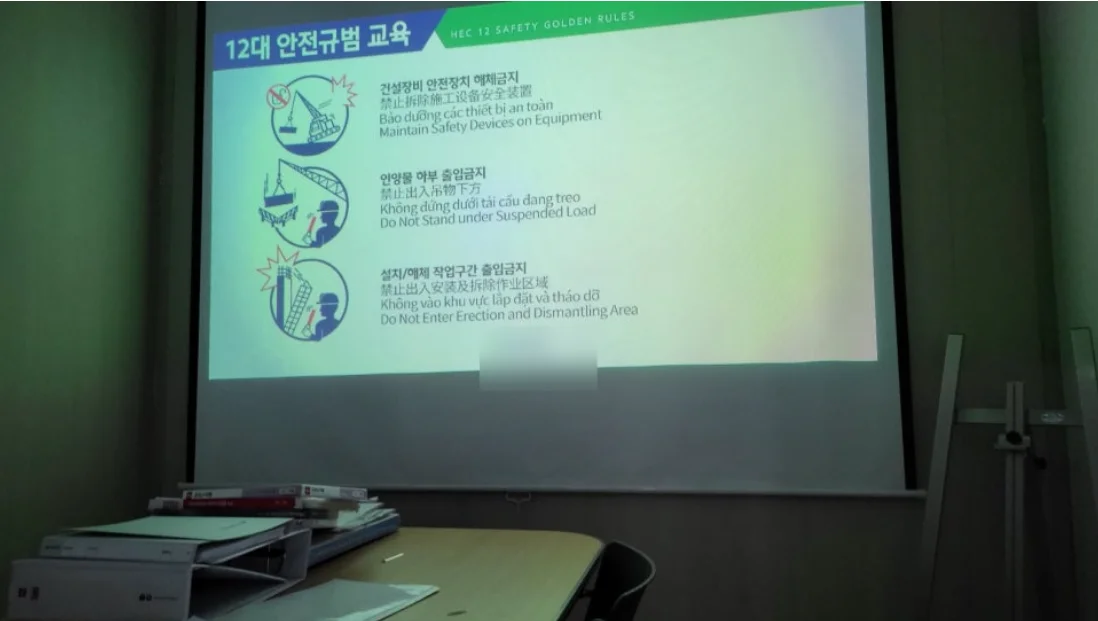
With more foreign workers on site, safety training materials are now prepared in multiple languages. Does that mean the safety officer needs to be multilingual too? Every site and contractor we visit runs a safety briefing before work begins. Some felt somewhat perfunctory, but this major contractor clearly takes safety training seriously. As a supplier of confined-space safety equipment, we can only welcome a society that places greater importance on safety.
The training process included a blood pressure check, verification of the basic safety training completion certificate, and worker registration and a quiz through a basic safety training mobile app. More and more of this process is being handled through mobile apps.
Recently, many sites require proof of completion of the basic occupational safety and health training before allowing entry, so anyone carrying out installation work directly — not just sales staff — should complete this training in advance. Times are changing.
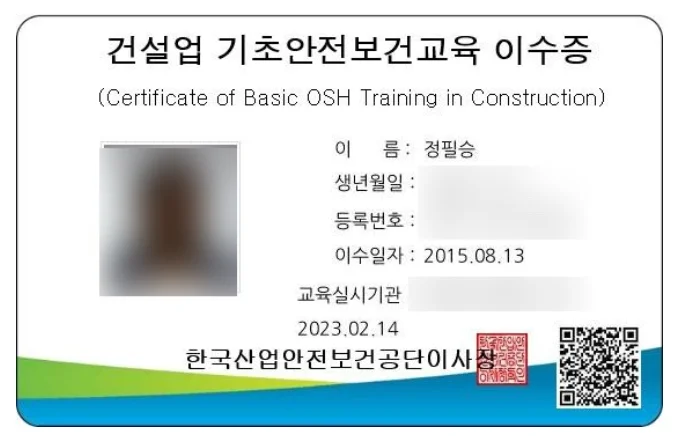
Fortunately, our team had already completed all the required training in advance. A friendly reminder to everyone: keep an eye on your health, including your blood pressure — it matters in every profession, not just construction.
Arriving On Site
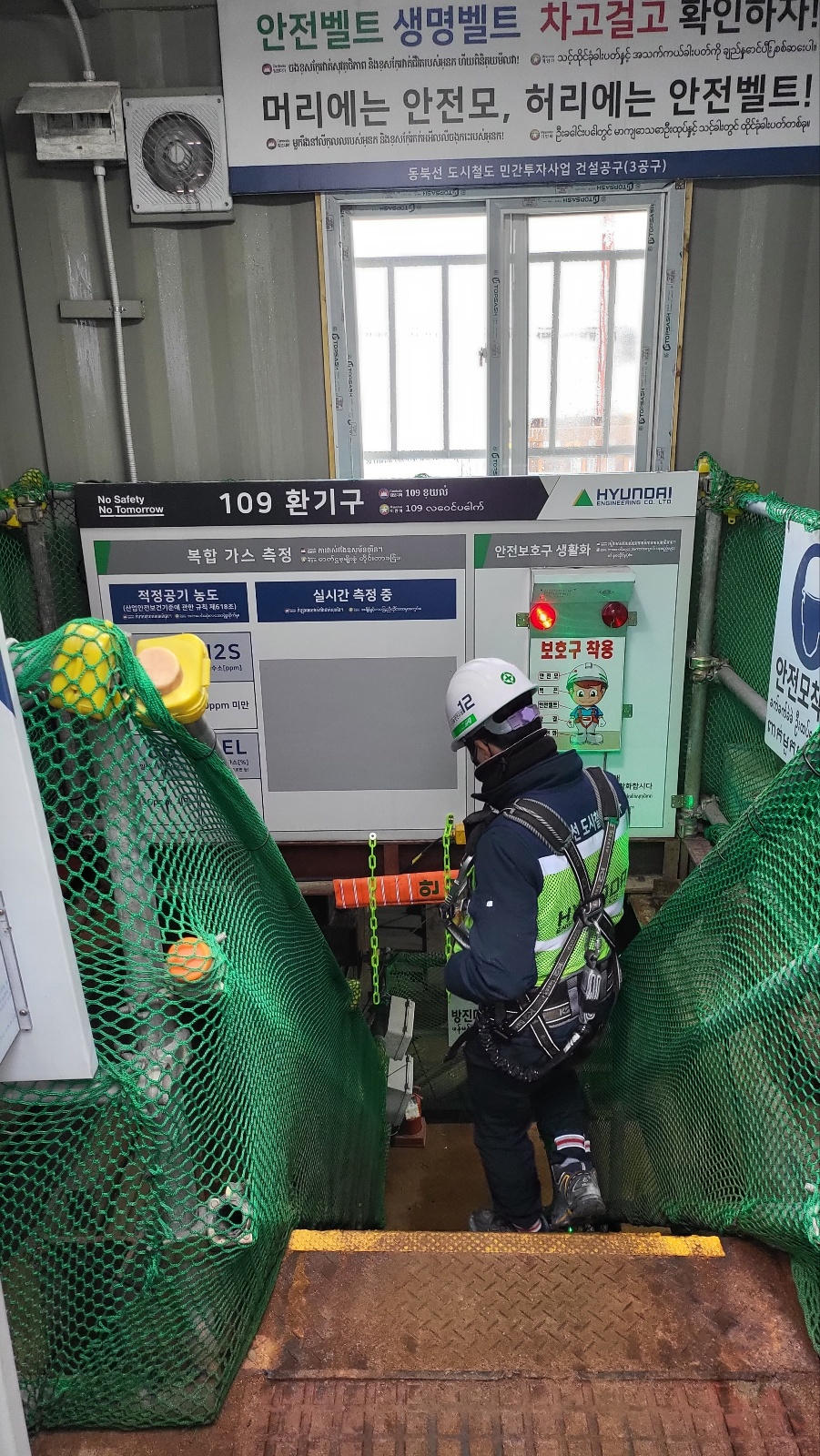
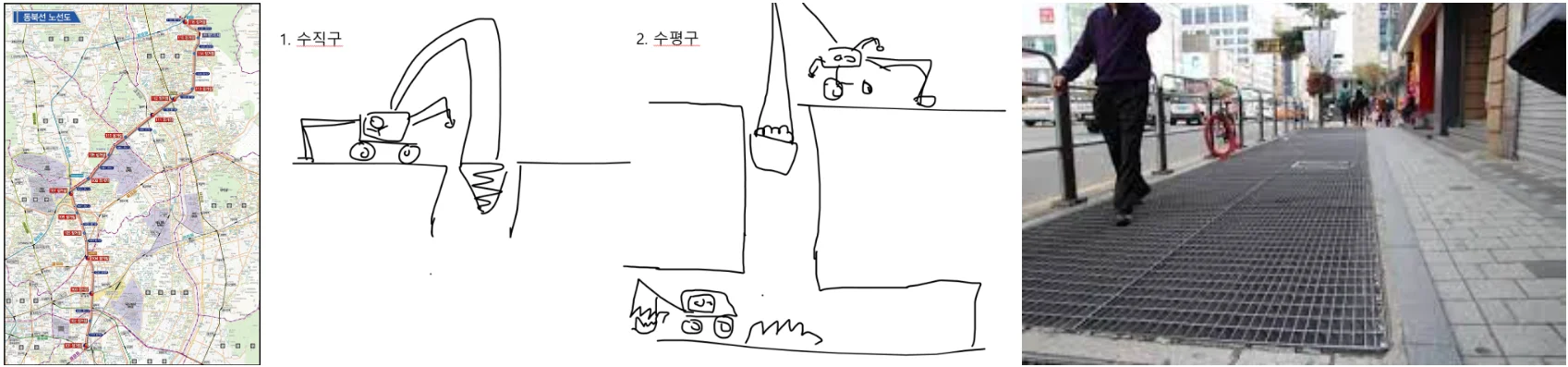
This installation took place at the vertical shaft of the newly excavated Station 109. To bring heavy equipment into each section for the horizontal tunnel work, a vertical shaft must first be dug at intervals — and each of these shafts eventually becomes one of the ventilation openings we pass by every day above ground. We hadn't realized it before, but we got to see firsthand how a ventilation shaft comes to be.
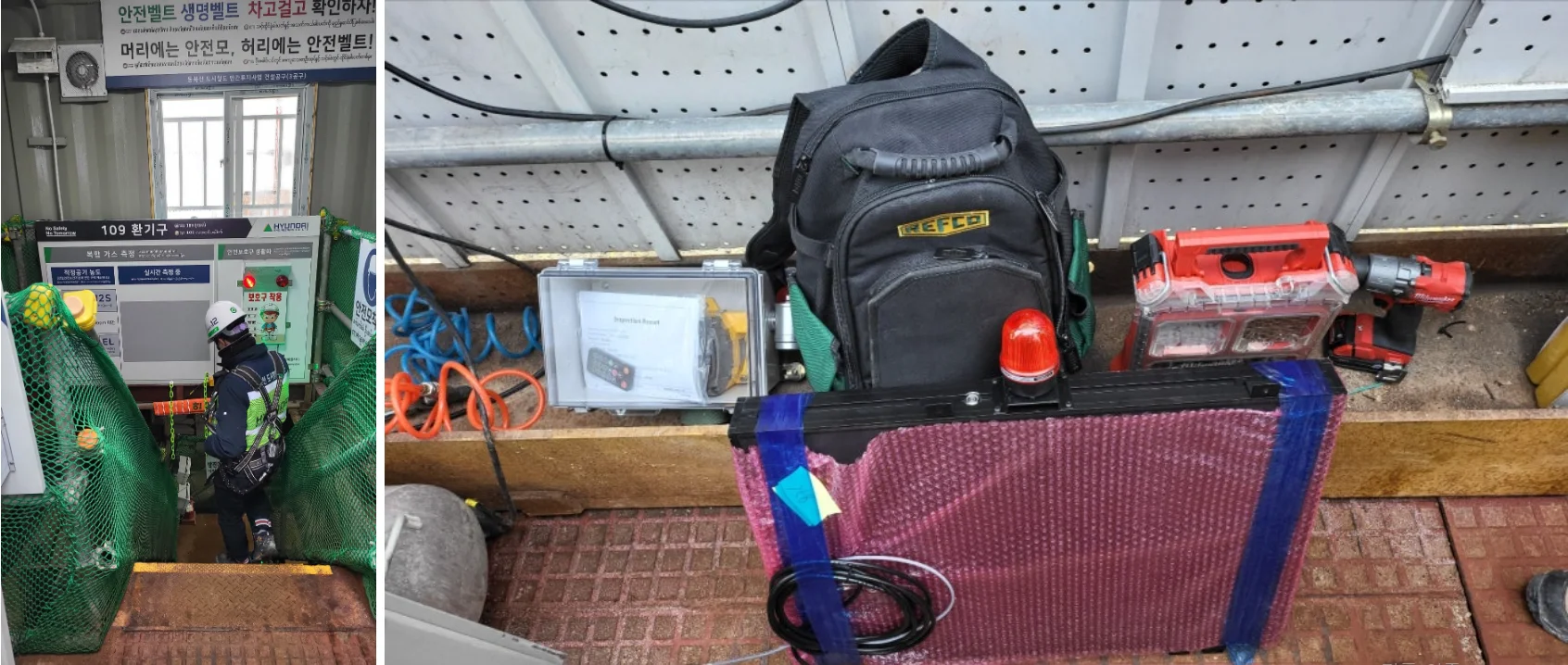
Space for the status display panel had already been prepared at the new site. We surveyed the area and prepared our materials.
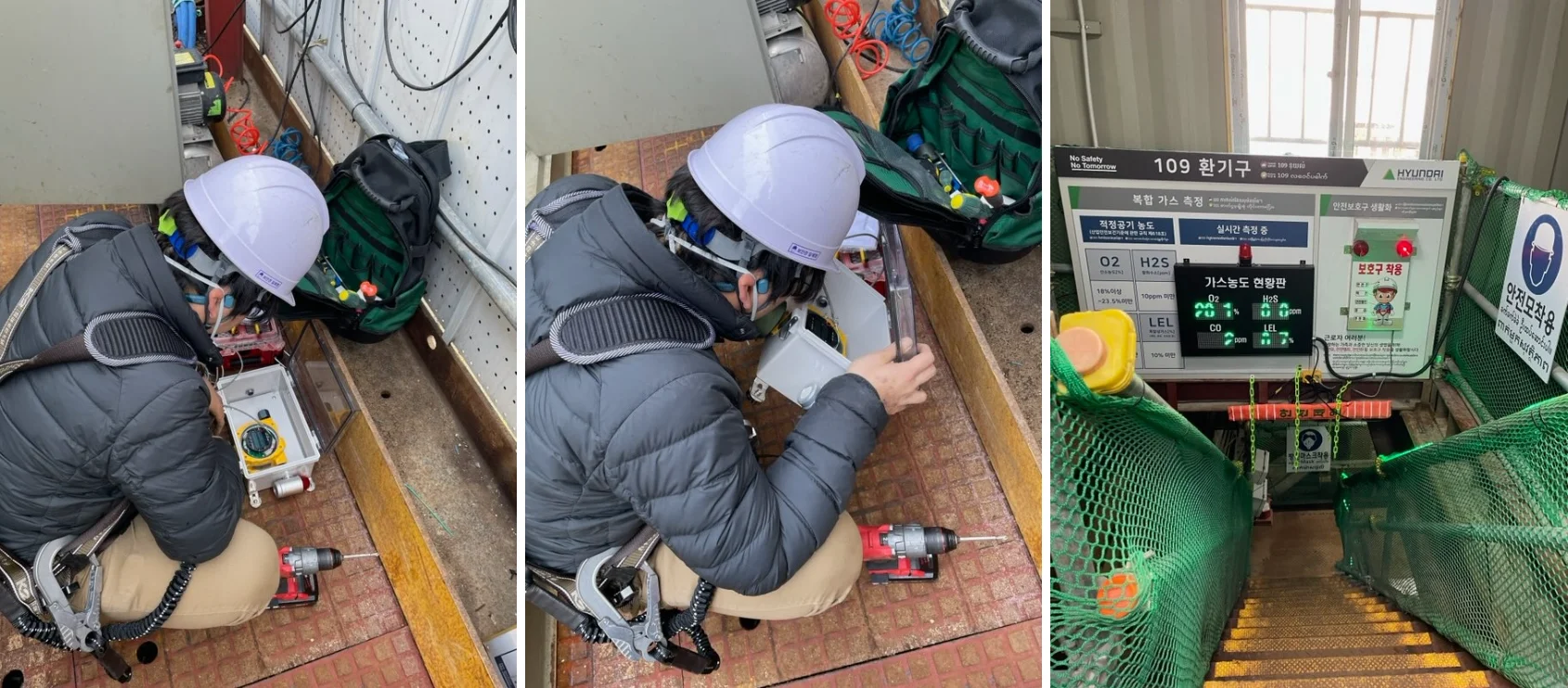
Since the run covered a 150m section, we tested the wiring connections before heading down into the tunnel — if a problem had turned up after installation, we would have had to climb up and down the deep tunnel repeatedly. We breathed onto the sensor to check that the O2 reading responded correctly. For anyone who smokes heavily, the detector also measures CO, so it comes in handy there too. The status display lit up without issue and communication was stable.
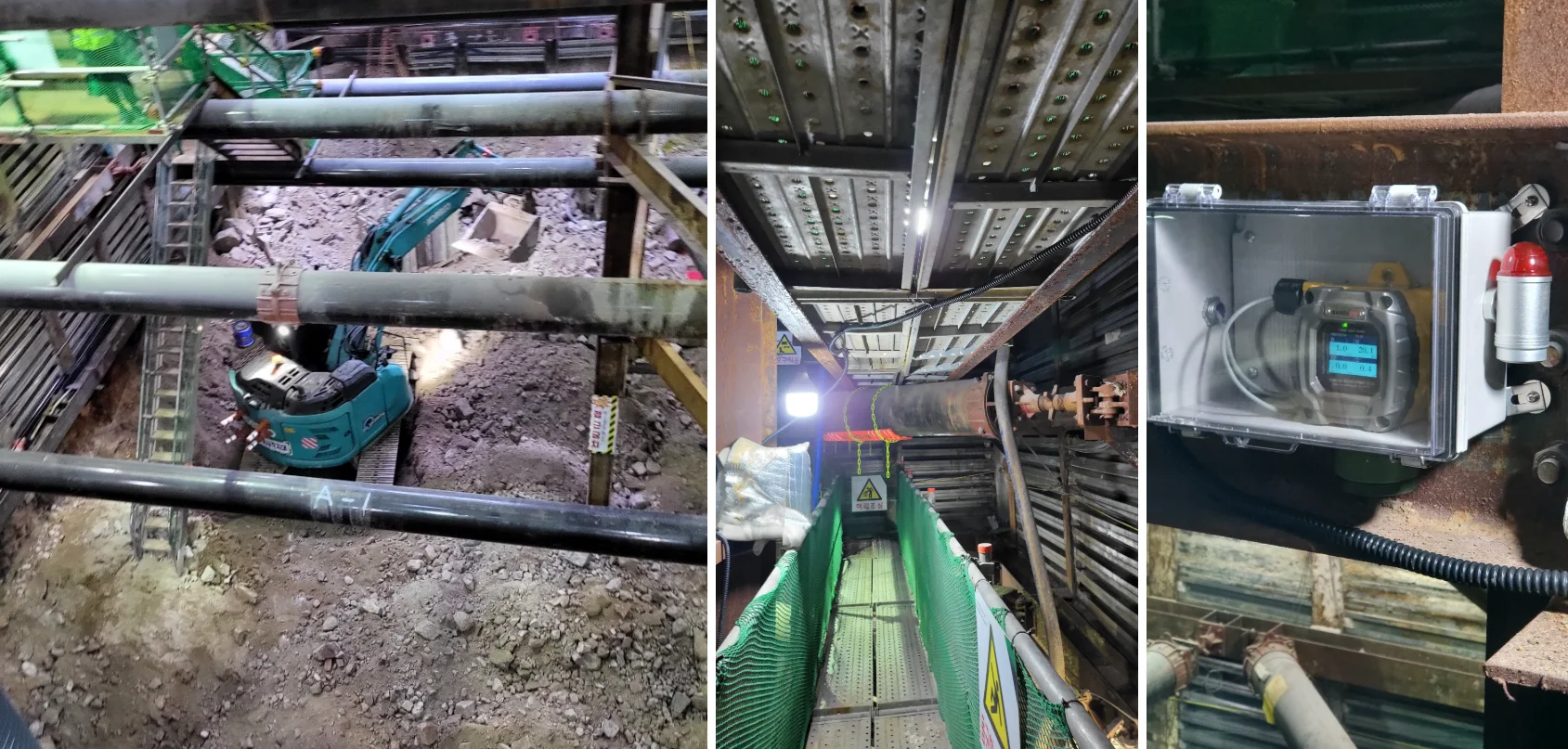
An excavator worked steadily to lift soil generated by the tunneling up to ground level. With worker safety as the top priority, we carefully lowered the cable and mounted the detector on an H-beam using the magnetic bracket. Near the entrance, we coiled up the remaining cable neatly to make future relocation easier.
Having done this once before, the second installation went noticeably faster. We regret that, due to limited crew on hand, we weren't able to capture a photo of the alarm test while introducing test gas.
Epilogue
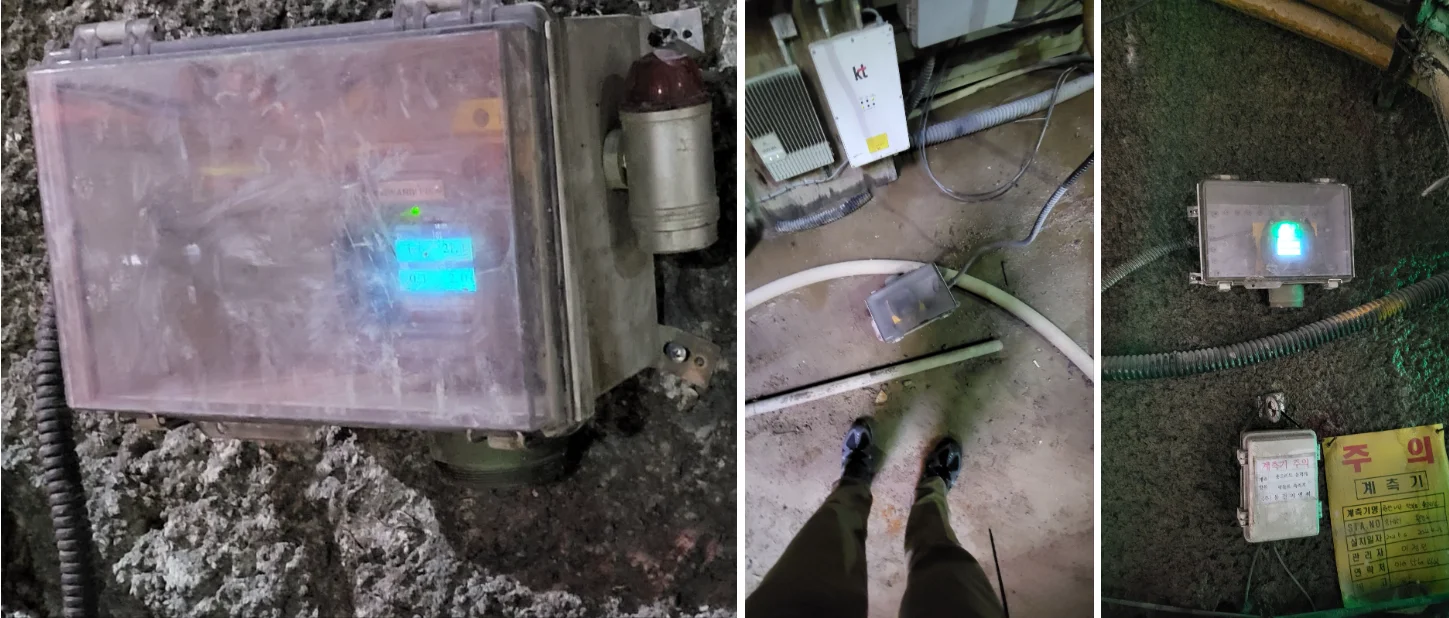
The site manager had since changed, and the new manager asked for a refresher briefing on the existing equipment, so our team made the rounds again. In a tunnel site full of dust, our FIX800 had been holding up on the job for more than a year already. Thank you for your hard work, FIX800.
We can confidently say that the dust- and rain-resistant enclosure configuration we strongly recommended is what allowed the unit to hold up in such a harsh environment. This is exactly why we try to conduct an on-site survey and meeting whenever possible — only an accurate assessment of the site environment allows the product to perform to its full potential.
That's all for today's installation story, because we've said everything we wanted to say. If you'd like to know more, please give us a call. For inquiries about gas detectors and other environmental monitoring instruments, please contact us during weekday business hours.
From phone consultation to on-site survey, meetings, ordering, and installation — we at RS Korea strive to handle it all in one seamless process.
Frequently Asked Questions (FAQ)
What gases does the FIX800 detect in this installation?
In this project, the FIX800 was configured for four gases: oxygen (O2), carbon monoxide (CO), hydrogen sulfide (H2S), and combustible gas (EX/LEL), a standard 4-gas configuration for confined-space safety monitoring.
Why was a magnetic bracket used instead of standard fasteners?
A custom magnetic bracket allowed the detector to be securely mounted to the H-beam structure inside the tunnel without additional drilling or welding, simplifying installation and making future relocation easier as the tunnel construction progresses.
Did the installation require separate electrical work?
No. Power was supplied through a standard 220V outlet already available on site, so no additional electrical construction was needed.
How does the enclosure protect the detector in a dusty tunnel environment?
The unit was fitted with a dust- and rain-resistant outdoor enclosure, which is why it continued operating reliably for over a year in a dusty tunnel environment.
Can the detector be relocated as construction progresses?
Yes. Extra cable length was intentionally left coiled near the access point so the detector and display panel can be relocated as tunnel construction advances, as was done when the unit was moved from the vertical shaft to the horizontal tunnel section.