Applied Markets
Installed Gases
Project Details
Hello. This is our team.
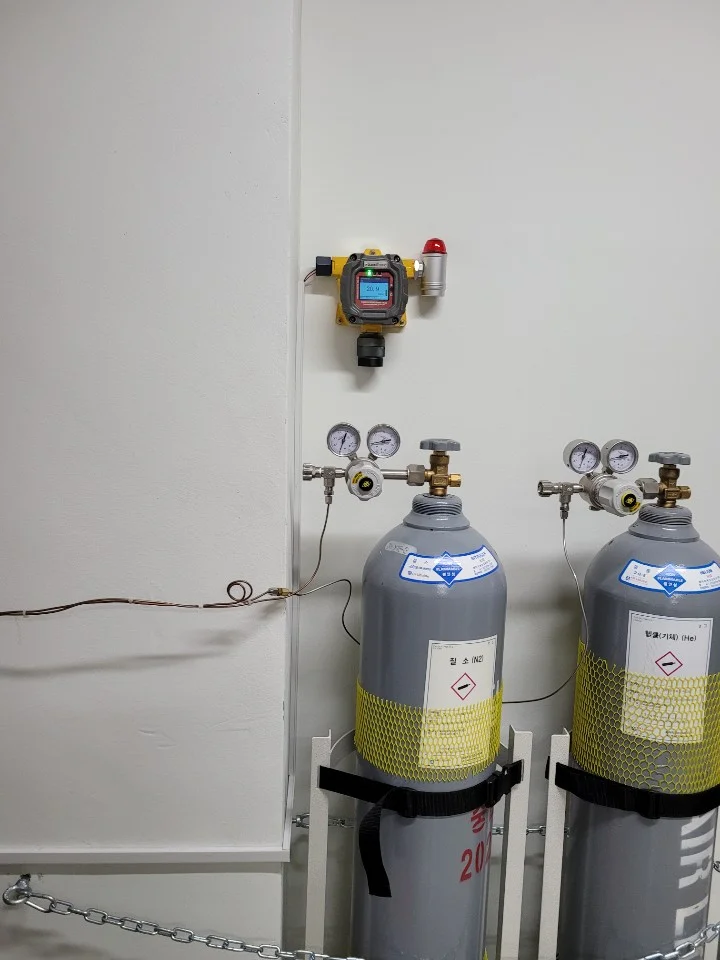
The installation case we're sharing today involves a FIX800 gas detector installed at a laboratory/research facility that uses nitrogen gas and carbon dioxide gas.
Before every installation, we always visit the site in advance to confirm the appropriate gas sensors, installation points, and mounting locations.
This facility is a research lab that conducts experiments using standard gases such as hydrogen, nitrogen, and helium.
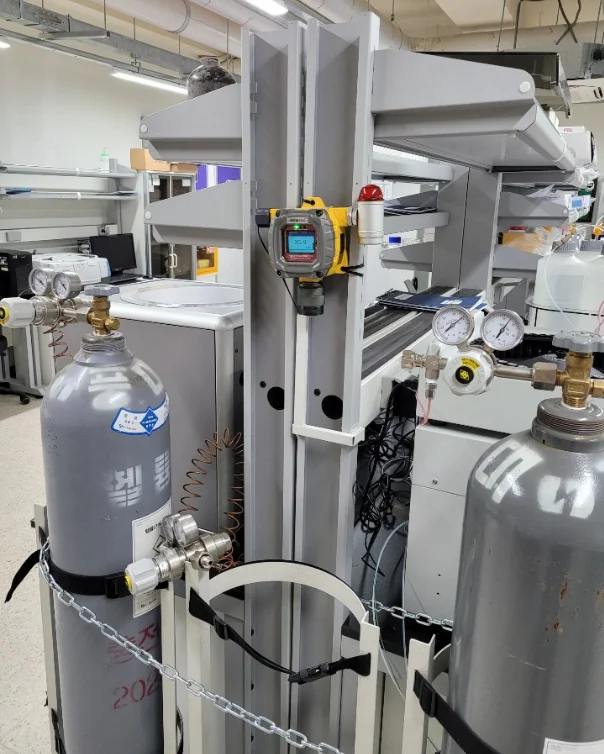
Since most of the gases handled here — hydrogen, nitrogen, and helium — are used at high concentrations, there is a risk of asphyxiation in the event of a leak, which is why they requested this installation.
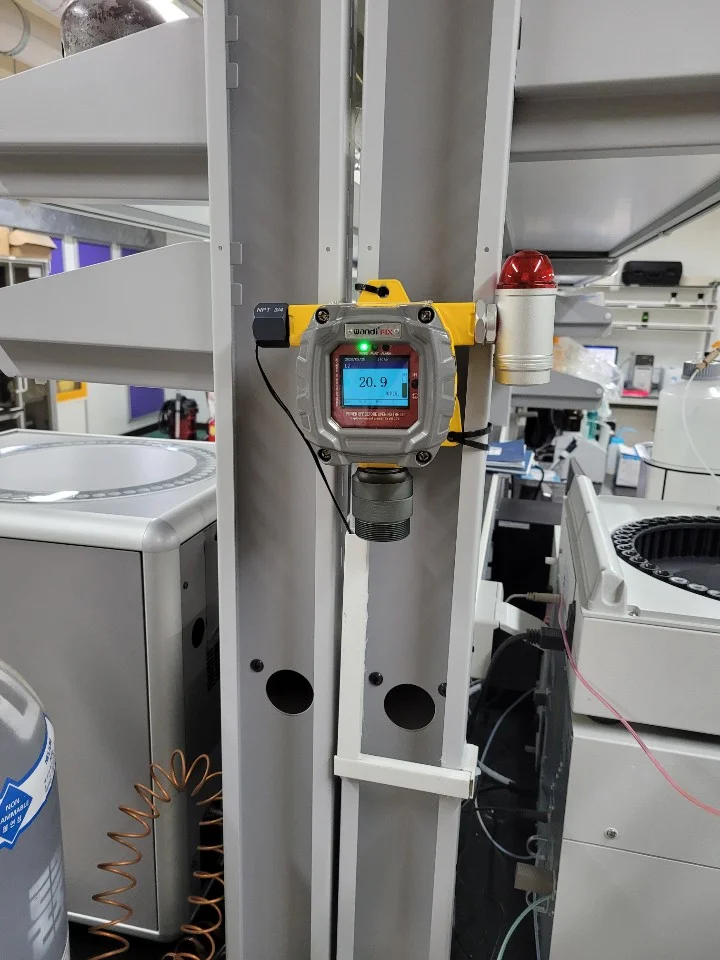
Of course, we coordinated in advance during our site visit to optimize both the installation points and the number of detectors, for a solution that works well for everyone.
To date, no detector exists that can directly measure nitrogen concentration. Therefore, nitrogen must be measured indirectly, using the drop in oxygen concentration that occurs when nitrogen leaks.
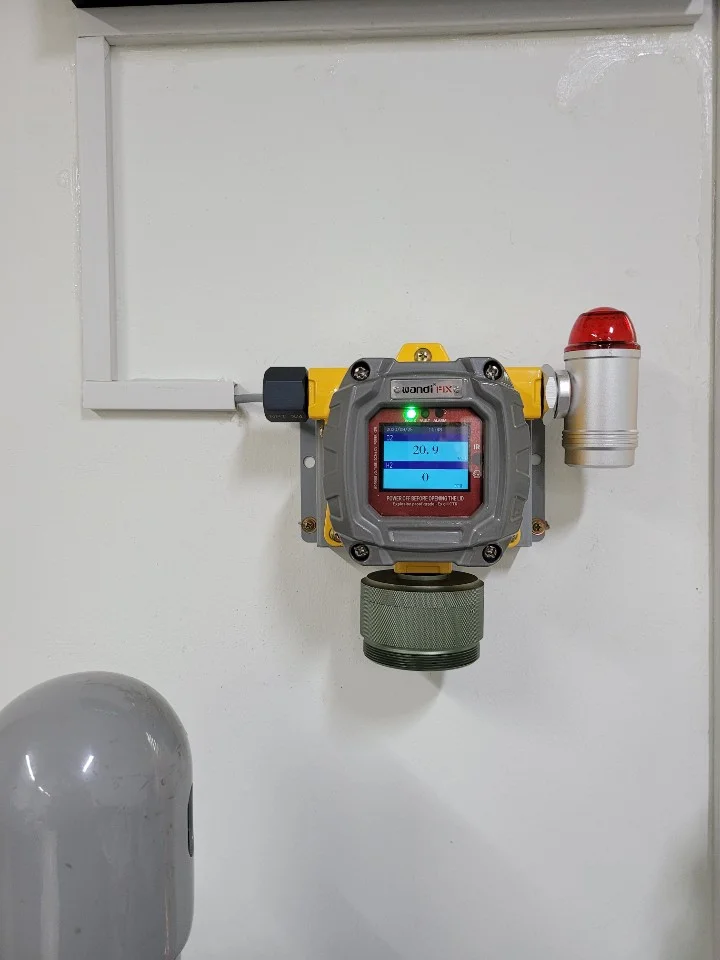
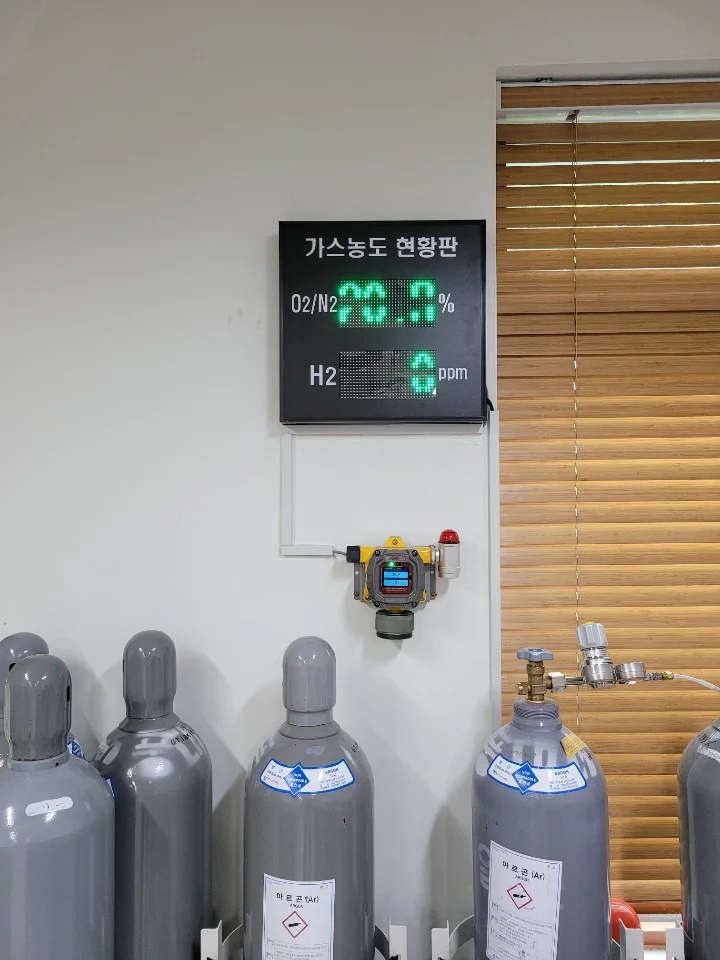
Since this particular lab keeps a variety of standard gases on hand, we installed a unit fitted with two sensors, O2 and H2.
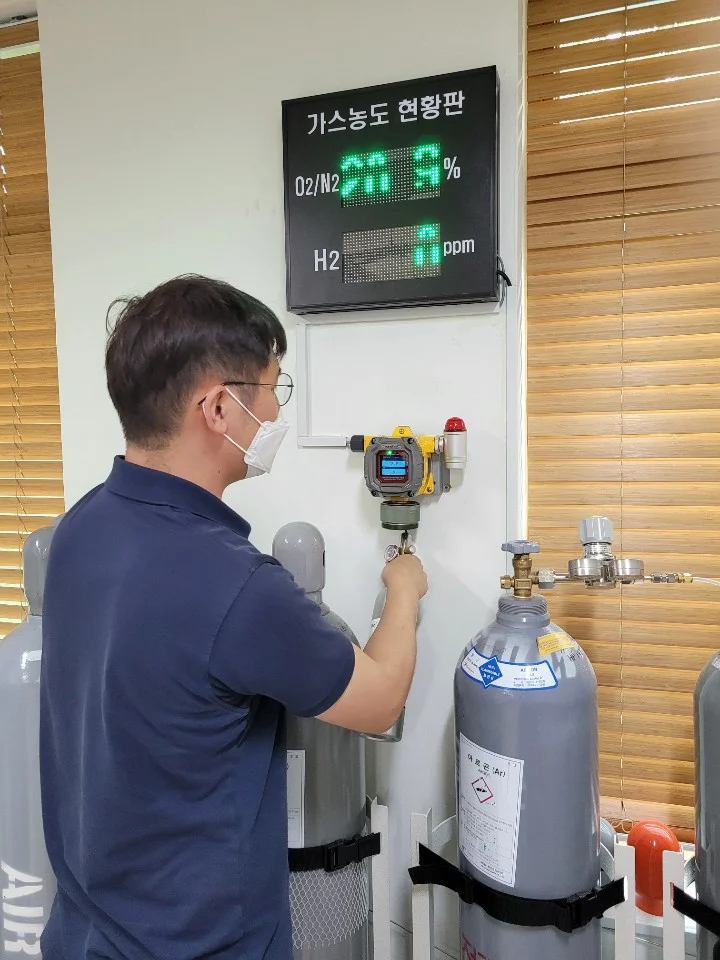
Once installation was complete, we tested the unit's operation using a portable standard gas we brought along.
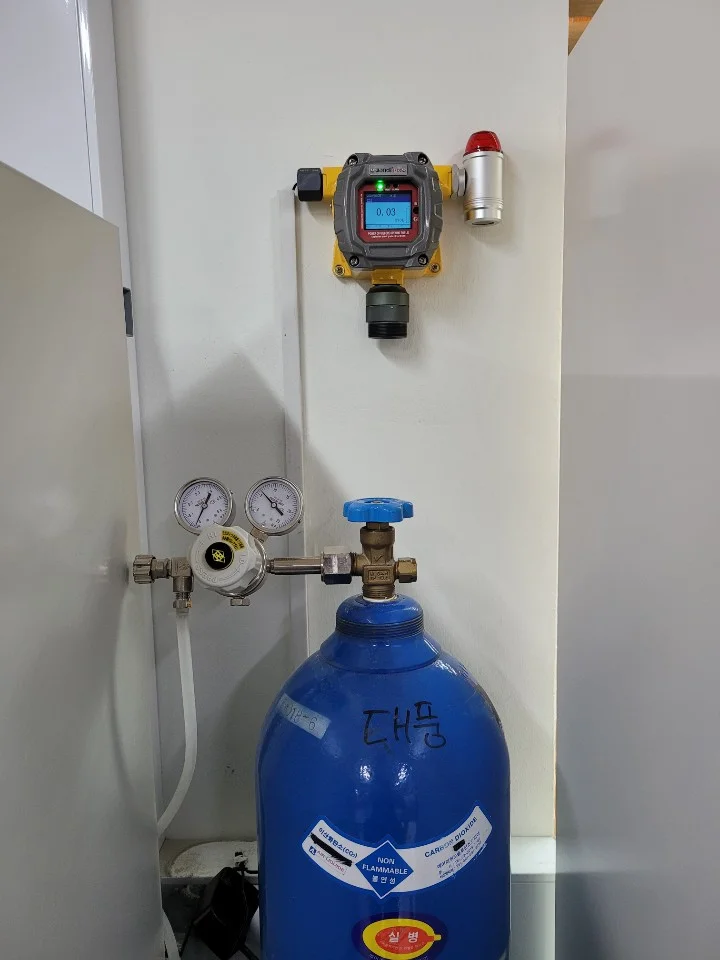
For this lab, since it uses a high-concentration CO2 standard gas, we installed a single-gas CO2 detector.
Even in a very large space, if there is only a single leak point, installing one detector near that point is sufficient. Installing multiple units across a large space unnecessarily would simply be a waste of budget.
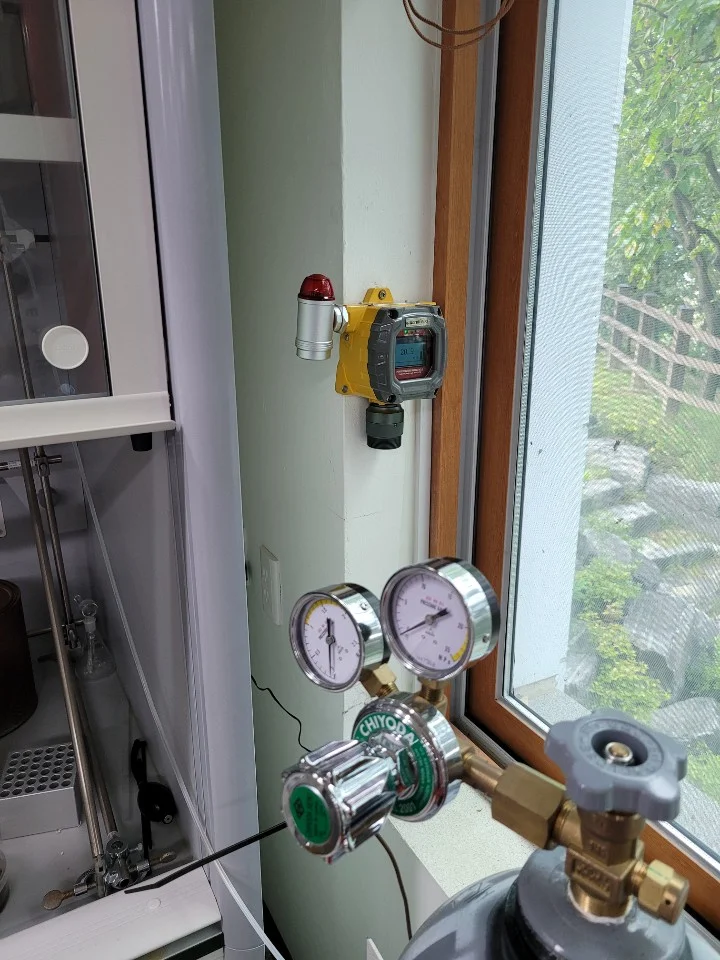
Some of the spaces requiring detector installation were fairly tight, but working conditions inside an indoor research lab are generally favorable, so we did not encounter major difficulties.
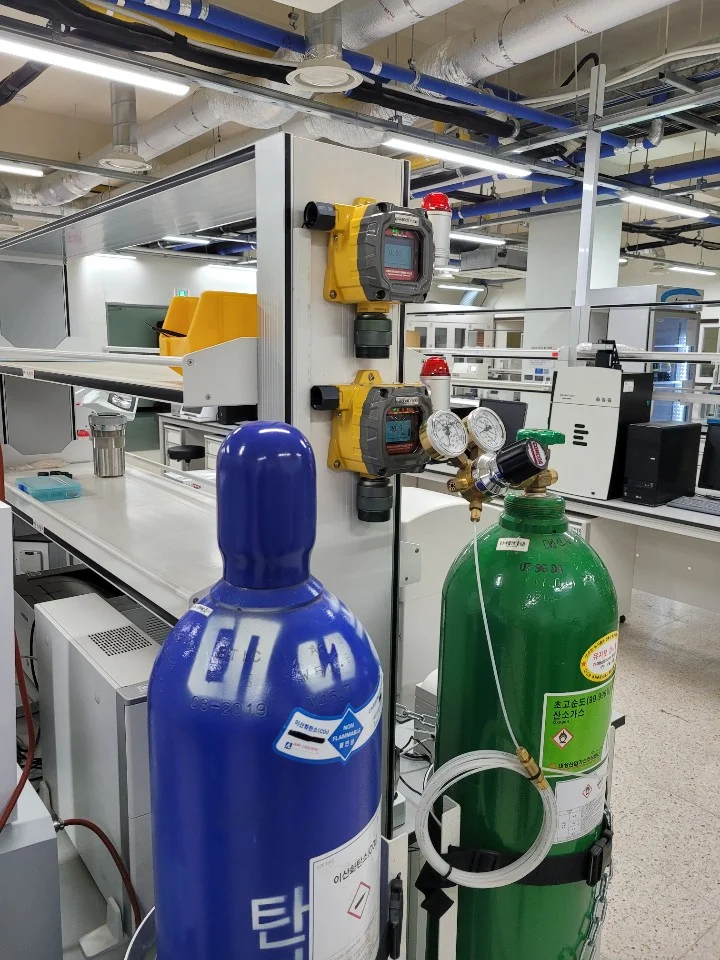
A total of 7 points were installed, and since most of the work used conduit molding, the entire installation was completed in a single day.
For sites such as septic tank rooms, construction sites, or facility management offices, waterproofing and cable protection are essential, which requires GW pipe or steel conduit instead of standard molding. This type of work takes longer and can increase the overall project cost compared to molding.
We don't simply sell products — we consult with customers, conduct site surveys, and provide accurate solutions for operating gas detectors.
That concludes this review of a gas leak detector installation for asphyxiation prevention.
Frequently Asked Questions (FAQ)
Q1. How is nitrogen (N2) concentration measured?
Since no detector can measure nitrogen directly, it is measured indirectly using an O2 sensor, based on the drop in oxygen concentration that occurs when nitrogen leaks.
Q2. What sensors were installed in this research lab?
For the lab equipped with various standard gases (hydrogen, nitrogen, helium), we installed a unit with both O2 and H2 sensors, and a separate single-gas CO2 detector for the area using high-concentration CO2 standard gas.
Q3. Do multiple detectors need to be installed even in a large space?
If there is only a single leak point, installing one detector near that point is sufficient. Installing multiple units across a large space unnecessarily can be a waste of budget.
Q4. How many points were installed at this site?
A total of 7 points were installed, and since most of the work used conduit molding, the entire installation was completed in a single day.
Q5. How does installation differ for waterproof-required areas like septic tank rooms or construction sites?
Such locations require waterproofing and cable protection, so GW pipe or steel conduit is used instead of standard molding, which can take more time and cost compared to molding work.
#WANDI #FIX800 #NitrogenGasDetection #OxygenDetector #CO2Detector #LabSafety #ResearchFacilitySafety #AsphyxiationPrevention #GasLeakDetector #IndustrialSafety
![납품] 공공기관(초등학교) 대기질 측정 위한 FIX800 NO2 와 미세먼지 소음 측정기 납품 설치](https://wandi.co.kr/storage/construction-cases/uHpA1nMmzxkhVsGa2o93pQrNhO2Qan4yj8v6ZyyX.png)
![설치] 서울시 동작구 통신사 지사 지하 폐수처리장 FIX800 5GAS 및 전광판 설치 작업](https://wandi.co.kr/storage/construction-cases/h45V0D5w3QxXv8Yr0FiJgPGz6LSpxKvzCMAfAhaV.png)
![[레이먼드] 발전소 서버실,제어실 설치사례](https://wandi.co.kr/storage/construction-cases/AIx5JLMDD2Vkw0UQVzqeR3dNMtOMfw5UbMy7ifWH.jpg)
![설치] 무선 IOT 하드웨어 FIX-AP 첫 설치 4-20ma 수위 트랜스미터 모니터링](https://wandi.co.kr/storage/construction-cases/kStrBVcES9XlNiFqUSzi1cp7818Sj3nNPXxjTc64.png)
![설치]서울시 지하공동구 설치형 복합가스측정기 FIX800 + 전광판 설치현장!](https://wandi.co.kr/storage/construction-cases/4OdX5WcqxlRPgDD7YsP8ntGzKawX5b24sFXLhUWg.png)