Applied Markets
Installed Gases
Project Details
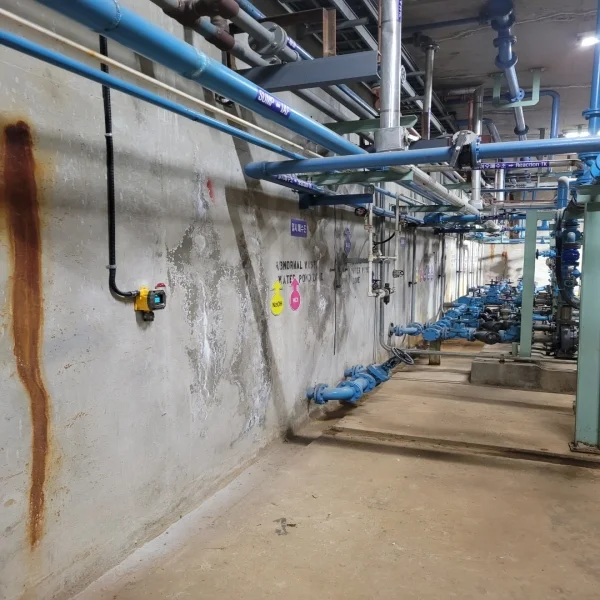
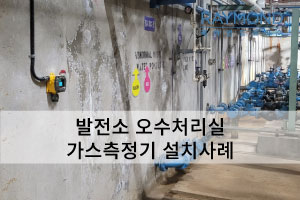
This case involves the installation of a fixed gas detector for confined-space monitoring at a wastewater treatment facility located inside a power plant.
Wastewater treatment facilities within power plants differ somewhat from typical buildings or industrial sites. This is because they collect various wastewater byproducts generated from high-temperature combustion and turbine operation, and the wastewater itself tends to be highly corrosive and heavily contaminated.
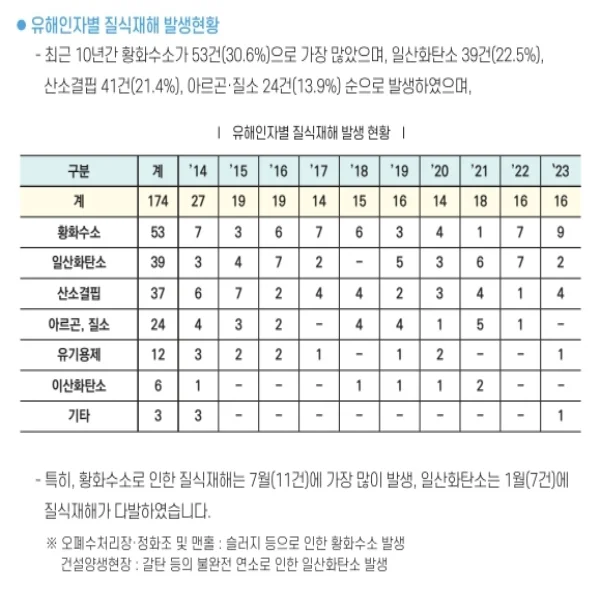
The chart above shows 2025 asphyxiation accident statistics by hazardous substance, published by the Korea Occupational Safety and Health Agency (KOSHA). The data shows that accidents caused by hydrogen sulfide (H2S) account for an overwhelming share of the total.
Most of these accidents occur specifically from H2S gas generated at wastewater facilities like this one. Because such facilities operate under harsh conditions with no permanent staff and infrequent access, a fixed gas detector capable of monitoring H2S around the clock, 365 days a year, is essential.
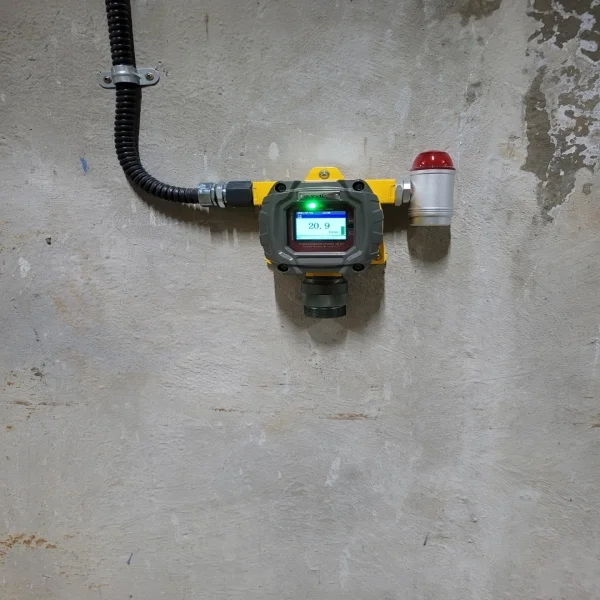
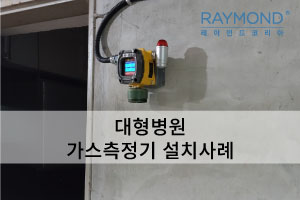
The FIX800 hydrogen sulfide detector is wall-mounted. It can be firmly secured to the wall with just three anchor screws.
The display shows the current H2S concentration in the air in real time, in black text. The industrial exposure standard for hydrogen sulfide is 10 ppm. The unit ships with the alarm threshold set at 10 ppm by default. When the concentration exceeds 10 ppm, the on-screen text switches from black to red, and a beacon light triggers an audible and visual alarm.
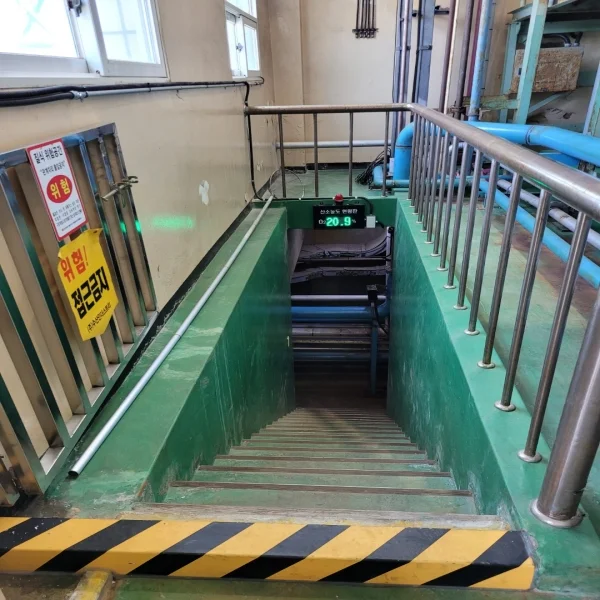
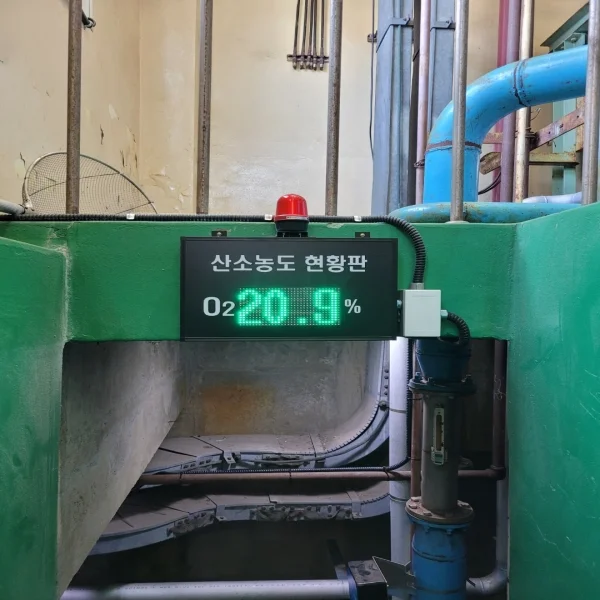
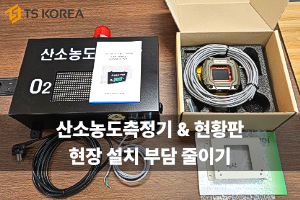
A signage board at the entrance lets workers check the gas concentration inside the wastewater facility before entering. A green light indicates a safe concentration and that entry is permitted.
If the LED shows red, it means the concentration is at or above 10 ppm, and workers should not enter under that condition.
This combination of a confined-space gas detector and an entrance signage board is, in our view, one of the most cost-effective monitoring systems that can be implemented on site. Through intuitive, at-a-glance display, it gives workers who enter and manage confined spaces a convenient way to help prevent gas-related accidents.
We provide free on-site assessment and tailored solutions, from installation through responsible after-sales service and ongoing maintenance for this gas detection system. Thank you.
Frequently Asked Questions (FAQ)
Q1. What kind of installation case is this?
This is a confined-space safety case involving the installation of a fixed gas detector (FIX800) at a wastewater treatment facility inside a power plant.
Q2. Why is hydrogen sulfide (H2S) monitoring especially important at power plant wastewater facilities?
According to KOSHA data, hydrogen sulfide accounts for an overwhelming share of asphyxiation accidents, and because power plant wastewater facilities have little permanent staff on site, continuous 24/7 monitoring is needed.
Q3. How is the FIX800 installed?
It is wall-mounted using just three anchor screws, and the display shows real-time H2S concentration in black text.
Q4. What triggers the alarm?
The default alarm threshold is set at the industrial exposure standard of 10 ppm. Above 10 ppm, the on-screen text turns red and a beacon light provides an audible and visual alarm.
Q5. What does the entrance signage board do?
It lets workers check the gas concentration before entering a confined space — green indicates a safe level and permitted entry, while red indicates a concentration at or above 10 ppm and that entry is not permitted.
#WANDI#FIX800#HydrogenSulfideDetector#H2SDetector#ConfinedSpaceGasDetector#FixedGasDetector#PowerPlantSafety#WastewaterTreatment#GasDetectionSystem#IndustrialSafety