Applied Markets
Installed Gases
Project Details
Hello, this is RS Korea.
This installation covered three points per building across a total of three buildings — nine installation points in all — and the work was carried out over three days.
This is the third installment of a series covering a public-facility project in Jeju. The first installment covered the septic tank room, and the second covered the fire-suppressant chemical room. This third installment covers the "jolla pump" room and the pit room.
Product
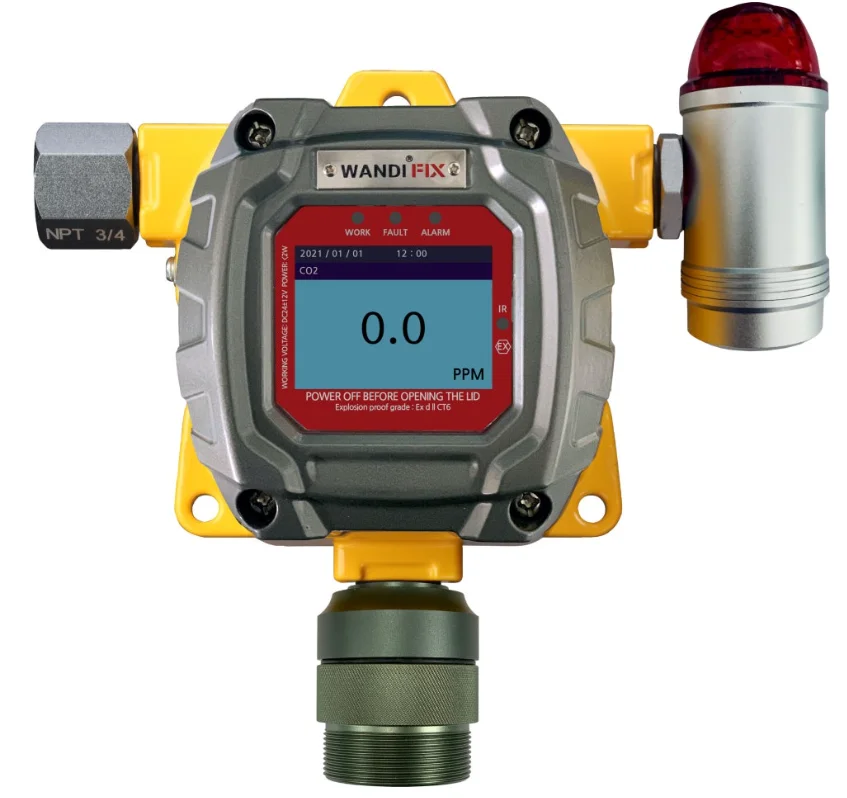
The products installed were WANDI's fixed gas detector, the FIX800, together with a gas concentration status display (digital board). The FIX800 provides four gas sensor slots, and up to five gases can be accommodated when dual sensors are used. The sensors fitted to the unit display readings directly, and the status display allows readings to be checked from outside the space as well.
For spaces with no particular risk of hazardous gas, an O₂ (oxygen) concentration detector was installed. For environments such as septic tank rooms where sediment and hazardous gases such as H₂S can occur, a safety-oriented multi-gas configuration (O₂, CO, H₂S, LEL) was used instead.
Pump Room and Pit Room
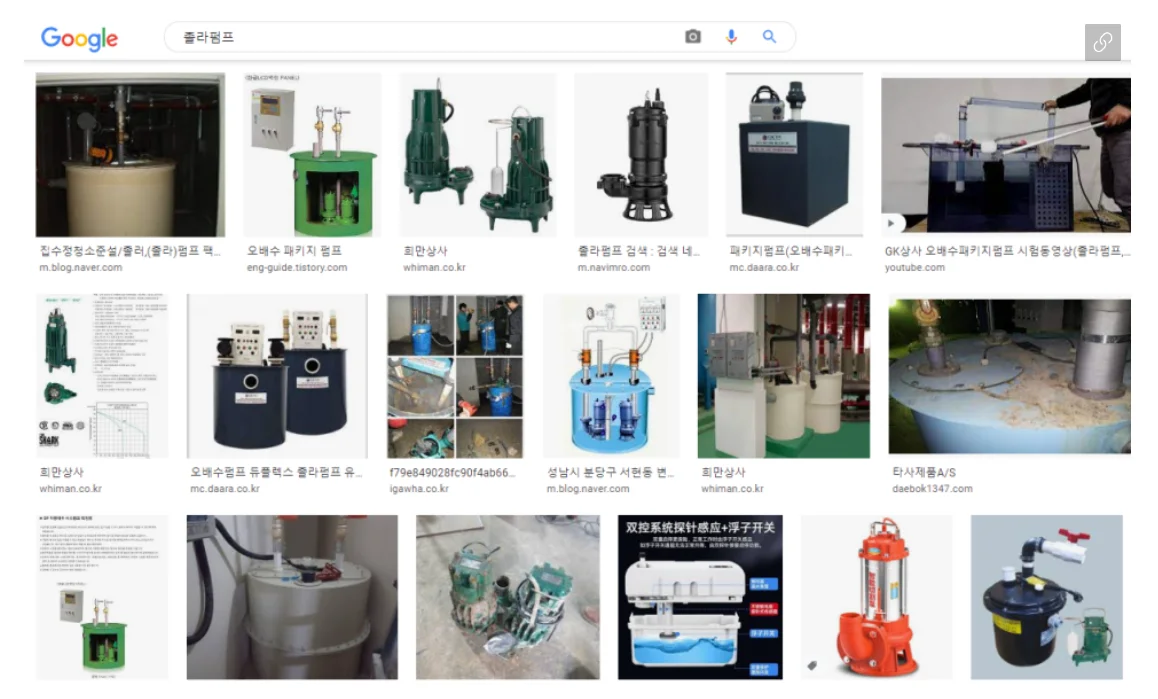
The "jolla pump" is a packaged wastewater/sewage pump unit — a self-contained pump package used in locations where it would otherwise be difficult to route water, such as around septic tank facilities or sewage and drainage systems. The space that houses this type of pump is referred to as the pump room.
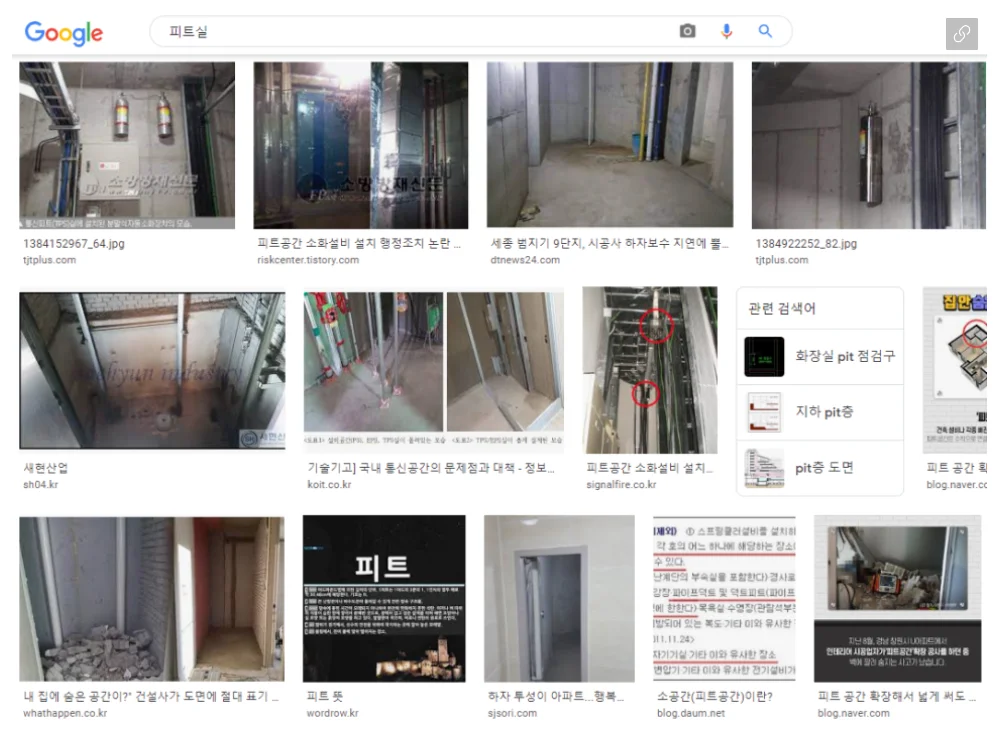
A pit room is a space set aside to install or route building services and piping — communication lines, electrical wiring, gas piping, and water piping. It is also commonly referred to as a pit space.
Installation Points
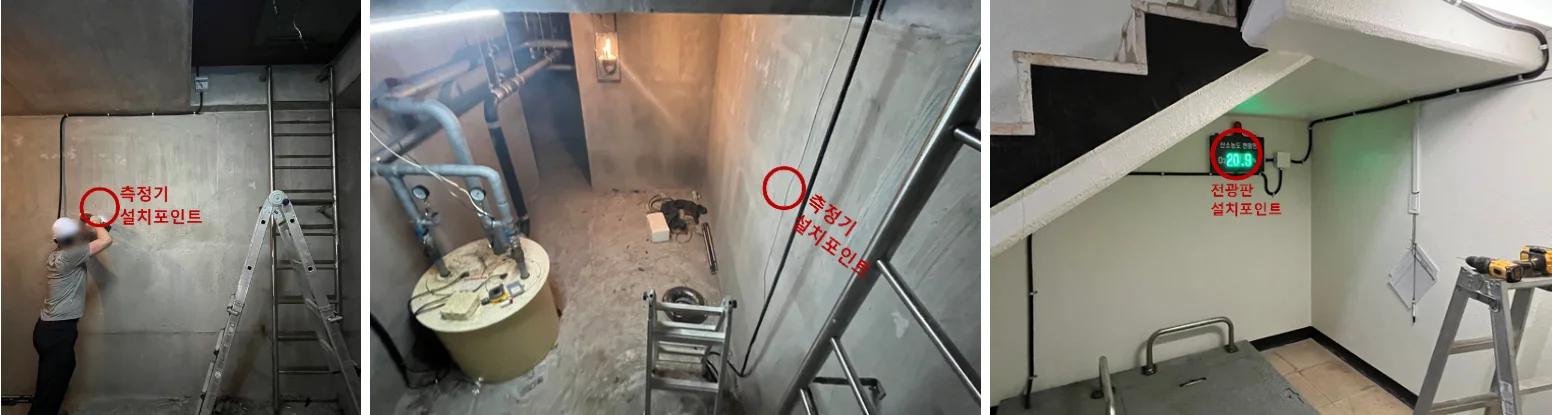
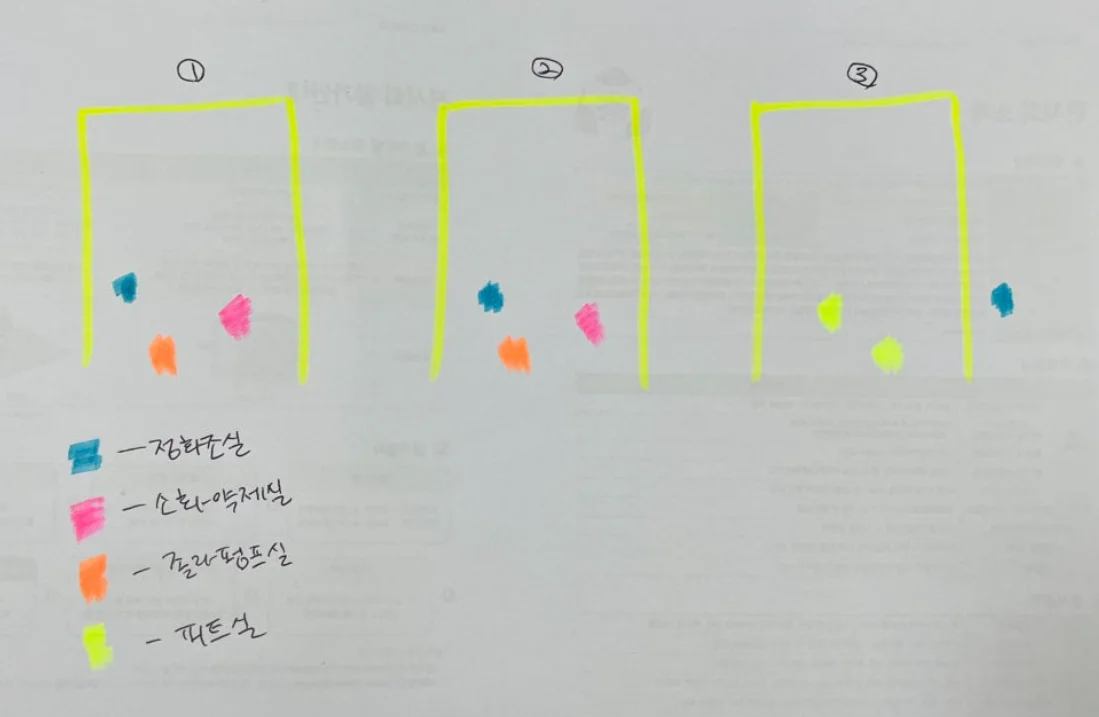
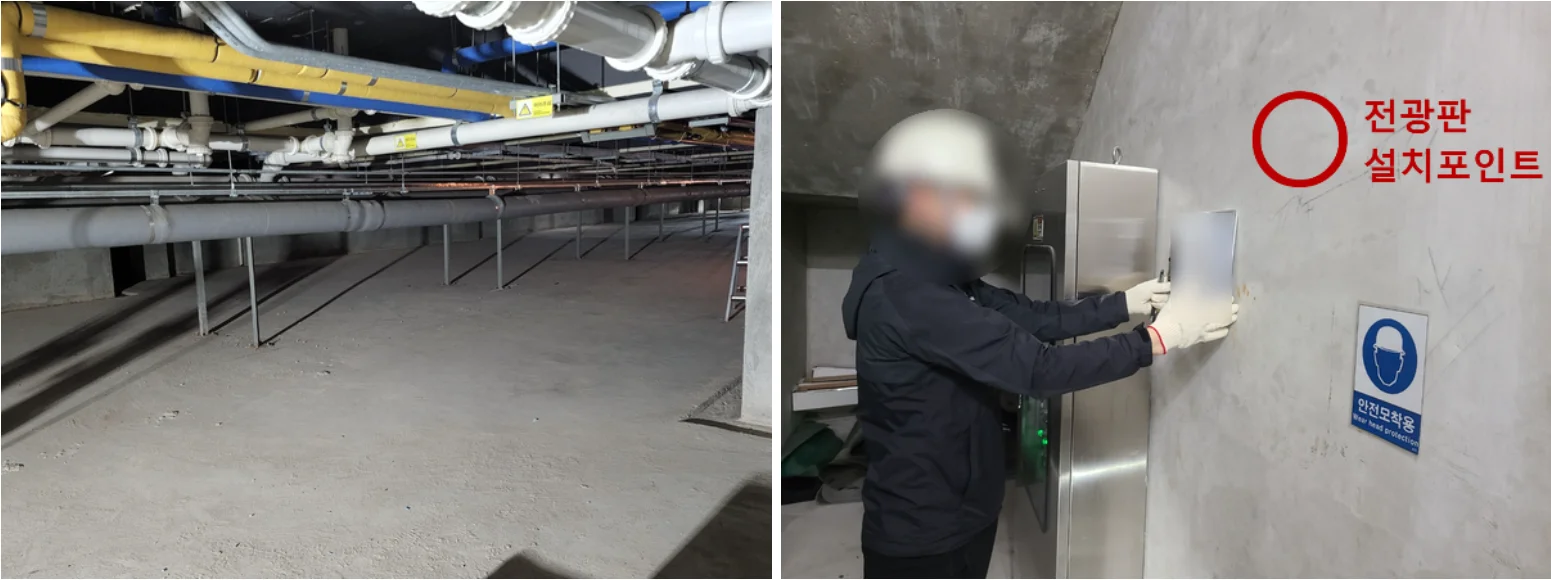
This is the installation point for pump room 1.
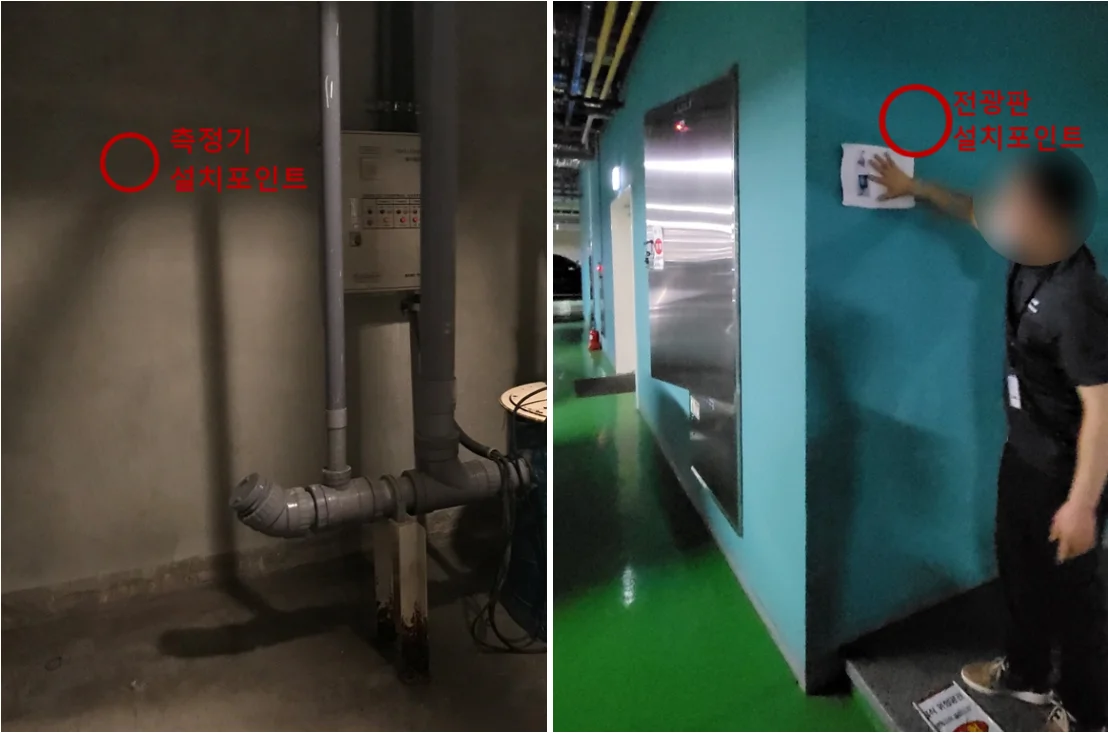
This is the installation point for pump room 2. The FIX800 installation point was set inside the pump room, and the gas status display installation point was set at the pump room entrance.
This is the installation point for pit room 1.
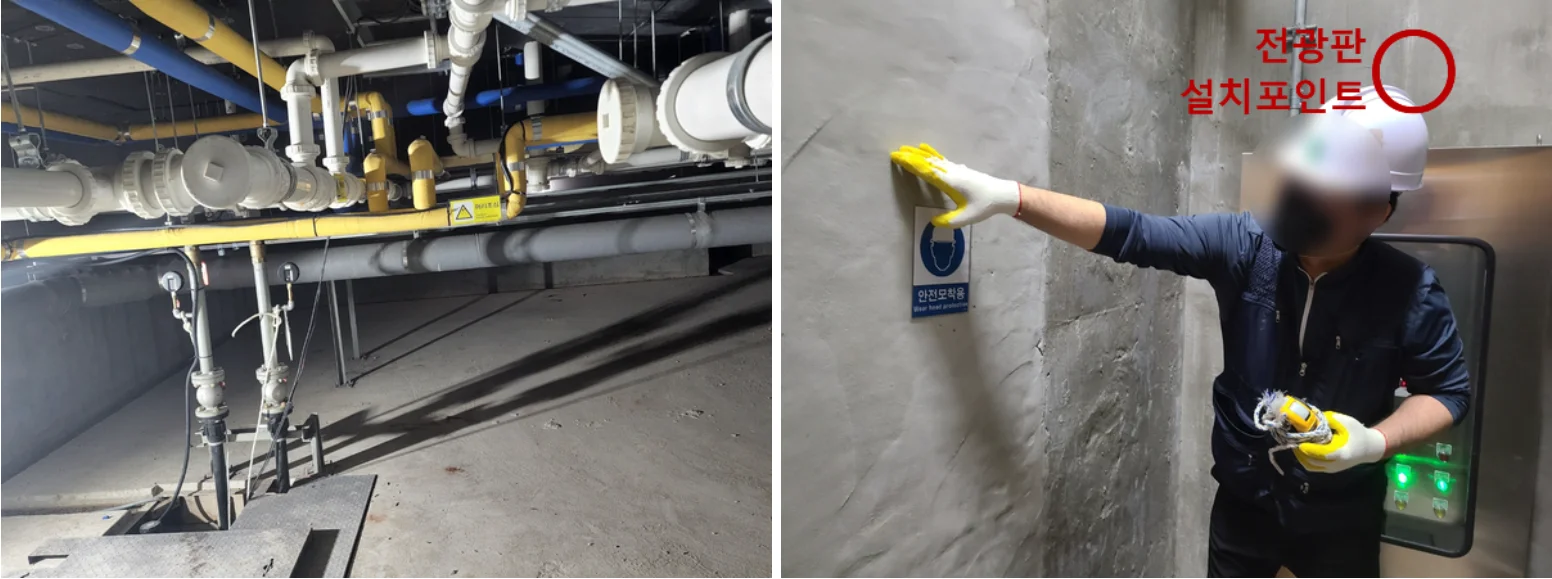
This is the installation point for pit room 2. The fixed FIX800 detector installation point was set inside each pit room, with the gas status display installation point set at each pit room entrance.
Installation
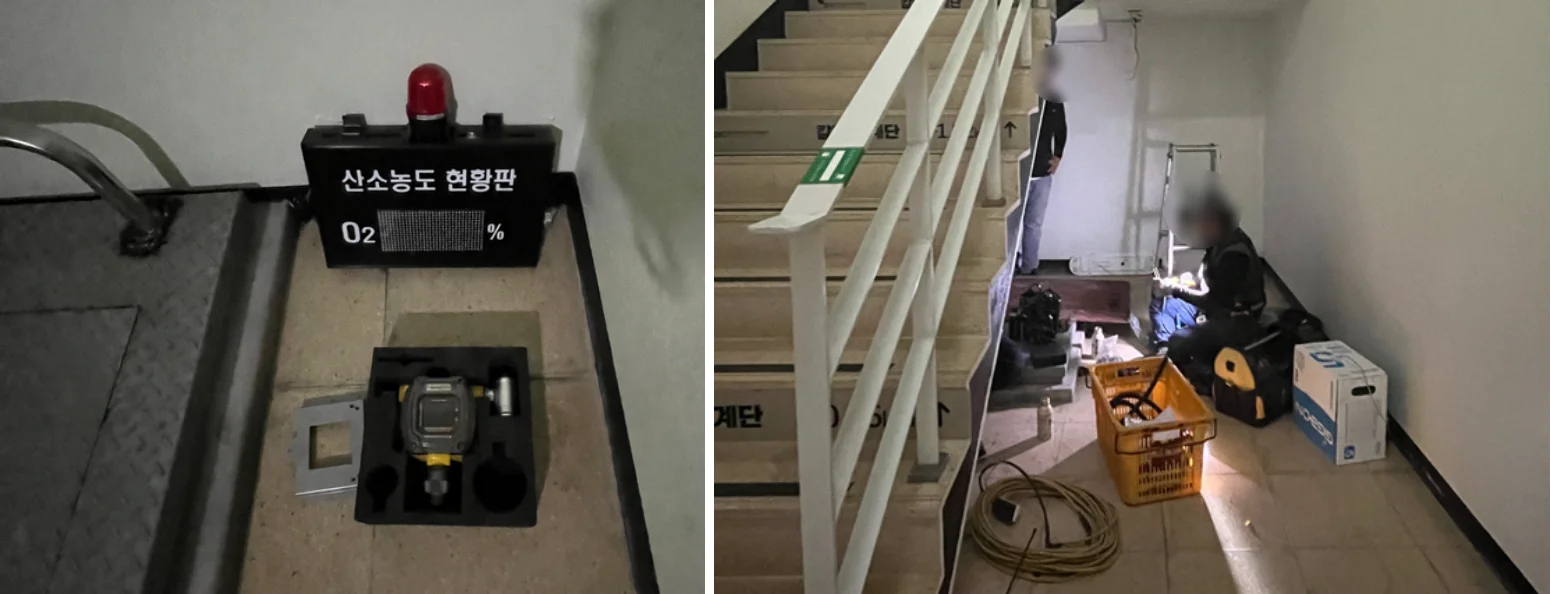
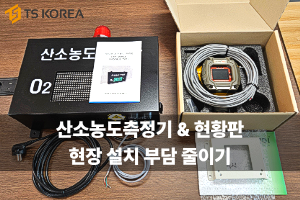
These are the installation materials — the fixed FIX800 gas detector units and the oxygen concentration status displays to be installed in the pump rooms and pit rooms.
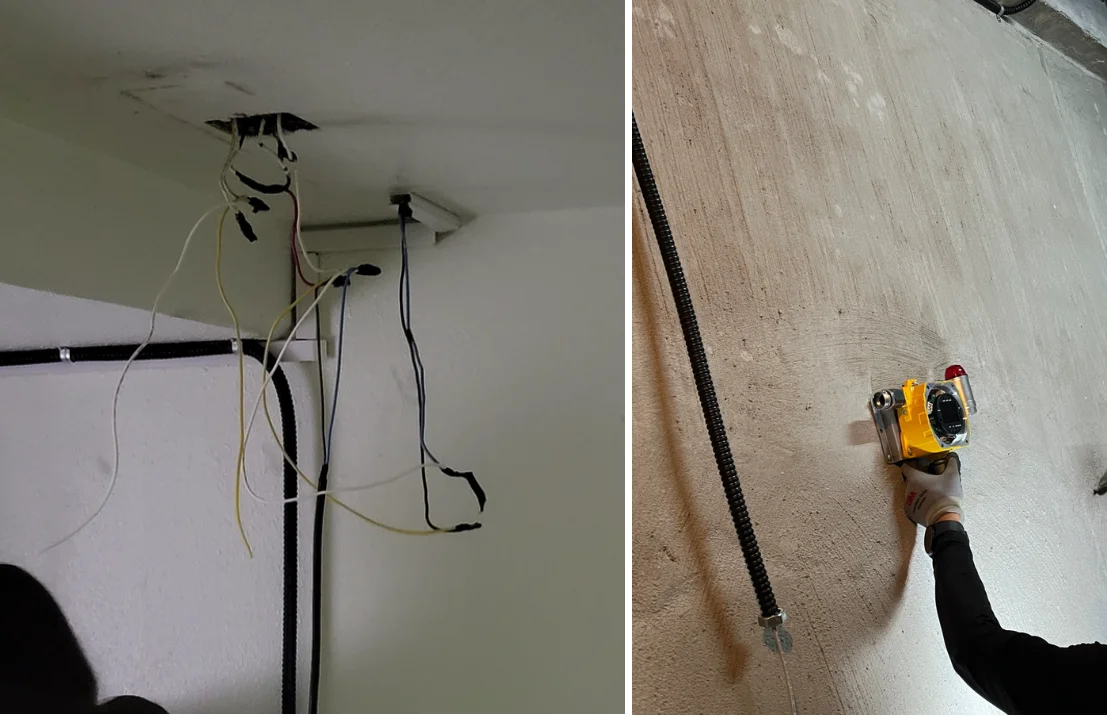
Installing the oxygen concentration detector to help prevent confined-space incidents. Power was supplied from a light fixture near the pump room entrance. Inside the pump room, the detector was installed at a height of about 1.5 m, roughly at breathing height, and the oxygen concentration status display was installed at the entrance so the internal oxygen level can be checked before entering.
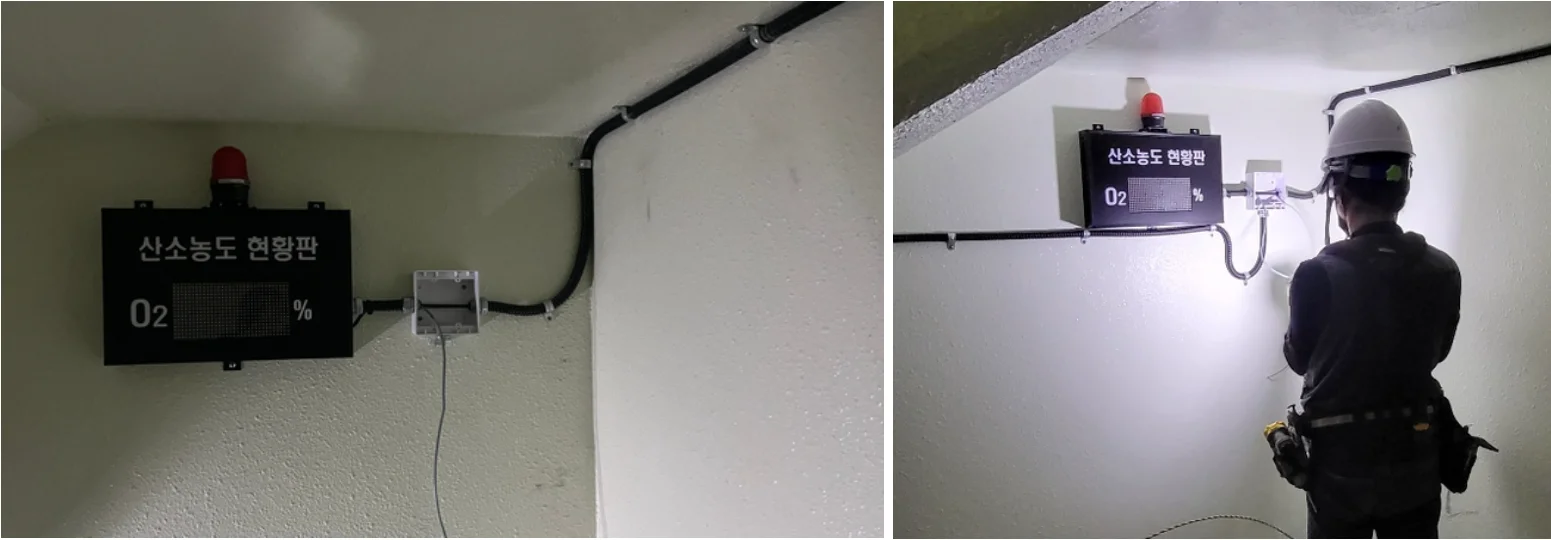
The power supply and the status display's power cabling were organized through a junction box.
Installation Complete
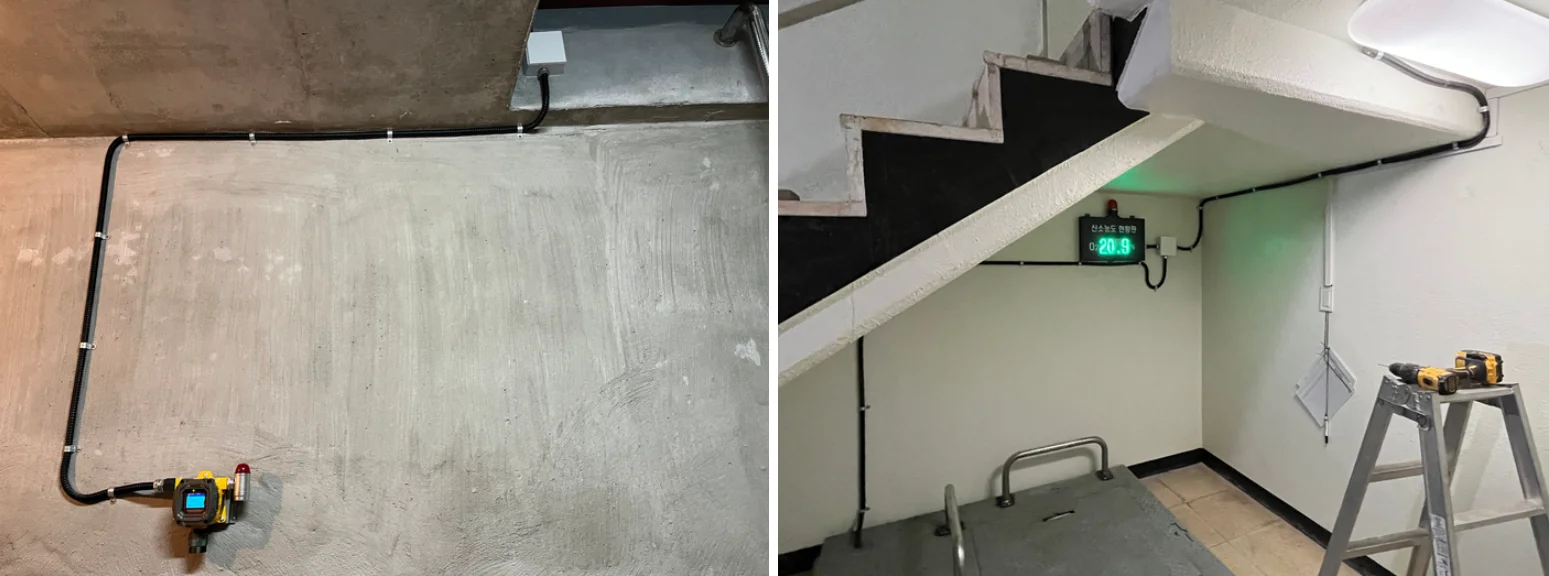
Pump room 1 — installation complete.
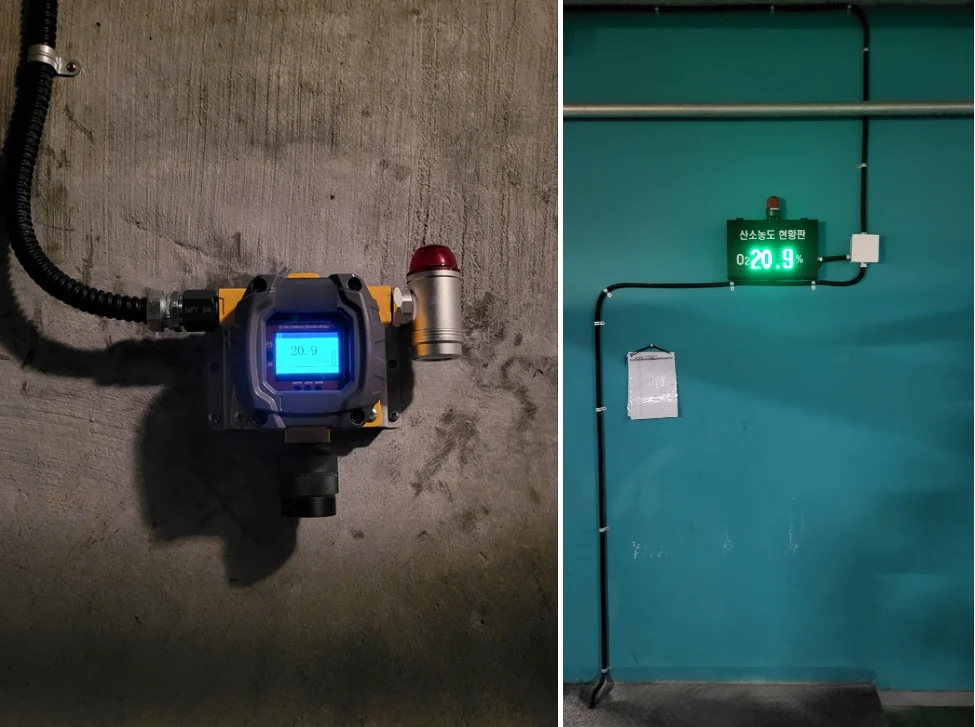
Pump room 2 — installation complete.
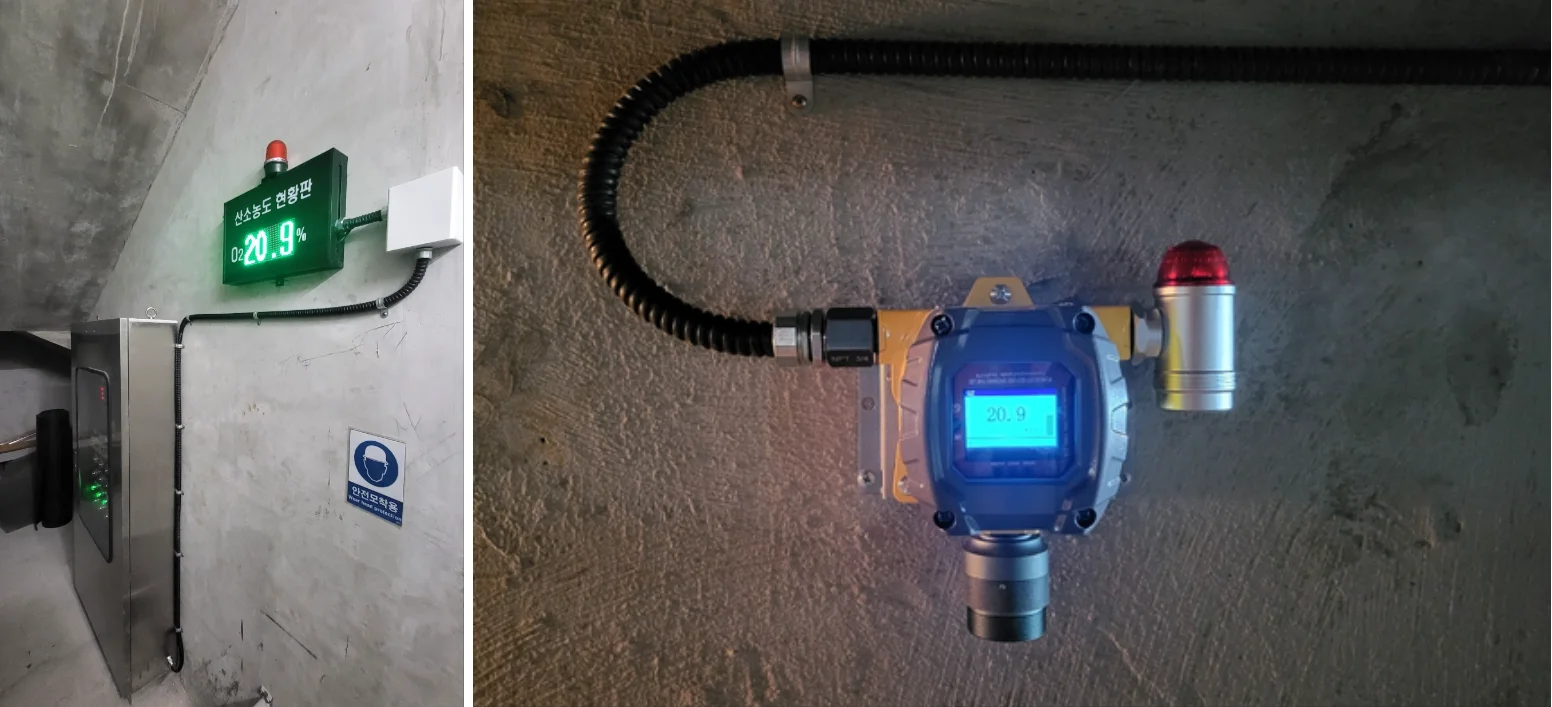
Pit room 1 — installation complete.
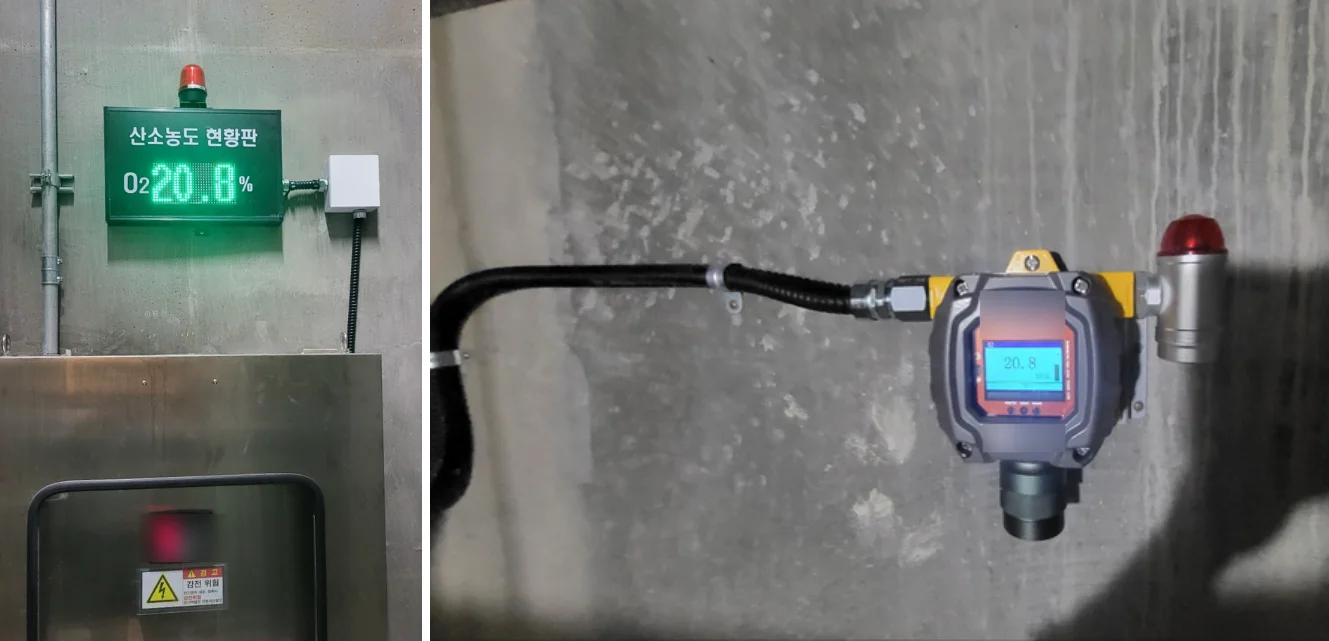
Pit room 2 — installation complete.
The FIX800 oxygen (O₂, 0–30%) detectors and oxygen concentration status displays have now been installed in all of the pump rooms and pit rooms. The fixed FIX800 detector runs on a DC 24V power supply, allowing continuous 24-hour monitoring. When the status display is powered on, the detector operates simultaneously, so readings can be checked in real time.
With this third installment, the installation project covering the septic tank room, fire-suppressant chemical room, pump rooms, and pit rooms at this public facility in Jeju has been completed.
RS Korea is the official Korean branch for this product line. Beyond standard product sales, we also provide our own calibration, domestic repair, and custom manufacturing services as a gas-detection specialist. Drawing on our experience delivering and installing equipment across a wide range of environments, we configure 1:1 customized systems — including moisture and high-temperature gas sampling conditioning systems — to match each measurement environment.
Project summary: Location — Jeju. Environments — septic tank room, fire-suppressant chemical room, pump rooms, and pit rooms. Products — WANDI FIX800 4-Gas (O₂/CO/H₂S/LEL) × 3, WANDI FIX800 O₂ × 6, 4-Gas status displays × 3, O₂ status displays × 6. Measurement ranges — O₂ 0–30%, CO 0–1,000 ppm, H₂S 0–100 ppm, LEL 0–100% LEL. Additional notes — completed by a 4-person team over 3 days (8 hours per day), with a total of 9 installation points, each fitted with one detector and one status display. Waterproof corrugated conduit was used for cable runs. In the septic tank room, power was connected through an existing junction box from prior wiring work, so no additional concrete coring was required. In the fire-suppressant chemical room, power was supplied from the distribution panel, which required working at height for cable installation. In the pump rooms, power was supplied from a light fixture near the room entrance.
Thank you for reading. If you have any questions about a gas detector installation survey, this type of construction work, combustion gas analyzers, or other environmental measurement instruments, please feel free to contact our team.
자주 묻는 질문 (FAQ)
Q1. Why were only oxygen (O₂) detectors installed in the pump rooms and pit rooms, rather than multi-gas detectors?
Because these spaces carry no particular risk of hazardous gas generation, an O₂ concentration detector alone was sufficient. In contrast, environments such as septic tank rooms — where sediment and hazardous gases like H₂S can occur — were fitted with a safety-oriented multi-gas configuration (O₂, CO, H₂S, LEL) instead.
Q2. What is a "jolla pump room," and why does it need a gas detector?
A jolla pump is a packaged wastewater/sewage pump unit used in locations where it is difficult to route water directly, such as around septic tank facilities and drainage systems. Because the space is enclosed and connected to wastewater handling, monitoring the oxygen concentration helps prevent confined-space incidents.
Q3. Why is the detector installed at a height of about 1.5 meters?
Because that height corresponds roughly to a worker's breathing zone, which gives the most representative reading of the air a person entering the space would actually be exposed to.
Q4. Can the fixed FIX800 detector run continuously?
Yes. It operates on a DC 24V power supply, which allows for continuous 24-hour monitoring, and it works together with the status display so that readings update in real time whenever the system is powered.
Q5. Why is a status display installed at the entrance to each room?
So that personnel can check the internal oxygen concentration before entering a pump room or pit room, allowing them to confirm it is safe to enter without having to step inside first.
#WANDI#FIX800#OxygenDetector#ConfinedSpaceSafety#FixedGasDetector#PumpRoomSafety#PitRoomSafety#GasStatusDisplay#PublicFacilitySafety#JejuInstallation