Applied Markets
Installed Gases
Project Details
Hello.
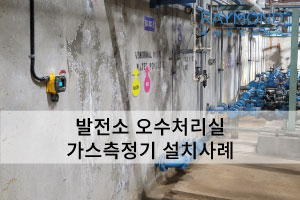
This case covers a field visit to supply a portable multi-gas detector and calibrate a gas detector installed in a hotel basement confined space.
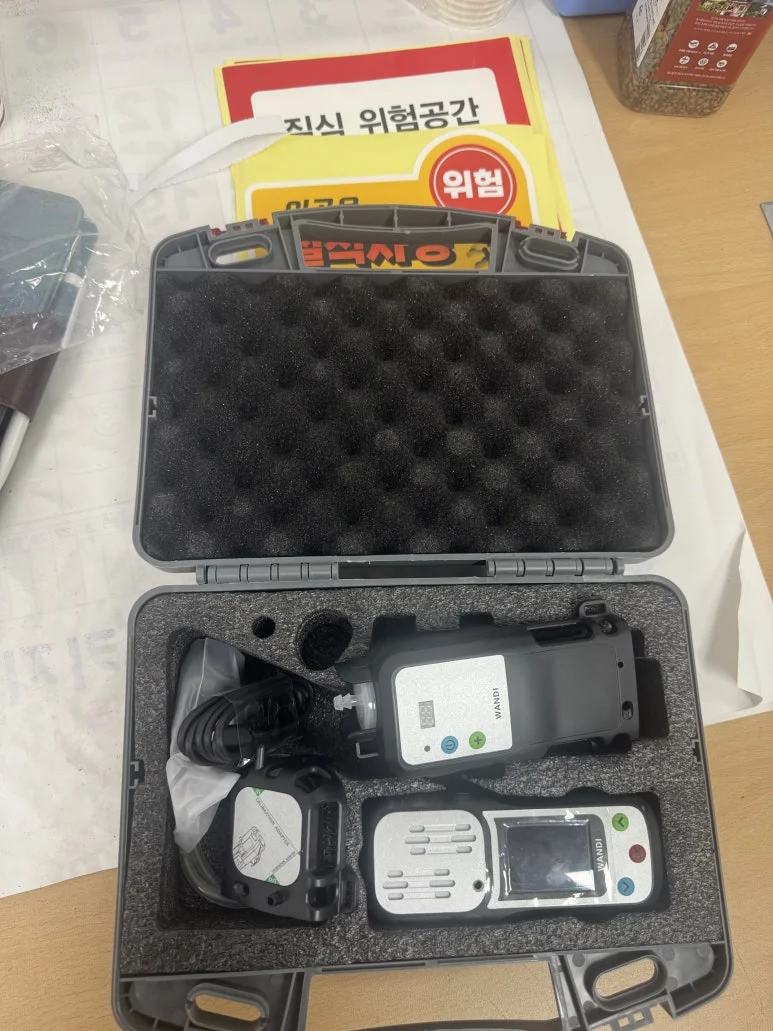
A gas detector was already installed inside the confined space of the underground wastewater treatment area, but the site manager had no portable device to carry, so an EDW500 portable multi-gas detector was purchased as an additional safety measure.
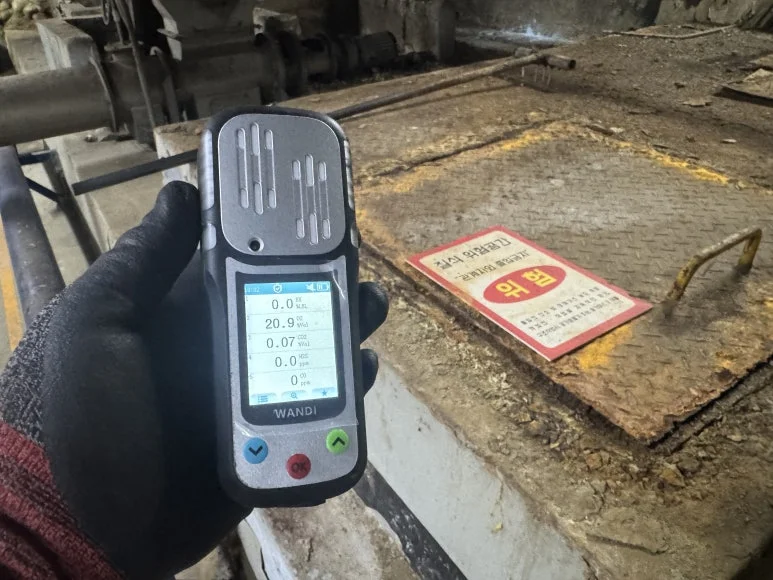
Even where a fixed-type gas detector is already installed on-site, a portable device must always be carried when entering a confined space, in order to prevent asphyxiation accidents.
EDW500 Portable Multi-Gas Detector
Measures O2, CO, H2S, EX (combustible gas), and CO2
Free cloud monitoring service available
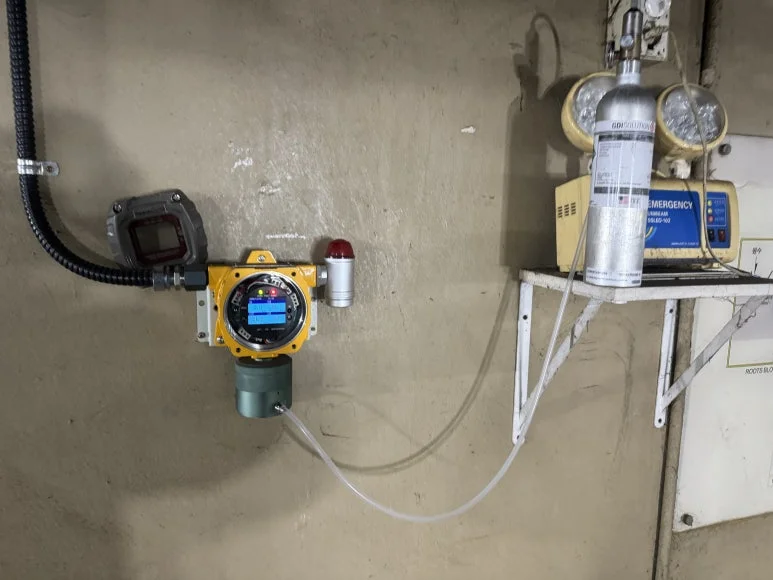
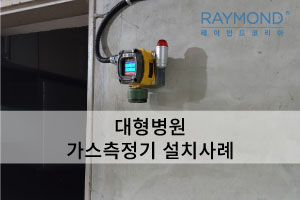
Along with the delivery of the portable device, we also carried out field calibration of the fixed-type FIX800 gas detector already installed on-site, using standard reference gas to test response and accuracy.
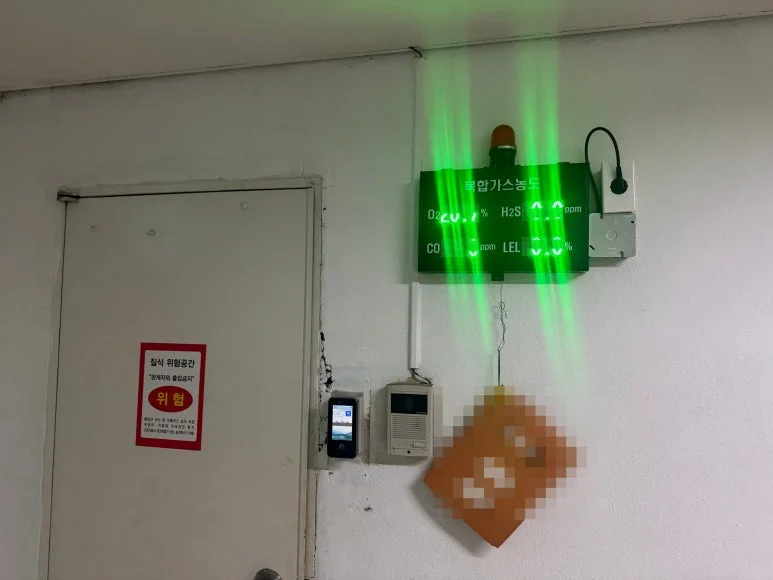
When oxygen levels drop or toxic gas is detected, the gas detector and the display board trigger an alarm simultaneously.
Oxygen: 18.5% or below
Hydrogen sulfide: 10 ppm or above
Carbon monoxide: 30 ppm or above
Combustible gas: 10% LEL or above
Carbon dioxide: 1.5% vol or above
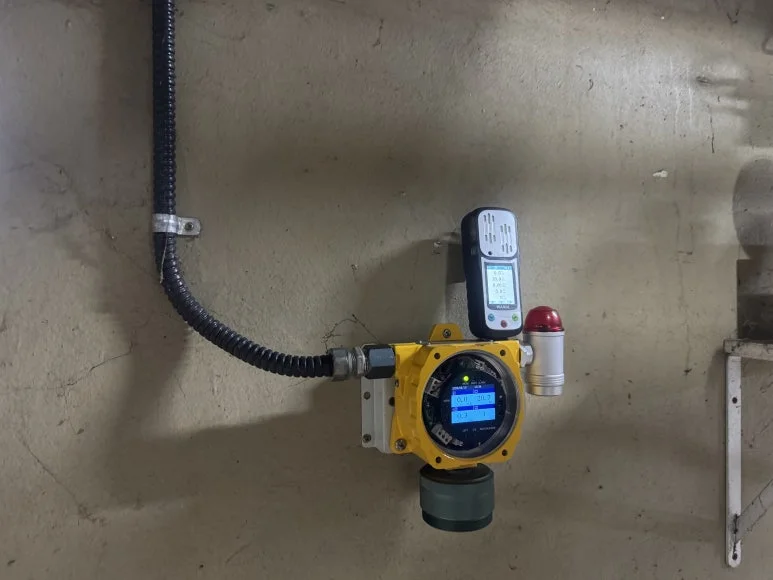
Asphyxiation accidents in confined spaces don't happen often, but when they do, they are among the safety incidents with the highest fatality rate.
Always carry a portable gas detector and stay alert to safety when working in confined spaces.
Frequently Asked Questions (FAQ)
Q1. Why is a portable detector needed when a fixed-type detector is already installed?
A fixed-type detector only monitors gas levels at its own installed location, so anyone entering a confined space needs a personal, portable detector to check the gas concentration in their immediate surroundings in real time.
Q2. What gases does the EDW500 measure?
The EDW500 is a portable multi-gas detector that simultaneously measures O2 (oxygen), CO (carbon monoxide), H2S (hydrogen sulfide), EX (combustible gas), and CO2 (carbon dioxide).
Q3. What thresholds trigger the alarm?
The alarm activates on both the detector and the display board when oxygen falls to 18.5% or below, hydrogen sulfide reaches 10 ppm or above, carbon monoxide reaches 30 ppm or above, combustible gas reaches 10% LEL or above, or carbon dioxide reaches 1.5% vol or above.
Q4. Why is field calibration necessary?
Sensor performance in an installed gas detector can drift over time, so periodic calibration using standard reference gas — testing both response and accuracy — is required to keep readings reliable.
Q5. What is the free cloud monitoring service?
The EDW500 can transmit its readings to the cloud, enabling free real-time remote monitoring in addition to on-site display.
#EDW500 #PortableGasDetector #MultiGasDetector #ConfinedSpaceSafety #FieldCalibration #FIX800 #AsphyxiationPrevention #CloudMonitoring #IndustrialSafety #GasDetector