Applied Markets
Installed Gases
Project Details
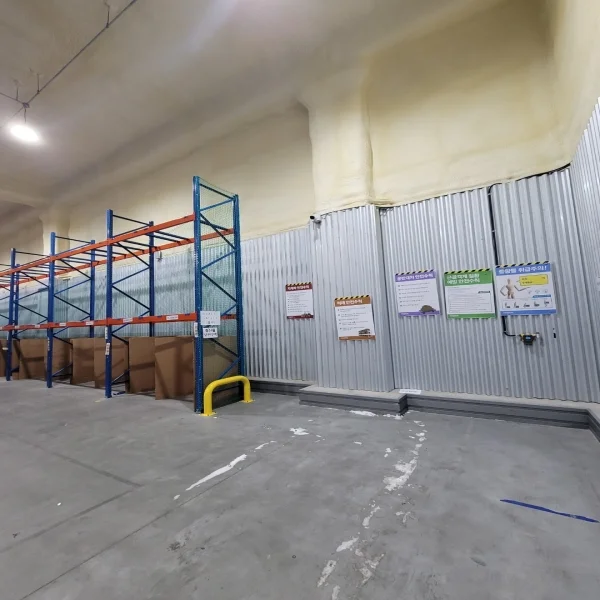
Hello. This case covers a cold storage warehouse that handles dry ice.
Dry ice is a material many of us encounter when buying ice cream — but why exactly is it dangerous?
Here is the official explanation from Korea's Occupational Safety and Health Agency (KOSHA):
"Dry ice is solid carbon dioxide. When exposed to normal temperature and pressure, it sublimates into CO2 gas, absorbing heat from its surroundings, which is why it is widely used to cool materials or lower temperatures. It is rarely used in facilities with cooling systems capable of sustaining low temperatures over long periods, but it can become a problem when used temporarily for short-term purposes, or in facilities or warehouses that lack large ice boxes or cooling systems."
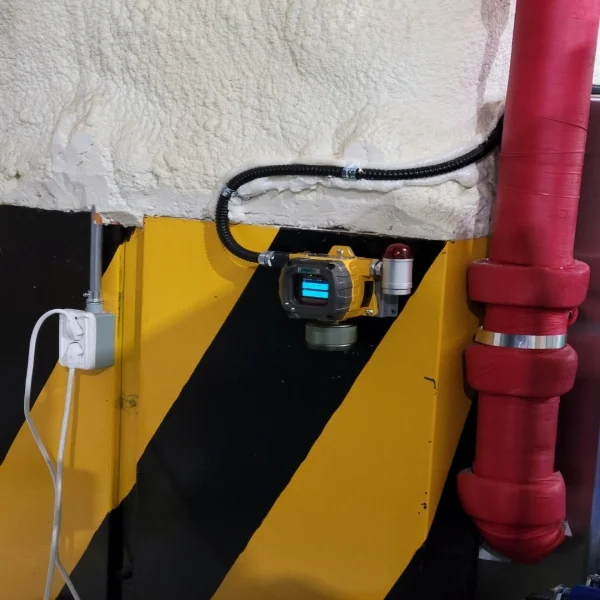
Beyond dry ice, cold storage warehouses can also be exposed to refrigerant gas.
This is generally because, if refrigerant gas leaks, it can travel along the piping into the cold storage warehouse where cold air is injected. Depending on the capacity of the refrigeration unit, a large refrigerant leak also carries a real risk of asphyxiation.
For this reason, both an O2 (oxygen) sensor — for general asphyxiation-risk monitoring — and a CO2 sensor — specifically for dry ice — were installed together at this site.
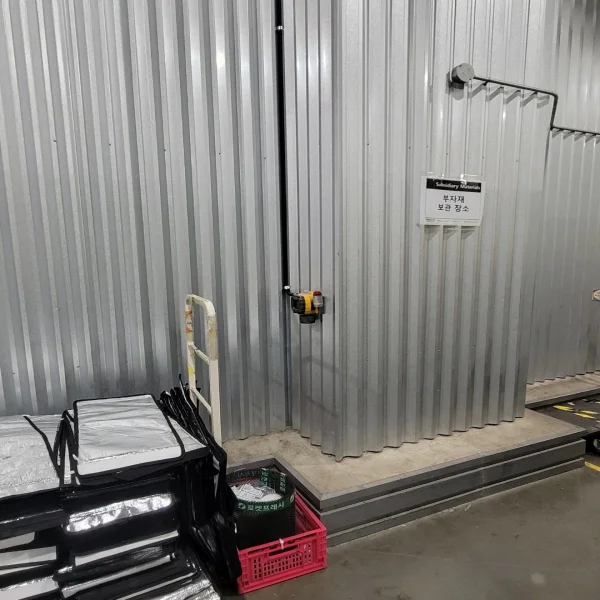
The installation position of a gas detector is often adjusted based on the gas's weight relative to air.
This is because gases heavier than air gradually sink toward the floor when released, while lighter gases gradually rise toward the ceiling. CO2 is a representative example of a gas heavier than air, while H2 (hydrogen) is a representative lighter gas. Accordingly, the O2/CO2 detectors here were installed close to the floor to match the relative weight of these gases.
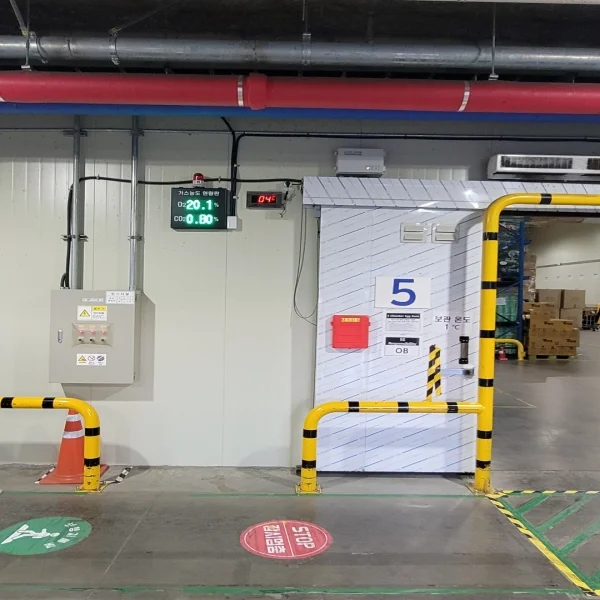
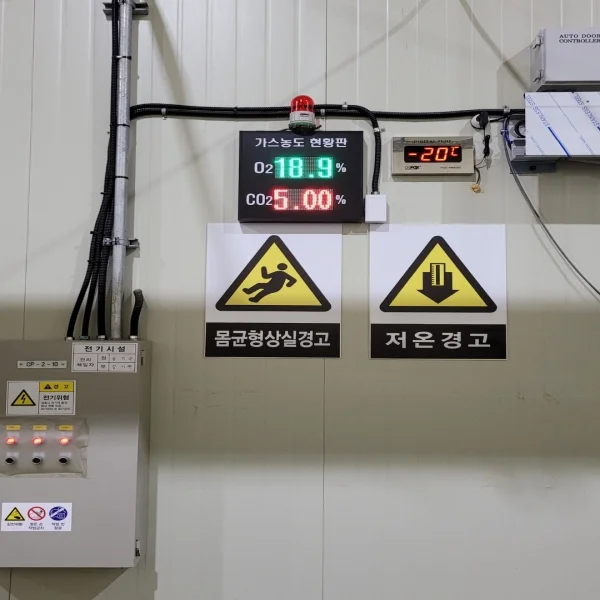
Cold storage warehouses are kept locked at all times, since maintaining temperature is critical. If the door were opened and the temperature rose, it could cause significant losses — both from wasted electricity and from damage to the stored goods. For this reason, a temperature display board is always mounted on the outside of the warehouse so staff can check the internal temperature without opening the door.
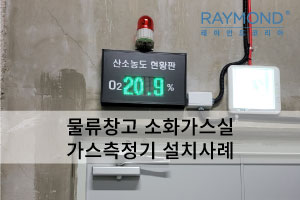
At this site, a gas concentration display board was also installed alongside the existing temperature display board. Even with the warehouse locked, supervisors can now check both the internal gas concentration and air quality simply by looking at the display board at the entrance.
This concludes our case on the installation of a gas detector at a cold storage warehouse.
We provide everything from a free on-site survey and solution design through installation, backed by dedicated after-sales service and ongoing support, as a gas detector sales and installation specialist.
Thank you.

Frequently Asked Questions (FAQ)
Q1. Why were both O2 and CO2 sensors installed in this cold storage warehouse?
The CO2 sensor monitors the gas released as dry ice sublimates, while the O2 sensor monitors general oxygen-deficiency risk, so both were installed together to cover both hazards.
Q2. Why is dry ice dangerous?
Dry ice is solid CO2 that sublimates into CO2 gas at normal temperature and pressure, absorbing surrounding heat. Used in large quantities in a poorly ventilated warehouse or confined space, it can lower the oxygen concentration and create an asphyxiation risk.
Q3. How is the installation position of a gas detector determined?
Gases heavier than air, such as CO2, sink toward the floor when released, while lighter gases such as H2 rise toward the ceiling. Since both O2 and CO2 here behave as heavier or near-floor-level gases, the detectors were installed close to the floor.
Q4. Can the internal gas concentration be checked without opening the warehouse door?
Yes. A gas concentration display board was installed alongside the existing temperature display board, so staff can check both temperature and gas concentration from the entrance even while the warehouse remains locked.
Q5. Can refrigerant gas also pose a hazard?
Yes. A refrigerant leak can travel through the piping into the cold storage warehouse along with the cold air, and depending on the refrigeration unit's capacity, a large leak can pose an asphyxiation risk — which is why the O2 sensor monitors for this as well.
#WANDI #ColdStorageWarehouse #DryIce #CO2GasDetector #OxygenDetector #AsphyxiationPrevention #GasDetectorInstallation #RefrigerantGas #GasDisplayBoard #ConfinedSpaceSafety