Applied Markets
Installed Gases
Project Details
Hello, this is RS Korea.
Today's post is a follow-up to a site survey our team carried out earlier at a public sports facility in Gyeonggi-do. This case documents the installation of FIX800 oxygen (O2) detectors and digital display boards at the facility's integrated disaster prevention center, exactly as planned during that survey.
Site survey summary: gymnasium — FIX800 O2 x3 with a 3-channel display board; general stadium — FIX800 O2 x5 with a 5-channel display board. Power was to be supplied from existing external 220V outlets, so no separate electrical work was required, and cabling would run through the existing lighting line ducts. The job was expected to take a crew of 4 about two days, including some elevated work.
Let's take a look at whether the installation went according to the survey plan.
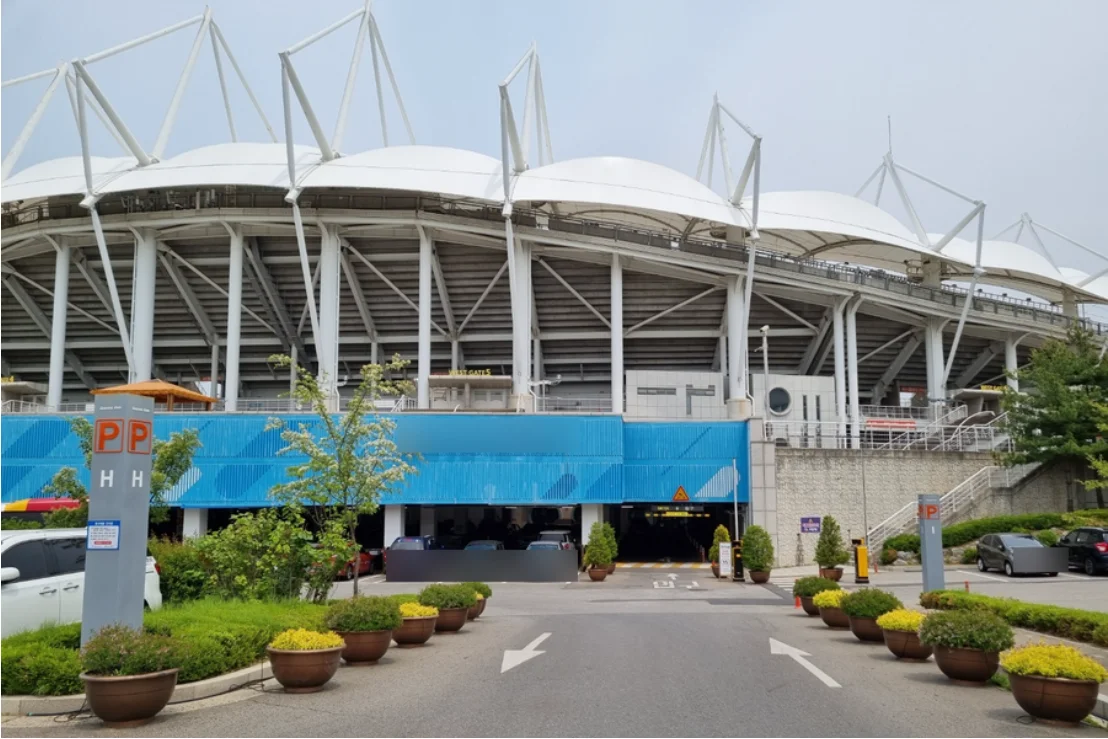
Today's installation sites were the general stadium and the gymnasium of a public sports facility in Gyeonggi-do.
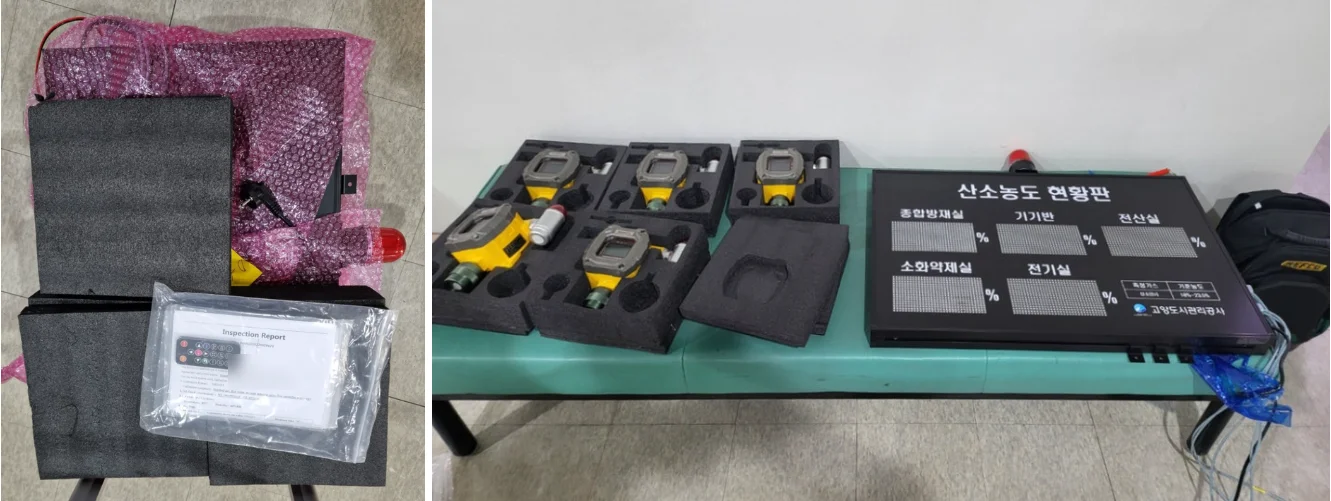
Today's equipment: for the gymnasium, 3 FIX800 O2 units, a display board with a warning light, and an additional warning light at the rear entrance so anyone outside could immediately see the status inside. For the general stadium, 5 FIX800 O2 units and a display board with a warning light. Since there were two separate installation points, the work was split across two days.
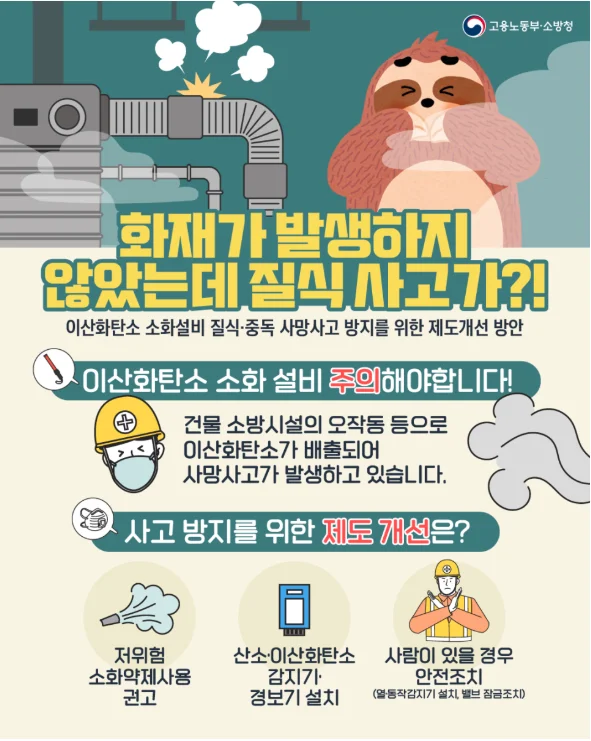
What is combustion? It is the phenomenon in which a substance combines with oxygen and releases large amounts of light and heat. Fire suppression works on three principles: asphyxiant suppression (cutting off oxygen), cooling suppression (removing heat), and inhibition suppression (interrupting the chain reaction). (Source: Ministry of Employment and Labor, National Fire Agency)
In spaces equipped with CO2 fire-suppression systems, oxygen and CO2 concentration detectors must be installed and their readings continuously managed to prevent asphyxiation, poisoning, and fatal accidents. This particular integrated disaster prevention center includes a fire-suppressant agent room, and cabinet-type automatic extinguishers are installed in areas that must be protected first in the event of a fire — the server room, the UPS (uninterruptible power supply) room, and similar spaces. In facilities that handle asphyxiant fire-suppression gases such as these cabinet-type automatic extinguishers, even a small leak can cause a fatal asphyxiation accident, which is why oxygen (O2) and carbon dioxide (CO2) concentration detectors were installed here.
There were eight installation points in total across the public sports facility — three in the gymnasium and five in the general stadium. Detectors were installed in every space carrying an asphyxiation risk related to the CO2 suppressant or the cabinet-type suppression equipment: the integrated control room, the equipment room, the server room, the agent storage room, and the electrical room.
First, the gymnasium.
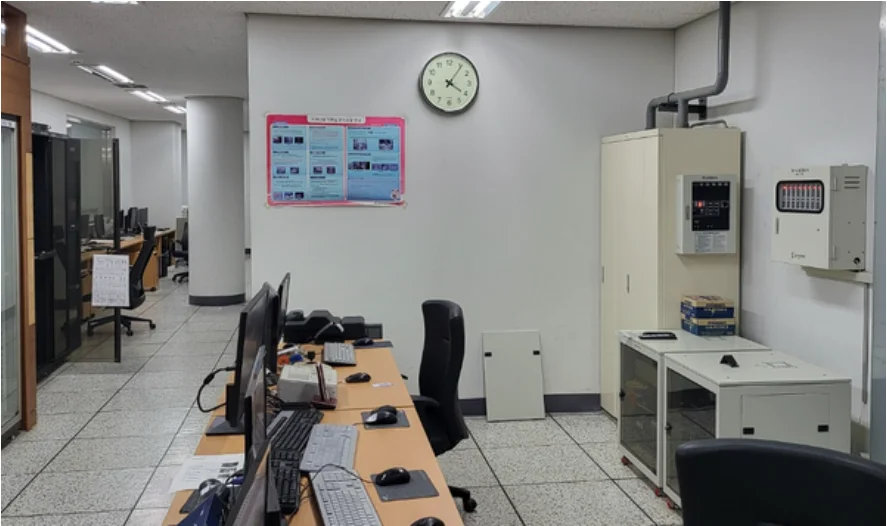
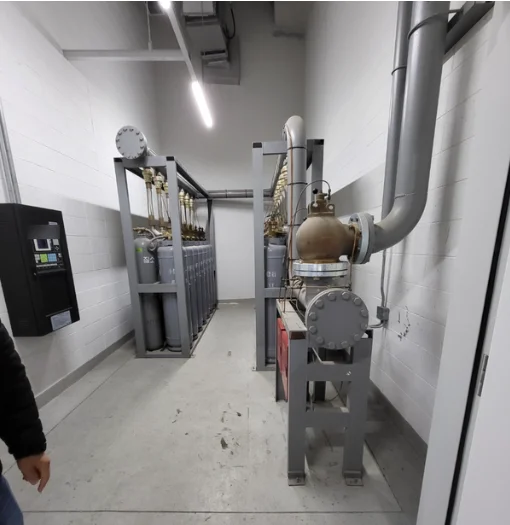
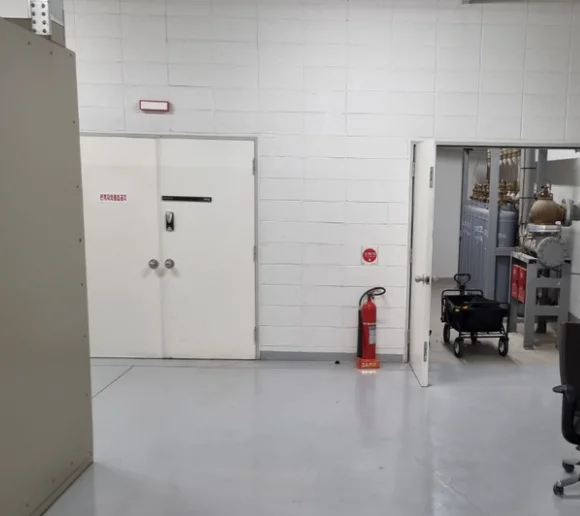
Gymnasium gas detector installation points: within the gymnasium's disaster prevention center, the fixed-type FIX800 detectors were installed in the integrated control room, the electrical room, and the fire-suppressant agent room.
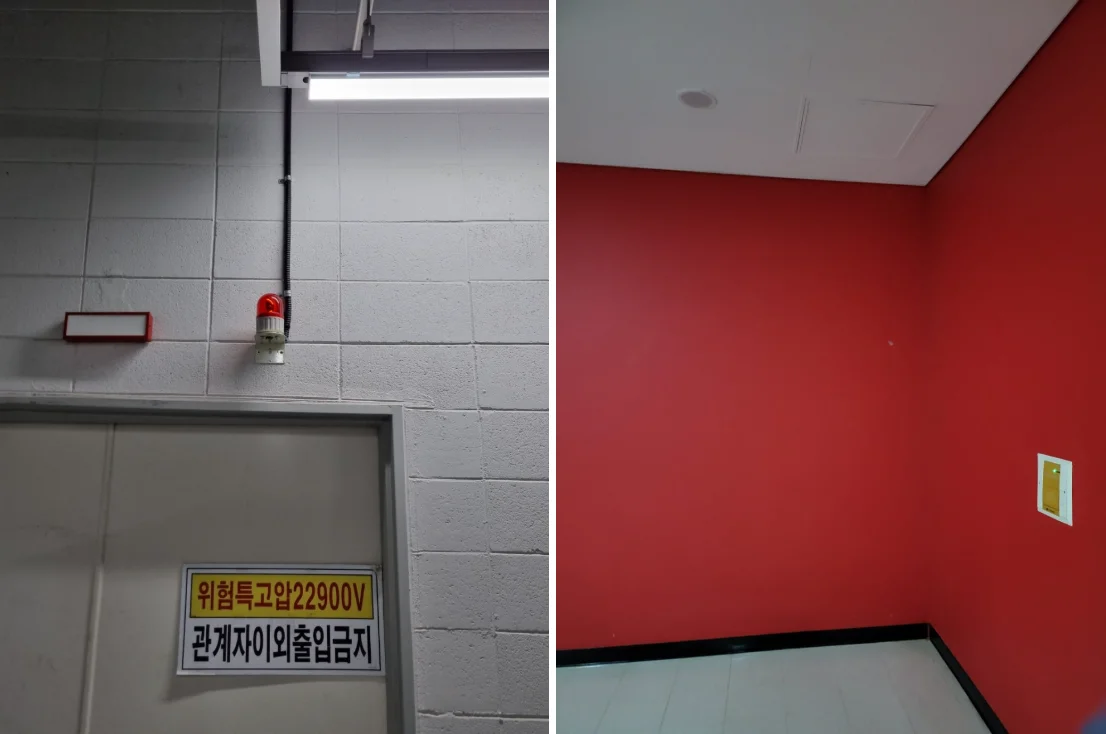
Gymnasium display board and warning light installation points: the display board and a warning light were installed at the main entrance, and a separate warning light was connected at the rear entrance so that the situation inside could be checked from outside.
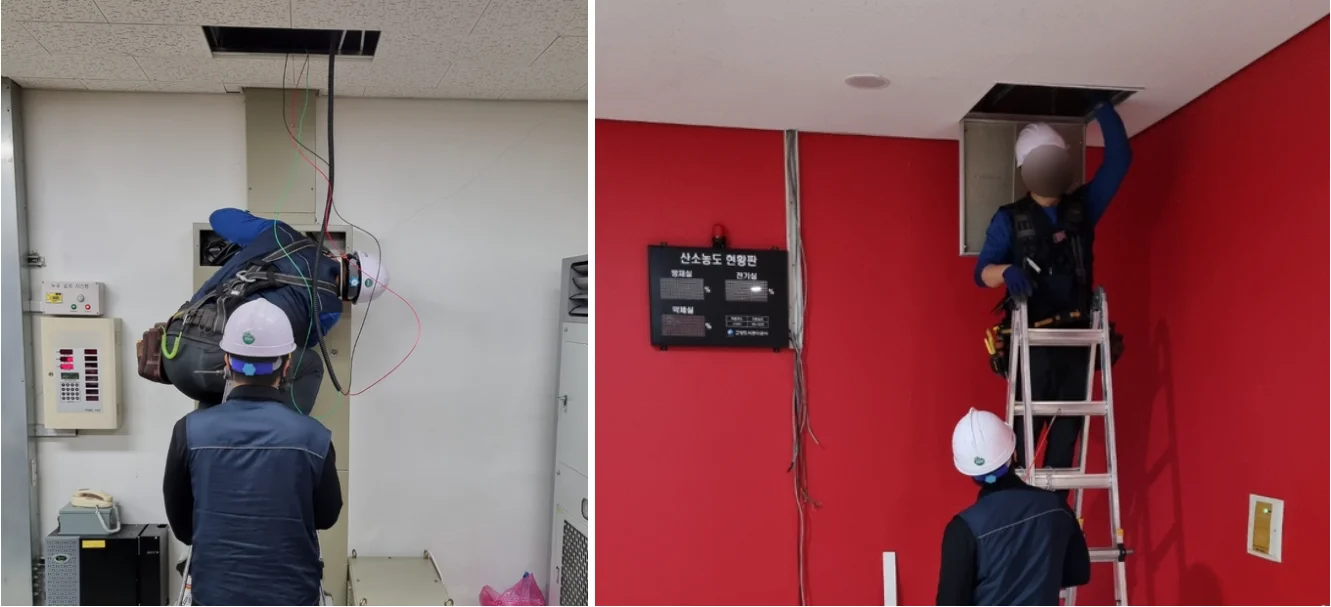
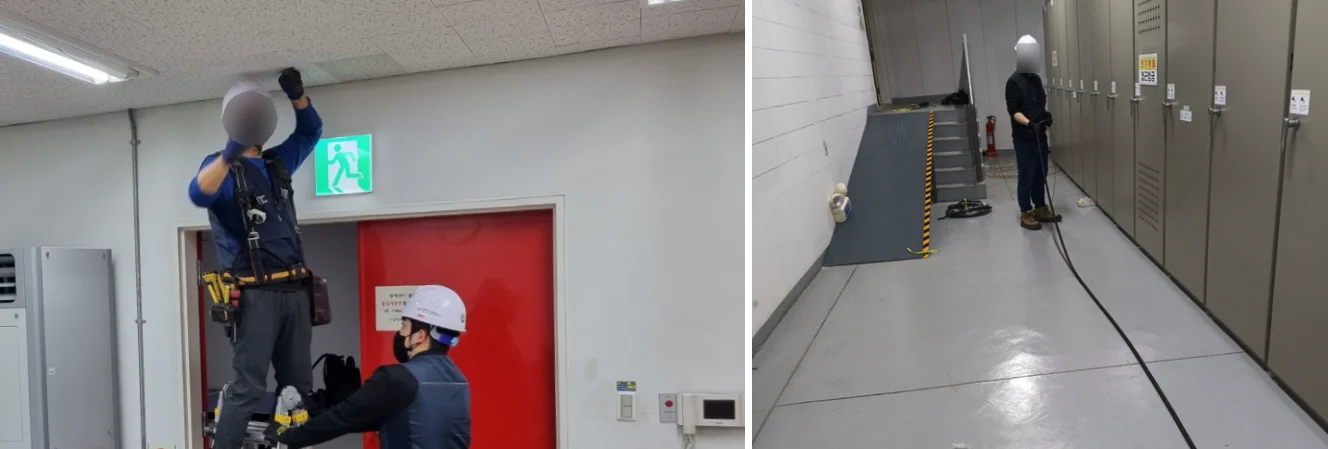
Cabling followed the same method used during the survey: 8-core shielded cable was routed through the existing lighting line ducts for a clean installation. Because of the layout of the gymnasium, cable runs and travel distances were longer than expected, which slightly delayed the work.
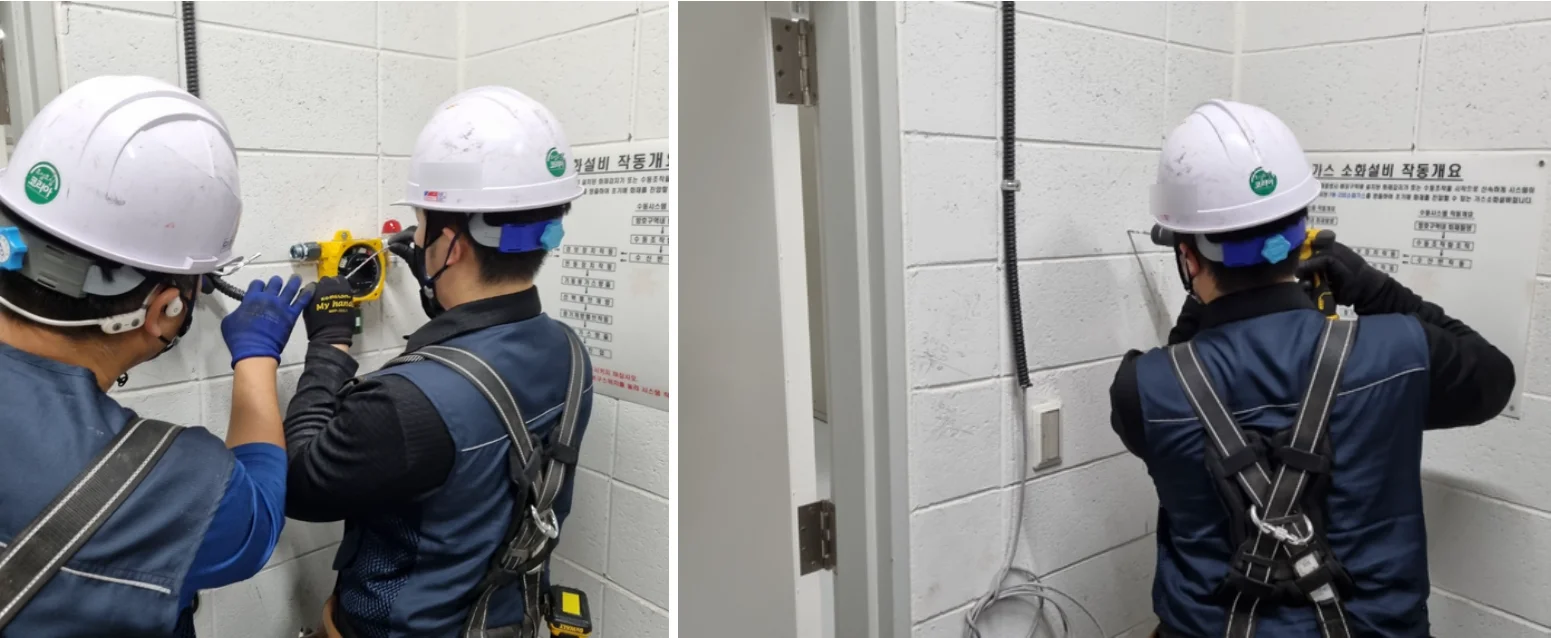
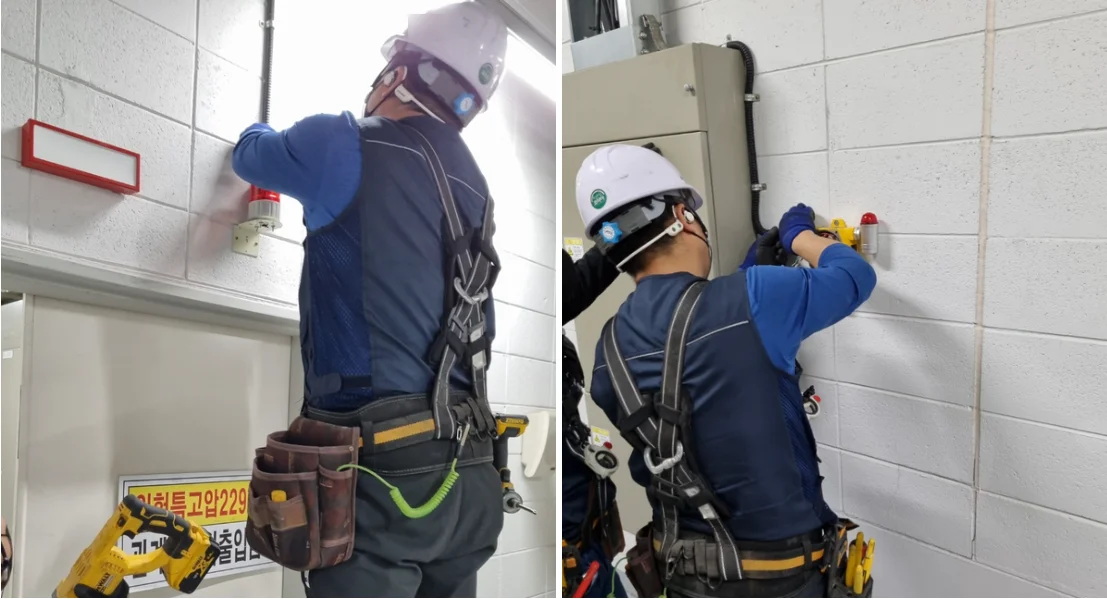
Installation proceeded at each point. The exterior warning lights required some elevated work.
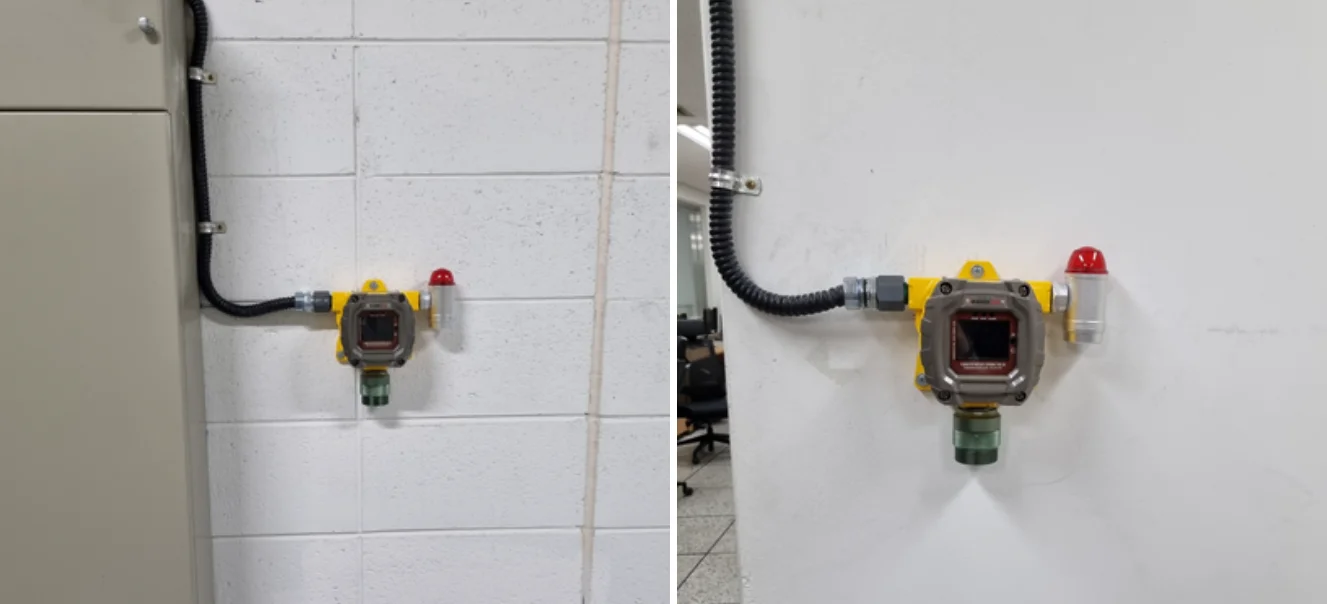
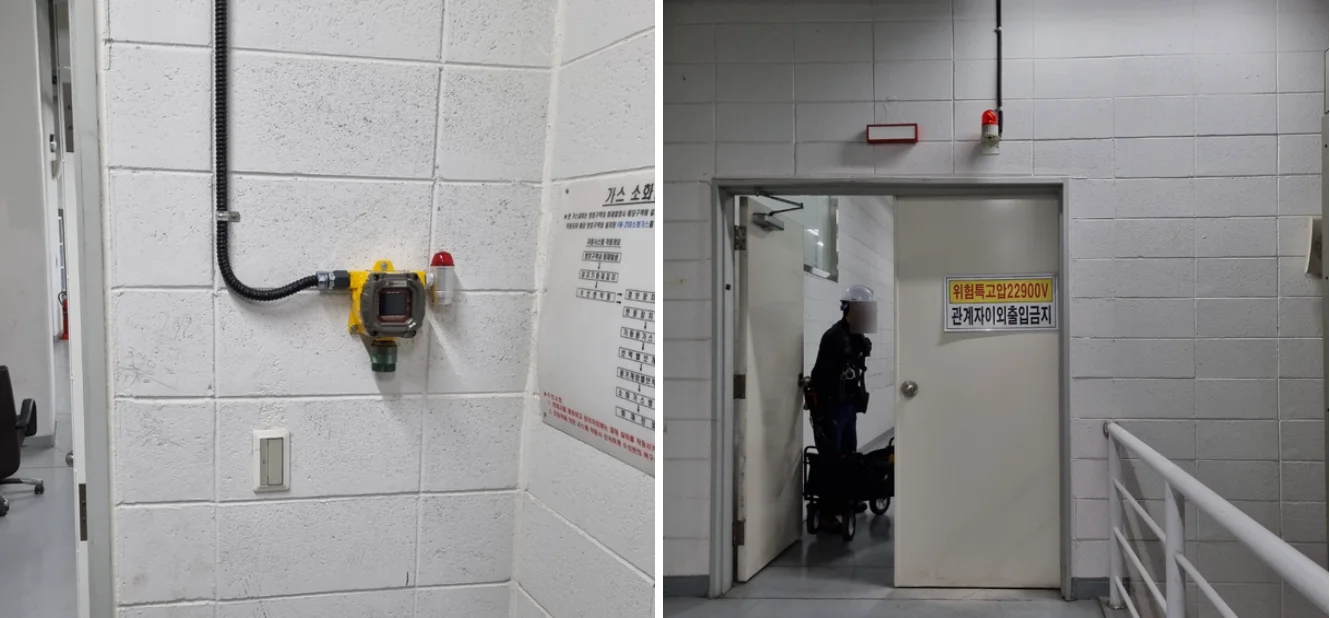
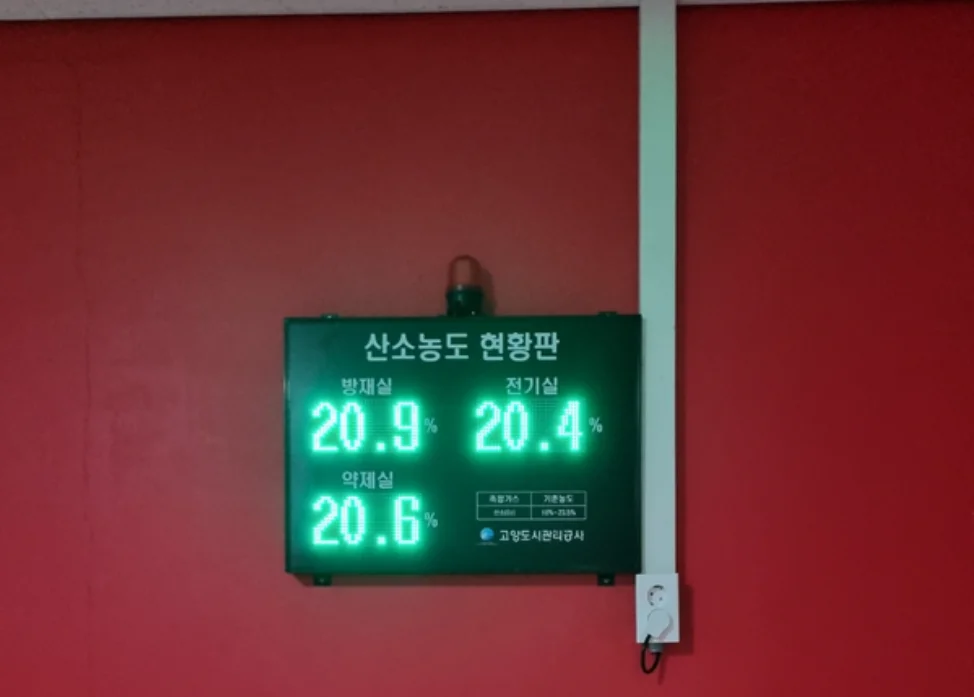
Installation inside the gymnasium was completed. As anticipated, travel and cabling distances were longer than during the survey, which delayed the schedule somewhat — a laser distance meter will be brought along for future surveys. Power was supplied from the external 220V outlet near the entrance where the display board was installed, exactly as planned during the survey, so no separate electrical work was required.
Next, the installation points at the general stadium.
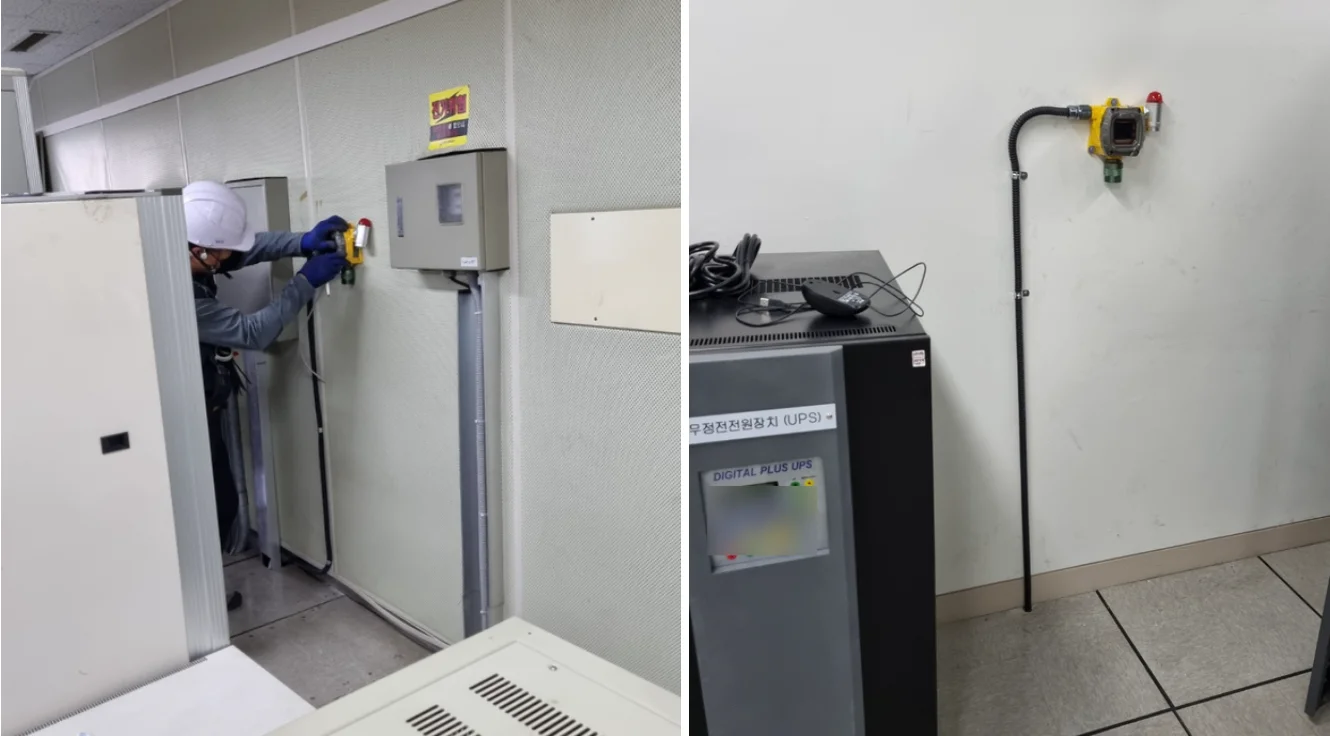
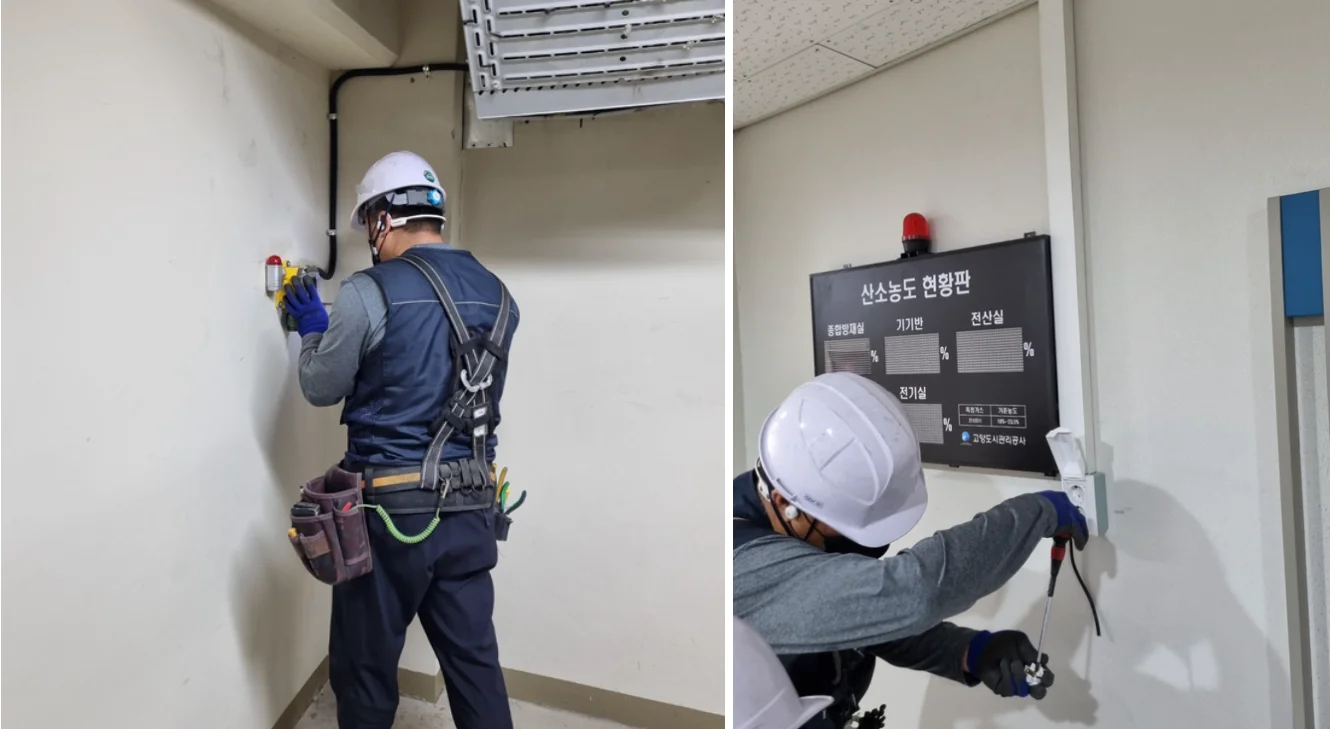
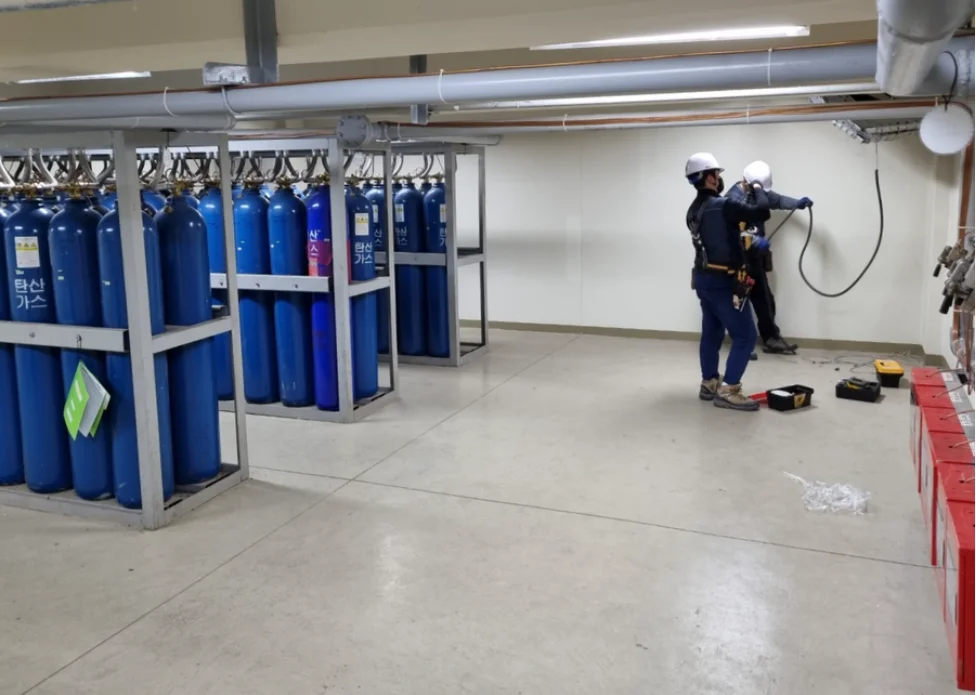
As with the gymnasium, FIX800 oxygen detectors and a display board were installed at the general stadium's disaster prevention center, in every space carrying an asphyxiation risk: the control room, the equipment room, the server room, the electrical room, and the fire-suppressant agent room.
Cabling used 8-core shielded cable routed through the lighting line ducts, with waterproof corrugated conduit for the short run between the duct and the wall — all carried out exactly as planned during the survey.
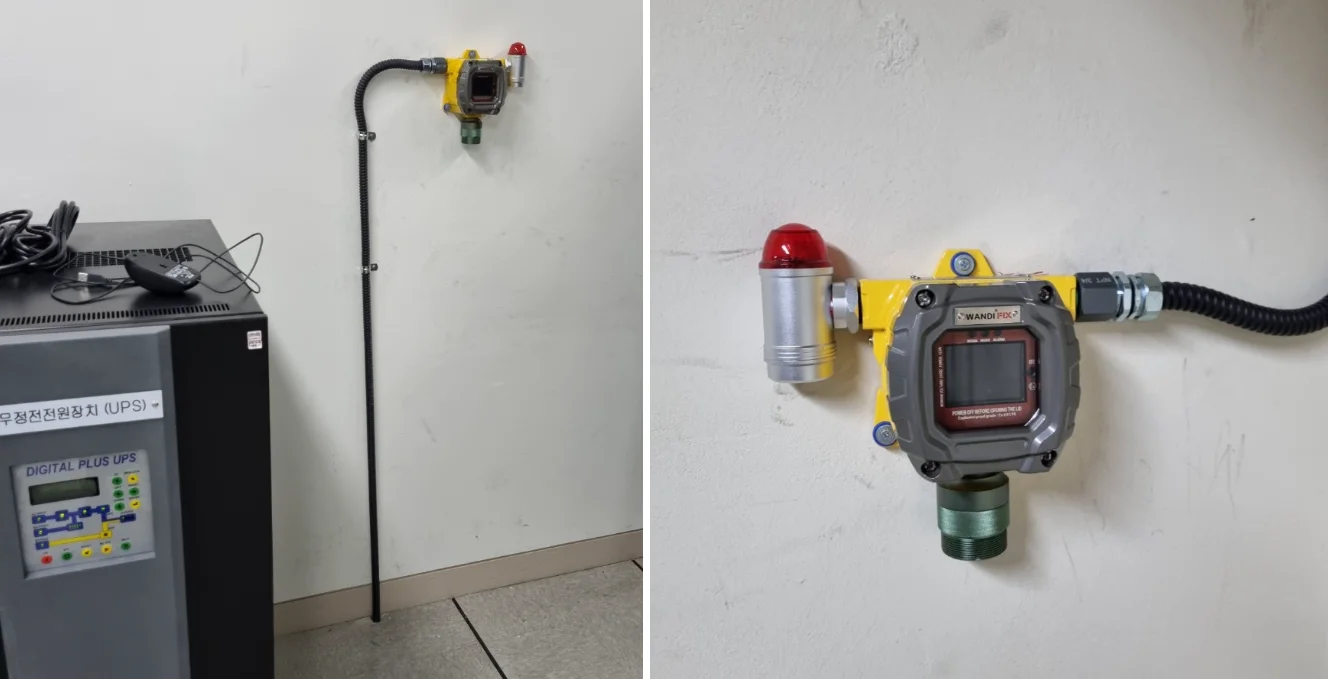
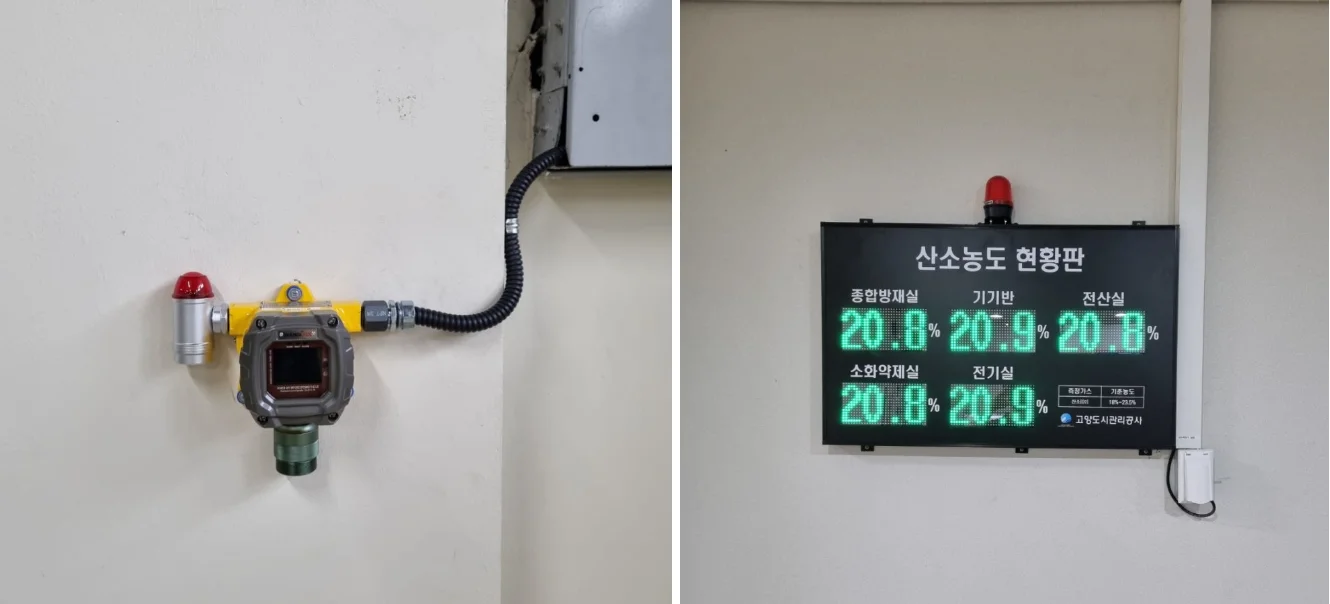
As with the gymnasium, power was supplied from the external 220V outlet at the entrance where the display board was installed, requiring no separate electrical work. Installation at the general stadium was completed, and product training for the facility staff was also finished as usual.
As with any on-site installation work, unexpected variables can arise. Drawing on our experience delivering and installing equipment across a wide range of environments, our team carefully accounted for the measurement environment during the site survey, which allowed this installation to be completed without any unexpected issues.
RS Korea operates an official Korean branch with complete in-house facilities for after-sales repair, calibration, gas-system fabrication, and shipping — making us a gas-specialized company that handles far more than simple sales, including calibration, repair, fabrication, and installation.
With this, the installation of fixed-type FIX800 O2 (0–30%) oxygen detectors at the integrated disaster prevention center of the public sports facility in Ilsan is complete.
Today's summary
Client: Undisclosed
Region: Gyeonggi-do
Environment: Integrated disaster prevention center and fire-suppressant agent room within a public gymnasium and stadium
Product: WANDI FIX800 O2 (0–30%) x 8, warning lights, display boards
Crew: 4 people, approximately 2.5 days (based on 8-hour workdays)
Notes: elevated work using a ladder (approx. 2 m); power supplied from an external 220V outlet near the entrance, requiring no separate electrical work; cabling routed through existing lighting line ducts; travel and cabling distances in the gymnasium were longer than expected, which delayed the schedule; waterproof corrugated conduit used for the duct-to-wall cable run.
This concludes our post on the installation of fixed-type multi-gas detectors (FIX800 O2, 0–30%) with warning lights and display boards. If you have any questions about site surveys, gas detector installation, or environmental monitoring in general, please feel free to reach out to our team.
Frequently Asked Questions (FAQ)
Q1. Why does a CO2 fire-suppression system require an oxygen detector?
Because CO2 extinguishes fire by displacing oxygen (asphyxiant suppression), any leak or discharge of the suppressant gas lowers the oxygen level in the room and can cause asphyxiation. An O2 detector provides an early warning before the atmosphere becomes dangerous.
Q2. What measurement range does the FIX800 O2 detector used in this project cover?
The units installed here measure oxygen concentration from 0–30% volume, which is suitable for confined-space and asphyxiation-risk monitoring in general facility environments.
Q3. Why were detectors installed in both the gymnasium and the general stadium?
Both buildings have their own integrated disaster prevention centers containing server rooms, UPS rooms, and cabinet-type fire-suppression equipment, so each required independent oxygen monitoring at its own risk points — eight points in total.
Q4. Was separate electrical work required for the installation?
No. Power was drawn from existing external 220V outlets near the entrances where the display boards were installed, and cabling was routed through the existing lighting line ducts, so no additional electrical construction was needed.
Q5. How long did the installation take?
A four-person crew completed the work in approximately 2.5 days (based on 8-hour workdays), split across two installation points.
#WANDI #FIX800 #OxygenDetector #GasDetectorInstallation #CO2FireSuppression #ConfinedSpaceSafety #DisasterPreventionCenter #FixedGasDetector #DisplayBoard #GyeonggiInstallation