Installed Gases
Project Details
Hello, this is RS Korea.
You may remember our earlier post about the site survey we did last week at the Nowon-gu tunnel site. This post covers the follow-up installation.
Of all the tasks in a job like this, cable routing is by far the most time-consuming — no matter how specialized the gas detector itself is, the core of the job is still essentially electrical work.
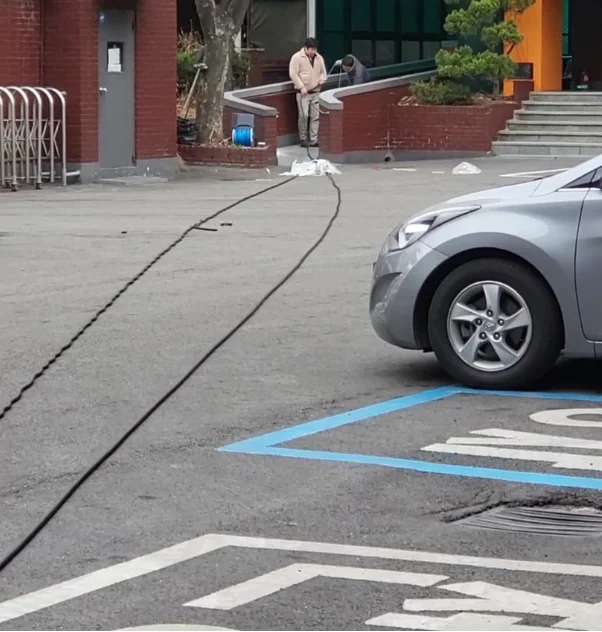
So we prepared ahead of time: feeding 4-wire communication cable through 100m of corrugated conduit in advance. It might seem like the same amount of work whether it's done beforehand or on site, but based on what we saw during the survey, running cable in Nowon-gu's narrow, congested streets would have been difficult — which is exactly why a proper site survey matters.
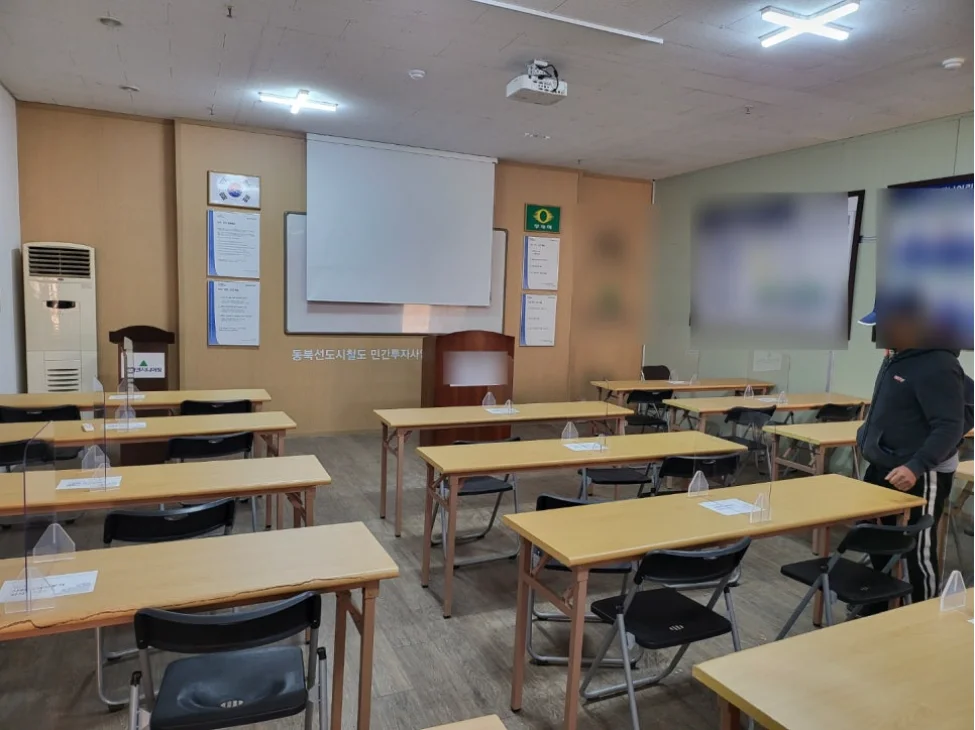
Safety training was completed before work began.
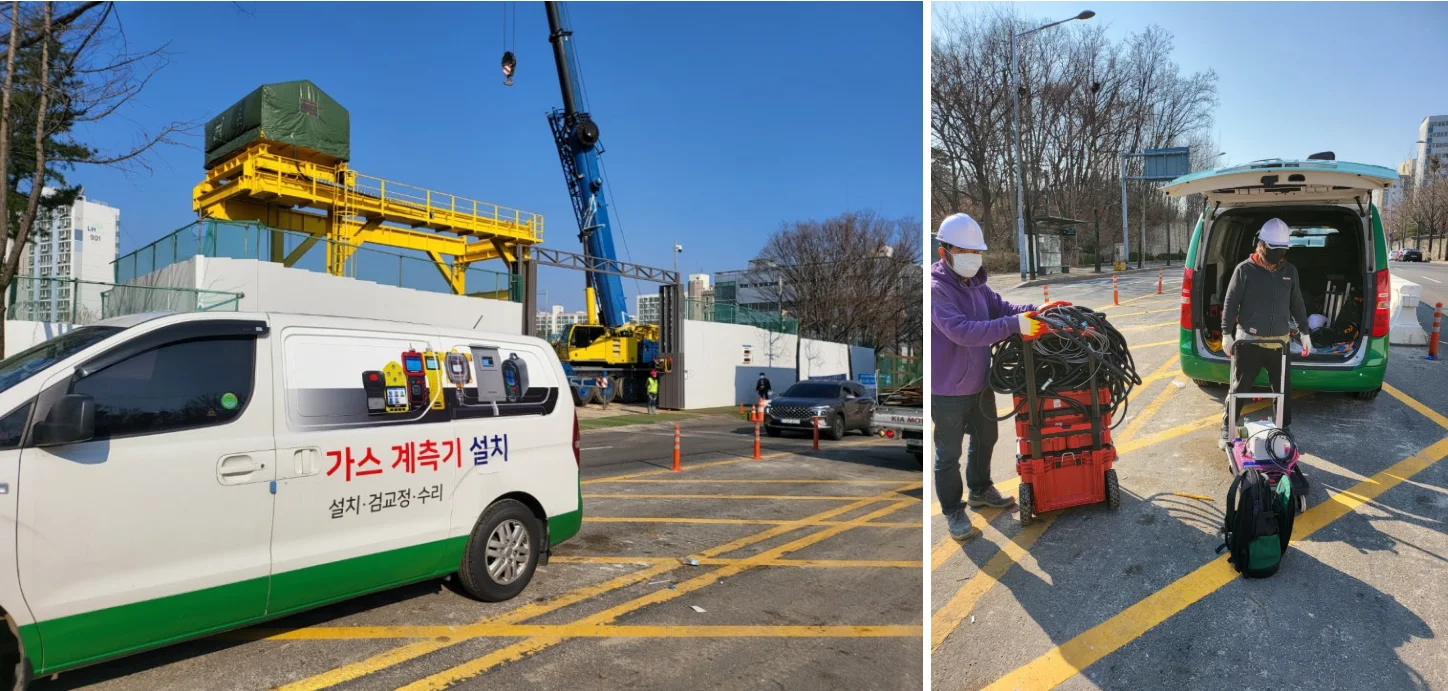
We arrived at the first site we had surveyed earlier. This is the first time our RS Korea service vehicle has appeared in one of our photos. The crew for the day — two experienced technicians brought in for the job — are shown here with the equipment and materials laid out.

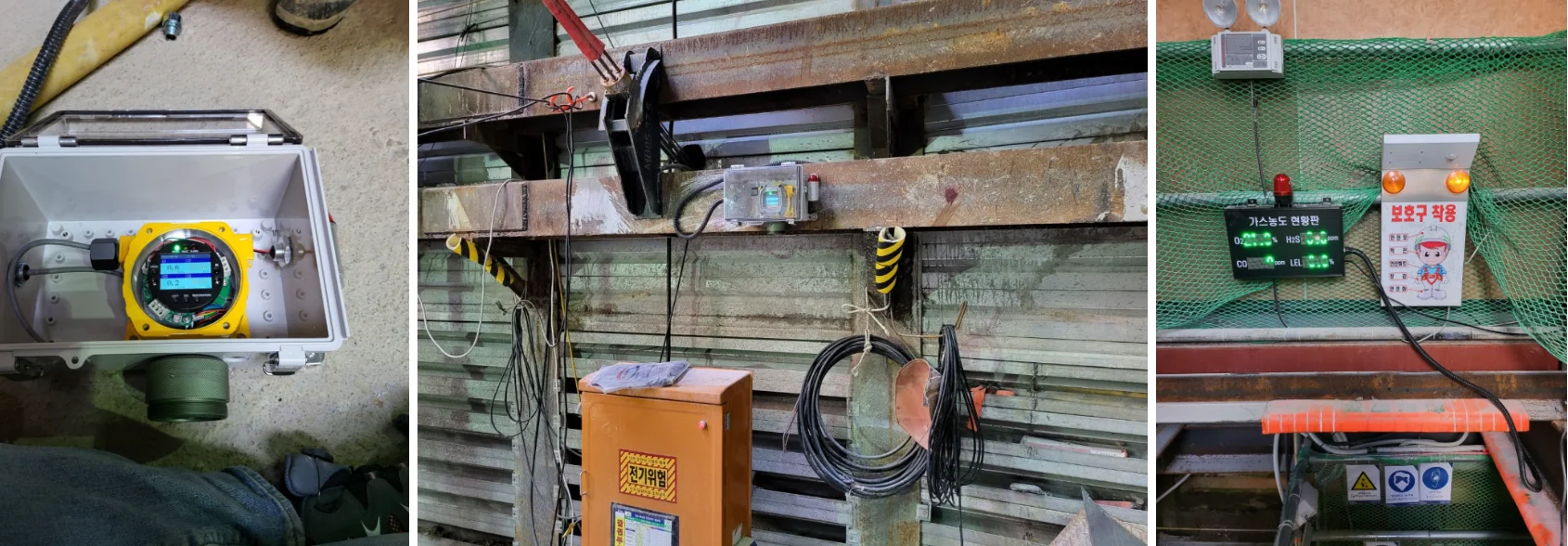
The display board was installed at the tunnel entrance — a case of "well begun is half done." From there, the pre-wired cable was connected and routed alongside the existing cabling already in place, keeping everything tidy and out of the way.

The wiring was completed in about an hour and a half thanks to the crew's efficient work.
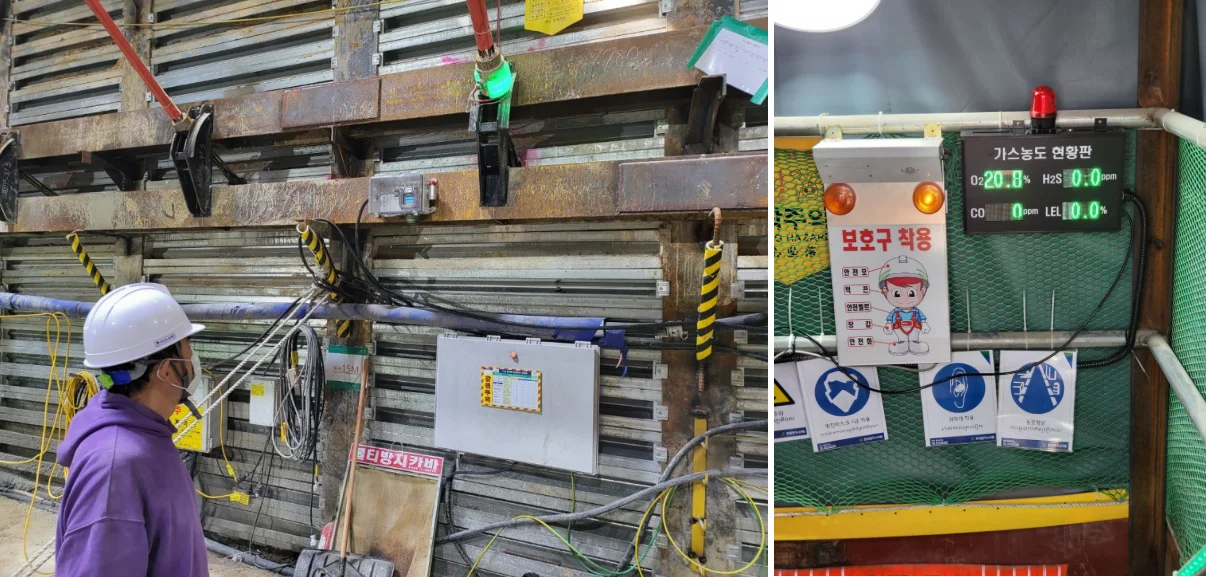
Power was applied and a product demonstration was carried out. As we headed to the next site, we got word that the second tunnel was temporarily off-limits due to blasting work underway.

Since dust needed time to settle before it was safe to re-enter, we took the opportunity to grab lunch at a nearby restaurant. Work resumed roughly an hour later, once conditions inside had stabilized.
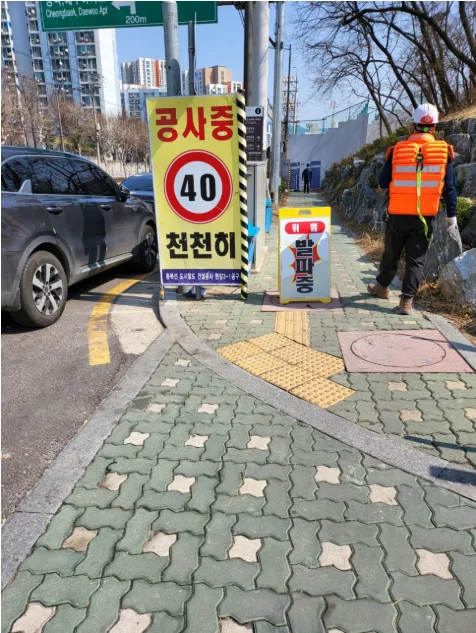
We laid out the product and materials for the second site — a tunnel of nearly identical structure to the first.

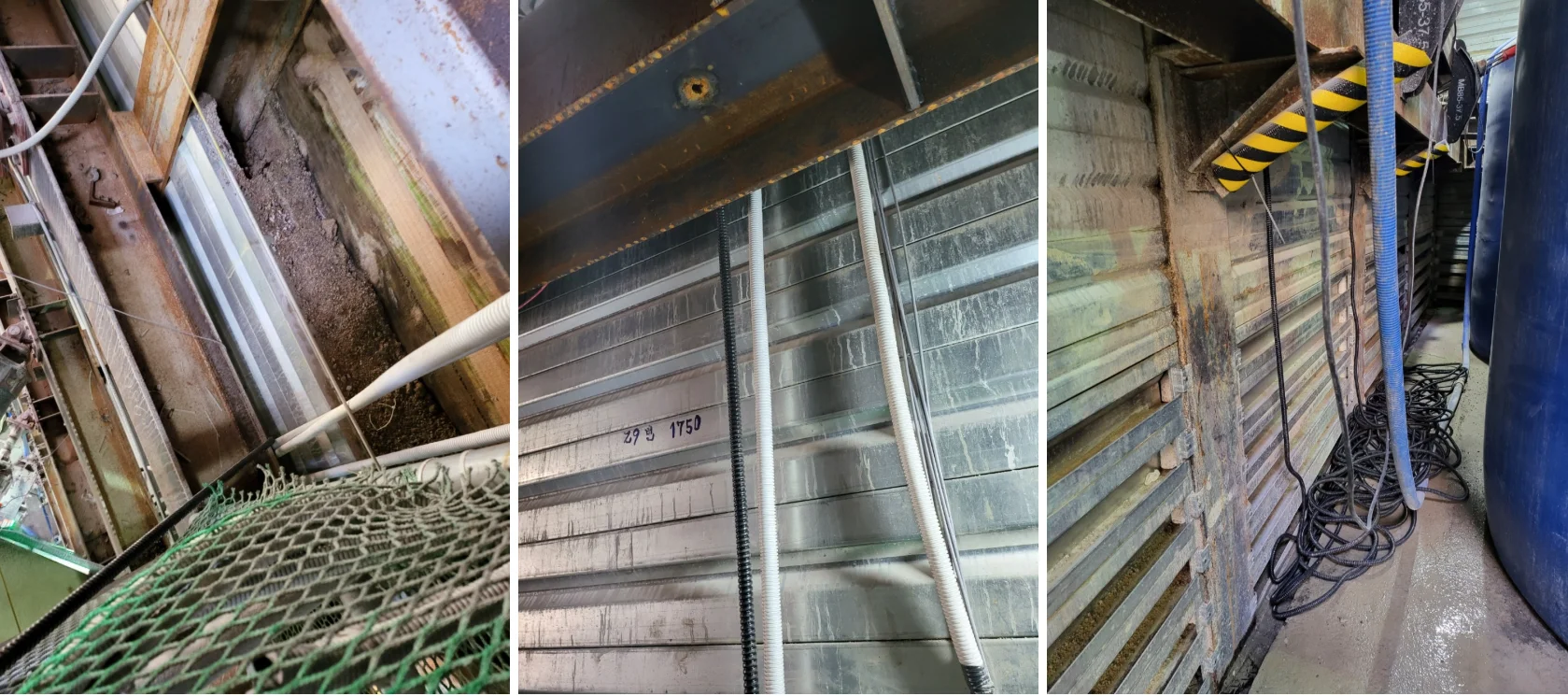
The conduit had to be lowered through a narrow gap between the wall and an H-beam. Rather than have a crew member climb over to feed it through directly — which wasn't a safe or authorized option — we secured a monkey wrench to the end of the cable as a weight and carefully lowered it through the gap instead.
After finishing the wiring, we injected calibration gas to test gas response, the alarm function, and display board compatibility, then mounted everything in place using the magnetic bracket. Between the magnetic bracket-and-enclosure setup and the cable groundwork done in advance, we were able to cut the overall installation time significantly.
One last photo to wrap things up, along with the tool bag that did a lot of the heavy lifting that day. Despite being packed with wire strippers, two monkey wrenches, electrical tape, four screwdrivers, tweezers, scissors, a multimeter, a signal tester, and various small parts, its mesh back panel and reinforced base made it comfortable to wear on site all day. It should be available through our own store before long.

That wraps up this report on the installation of safety-grade 4-gas detectors for the Dongbuk Line tunnel construction project.
Project summary — Installing company: undisclosed. Installation location: Nowon-gu, Seoul. Products installed: FIX800 4-gas fixed detectors (O2, CO, H2S, EX) with warning lights, outdoor-rated enclosures, custom-fabricated magnetic brackets, and outdoor 4-channel display boards with warning lights, across two sites. Order date: March 1. Installation date: March 22, 9:00 a.m.–2:00 p.m. (roughly 4 hours of actual work, excluding training and lunch breaks). Crew: 3 people.
Notable aspects of this installation: magnetic bracket mounting; power supplied through an existing 220V outlet with no separate electrical work required; roughly 100m of GW corrugated conduit and AWG shielded cable pre-installed in advance to reduce on-site work time; parking and material handling made more difficult by the urban construction site; and extra cable slack left in place to accommodate future relocation of the detectors as tunnel construction progresses.
For inquiries about gas detectors or to arrange a site survey, please feel free to contact us directly during business hours.
자주 묻는 질문 (FAQ)
What gases does this installation measure?
Two FIX800 fixed detectors were installed, each configured for 4-gas measurement — oxygen (O2), carbon monoxide (CO), hydrogen sulfide (H2S), and combustible gas (EX) — with warning lights and outdoor 4-channel display boards.
Why was pre-installing the cable in corrugated conduit important for this project?
Based on the earlier site survey, the tunnel's narrow, congested surroundings made on-site cable routing difficult. Feeding the communication cable through 100m of conduit in advance significantly reduced the amount of work needed on site.
Why was the magnetic bracket mounting method used here?
The magnetic bracket and enclosure setup, combined with cable groundwork completed in advance, allowed the crew to install and secure the detector quickly without extensive drilling or fixed mounting work — an efficient approach for tunnel environments.
Did construction activity affect the installation schedule?
Yes. Access to the second tunnel was temporarily blocked due to blasting work in progress. The crew waited for dust to settle before resuming installation about an hour later.
Why was extra cable slack included in the installation?
Because detector positions may need to be relocated as tunnel construction progresses, additional cable length was left in place to accommodate future adjustments without redoing the wiring from scratch.
#WANDI#FIX800#GasDetector#TunnelSafety#ConfinedSpace#IndustrialSafety#OxygenO2#CarbonMonoxideCO#H2SDetector#DisplayBoard