Installed Gases
Project Details
Hello, this is RS Korea. This post covers essentially the same application as our previous post — if you landed here without reading Part 1 first, we'd recommend checking that out for the full background.
With the first site successfully installed, one more facility remained. Life is full of choices, and this was one of them: push through and finish both sites within the same Thursday, or take it easy and tackle the second site fresh the next day. Which would you choose?
We chose the former — or more precisely, I did. With the decision made, we moved quickly to Seogwipo-si.
The product installed here matches both the other Jeju site and the nationwide facilities mentioned in our previous post: the FIX800 fixed-type gas detector, configured with NH3, O3, H2S, and CO sensors. Options included a corrosion-resistant enclosure for the humid environment, a pump and sampling-line configuration to bridge the installation point and the actual gas source, and an external display board with a warning light for remote monitoring. Crew: 4 people. As with the previous site, the detector location and the monitoring location were in separate buildings, requiring some elevated work, and a pump and sampling line were needed to connect the installation point to the actual gas measurement point.
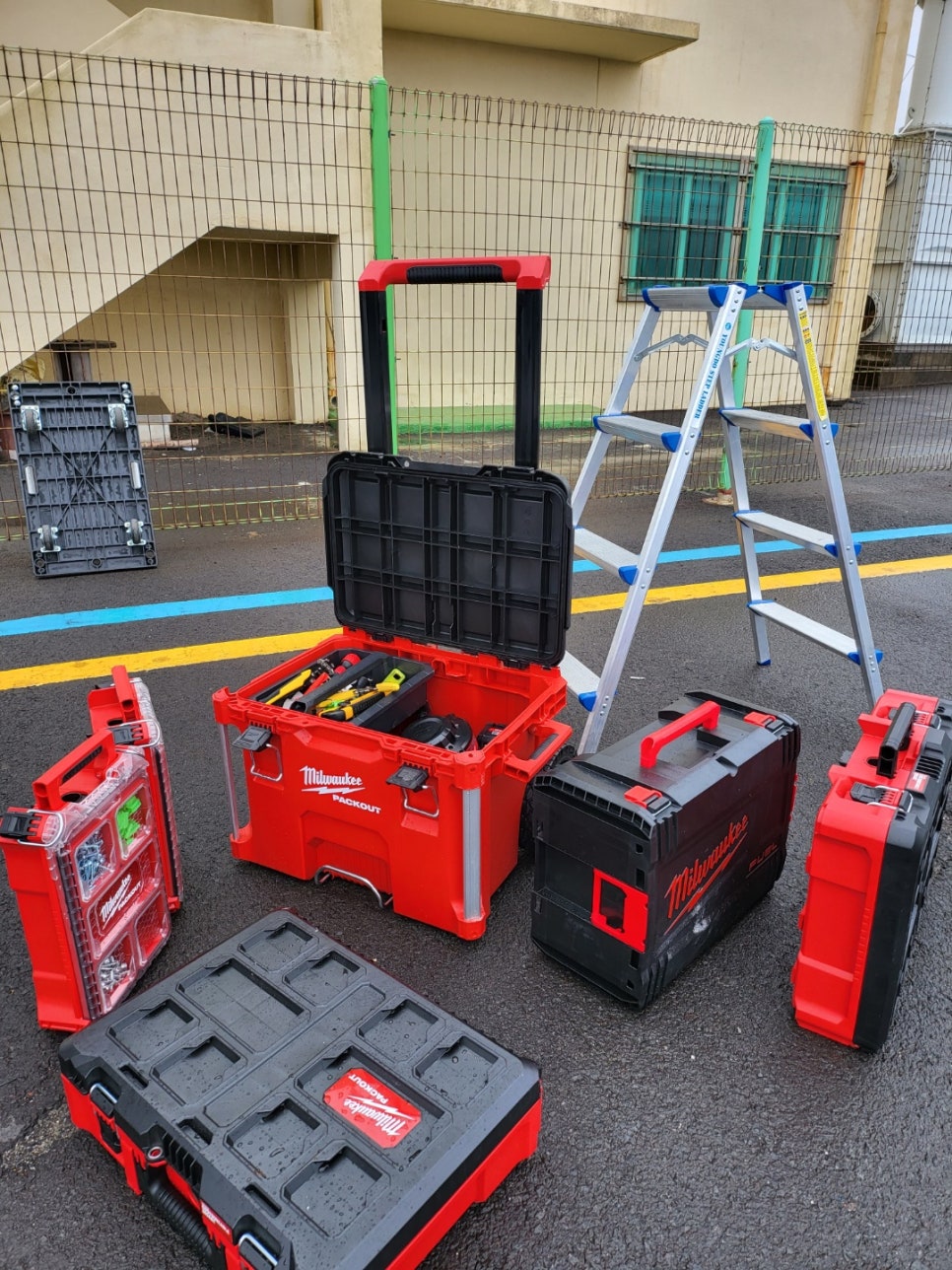
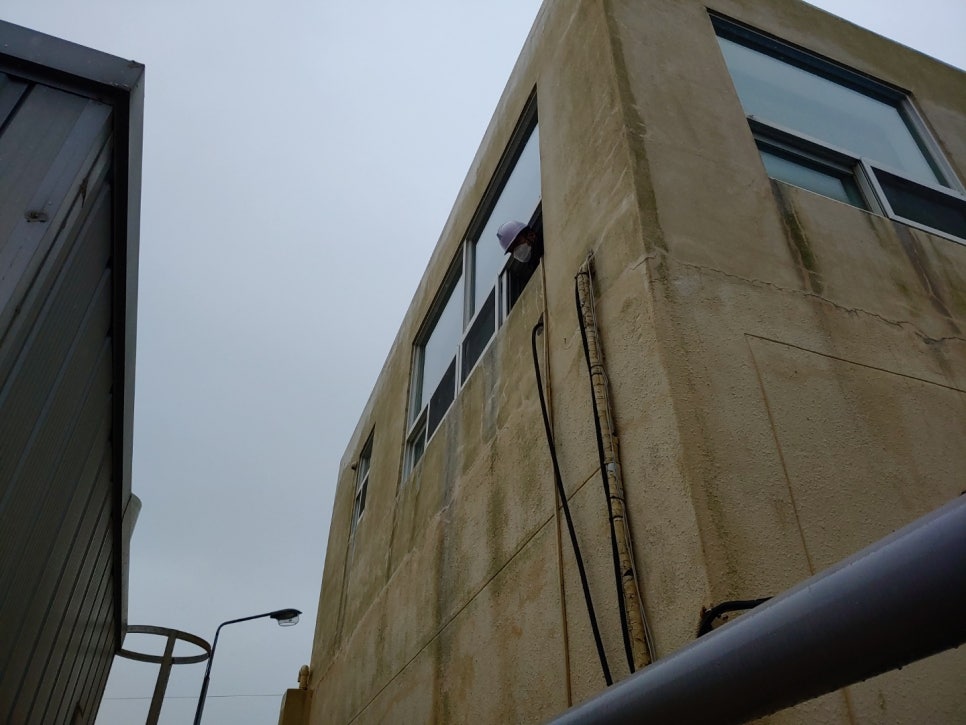

We arrived on site around 2:00 p.m., laid out our tools and materials quickly, and surveyed the work area — checking the view from the window to choose the safest, cleanest installation approach.
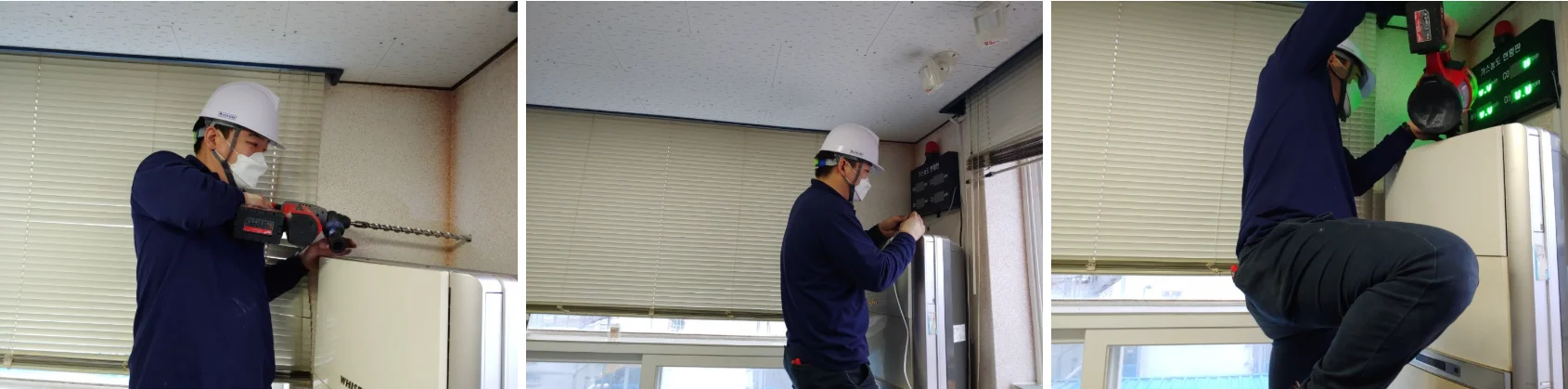
We drilled the mounting hole, installed the unit, and cleaned up afterward.
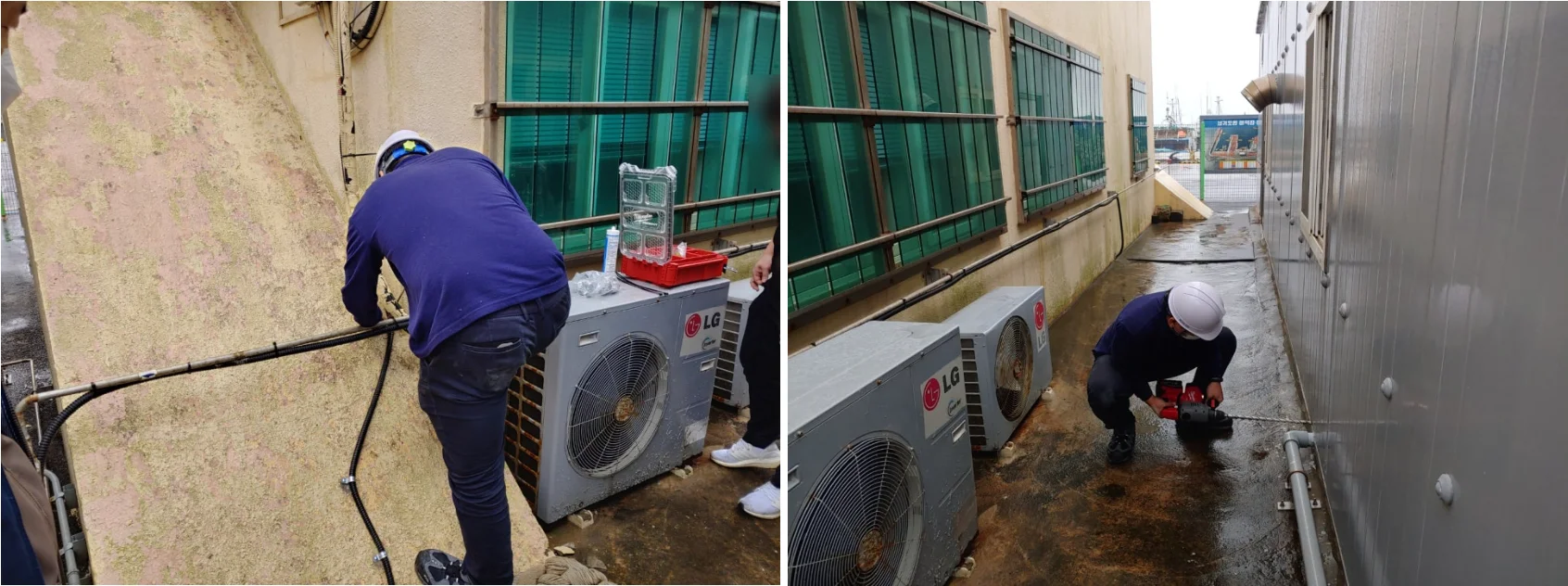
As with the previous site, wiring was routed along the existing conduit.

We operated the unit using the remote control and ran the function test while communicating with a colleague stationed at the display board. As with the Jeju post, product training was carried out together with the site manager.
The weather still wasn't great, but repeating a process we had just used at the first site let us move noticeably faster. Thanks to the team's coordination, we managed to complete what had been planned as a two-day job in a single day.
Installation summary — Crew: 4 people. Working hours: approximately 3 hours in the early afternoon. Materials used: GW waterproof flexible conduit, roughly 100m of communication and power cable, and other mounting hardware. Notable challenge: drilling through the exterior wall was made more difficult by other structures in the way.
As of this writing in February, all 11 planned facilities have now been fitted with the same configuration. There were real challenges along the way — urgent orders and long-distance travel among them — but successfully and reliably adapting the system to an application somewhat different from a typical collection-tank environment was a clear win.
For inquiries about gas detectors and environmental monitoring equipment, please contact us directly.
자주 묻는 질문 (FAQ)
Is this installation part of the same project covered in the previous post?
Yes. This is the second of two Jeju Island facilities installed as part of the same nationwide rollout covering 11 branch facilities, using an identical FIX800 configuration.
Why does this installation use NH3, O3, H2S, and CO sensors instead of a typical FIX800 gas combination?
Because the site involves a wastewater collection environment where ammonia and hydrogen sulfide are generated, with ozone used to help reduce ammonia levels — the same reasoning that applied to the first Jeju facility in this project.
Why were a pump and sampling line required for this installation?
The detector's installation point and the actual gas source were located in different areas, so a pump and sampling line were used to draw the gas sample to the detector for accurate measurement.
What made the on-site installation work more challenging here?
Drilling through the exterior wall was complicated by nearby structures, and the fact that the detector and the monitoring location were in separate buildings meant some elevated work was required.
Has this configuration been rolled out beyond the two Jeju facilities?
Yes. By the time of writing, all 11 planned facilities nationwide had been fitted with the same FIX800 configuration, successfully adapting it to an application slightly different from typical collection-tank gas measurement.
#WANDI#FIX800#GasDetector#AmmoniaNH3#OzoneO3#H2SDetector#CarbonMonoxideCO#WastewaterTreatment#PublicInstitution#IndustrialSafety