Installed Gases
Project Details
— As this installation took place inside a national public institution, we are not disclosing the institution's name, branch name, or the exact location. —
Hello, this is RS Korea. We hope you had a great New Year and a relaxing holiday season.
If you ask "how far will you go for a delivery," our 2021 answer used to be a delivery to Sinui Island back in July. But by the end of 2021, RS Korea managed to outdo itself once again — this time with product delivery and installation at two facilities on Jeju Island.
This institution operates 12 branches and 13 facilities nationwide. After a pilot installation of the FIX800 at two facilities in August 2021 received a positive evaluation, simultaneous installation across the remaining 11 facilities was confirmed. Among these, RS Korea handled the two Jeju Island facilities directly, since they required more time and travel cost than the mainland sites.
This post is organized in three parts: the journey, the product, and the installation and commissioning. If you're not interested in a field engineer's travel story, feel free to scroll straight to the installation section.
Let's get started.
We planned the job around a 4-person, 2-day schedule to account for possible variables. For a typical location, staffing would be the only real consideration — but Jeju is different. To maximize efficiency, we worked through the logistics carefully. Flying is the obvious choice for Jeju, but after mentally walking through the full sequence — loading equipment into the car, unloading at the airport, checking in, flying to Jeju, retrieving baggage and freight separately, picking up a rental car, sourcing any additional materials locally, finishing the job, returning the rental car, and then flying and driving all the way back — it was clear this would be exhausting.
That's when we remembered the passenger ferry terminal from our earlier Sinui Island project. Loading the entire van onto a ferry would greatly simplify most of those steps. The route (our office to Mokpo, about 4 hours, then Mokpo to Jeju, about 5 hours) does mean more total travel time, especially with the same route on the way back — but skipping the repeated loading and unloading of equipment made it well worth it. We searched for alternative ports to reduce driving fatigue, but Mokpo's passenger terminal remained the most practical option. Our team members, meanwhile, flew separately. In the winter of 2021, we set off on a Thursday-to-Saturday trip.

The ferry from Mokpo to Jeju departs at 1:00 a.m. We left the office a little early, stopped for a meal at a rest area, and loaded the van onto the ferry.
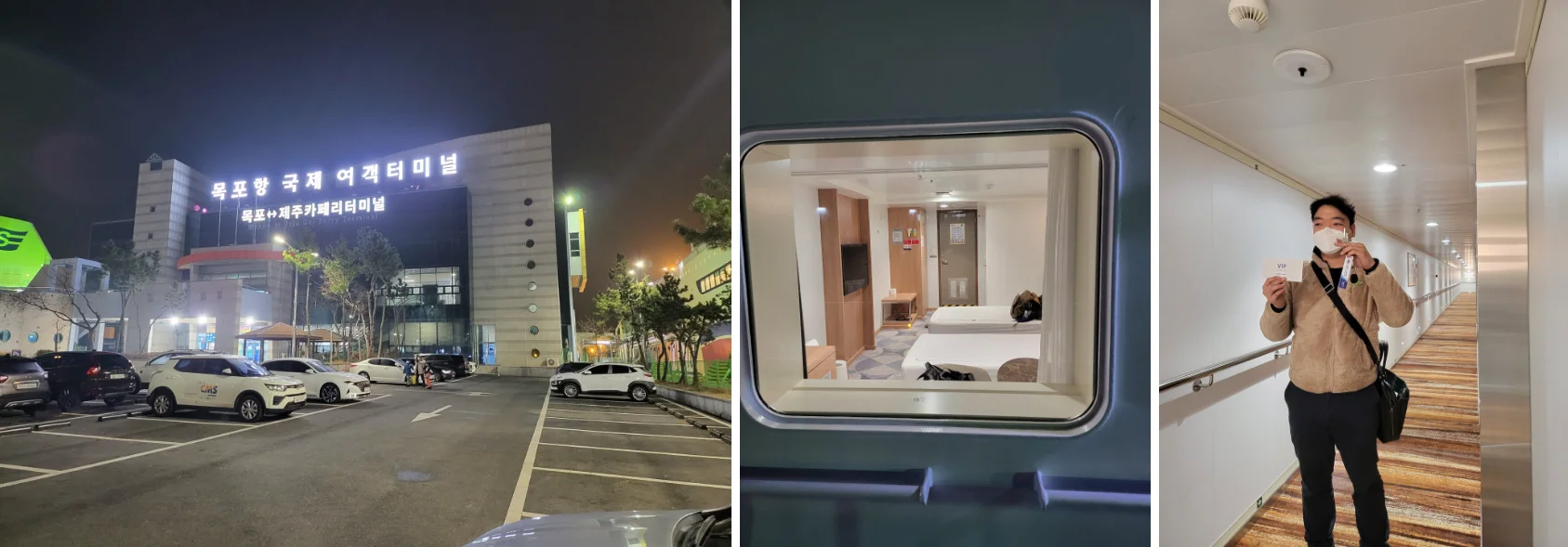
At the terminal, we upgraded to a cabin with beds for the crossing.
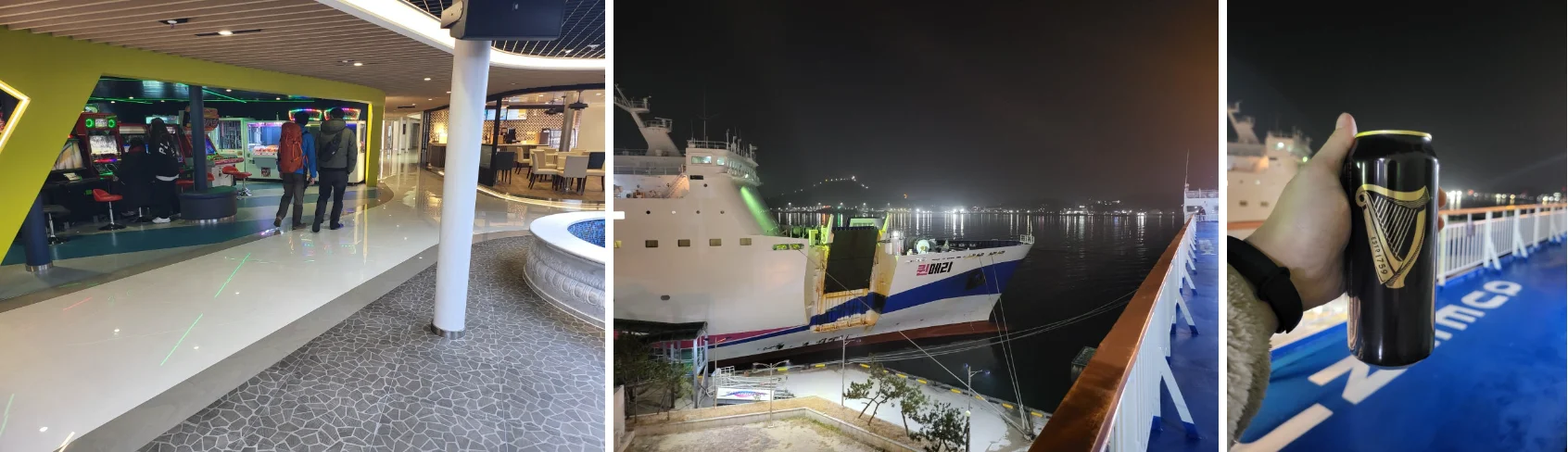
It was our first time on a ferry of this scale — complete with an arcade, a bakery, and a convenience store on board. The five-hour crossing arrived in Jeju right on schedule at 6:00 a.m., and we were on the road by around 7:00 a.m. Now, on to the installation.
Product to be installed: the FIX800 fixed-type gas detector, configured with NH3, O3, H2S, and CO sensors. Options included a corrosion-resistant enclosure for the humid environment, a pump and sampling-line configuration to bridge the gap between the installation point and the actual gas source, and an external display board with a warning light for remote monitoring. Planned crew: 4 people. Estimated time: 4–6 hours. Site notes: the detector location (on site) and the monitoring location (the office) were in separate buildings, requiring some elevated work, and because the installation point and the actual gas measurement point differed, a pump and sampling line were needed to connect them.
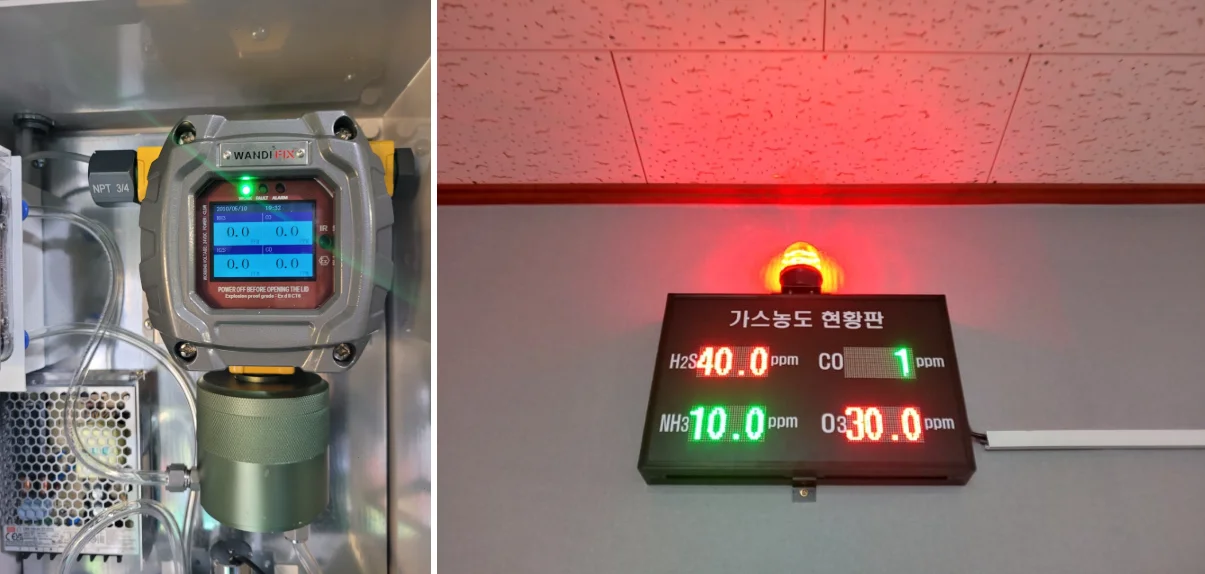
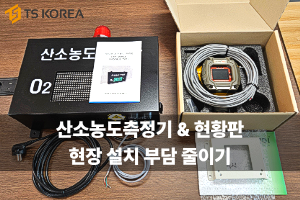
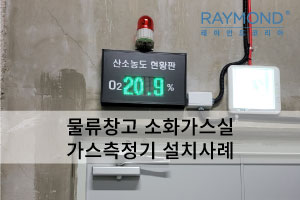
Worth remembering: the FIX800 can measure multiple gases simultaneously with a single unit. (The reading shown on the display board in this photo was generated using a test signal.)
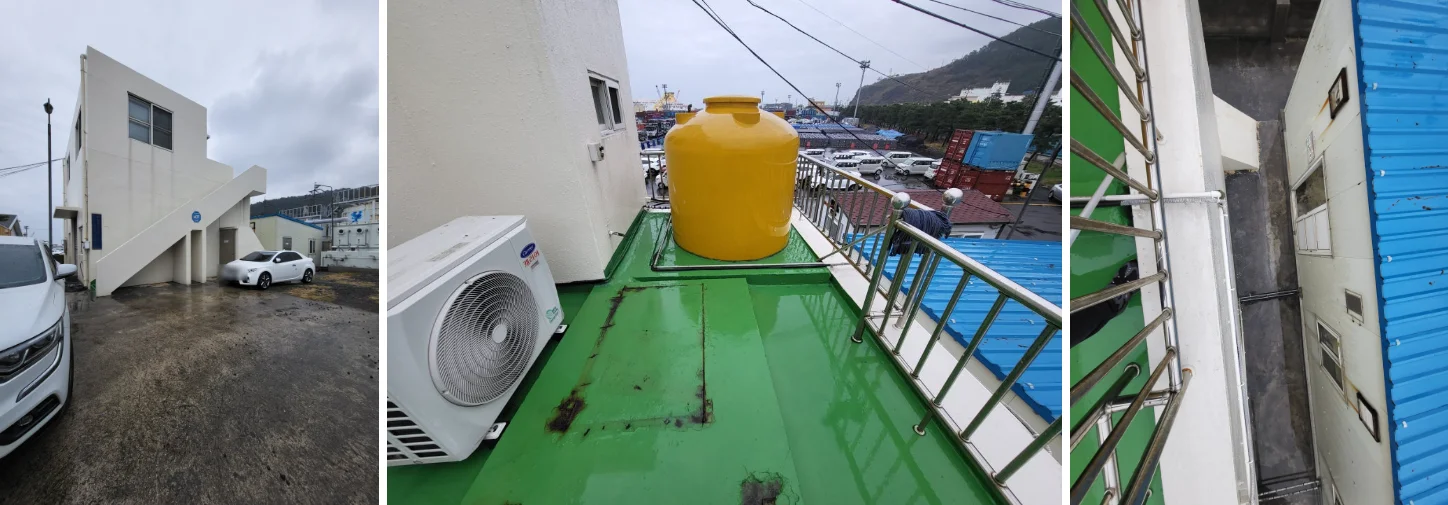
We arrived on site at 8:30 a.m. and checked the installation point. The wall already had pre-drilled openings, which made it straightforward to plan the conduit routing, and the neighboring building was close enough to keep the layout clean.
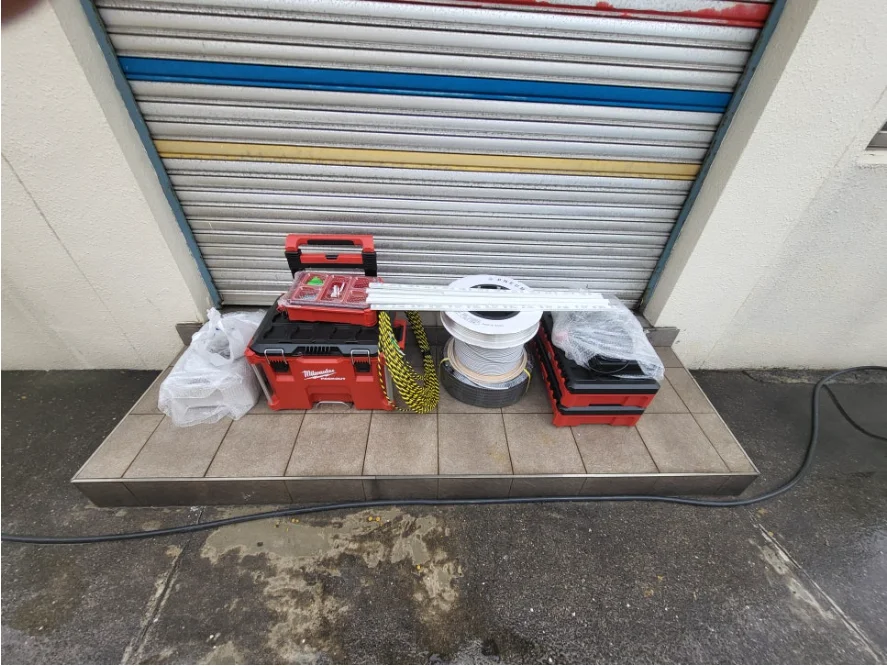
After meeting with the site manager and completing the safety briefing, we organized the equipment and tools, and briefed the rest of the crew as they arrived.
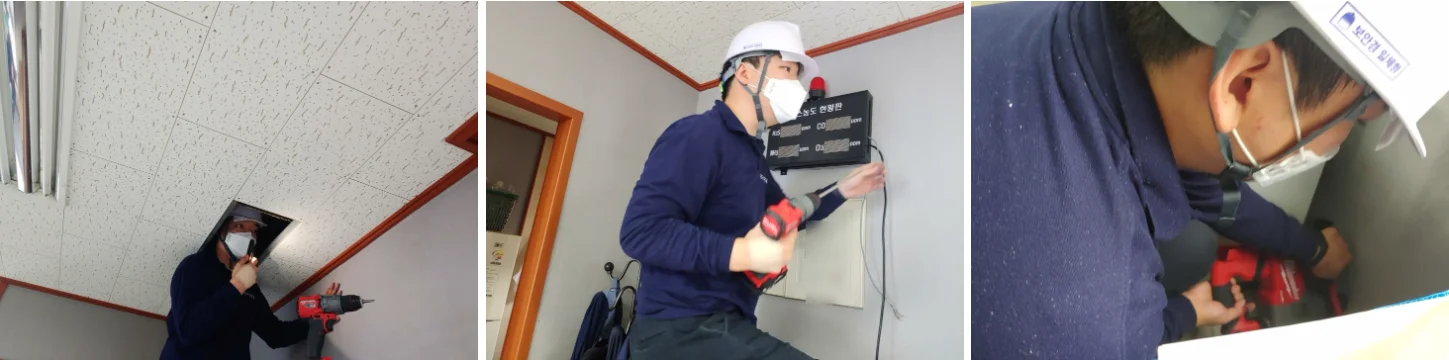
We checked the ceiling space for an easier routing path, installed the display board at the requested location, and cleaned up the area afterward.
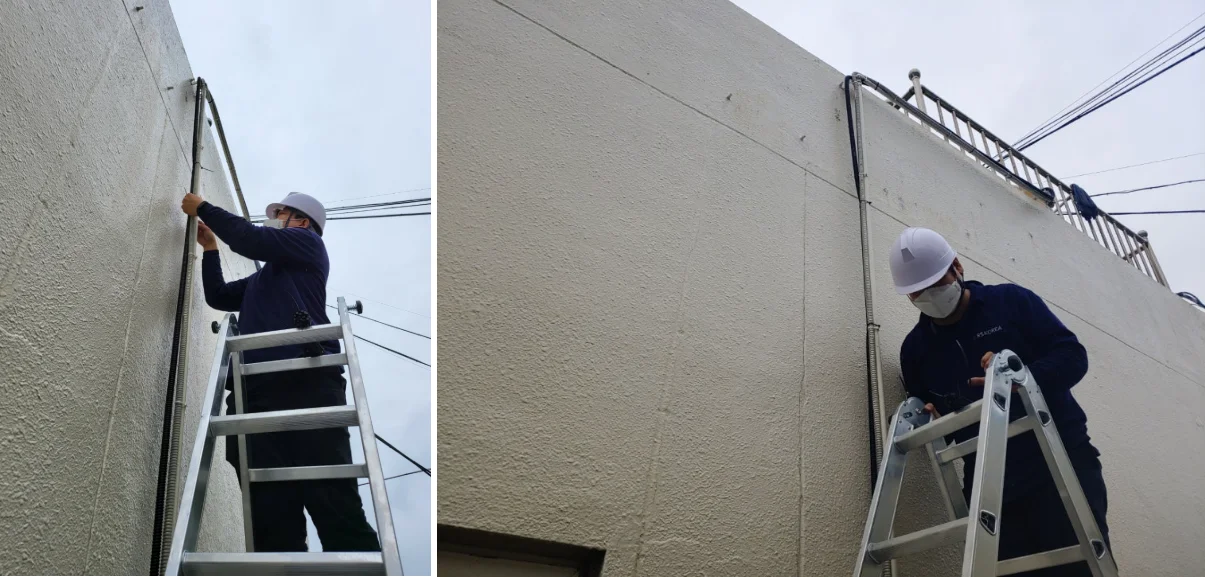
Waterproof flexible conduit was secured along the existing piping route, making for a clean and efficient installation.

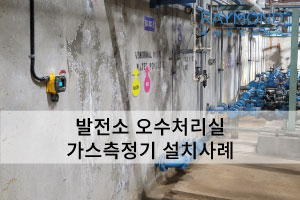
The detector was installed on site and wired neatly, per the site manager's request for a tidy finish. (Photos of the sampling-line installation inside the facility are withheld at the customer's request.)
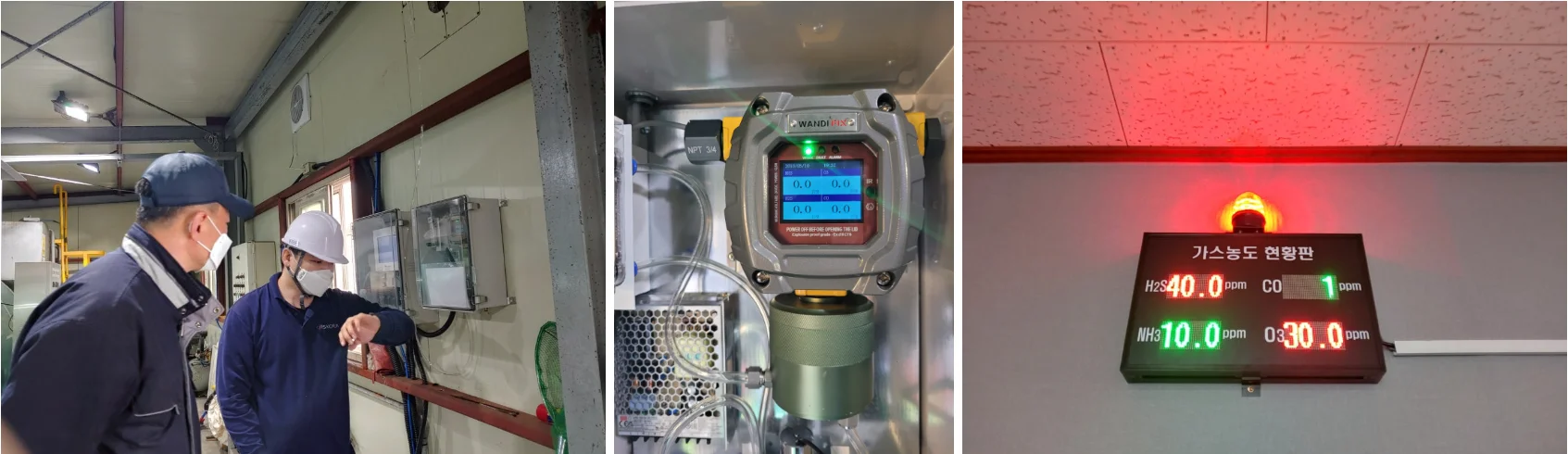
After installation, we conducted product training with the site manager, confirmed the detector's power status, and used the test-signal button to verify that the display board responded correctly.
Aside from a bit of light rain, the job wrapped up without major issues. Installation summary — Crew: 4 people. Working hours: 9:00–13:00 (about 4 hours). Materials used: GW waterproof flexible conduit, roughly 100m of communication and power cable, and other mounting hardware.
This project used a sensor combination of H2S, NH3, O3, and CO — a bit different from the more typical FIX800 4- or 5-gas combination of O2, CO, CO2, H2S, and EX. In environments like collection tanks and storage reservoirs where wastewater and sewage accumulate, hydrogen sulfide and ammonia are practically unavoidable. At this facility, ozone is sprayed to help reduce ammonia levels — we won't go into the underlying ozone–ammonia reaction chemistry here. In short, the goal was twofold: protecting workers from odor-gas exposure in line with the Industrial Safety and Health Act, and verifying gas concentration and odor-reduction effectiveness after ozone treatment.
We'll see you in the next post — Part 2 of RS Korea Goes to Jeju. For inquiries about gas detectors and environmental monitoring equipment, please contact us directly.
자주 묻는 질문 (FAQ)
Why does this installation use an H2S/NH3/O3/CO sensor combination instead of the more common FIX800 configuration?
The typical FIX800 setup measures O2, CO, CO2, H2S, and EX. This site instead required H2S, NH3, O3, and CO because it involves wastewater collection tanks, where hydrogen sulfide and ammonia are generated, along with ozone spraying used to help reduce ammonia levels.
Why was a pump and sampling line needed for this installation?
The detector's installation point and the actual gas source were in different locations, so a pump and sampling line were used to draw gas from the source to the detector for accurate measurement.
Why isn't the exact facility location disclosed in this post?
Because the installation took place inside a national public institution, the institution name, branch name, and exact location are withheld for confidentiality, while the general region (Jeju Island) is shared for context.
What options were included for the humid on-site environment?
A corrosion-resistant enclosure was used to protect the detector from the site's humid conditions, along with an external display board and warning light for remote, real-time monitoring.
How long did the on-site installation take?
A four-person crew completed the installation in about four hours, from 9:00 a.m. to 1:00 p.m., using waterproof flexible conduit and roughly 100 meters of communication and power cable.
#WANDI#FIX800#GasDetector#AmmoniaNH3#OzoneO3#H2SDetector#CarbonMonoxideCO#WastewaterTreatment#PublicInstitution#IndustrialSafety