Installed Gases
Project Details
Hello, this is RS Korea.
If it looks like we're posting twice in one day, that's because we are.
As with our previous post, demand for equipment that can simultaneously measure ammonia, hydrogen sulfide, methane, and other odor-causing gases has been rising sharply since 2021, driven by growing public concern over odor gas and stricter related regulations. Although these are all "odor gases," the right measurement approach differs depending on the purpose:
1. Worker safety inside confined spaces.
2. Ambient air quality monitoring to prevent impact on residents near odor-generating facilities.
3. Purification and resource-recovery research on the toxic gases that inevitably arise from manure, sewage, and food-waste treatment.
We've covered each of these scenarios in previous posts, including installations of confined-space safety detectors, odor detectors for livestock housing, and a flow meter used in biogas resource-recovery research. Since research on this particular case is still ongoing, we won't go into detail, but this installation is closest to the third scenario above.
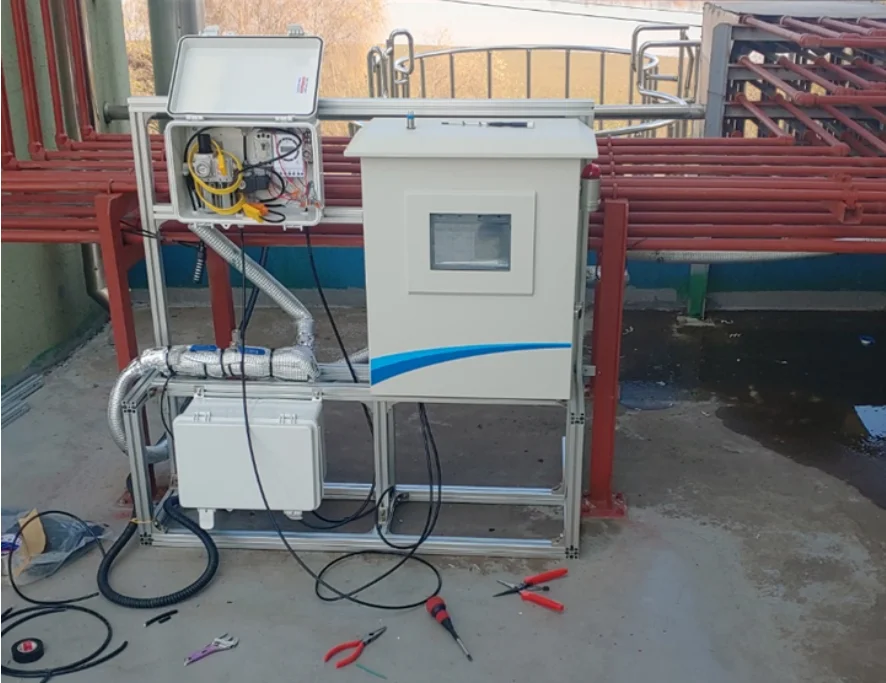
The photo shows the unit roughly 95% through installation at a facility in the Nonsan area that processes a certain type of resource. We're keeping the specific details confidential, but the setup reflects our best effort at maintaining our customer's confidentiality.
The FIX5000 fixed ambient gas analyzer supports up to six user-selected gas sensors, and can also measure additional environmental parameters — fine dust, temperature, humidity, wind speed, wind direction, illuminance, and atmospheric pressure — for up to twelve simultaneous environmental readings in total. It includes an internal moisture and dust filter and uses a pump to draw in ambient air or gas from a specific sampling point. While originally designed for ambient air monitoring, it can be adapted to specialized environments per customer request.
For this project in particular, the unit was configured with three sensors for ultra-high-concentration biogas measurement: NH3 up to 5,000 ppm, H2S up to 10,000 ppm, and CH4 from 0–100%.
Because the environment also involves high humidity, a separate moisture-removal unit was installed alongside the FIX5000 (shown on the left in the enclosure). It measures gas on a set time cycle and discharges moisture accordingly.
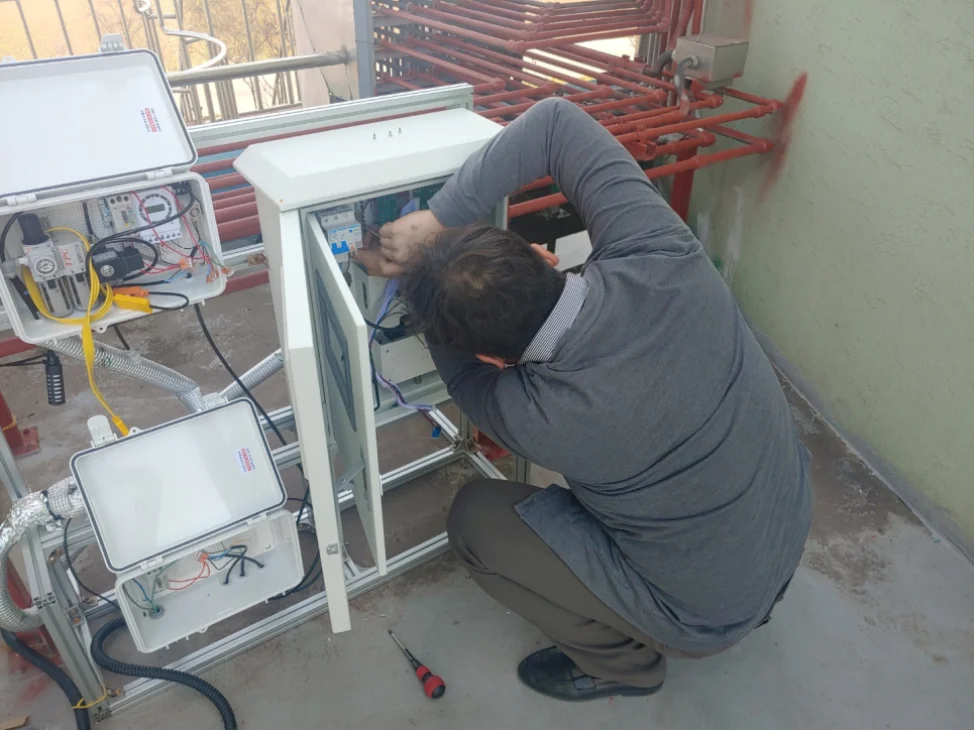
The unit also has three internal relays, configured according to the customer's requirements.
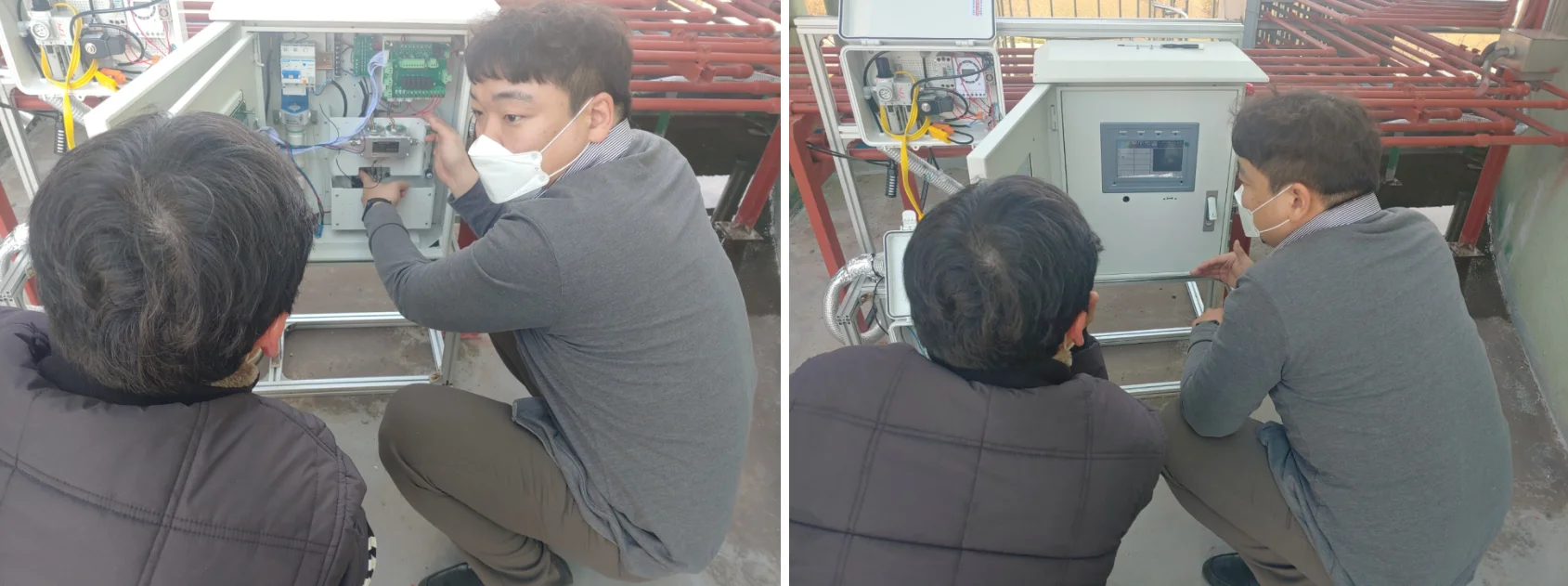
With a product that packs in this many features, detailed hands-on training is essential.
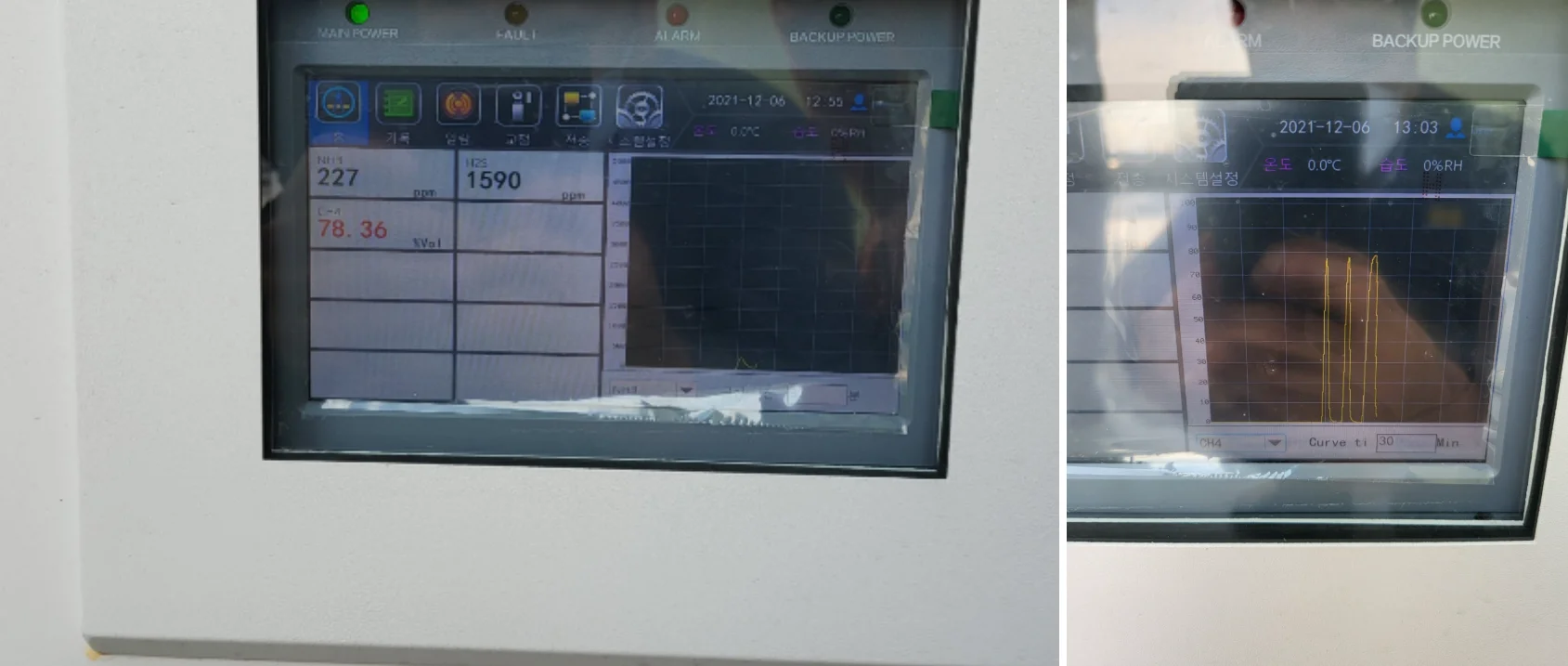
After installation, we ran a test operation. Concentrations of biogas far beyond what would ever be found in a typical environment were measured instantly. Any desired parameter can also be plotted as a graph. Measured values can be centrally monitored via RS-485, and data can also be extracted through USB from the unit's internal storage. For remote sites without a stable power supply, the system can also be configured to run independently using solar battery equipment — feel free to contact us about your specific site conditions.
For inquiries about gas detectors and environmental monitoring equipment, please reach out to us directly. Product demonstrations, installation training, and calibration are all handled by RS Korea.
자주 묻는 질문 (FAQ)
What gases does the FIX5000 measure in this installation?
This unit was configured with three sensors for ultra-high-concentration biogas monitoring: ammonia (NH3) up to 5,000 ppm, hydrogen sulfide (H2S) up to 10,000 ppm, and methane (CH4) from 0–100%.
What makes the FIX5000 different from a standard portable gas detector?
The FIX5000 is a fixed, pump-driven multi-parameter analyzer that supports up to six user-selected gas sensors alongside environmental parameters such as fine dust, temperature, humidity, wind speed, wind direction, illuminance, and atmospheric pressure — up to twelve readings simultaneously. It also includes an internal moisture and dust filter to protect the sensors in demanding environments.
Why was a separate moisture-removal unit installed alongside the FIX5000?
Because the sampling environment involves high humidity, an additional moisture-treatment enclosure was installed next to the FIX5000. It measures gas on a set cycle and discharges accumulated moisture to protect sensor accuracy over time.
How is the measurement data monitored and retrieved?
Measured values can be sent to a central monitoring system via RS-485, plotted as graphs for any selected parameter, or extracted directly via USB from the unit's internal storage.
Can this system be used at remote sites without a stable power supply?
Yes. For sites with unreliable grid power, the system can be configured to run independently using solar battery equipment. Contact us with your site conditions for a suitable configuration.
#WANDI#FIX5000#GasAnalyzer#Biogas#OdorGas#AmmoniaNH3#H2SDetector#MethaneCH4#EnvironmentalMonitoring#IndustrialSafety