Applied Markets
Installed Gases
Project Details
Hello. Today we're sharing an installation case for an oxygen detector at a septic tank chamber, part of our oxygen monitoring solutions for wastewater treatment plants, dewatering facilities, and septic tanks.
For this project, the installation point was the septic tank chamber. Septic tank chambers typically have an entry door, and are reached by going down a staircase or corridor to the chamber below.

Before any installation, a site visit is always required to check the piping layout and electrical wiring that will need to be set up.
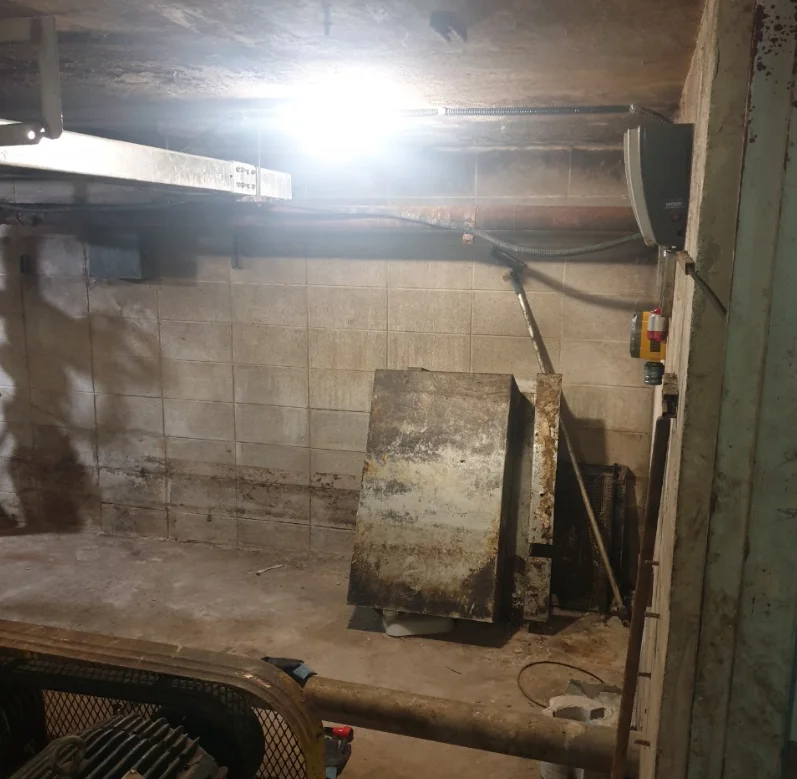
For this site as well, an oxygen detector was installed inside the septic tank chamber, and a monitoring display board was installed outside.
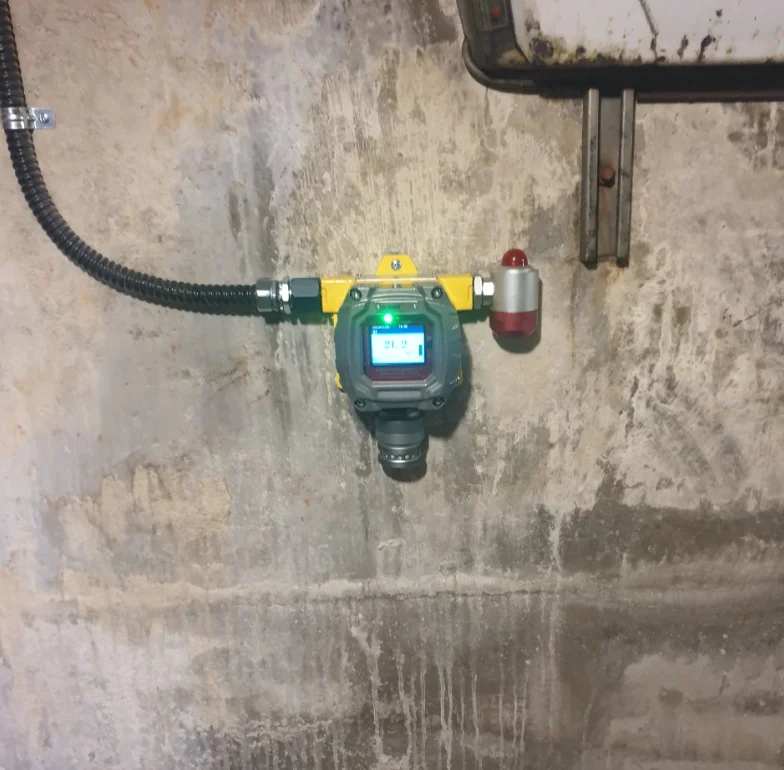
This is how the FIX800 oxygen detector was installed inside the septic tank chamber.
If equipment inside the septic tank chamber fails, the gases generated in the tank can lower the oxygen concentration, putting anyone entering the space at risk of asphyxiation.
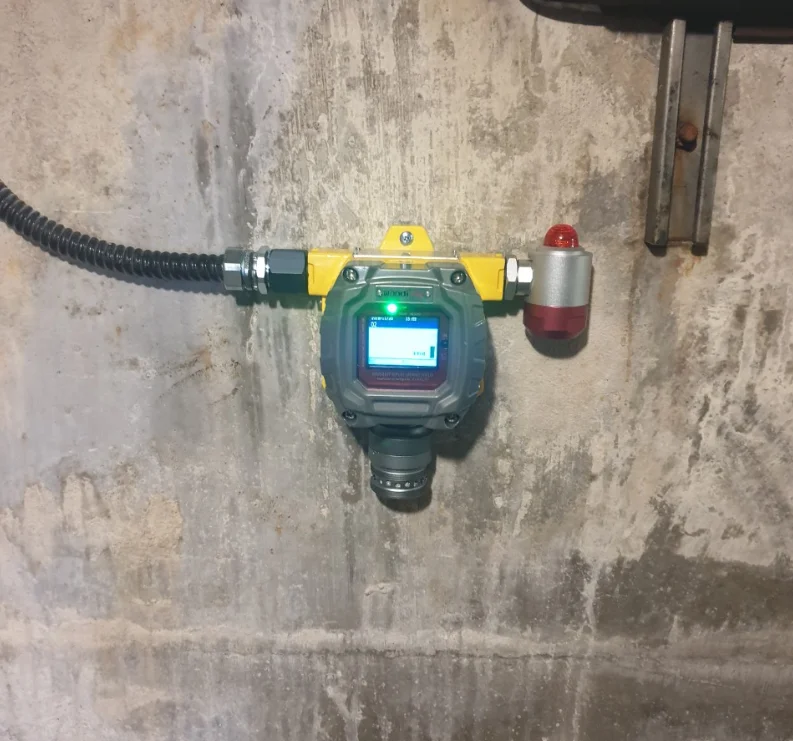
By continuously measuring the oxygen concentration inside the septic tank chamber in real time, the system triggers an audible and visual alarm the moment the concentration drops below a safe level.
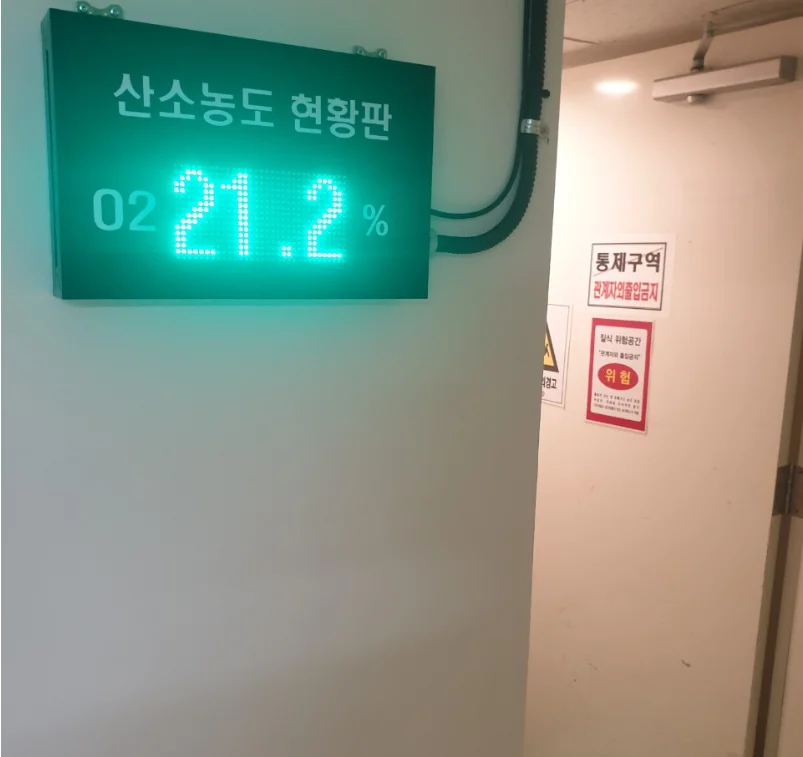
A display board was also installed at the entrance so workers can check the oxygen concentration inside the chamber before entering.
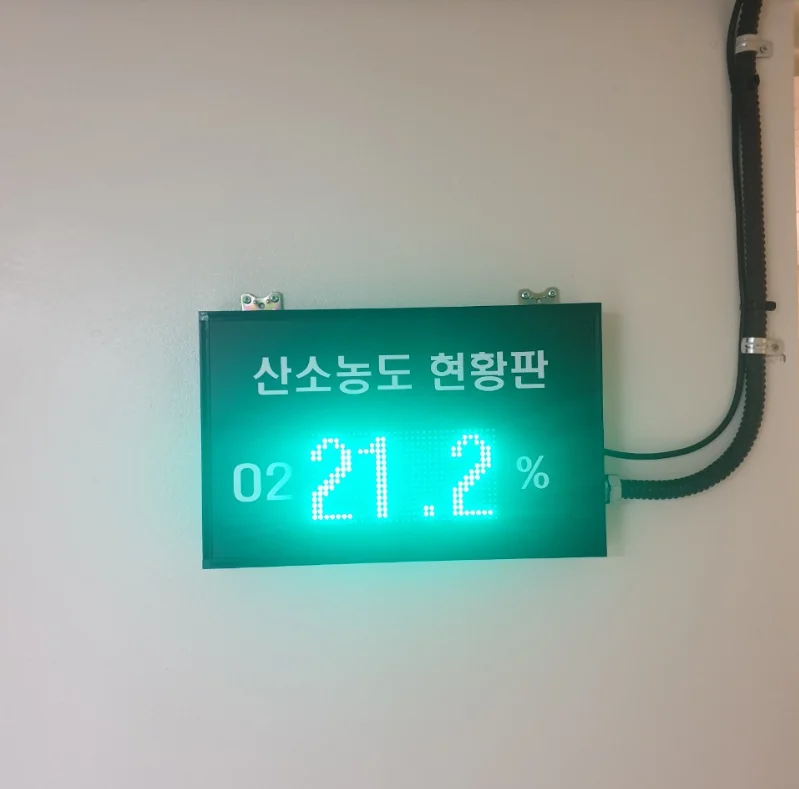
With this kind of setup, workers no longer need to carry a portable detector at all times, and continuous confined-space monitoring is in place. In some cases, this can even be more cost-effective than operating two or three portable units.
Thank you.
Frequently Asked Questions (FAQ)
Q1. Why install an oxygen detector in a septic tank chamber?
Gases generated inside a septic tank can lower the oxygen concentration, which can lead to asphyxiation. Real-time oxygen monitoring with an alarm is essential for safe entry.
Q2. What equipment was installed at this site?
A FIX800 fixed oxygen detector was installed inside the septic tank chamber, together with an external monitoring display board.
Q3. Why is a display board also installed at the entrance?
It lets workers check the oxygen concentration inside the chamber before entering, so they can confirm it is safe to proceed.
Q4. How does the system alert workers when oxygen levels drop?
When the oxygen concentration falls below the safety threshold, the system immediately triggers an audible and visual alarm.
Q5. What is the advantage of a fixed detector over portable units?
A single fixed installation can provide continuous monitoring of the chamber and can be more cost-effective than operating multiple portable detectors.
#WANDI#FIX800#OxygenDetector#SepticTank#ConfinedSpace#OxygenMonitoring#WastewaterTreatment#GasDetector#DisplayBoard#IndustrialSafety
![[레이먼드] 오,폐수 처리실 유해가스 모니터링](https://wandi.co.kr/storage/construction-cases/YxFUQVBZ8Unnk7pJzzfsmezr6xNe0LZvQRDmt7TL.jpg)
![[브이피이코리아] 종합병원 지하 밀폐공간 가스 측정기 설치_FIX800 & FIX-DS](https://wandi.co.kr/storage/construction-cases/gNOA28xSlEy5uU3AOxyHDRH5UfAe0TpMTgAt4Uag.jpg)

