Applied Markets
Installed Gases
Project Details
Hello.
We'd like to introduce an installation case of the FIX800 EtO (ethylene oxide) gas leak detector, one of our steadily popular products.
EtO is precisely a gas called ethylene oxide.
It's mainly used to sterilize medical devices via EtO gas sterilization~
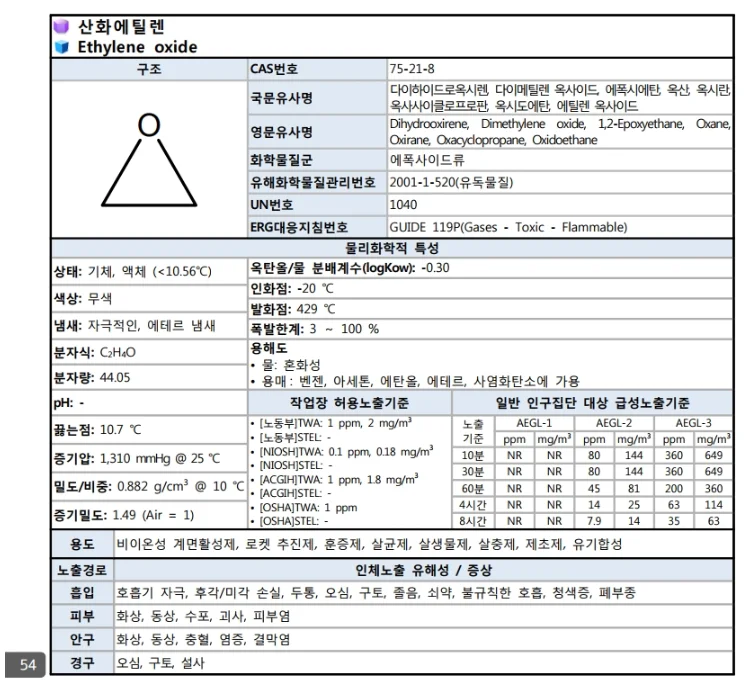
EtO is a gas with excellent sterilizing power, but it has the harmful drawback that even a small leak can be very dangerous to the human body.
It's also a gas designated as a hazardous substance by the government, with exposure limits established for its management.
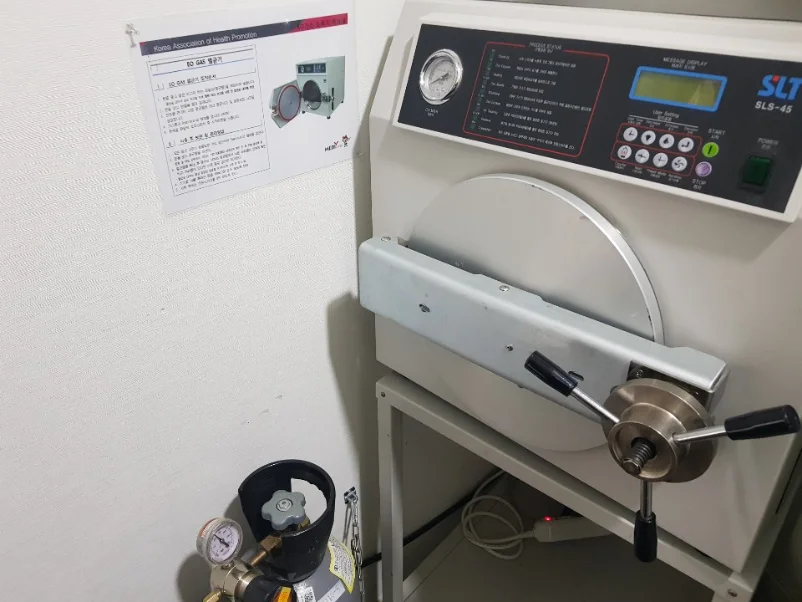
Wherever you go in a hospital, there's an EtO sterilizer and gas cylinder tucked away in a corner somewhere.
Since the sterilizer operates using EtO gas supplied from the cylinder, as equipment ages or a valve loosens, a small amount of gas can leak.
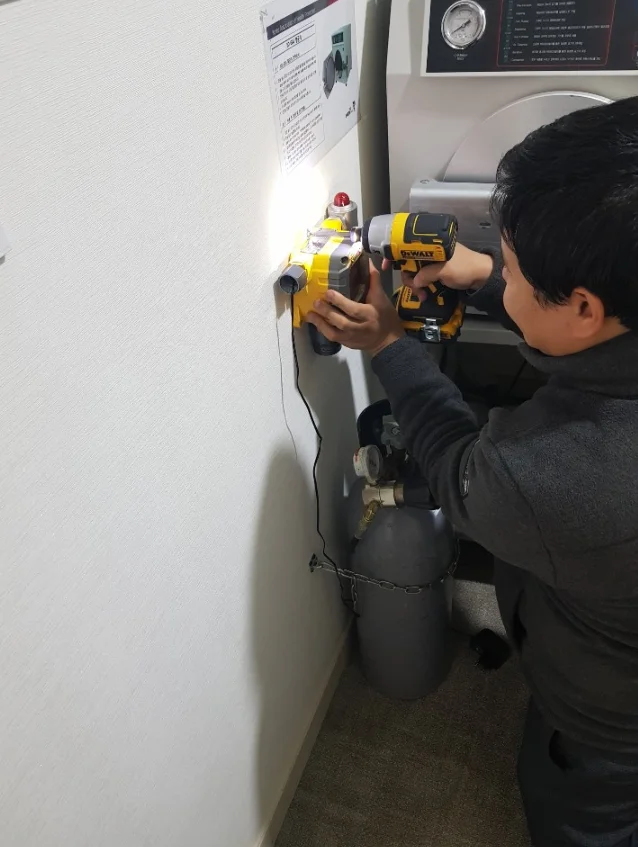
In fact, installing an EtO leak detector is quite easy.
After securing the detector in place with an electric drill,
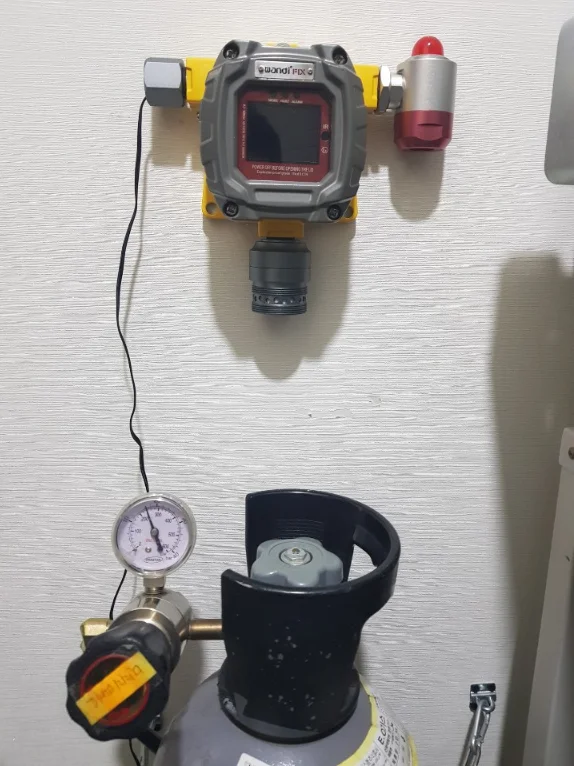
simply powering it on completes about half of the installation.
Before finishing up, it's essential to confirm that the power is working correctly.
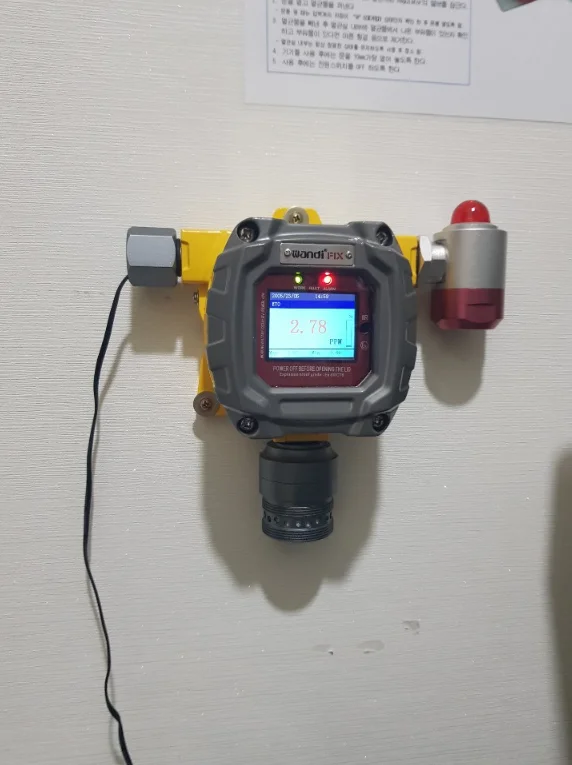
We check that the power operates without issue and that the zero point is properly calibrated.
After confirming the reason for the chosen installation location and that the operation is normal with the site manager, we proceed with the finishing work.
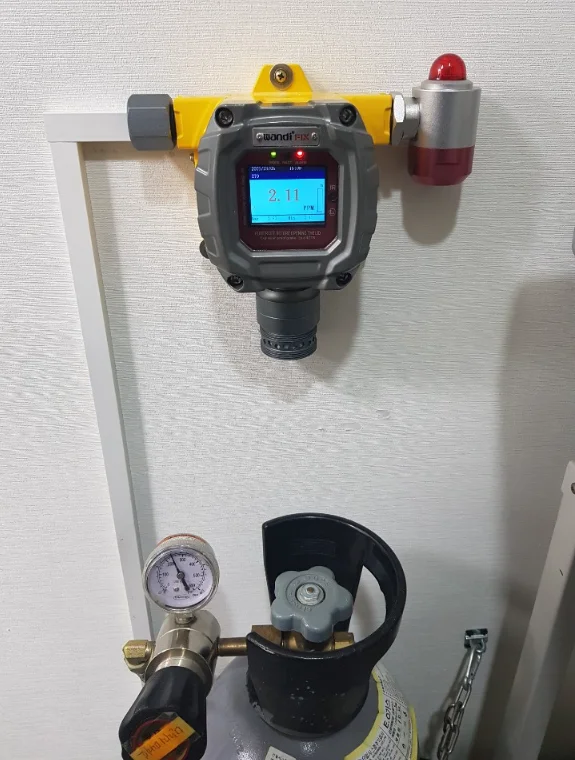
Once the molding work is complete, the entire installation is finished.
The whole process typically takes about 30 minutes.
Since the gas concentration can rise somewhat while the EtO sterilizer is operating, ventilation inside the sterilizer room is essential.
This concludes the installation case for the EtO leak detector FIX800.
Frequently Asked Questions (FAQ)
Q1. What is EtO gas?
EtO is precisely a gas called ethylene oxide, mainly used to sterilize medical devices. It has excellent sterilizing power, but even a small leak can be very harmful to the human body, which is why it's designated as a hazardous substance by the government with established exposure limits for management.
Q2. Why is an EtO leak detector needed?
Since hospital sterilizers operate using EtO gas supplied from a cylinder, as equipment ages or a valve loosens, a small amount of gas can leak.
Q3. Is installation difficult?
Installing an EtO leak detector is quite easy. After securing the detector with an electric drill and powering it on, about half of the installation is complete. The whole process typically takes about 30 minutes.
Q4. What verification steps are done after installation?
Before finishing, we confirm that the power is working correctly and that the zero point is properly calibrated. We then confirm the reason for the installation location and normal operation with the site manager before proceeding with the finishing (molding) work.
Q5. What should be noted inside a sterilizer room?
Since the gas concentration can rise somewhat while the EtO sterilizer is operating, ventilation inside the sterilizer room is essential.
#WANDI #FIX800 #EtOLeakDetector #EthyleneOxide #HospitalSterilizer #MedicalDeviceSterilization #HazardousGasManagement #IndustrialSafetyEquipment #FixedGasDetector #OccupationalSafety
![[레이먼드] 오,폐수 처리실 유해가스 모니터링](https://wandi.co.kr/storage/construction-cases/YxFUQVBZ8Unnk7pJzzfsmezr6xNe0LZvQRDmt7TL.jpg)
![[브이피이코리아] 종합병원 지하 밀폐공간 가스 측정기 설치_FIX800 & FIX-DS](https://wandi.co.kr/storage/construction-cases/gNOA28xSlEy5uU3AOxyHDRH5UfAe0TpMTgAt4Uag.jpg)

