Applied Markets
Installed Gases
Project Details
Hello.
Today's site is a case where we installed a hydrogen leak detector inside a factory that uses hydrogen gas.
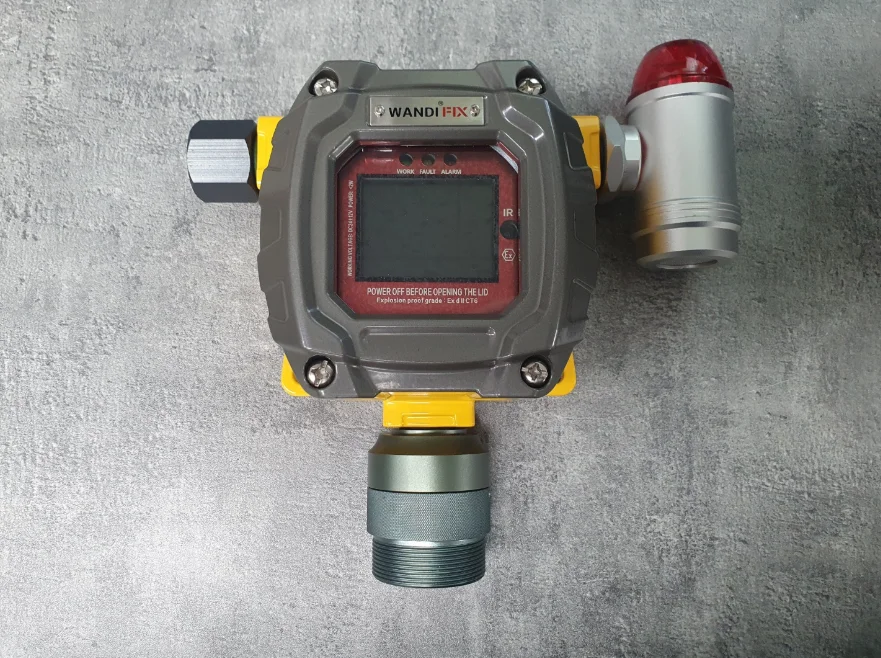
The fixed-type hydrogen leak detector FIX800 was installed. It measures hydrogen concentration in real time and displays the reading. Alarm concentration can also be set, so if a hydrogen concentration higher than the set value is detected, a sound & light alarm is triggered.
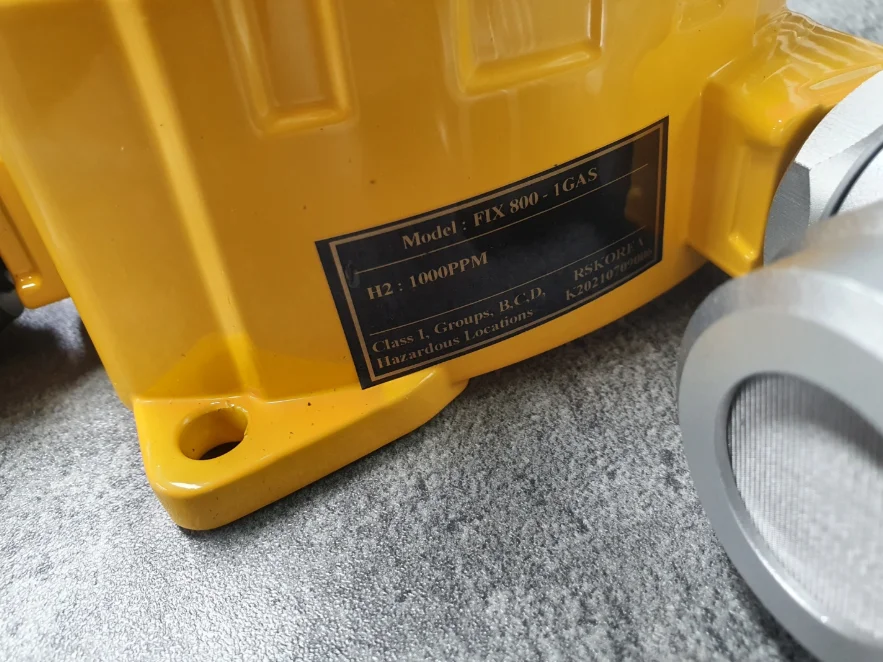
The most commonly sold hydrogen detector range is 0~1,000ppm.
Generally, if hydrogen leaks at a concentration of 40,000ppm or more and meets a heat source, an explosion can occur.
Therefore, on site, we apply a high-precision hydrogen sensor around 1,000ppm so that even a small hydrogen leak can be detected.
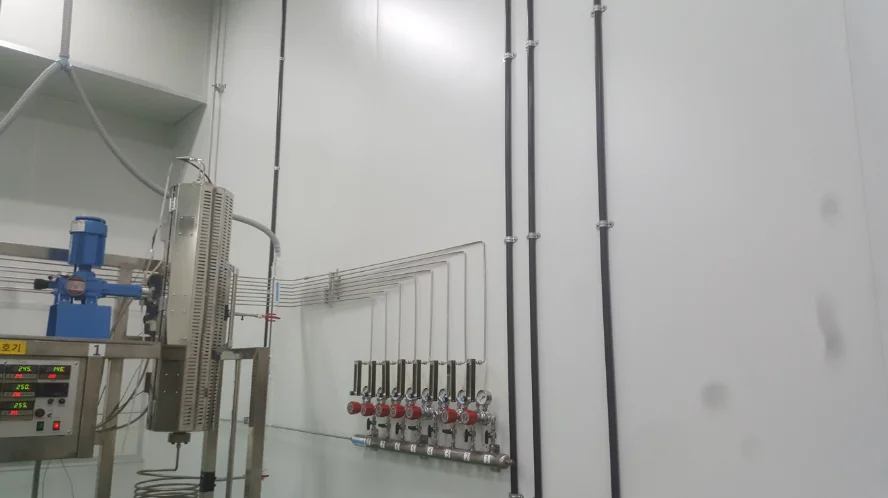
Hydrogen gas is lighter than air.
For this site as well, we conducted a prior site survey, introduced the detector installation points and schedule, and then proceeded with the installation.
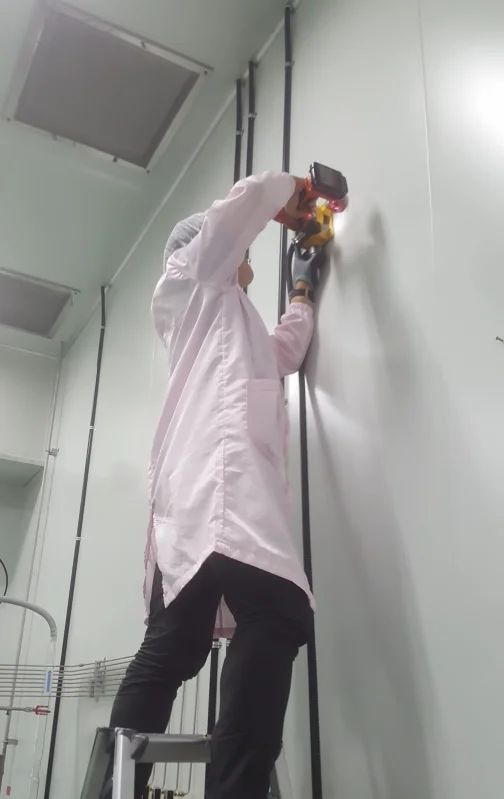
Hydrogen gas has a lighter weight compared to oxygen.
Therefore, when it leaks, it rises upward.
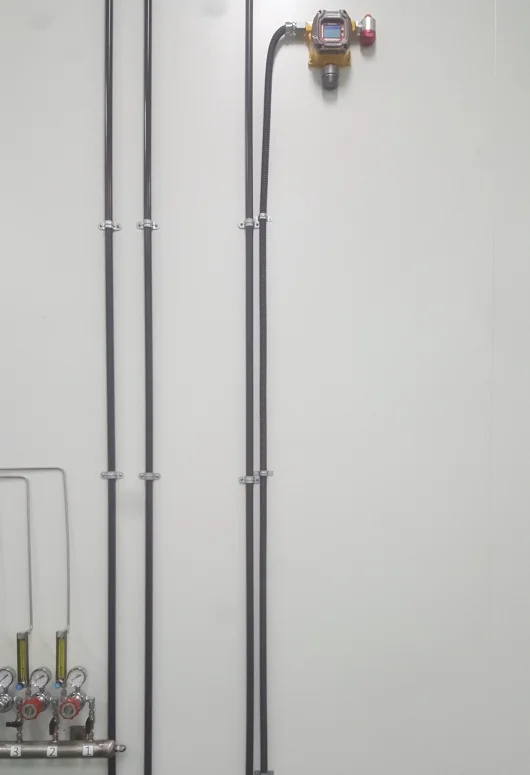
So, most sites prefer to mount the hydrogen detector near the ceiling or at a high location. In fact, the Korea Occupational Safety and Health Agency (KOSHA) also recommends installing detectors for gases lighter than air at a point 20~30cm from the ceiling.
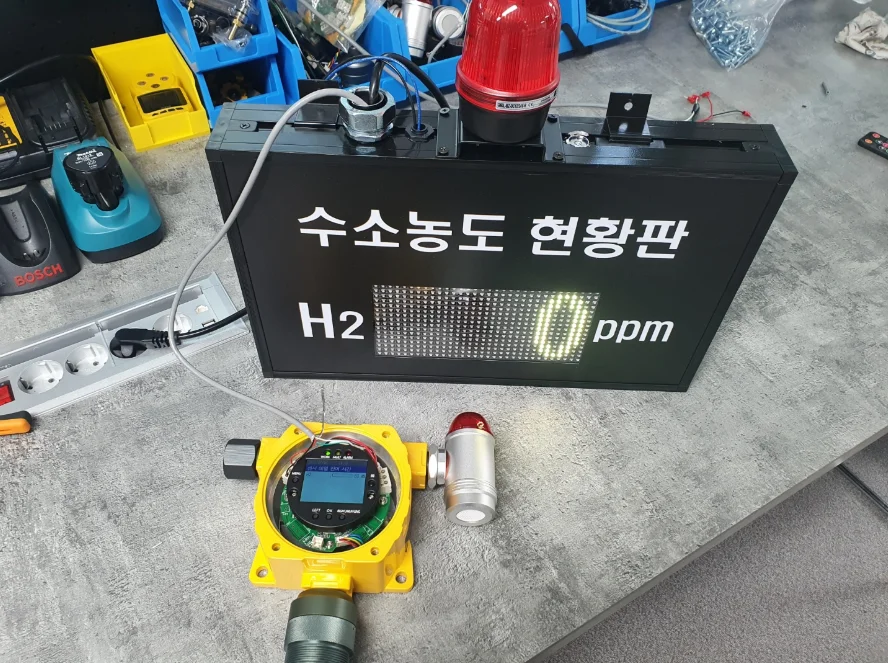
Additionally, although not applied at this particular site, when linked with a display board, the hydrogen detector shows its greatest advantage in this way.
Since most hydrogen detectors are installed at high locations, checking the concentration can be difficult, but by configuring a display board like this, the current hydrogen concentration can be checked easily.
Thank you.
Frequently Asked Questions (FAQ)
Q1. What equipment was installed in this case?
The fixed-type hydrogen leak detector FIX800 was installed. It measures hydrogen concentration in real time and displays the reading, and if a set alarm threshold is exceeded, a sound & light alarm is triggered.
Q2. What is the measurement range of the hydrogen detector?
The most commonly sold range is 0~1,000ppm, and on site, a high-precision hydrogen sensor is applied so that even a small leak can be detected.
Q3. Why does hydrogen pose an explosion risk?
Generally, if hydrogen leaks at a concentration of 40,000ppm or more and meets a heat source, an explosion can occur.
Q4. Why are hydrogen detectors installed at high locations?
Since hydrogen is lighter than air and rises when it leaks, most sites prefer installing detectors near the ceiling or at a high point. KOSHA also recommends installing detectors for gases lighter than air at 20~30cm from the ceiling.
Q5. What's the advantage of linking it with a display board?
Since most hydrogen detectors are installed at high locations, checking the concentration can be difficult. A display board makes it possible to check the current hydrogen concentration easily from ground level. (This was not applied at this particular site.)
#WANDI #FIX800 #HydrogenLeakDetector #HydrogenAlarm #FixedGasDetector #H2Detection #ExplosionRiskManagement #GasConcentrationDisplayBoard #IndustrialSafetyEquipment #OccupationalSafety
![[레이먼드] 오,폐수 처리실 유해가스 모니터링](https://wandi.co.kr/storage/construction-cases/YxFUQVBZ8Unnk7pJzzfsmezr6xNe0LZvQRDmt7TL.jpg)
![[브이피이코리아] 종합병원 지하 밀폐공간 가스 측정기 설치_FIX800 & FIX-DS](https://wandi.co.kr/storage/construction-cases/gNOA28xSlEy5uU3AOxyHDRH5UfAe0TpMTgAt4Uag.jpg)

