Applied Markets
Installed Gases
Project Details
Hello. This is our team.
The product we'd like to introduce today is the GasTiger2000 model.
Air-quality gases: O3 (Ozone), NO2 (Nitrogen Dioxide)
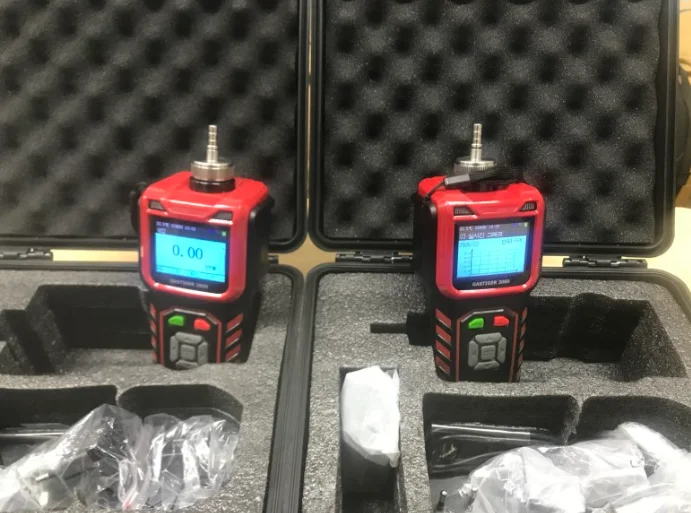
< GasTiger2000 Gas Detector >
A single unit can be configured with both NO2 and O3 sensors together, but at the purchasing company's request, we supplied this order as two separate units.
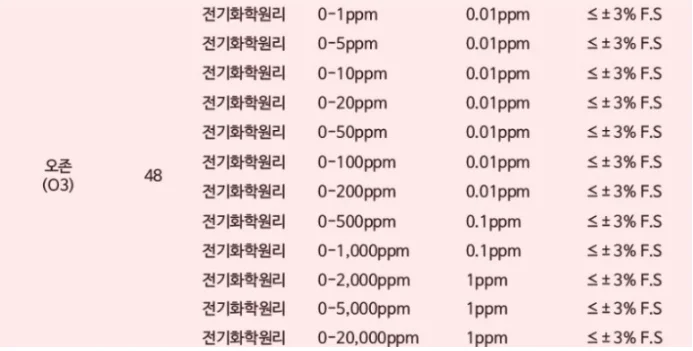
< GasTiger 2000 – O3 (Ozone) Measurement Range >
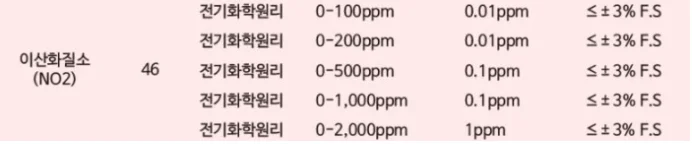
< GasTiger 2000 – NO2 (Nitrogen Dioxide) Measurement Range >
Before explaining the GasTiger 2000 model, let us first explain why O3 (ozone) and NO2 (nitrogen dioxide) need to be measured together.
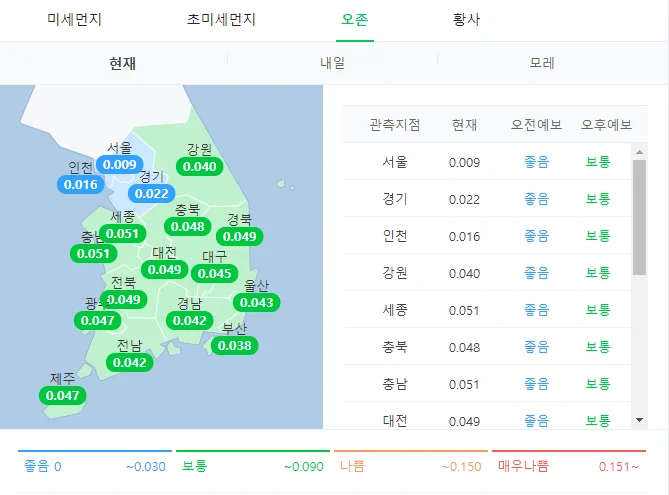
This shows today's nationwide O3 (ozone) concentration status. Because it was raining with very little UV exposure, conditions were moderate to good.
Ozone is generated through photochemical reactions, so ozone concentrations rise relatively higher during summer months with more sunlight.
When ozone concentration in ambient air rises, it can cause an unpleasant odor followed by coughing, eye irritation, headaches, shortness of breath, and vision problems — which is why it is an essential value to monitor.
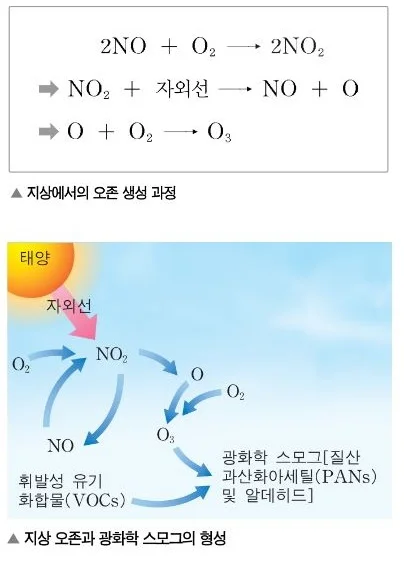
< How O3 (Ozone) Forms >
Understanding how ozone forms in the atmosphere explains why NO2 (nitrogen dioxide) and O3 (ozone) must be measured together.
Ozone and nitrogen dioxide are secondary pollutants. The primary pollutant NO (nitric oxide) combines with O2 (oxygen) to form NO2 (nitrogen dioxide), and NO2 then reacts with solar UV radiation to generate ozone.
For this reason, research institutions and air-quality analysis facilities must measure a range of gases including VOCs (volatile organic compounds), NO, O2, O3, and NO2.
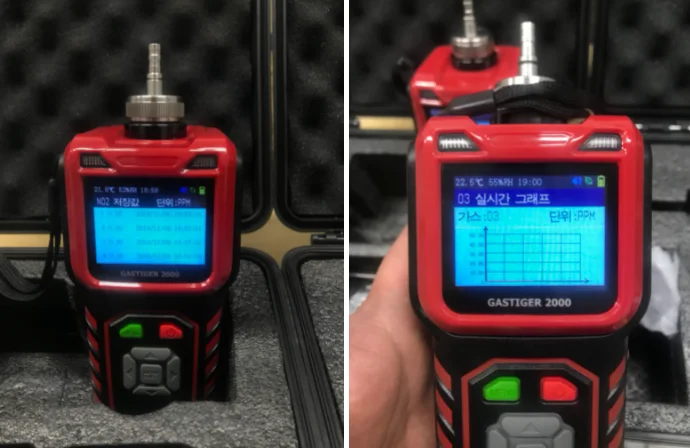
< GasTiger2000 >
The GasTiger 2000, one of our flagship models, supports a wide range of measurement ranges and 6 sensor slots (up to 7 gases measured simultaneously), making it an excellent choice for personnel who need to perform portable gas analysis and measurement.
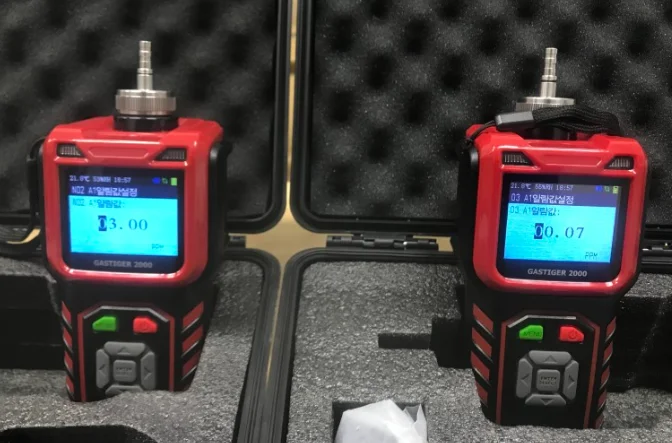
> Ozone (O3)
STEL (Short-Term Exposure Limit): 0.2 ppm
TWA (Time-Weighted Average over an 8-hour workday): 0.08 ppm
> Nitrogen Dioxide (NO2)
STEL (Short-Term Exposure Limit): 5 ppm
TWA (Time-Weighted Average over an 8-hour workday): 3 ppm
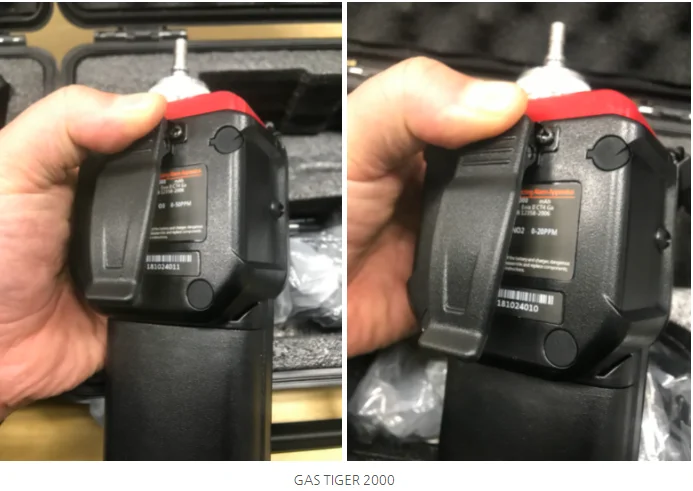
Since the client needed to test high-concentration gas, we configured a relatively high measurement range for this unit. Despite the high range, the resolution remains as fine as 0.01 ppm.
For accurate measurement, selecting the right product model for the application environment is essential. If you have any inquiries regarding multi-gas measurement and analysis equipment, please feel free to contact us.
Frequently Asked Questions (FAQ)
Q1. Why do ozone (O3) and nitrogen dioxide (NO2) need to be measured together?
Both are secondary pollutants: NO (nitric oxide) combines with O2 (oxygen) to form NO2, and NO2 then reacts with solar UV radiation to generate ozone. Because of this chain relationship, both gases must be monitored together for accurate air-quality analysis.
Q2. How many sensors can the GasTiger 2000 support?
The GasTiger 2000 supports 6 sensor slots and can measure up to 7 gases simultaneously.
Q3. What are the exposure limits for ozone and nitrogen dioxide?
Ozone: STEL 0.2 ppm, TWA 0.08 ppm. Nitrogen dioxide: STEL 5 ppm, TWA 3 ppm.
Q4. When does ozone concentration rise?
Since ozone forms through photochemical reactions, concentrations rise relatively higher during summer months with more sunlight and UV exposure.
Q5. Why was the equipment supplied as two separate units in this case?
A single unit can be configured with both NO2 and O3 sensors together, but at the purchasing company's request, this order was supplied as two separate units instead.
#WANDI #GasTiger2000 #OzoneDetector #NO2Detector #AirQualityMonitoring #AirPollutionMonitoring #GasDetector #IndustrialSafety #EnvironmentalMonitoring #GasMonitoring
![[레이먼드] 오,폐수 처리실 유해가스 모니터링](https://wandi.co.kr/storage/construction-cases/YxFUQVBZ8Unnk7pJzzfsmezr6xNe0LZvQRDmt7TL.jpg)
![[브이피이코리아] 종합병원 지하 밀폐공간 가스 측정기 설치_FIX800 & FIX-DS](https://wandi.co.kr/storage/construction-cases/gNOA28xSlEy5uU3AOxyHDRH5UfAe0TpMTgAt4Uag.jpg)

