What Is Hydrogen (H2)? A Colorless, Odorless, Tasteless Explosive Gas
Hydrogen (H₂) is the most abundant element in the universe and the lightest gas by molecular weight. Being colorless, odorless, and tasteless, a leak can never be detected by human senses, and since it is about 14 times lighter than air, it rapidly accumulates near ceilings when it leaks. With a lower explosive limit (LEL) of 4% and an upper limit (UEL) of 75%, it has the widest explosive range of any flammable gas, and its ignition energy is just 0.017 mJ, low enough to be ignited by a single static discharge.
💡 Key Hazard Characteristics
Hydrogen is colorless and odorless, making it undetectable by human senses / explosive range 4–75% (the widest range) / ignition energy 0.017 mJ (static discharge level) / risk of accumulation near the ceiling of confined spaces
Health Effects of Hydrogen on the Human Body
Hydrogen is a simple asphyxiant with low toxicity, but in high-concentration environments it dilutes the oxygen concentration, creating a risk of asphyxiation. The main health effects are as follows.
| Concentration (vol%) | O₂ Level Change | Health Effect | Explosion Risk |
|---|---|---|---|
| Below 1% | Normal (~20.9%) | No symptoms | Below LEL, safe |
| 4% (LEL) | About 20% | No symptoms (explosion onset point) | ⚠️ Explosion begins |
| 10–20% | 17–19% | Headache, dizziness, breathing difficulty | 🔥 Heightened explosion risk |
| 25% or above | Below 16% | Severe headache, fainting | 🔥 Very dangerous |
| 75% (UEL) | Below 5% | Unconsciousness, death by asphyxiation | Upper explosive limit (still hazardous above) |
※ Source: OSHA 29 CFR 1910.146, NFPA 2 Hydrogen Technologies Code
Real Hydrogen Accident Cases
🇳🇴 Hydrogen Fueling Station Explosion Near Oslo, Norway (2019)
In June 2019, at the Kjørbo hydrogen fueling station near Oslo, Norway, a sealing defect at a tank connection caused a hydrogen leak that resulted in an explosion. Vehicles within a few hundred meters of the station had their airbags deployed, and two nearby residents suffered minor injuries. In the aftermath, hydrogen fueling station operations across Europe were temporarily suspended, and discussions began on making fixed H2 detectors mandatory. (Source: Uno-X Hydrogen; Norway DSB Accident Report, 2019)
🇰🇷 Hydrogen Fire at a Semiconductor Plant in Gyeonggi-do, Korea (2022)
In 2022, a fire broke out at a semiconductor manufacturing plant in Gyeonggi-do, Korea, caused by a hydrogen leak at a process piping connection. At the time, only a local ventilation system was operating on site, and since no fixed hydrogen detector was installed, early detection of the leak failed. It took roughly two hours to extinguish the fire, and equipment damage amounted to several billion won. (Source: Gyeonggi Fire Service Headquarters Fire Investigation Report, 2022)

What If WANDI FIX800 Had Detected the Hydrogen Leak in Advance?
Scenario If FIX800 Had Been Installed
- 1When LEL reaches 10% (Stage 1 alarm): FIX800 immediately sounds an alarm and displays a red warning on the FIX-DS board
- 2When LEL reaches 25% (Stage 2 alarm): A notification is sent to the manager's smartphone, and a valve shut-off signal is output via relay integration
- 3Evacuation of the site: Workers evacuate immediately upon receiving the alarm, and the fire department is notified
- 4Cutting off the source: The hydrogen supply valve is shut off automatically or manually to prevent further leakage
- 5Cloud record retention: The leak time and concentration history are automatically saved for use in accident cause analysis
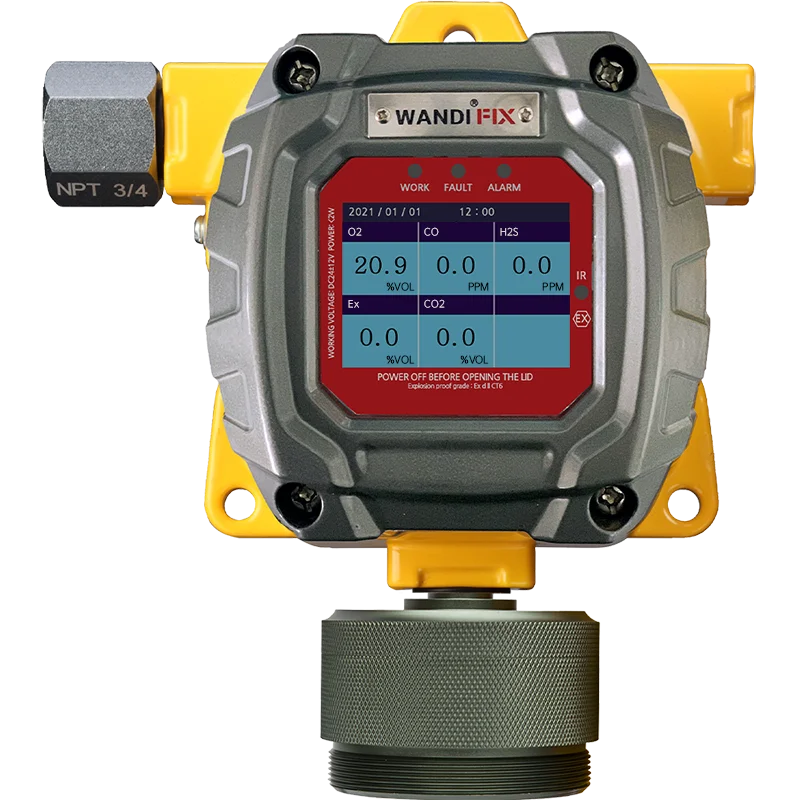
WANDI FIX800 Fixed Hydrogen Detector — Key Specifications
| Item | Specification |
|---|---|
| Target Gas | H2 — simultaneous 5-gas measurement possible (O2, CO, H2S, LEL combinations) |
| Measurement Range | 0–1,000 ppm or 0–100% LEL |
| Sensor Type | Catalytic Bead |
| Alarm Levels | Stage 1: 10% LEL / Stage 2: 25% LEL (user-configurable) |
| Output | 4–20mA analog, RS-485, 3 relay contacts |
| Integration | FIX-DS display board, warning light, ventilation fan, shut-off valve, cloud |
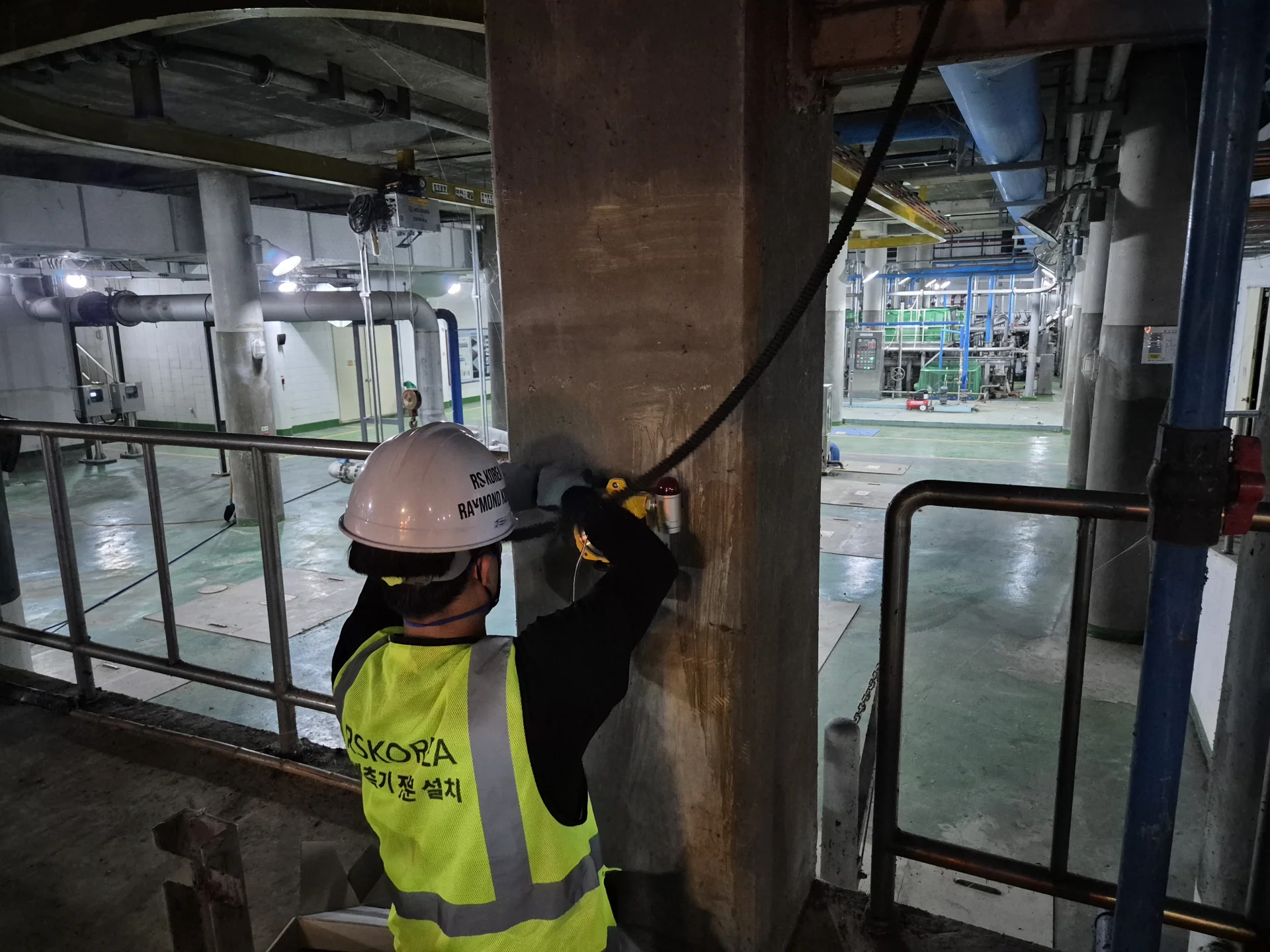
| Installation Method | Wall-mounted near the ceiling (upper installation considering hydrogen's low density) |
| Operation Mode | 24-hour continuous monitoring |
💡 FIX800 Simultaneous 5-Gas Measurement
In addition to measuring H2 alone, the FIX800 can simultaneously measure O2 (oxygen), CO (carbon monoxide), H2S (hydrogen sulfide), and LEL (combustible gas) from a single unit. It is well-suited to complex gas environments such as hydrogen fueling stations, semiconductor plants, and battery manufacturing lines.
Hydrogen Gas Detector Installation Cases
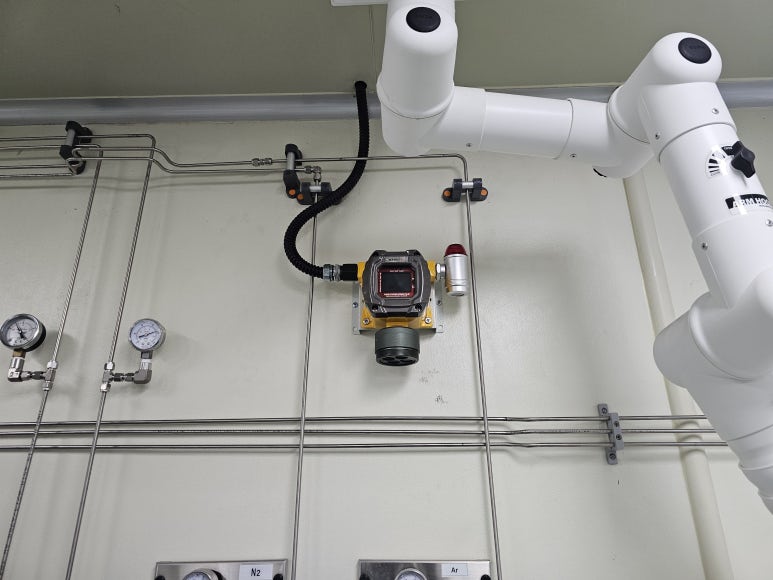
Applying FIX800 Across Different Hydrogen-Handling Environments
| Application Environment | Hazard Factor | Role of FIX800 |
|---|---|---|
| Hydrogen fueling stations | High-pressure pipe leaks, explosion during fueling | Ceiling detector → automatic integration with shut-off valve |
| Semiconductor clean rooms | Process gas piping leaks | Multi-point installation, real-time cloud monitoring |
| Battery / ESS facilities | H2 generation during overcharging | Early warning to preempt thermal runaway |
| Pharmaceutical research labs | Use of hydrogen as a reaction gas | Status displayed outside the lab via FIX-DS board |
| Water electrolysis / green hydrogen | H2 generation from electrolysis equipment | Continuous monitoring of the generation area |
A Closer Look at the WANDI FIX800 Product and Installation
Below are real photos of the WANDI FIX800 fixed multi-gas detector.