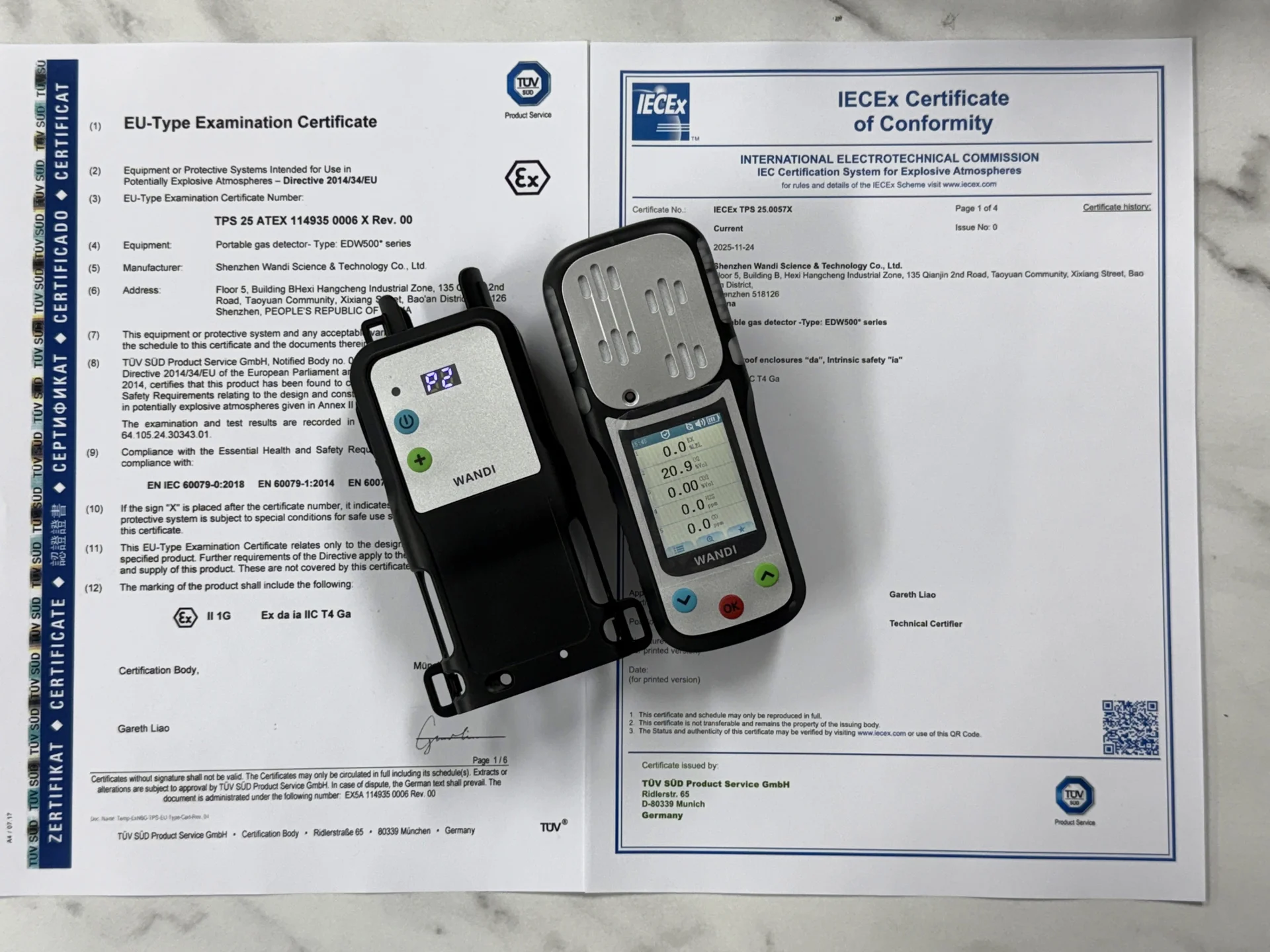
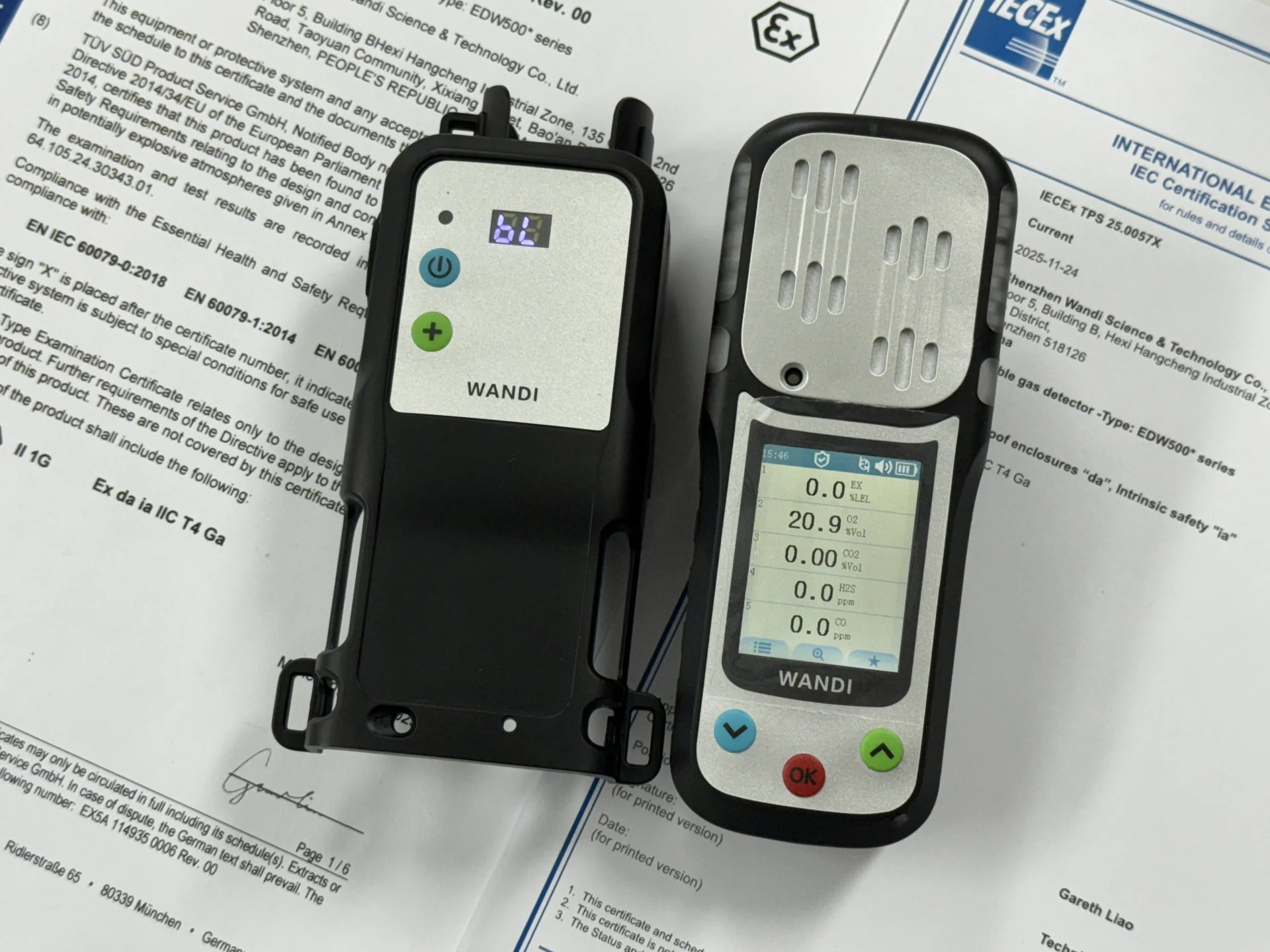
Ethylene oxide (ETO, C₂H₄O) is an essential gas in hospital medical-device sterilization, food fumigation, and chemical raw-material manufacturing. But ETO — classified by IARC as a Group 1 Carcinogen — can cause leukemia and breast cancer with long-term exposure even at just 1 ppm, and is explosive across a 3–100% range in air. The WANDI EDW500 portable multi-gas detector holds IECEx international explosion-proof certification (Certificate No. IECEx TPS 25.0057X) and simultaneously measures 5 gases including ETO, making it the most reliable safety solution for sterilization rooms, chemical processes, and hospital environments.
💡 Key Summary
ETO is a dual-hazard gas that is both carcinogenic and explosive. Korea's Occupational Safety and Health Act sets the exposure limit at 1 ppm (TWA), identical to the U.S. OSHA PEL. The EDW500 detects ultra-low concentrations down to the 0.01 ppm level with a dedicated EC sensor for ETO.
What Is Ethylene Oxide (ETO)? Basic Properties and Hazards
Ethylene oxide is a colorless gas with a sweet ether-like odor at room temperature (boiling point 10.7°C), readily soluble in water, alcohol, and ether. Its low molecular weight and rapid diffusion let it fill a space quickly even from a small leak.
| Item | Detail |
|---|---|
| Chemical formula | C₂H₄O (MW 44.05) |
| Boiling point | 10.7°C (gas at room temperature) |
| Explosive range (LEL~UEL) | 3% ~ 100% (in air) |
| Autoignition temperature | 429°C |
| IARC classification | Group 1 (confirmed human carcinogen) |
| Korea exposure limit (TWA) | 1 ppm (MoEL notice) |
| STEL (short-term limit) | Not set (minimize, as a carcinogen) |
| IDLH (immediately dangerous) | 800 ppm (NIOSH) |
| Odor threshold | 700 ppm+ (detectable only above 700× the exposure limit) |
⚠️ Critical Warning: Cannot Be Detected by Smell
ETO's odor threshold is 700 ppm or higher — you can only smell it above 700 times the human exposure limit (1 ppm). In other words, by the time a worker can smell it, they are already severely overexposed. An automatic gas detector is mandatory.
Health Effects of ETO on the Human Body
| Exposure Concentration | Exposure Time | Health Effect |
|---|---|---|
| 1 ppm | Long-term (years) | Increased risk of leukemia and breast cancer (IARC Group 1) |
| 50 ppm | Short-term | Headache, nausea, eye/nose/throat mucous irritation |
| 200 ppm | Several hours | Pulmonary edema, nervous system disorder, respiratory distress |
| 500 ppm | 30 min or more | Severe neurotoxicity, cardiac arrhythmia |
| 800 ppm+ | Immediately | Loss of consciousness, life-threatening (IDLH) |
| Skin contact | Minutes | Blisters/burns; systemic toxicity after skin penetration |
Source: NIOSH Pocket Guide to Chemical Hazards, IARC Monographs Vol.100F (2012), Korea MoEL Chemical Exposure Standards
Major ETO Use Sites and Leak Risks
- Medical sterilization rooms: ETO gas sterilization of endoscopes, surgical tools, and single-use medical devices. Residual gas leak risk when the sterilization chamber door is opened.
- Pharmaceutical/bio plants: Used as a synthesis intermediate for active ingredients. Leak risk at reactor pipe flanges and valves.
- Food fumigation facilities: Sterilization of spices and dried foods. High-concentration buildup when storage ventilation is insufficient.
- Chemical plants (EO production): Production of ethylene glycol and surfactant raw materials. Pipe-corrosion leaks under high pressure.
- Research laboratories: Small-scale use in cell culture and microbiology research.

Real Accident Cases
Case 1: Sterigenics ETO Leak, Georgia, USA (2019)
An EPA investigation confirmed that a Sterigenics International sterilization facility near Atlanta, Georgia had leaked ETO above permissible levels for years. A statistically significant increase in cancer rates among nearby residents was found, and the facility was forcibly shut down. Following this case, the U.S. EPA fully strengthened its ETO emission regulations. (Source: U.S. EPA, National Emission Standards for Hazardous Air Pollutants, 2023)
Case 2: Worker Exposure in a Domestic Hospital Sterilization Room, Korea (2021)
A special inspection by Korea's Ministry of Employment and Labor found that at a large domestic hospital's sterilization room, some workers' ETO exposure reached 2–5 times the exposure limit (1 ppm), resulting in corrective orders and a work-stoppage order. The main cause was failure to operate the local exhaust ventilation when the sterilization chamber was opened. (Source: Korea MoEL press release, 2021)
Installation Cases: WANDI Gas Detectors in the Field
WANDI EDW500: The Optimal Solution for ETO Detection
What Is IECEx International Explosion-Proof Certification?
IECEx (IEC System for Certification to Standards Relating to Equipment for Use in Explosive Atmospheres) is the international certification system for equipment used in explosive environments. The WANDI EDW500 holds the IECEx TPS 25.0057X certificate issued by TÜV SÜD and meets the explosion-protection rating Ex da ia IIC T4 Ga (Zone 0, EPL Ga). This means it can be used safely even in the most hazardous environment (Zone 0), where explosive gases like ETO may be continuously present.
EDW500 ETO Measurement Specifications
| Item | Specification |
|---|---|
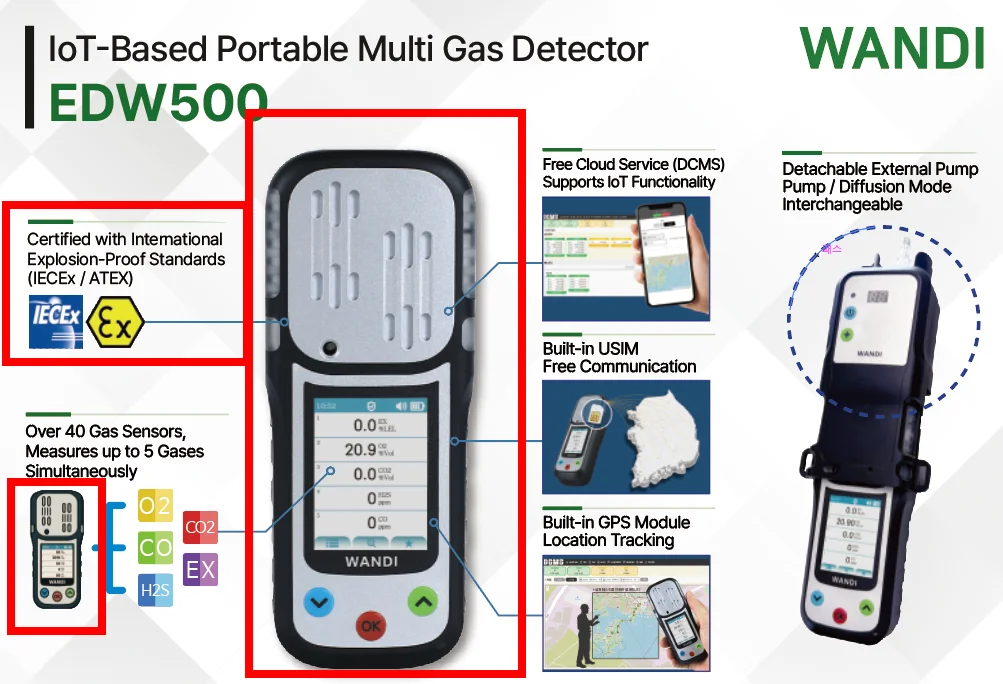
| Measured gases | ETO + combustible (EX) + O₂ + CO + H₂S (5 gases simultaneously) |
| Sensor type | Electrochemical (EC) — high-sensitivity ETO-dedicated sensor |
| Measurement range | 0 ~ 100 ppm |
| Alarm settings | Stage 1 (0.5 ppm) / Stage 2 (1 ppm), user-configurable |
| Explosion-proof cert. | IECEx TPS 25.0057X (Zone 0, Ex da ia IIC T4 Ga) |
| Data management | Cloud real-time monitoring, automatic measurement-history logging |
| Battery | 8+ hours of continuous use |

What If WANDI EDW500 Had Been Used? — ETO Accident Prevention Scenario
- 1Before the sterilization chamber door opens: The worker approaches wearing the EDW500, with ETO concentration shown in real time.
- 2When 0.5 ppm is exceeded: A stage-1 audible/vibration alarm fires → the worker is immediately alerted and verifies the ventilation system is running.
- 3When 1 ppm is exceeded: A stage-2 alarm → work stops immediately, and an automatic alert is sent to the manager (cloud-connected).
- 4Automatic measurement logging: ETO exposure records per task → securing legal evidence and data for epidemiological investigation.
- 5Simultaneous 5-gas detection: Monitoring combustible gas (LEL) alongside ETO → dual defense against fire and explosion risk.
Legal Obligations for ETO Work (Korea)
- Occupational Safety and Health Act Article 39: duty to comply with hazardous-factor exposure limits
- Chemicals Control Act: ETO is a hazardous chemical subject to handling-facility standards
- MoEL notice: subject to special health examinations (at least once a year)
- Work-environment measurement: duty to measure ETO concentration at least once every 6 months
- Serious Accidents Punishment Act: employer's duty to establish a safety & health management system
A Closer Look at the WANDI EDW500
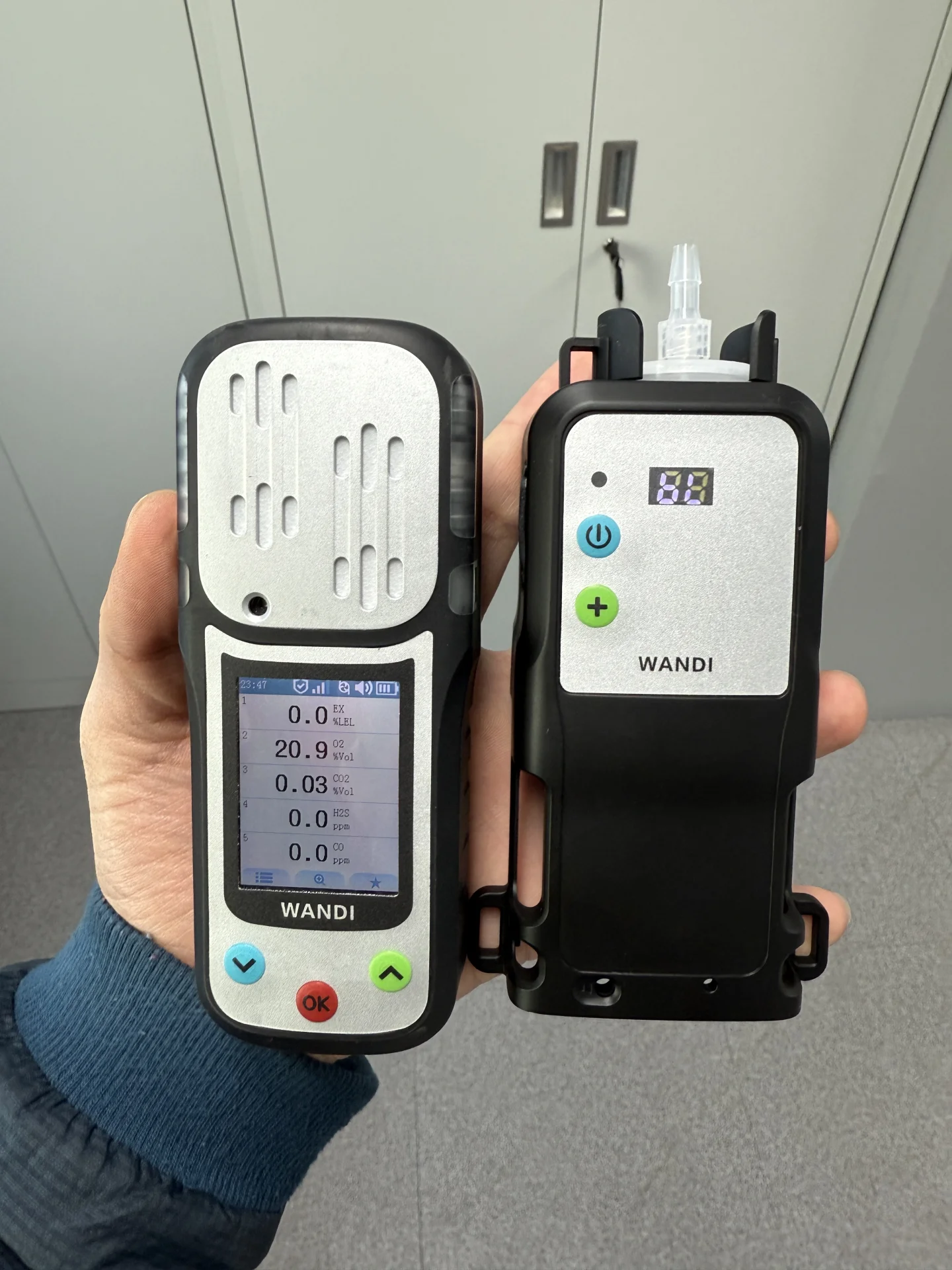
Below are real photos of the WANDI EDW500 portable multi-gas detector.